
For Plexiglass, use a 10-inch, 80–100T TCG, negative-hook carbide blade.
You’re cutting a clear acrylic panel for a display, and the last thing you want is chips, haze, or melted edges. I’ve been there—starting the cut with hope, ending it with cracks or a ragged line. The right blade turns that stress into a clean, glassy edge that needs almost no sanding. In this guide, I break down the best table saw blade for plexiglass so you can pick with confidence. I’ll point out what really matters—tooth grind, hook angle, kerf, and setup—then review top blades that have earned a spot in my shop. Let’s keep your acrylic clear, your cuts clean, and your time well spent.

FOXBC 8-1/4 Inch Metal Cutting…
8-1/4 Inch Metal Cutting Table Saw Blade 80-Tooth TCG, KERF 0.087″, 5/8″ Arbor, Diamond Knockout Laser-Cut Stabilizer Vents for trapping noise and reducing vibration for accuracy and durability Made from…

IVY Classic 35056 Swift Cut…
Steel blade designed for cutting light gauge aluminum, plastic and vinyl siding up to 1/8″ thick. For material thicker than 1/8” use IVY Classic 36366 10” 80T Non-Ferrous & Plastics…

Freud LU94M010: 10″ Plastic Blade
Specs: Arbor 5/8″, Diameter 10″, Grind MTCG, Hook Angle -3°, Kerf .110″, Plate .087″, Teeth 80 Premium TiCo HI-Density Carbide Plastic Blend for Maximum Performance Modified Triple Chip Grind (MTCG)…
Check Price on Amazon →FOXBC 8-1/4″ 80T TCG Plastic & Metal Blade

This FOXBC 8-1/4 inch blade is a smart fit for compact jobsite saws that need to cut plastics well. It uses an 80-tooth TCG (triple-chip grind), which helps reduce chipping on both the top and bottom face. The teeth are carbide, so they hold an edge and resist heat in tough cuts. If you have acrylic, polycarbonate, or thin PVC, this size and grind gives you clean, controlled passes.
I like this blade for smaller setups because it balances bite and finish. The 5/8-inch arbor fits most portable table saws. A fine grind and many teeth help with fragile materials like plexiglass. Keep your feed smooth and moderate. You’ll see fewer burrs and less haze along the edge.
Pros:
- 80T TCG teeth resist chipping in acrylic and polycarbonate
- Carbide tips handle heat and stay sharp longer
- Fits compact 8-1/4 inch table saws with 5/8-inch arbor
- Good edge quality on plexiglass with steady feed
- Versatile for non-ferrous metals and plastics
Cons:
- Smaller diameter limits max cut depth
- May still haze edges if feed is too slow
- Not ideal for very thick cast acrylic in one pass
My Recommendation
If you run a compact table saw and cut small to mid-size acrylic, this is a strong pick. It has the tooth shape I look for in the best table saw blade for plexiglass, especially when space and budget are tight. Use a zero-clearance insert and keep the protective film on your sheet. You’ll get a crisp, near-polished line on many clear plastics. Supply is good and pricing is fair, which adds to the value.
| Best for | Why |
|---|---|
| Compact jobsite saws | 8-1/4 inch size with 5/8-inch arbor fits smaller tools |
| Thin to medium acrylic | 80T TCG reduces chips and helps prevent melt |
| Mixed shop use | Cuts plastics and non-ferrous metals in one blade |
IVY Classic 10″ 200T Plastic & Aluminum Blade

The IVY Classic 200-tooth blade is all about a fine finish. With so many teeth, it takes small bites and leaves a smooth edge on plastics and thin non-ferrous stock. On plexiglass, this high tooth count can lower chipping on the top edge. It also helps limit tear on thin sheets that vibrate during the cut.
That said, it demands a steady feed and good support. High tooth count can make heat build fast if you push too slow. I use a zero-clearance insert and a featherboard to keep vibration down. If you need clean edges on thin acrylic and are patient with feed, this blade can shine.
Pros:
- Very high tooth count for ultra-fine finish
- Works on plastics and thin aluminum
- Reduces top-edge chipping on acrylic
- Good for thin, delicate sheets
- Affordable way to try an ultra-fine blade
Cons:
- Can heat up and smear plastic with slow feed
- Not ideal for thick cast acrylic
- Edges may still need a light flame polish
My Recommendation
If you cut thin plexiglass often and want a clean edge, this blade is a value choice. It is not the most forgiving, but it can make crisp cuts when set up right. For some shops, it may count as the best table saw blade for plexiglass on thin stock at a low price. Just keep your sheet stable and your feed smooth.
| Best for | Why |
|---|---|
| Thin acrylic sheets | 200 teeth take tiny bites for a fine edge |
| Budget-minded users | Low cost for high-tooth performance |
| Light non-ferrous work | Also handles thin aluminum and brass |
Freud LU94M010 10″ Plastic Blade
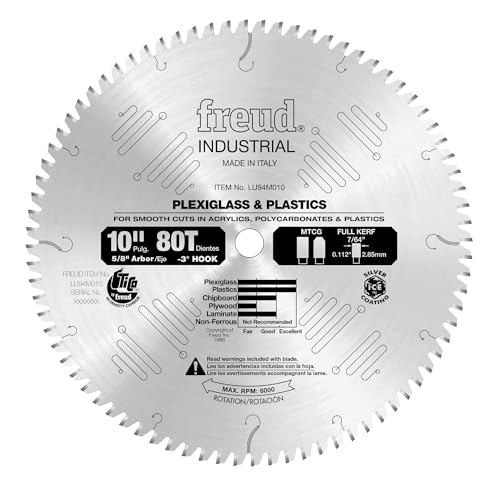
This Freud blade is purpose-built for plastics like acrylic (plexiglass), polycarbonate, and PVC. It uses an 80T TCG grind with a negative or low hook angle to tighten the cut and reduce lift. That combo keeps chips small and lowers the risk of melting. Freud’s carbide and anti-vibration design help it run cool and true.
I have used LU94M on cast and extruded acrylic with great results. The edge is smooth and clear on straight cuts, especially with a zero-clearance insert. This is a “buy it once” pick when you want a blade that is made for plastic, not just “okay” on it. It is a top pick for the best table saw blade for plexiglass if quality matters most.
Pros:
- Plastic-specific design with 80T TCG
- Low/negative hook controls chip-out and lift
- Quality carbide stays sharp longer
- Runs smooth with less vibration
- Excellent on cast and extruded acrylic
Cons:
- Costs more than generic blades
- Still needs proper feed rate to avoid haze
- Not meant for thick metals
My Recommendation
If you want a pro-level finish on plexiglass, this is my first call. It is built for plastic and rewards good setup with glassy edges. For many, this is the best table saw blade for plexiglass, period. If you cut clear acrylic often, the upgrade pays for itself in saved time and cleaner results.
| Best for | Why |
|---|---|
| Frequent acrylic work | Plastic-focused tooth grind and hook angle |
| Cast acrylic panels | Clean, clear edges with steady feed |
| Pros and serious hobbyists | Premium carbide and stable cut quality |
FOXBC 10″ 80T TCG Aluminum & Plastic Blade

This FOXBC 10-inch 80T TCG blade is a versatile choice for plastics and non-ferrous metals. The tooth geometry is well-suited for acrylic, as it breaks chips cleanly and lowers edge haze. The standard 5/8-inch arbor fits most table saws. It’s a cost-effective way to step into plastic-friendly blades.
With plexiglass, I get a clean edge when I use a zero-clearance insert and keep feed steady. It’s not as dialed-in as a plastic-only blade, but the finish can be very good. You also get the bonus of being able to cut aluminum extrusions, which is nice for shop builds and jigs.
Pros:
- 80T TCG tooth profile good for plastics
- Dual-purpose for aluminum and acrylic
- Standard 10-inch size for deeper cuts
- Good value for a multi-use blade
- Stable performance with proper setup
Cons:
- Not as specialized as plastic-only designs
- Can haze the edge if fed too slow
- Kerf may be wider than premium blades
My Recommendation
Pick this if you want one blade for both plastics and aluminum and you care about cost. It can be the best table saw blade for plexiglass in a mixed-use shop, as long as you dial in your setup. For occasional acrylic, it saves money yet still delivers neat edges. It’s easy to recommend for general shop duty.
| Best for | Why |
|---|---|
| Mixed materials | Handles plastics and non-ferrous metals well |
| General shop use | Versatile 10-inch size with 80T TCG |
| Budget-conscious buyers | Solid value without a big spend |
TOYAKI 10″ 120T TCG Ultra-Fine Finish Blade

TOYAKI’s 120-tooth TCG blade aims for ultra-smooth cuts on aluminum and plastics. More teeth mean finer chips and a smoother edge when the setup is right. In acrylic, I’ve seen strong results with controlled feed and a stable fence. It can handle delicate cuts where a 60T or 80T may leave a touch more swirl.
Higher tooth count also means more friction if you hesitate. Keep feed steady and use an outfeed table for longer sheets. When the cut is dialed, the edge is impressive. It’s a solid step up from general-purpose blades if finish is your goal.
Pros:
- 120T TCG teeth for ultra-fine finishes
- Good control on thin acrylic panels
- Works on plastics and non-ferrous metals
- Reduces top-edge chip-out
- Fits common 5/8-inch arbor saws
Cons:
- Higher heat risk with slow or stop-and-go feed
- Not needed if you only do rough cuts
- May cut slower due to many teeth
My Recommendation
If your priority is the cleanest possible acrylic edge, this blade is worth a look. It can act like the best table saw blade for plexiglass when your feed and support are on point. It is friendly to detail work and fine parts. It’s also easy to find at a fair price.
| Best for | Why |
|---|---|
| Ultra-smooth acrylic edges | High 120T count makes tiny chips |
| Thin plastic work | Gentle bite helps avoid cracking |
| Dual-use shops | Also handles aluminum projects |
10″ 80T Non-Ferrous Blade, Upgraded TCG

This 10-inch, 80-tooth blade with upgraded TCG works well on plastics and non-ferrous metals. The tooth geometry is tuned for neat chip formation. On plexiglass, that means cleaner edges and less stress along the cut line. Carbide-tipped teeth help the blade stay sharp through many sheets.
In my shop, it does good work for both acrylic and aluminum. It is not as refined as a plastic-only blade, but it holds its own. You get consistent results with a steady, moderate feed. That makes it a safe and simple pick for general acrylic use.
Pros:
- 80T upgraded TCG helps with clean plastic cuts
- Carbide tips extend blade life
- Standard 10-inch size for most table saws
- Balanced performance on multiple materials
- Good value for daily shop tasks
Cons:
- Not specialized for plastics only
- Edges may need light sanding or flame polish
- Requires a firm, smooth feed to avoid haze
My Recommendation
Choose this blade if you want one tool to handle plastics and light metal. It can be the best table saw blade for plexiglass for a shop that values versatility. It gives you clean cuts without a premium price. It’s a good everyday option when you need solid, repeatable results.
| Best for | Why |
|---|---|
| General acrylic cuts | 80T TCG balances speed and finish |
| Budget-friendly setups | Strong performance at a fair cost |
| Mixed material shops | Also handles non-ferrous metals |
MASTEC 10″ 100T TCG Aluminum Blade

MASTEC’s 100T TCG blade targets aluminum but does very nice work on plastics too. The extra teeth deliver a finer finish in acrylic than a 60T blade. It’s a good middle ground between speed and polish. Carbide teeth and TCG geometry help keep chips small and edges tidy.
I like this for medium to thicker acrylic panels where 80T might show faint swirl. With a zero-clearance insert, the top face stays clean. Keep the material supported and the feed consistent. You’ll get a smooth line with less risk of micro-chipping.
Pros:
- 100T TCG balances fine finish and cut speed
- Reliable on acrylic and aluminum
- Carbide teeth resist wear and heat
- Clean top-face cut with proper support
- Standard fit for 5/8-inch arbor
Cons:
- Not a plastic-only blade
- May still haze edges if feed is too slow
- Costs more than low-tooth alternatives
My Recommendation
Consider this blade if you cut acrylic often and want better edges than a simple 60T can give. For many jobs, it feels like the best table saw blade for plexiglass at a mid-price tier. It is predictable, durable, and forgiving. That’s what I want when I’m on a deadline.
| Best for | Why |
|---|---|
| Medium-thickness acrylic | 100T gives a finer edge than 60–80T |
| Dual-use tasks | Aluminum and plastics with one blade |
| Everyday shop work | Durable carbide and stable performance |
JINSINA 10″ 100T Aluminum & Plastic Blade
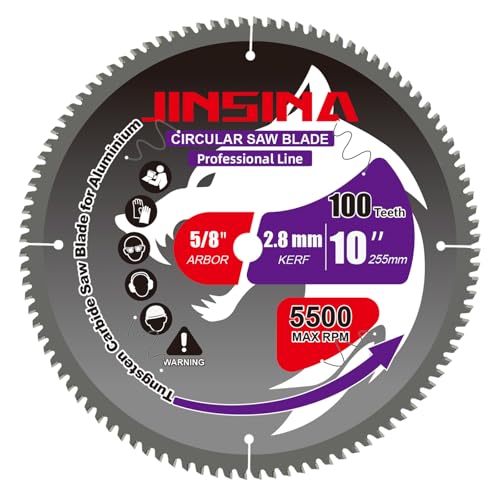
This JINSINA blade is a 10-inch, 100-tooth option for plastics and non-ferrous metals. Tungsten carbide tips help it keep a sharp edge. It targets materials like acrylic, polycarbonate, copper, and MDF. On plexiglass, I see clean results if the sheet is supported and the fence is square.
With 100 teeth, it sits between fast and ultra-fine. That helps you move through medium stock without losing finish quality. It’s handy when your shop needs a single blade for many materials. Keep your feed even, and the edge will be clear and smooth.
Pros:
- 100T for a fine, controlled cut
- Tungsten carbide-tipped for longevity
- Works on acrylic and polycarbonate
- Also handles non-ferrous metals
- Good everyday choice for mixed work
Cons:
- Not a dedicated plastic blade
- Edge may need a quick polish for display work
- Requires steady feed to avoid heat haze
My Recommendation
If you want strong results across many materials, this is a good fit. It can be the best table saw blade for plexiglass for makers who change materials often. It cuts clean and stays sharp. I also like that it tackles both shop builds and display projects without a swap.
| Best for | Why |
|---|---|
| Mixed material workflows | Handles plastics and light metals well |
| Medium acrylic panels | 100T helps reduce chip-out |
| Value seekers | Good balance of price and performance |
Diablo D1060X 10″ 60T Fine-Finish Wood Blade

Diablo’s D1060X is a superb fine-finish blade for wood, and it can cut acrylic in a pinch. The 60T Hi-ATB tooth shape shears cleanly, which helps with top-edge quality. But it’s not designed for plastics, so you must be careful with heat and feed. On thin acrylic, fast and steady feed can give acceptable results.
For frequent acrylic work, I’d pick a TCG plastic or non-ferrous blade. Still, if this is what you have on hand, it can make workable cuts. Leave the protective film on the sheet and support it well. Expect to sand or flame polish the edge for a display-grade finish.
Pros:
- Sharp Hi-ATB teeth cut cleanly in many materials
- Works in a pinch for thin acrylic
- Great value if you also do fine woodwork
- Stable, low-vibration plate
- Easy to find replacements
Cons:
- Not designed for plastics
- Higher melt risk than TCG blades
- Edges may need more post-cut work
My Recommendation
Use this if you already own it and need to cut a few acrylic sheets. It is not the best table saw blade for plexiglass, but it can get you by. Keep your feed brisk and avoid stopping mid-cut. For dedicated plastic work, step up to a TCG plastic/non-ferrous blade.
| Best for | Why |
|---|---|
| Emergency acrylic cuts | Common blade that can work with care |
| Wood-first shops | Excellent for fine woodwork, usable on acrylic |
| Small panels | Better control with thin sheets |
WEN BL1040 10″ 40T Woodworking Blade
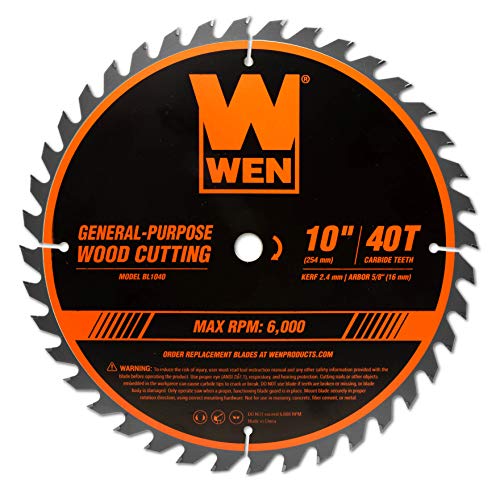
The WEN 40T blade is a general woodworking blade. It is not meant for acrylic or plastics. On plexiglass, it will likely chip and haze the edge. If you try it, use fast feed and expect to sand or polish.
I include this to set clear expectations. For the best table saw blade for plexiglass, look for 80–100T TCG with a low or negative hook. This 40T blade is great for lumber, sheet goods, and construction tasks. For plastics, it’s a last resort.
Pros:
- Affordable and easy to find
- Good for general wood cutting
- Works on jobsite tasks and rough builds
- Stable on most 10-inch table saws
- Carbide-tipped for durability in wood
Cons:
- Not designed for plastics
- High chance of chips and haze on acrylic
- Edges will need heavy post-processing
My Recommendation
Use this blade for wood, not acrylic. If you must cut plexiglass with it, go fast, keep the film on, and be ready to polish. It’s not the best table saw blade for plexiglass by any measure. Save yourself time and choose a TCG plastic or non-ferrous blade instead.
| Best for | Why |
|---|---|
| Wood projects | Designed for lumber and sheet goods |
| Rough cuts | Fast removal, less focus on finish |
| Budget builds | Low cost and widely available |
FAQs Of best table saw blade for plexiglass
What tooth count works best for plexiglass?
Use 80–100 teeth on a 10-inch blade. More teeth mean smaller chips and smoother edges.
Which tooth grind should I look for?
TCG (triple-chip grind) is ideal. It lowers chip-out and helps prevent melting.
Do I need a negative hook angle?
Yes, a low or negative hook angle reduces lifting and chipping on the top face.
How do I avoid melting or haze?
Use a sharp TCG blade, steady feed, zero-clearance insert, and keep the protective film on.
Can a wood blade cut plexiglass?
In a pinch, yes, with a fine 60T blade. But a TCG plastic blade is much better.
Final Verdict: Which Should You Buy?
For the cleanest, most reliable results, the Freud LU94M010 feels like the best table saw blade for plexiglass. It’s made for plastics and rewards good technique with glassy edges.
If you want value and versatility, the FOXBC 10″ 80T TCG is a strong second. Need ultra-fine edges on thin sheets? Look at TOYAKI’s 120T. Pick the best table saw blade for plexiglass that matches your material and your pace.