The best good beginner table saw balances safe control, steady cuts, simple setup, and fair value.
Starting with a table saw can feel like stepping onto a busy road. The motor is loud, the blade looks serious, and one poor setup can ruin both wood and confidence. I understand that worry. A good beginner table saw should feel stable, easy to adjust, and forgiving while you learn. I reviewed portable saws, jobsite models, and small craft saws to help you choose with less guesswork. The right tool can turn rough boards into clean shelves, boxes, trim, and weekend projects.

SKIL 15 Amp 10 Inch…
RACK AND PINION FENCE RAILS – Ensures fence stays parallel to blade for fast smooth, and accurate cuts INTEGRATED FOLDING STAND – Legs quickly fold in to provide portability and…

DEWALT 15 Amp 8-1/4 in….
24.5 in. of rip capacity for ripping 4×8 plywood or OSB sheets Compact size for easy transportation and storage Rack & pinion telescoping fence rails make fence adjustments fast, smooth,…

DEWALT Table Saw 10 Inch…
Rack & Pinion Telescoping Fence System Make fence adjustments fast, smooth and accurate Patented material support, can be used for narrow rip cuts. 32-1/2″ rip capacity easily cuts a variety…
SKIL 10-Inch Table Saw With Stand
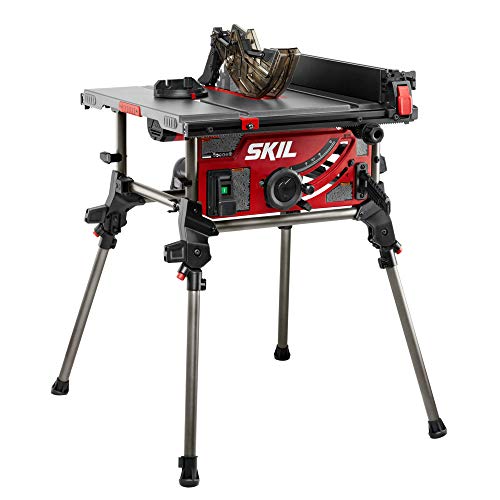
The SKIL TS6307-00 is an inviting first step for a new woodworker. Its 10-inch blade and 15-amp motor give beginners enough power for common boards, plywood, and trim. I like the folding stand because it raises the saw to a useful height without demanding a permanent shop bench. The stand also folds for storage when the garage must serve another purpose.
This saw includes a rack-and-pinion fence system that helps make width changes quick and repeatable. Its bevel range reaches 45 degrees, so you can learn angled cuts as your skills grow. The 4-by-4 cutting capacity at 90 degrees is useful for many home projects. As with any portable saw, I would check the fence alignment before important cuts and use a separate support for long stock.
Pros:
- Strong 15-amp motor for home projects
- 10-inch blade handles common stock sizes
- Folding stand saves floor space
- Rack-and-pinion fence makes setup easier
- Useful 4-by-4 cutting capacity
- Good fit for first-time table saw users
Cons:
- Portable stand is lighter than a fixed shop base
- Factory setup may need careful checking
- Dust control is not perfect without a shop vacuum
DEWALT 8-1/4-Inch Compact Jobsite Saw

The DEWALT DWE7485 is a compact saw for beginners who want a trusted jobsite design without a large footprint. Its 15-amp motor provides useful power for ripping boards and sheet goods. The 8-1/4-inch blade keeps the body smaller and easier to carry. I find that size helpful for a new user who has limited storage or works from a small garage.
Its rack-and-pinion fence makes small width changes feel controlled instead of loose. The fence also gives this saw a generous rip width for its compact class. The metal roll cage adds protection when the saw moves between work areas. It does not include the large rolling stand found on some bigger models, so you may need a sturdy bench or a separate stand.
Pros:
- Compact body is easy to carry
- 15-amp motor offers solid cutting power
- Accurate rack-and-pinion fence system
- Durable metal roll cage protects the saw
- Good rip capacity for a small saw
- Simple choice for limited shop space
Cons:
- Smaller blade gives less depth than a 10-inch saw
- Stand is not included with the basic unit
- Small table needs extra support for wide sheets
DEWALT 10-Inch Saw With Rolling Stand
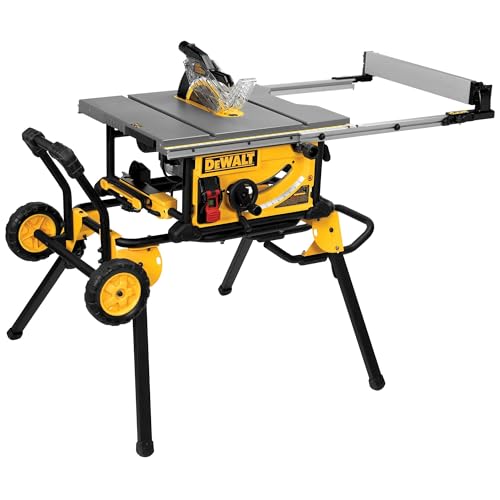
The DEWALT DWE7491RS is a larger jobsite saw that can serve a beginner for many years. Its 10-inch blade, 15-amp motor, and 32-1/2-inch rip capacity suit furniture parts, cabinet panels, and long boards. The rolling stand is a major help when you need to move the saw alone. I see this model as a strong choice for a beginner who expects projects to grow quickly.
The telescoping fence gives the saw room to support wide material while still folding close to the body. Its fence locks with a firm feel, which matters when a board presses against it. The 4800 RPM no-load speed listed for this model supports smooth general cutting with a suitable blade. This saw is heavier and costs more than a small starter model, but the extra size can reduce frustration on larger work.
Pros:
- Large 32-1/2-inch rip capacity
- 10-inch blade handles deeper cuts
- Rolling stand improves setup and storage
- Telescoping fence supports wide panels
- Strong motor for demanding home work
- Excellent long-term upgrade for beginners
Cons:
- Heavier and less compact than small saws
- Higher price may exceed a starter budget
- Long stock still needs an outfeed support
MIMYTH Mini Table Saw for Crafts

The MIMYTH mini table saw targets craft work rather than house framing or large furniture. Its small format can suit model builders, makers, and people who cut thin wood, plastic, acrylic, or similar materials. I appreciate how a compact craft saw can fit on a desk or hobby bench. It gives a beginner a low-cost way to learn basic feed control and measuring.
This is not a replacement for a full-size jobsite table saw. Small saws have limited cutting depth, table area, and material support. Before buying, I would confirm the blade size, compatible materials, guard design, and included accessories. For careful craft cuts, its portable format may be more useful than a large saw that stays packed in a closet.
Pros:
- Very small footprint for hobby benches
- Portable design suits craft rooms
- Useful for thin wood and maker materials
- Easy to store between projects
- Lower entry cost than full-size saws
- Can support model and handmade projects
Cons:
- Not made for thick boards or sheet goods
- Small table limits material support
- Users must check safety features and setup closely
WORX Pegasus Folding Workbench
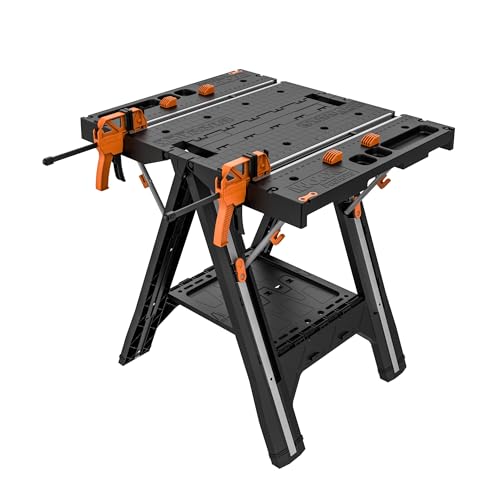
The WORX Pegasus is different from the other products here because it is a workbench and sawhorse, not a powered table saw. I included it because many beginners need a stable work surface before they need a dedicated saw. A good bench can support a circular saw, jigsaw, router, or hand tools. It can make early projects safer by keeping the work at a comfortable height.
The folding design helps people who work in a driveway, apartment, or shared garage. Clamps and dog holes can help hold stock during cuts, though you must never clamp material in a way that blocks a blade or tool path. This product cannot make table-saw cuts by itself. Think of it as useful support for a beginner setup, not as the best good beginner table saw on its own.
Pros:
- Folds for easy storage and transport
- Works as both bench and sawhorse
- Supports many types of power tools
- Helpful for small spaces and mobile work
- Can improve work height and stability
- Useful long after a first saw purchase
Cons:
- It is not a powered table saw
- Limited as a substitute for a rip fence
- Large stock may need added support
Mini Multifunctional Table Saw for Crafts

This mini multifunctional table saw is aimed at careful hobby work. The listed functions include cutting, grinding, engraving, and drilling, which may appeal to makers who want one compact platform. Adjustable speed and angle controls can help with small projects that need more than a straight cut. I would view it as a precision craft tool, not a general woodworking machine.
The dual-motor design and included accessories may make it useful for acrylic, plastic, PCB material, and thin wood. Small workpieces still need a safe hold-down method and clear hand placement. The maker should confirm the accessory fit and material limits before use. If your goal is dollhouse parts or small gifts, this type of saw can take up less room than a full-size model.
Pros:
- Supports several small craft tasks
- Adjustable speed can suit varied materials
- Adjustable angle adds project flexibility
- Compact size fits a hobby workspace
- Useful for acrylic, plastic, and thin stock
- Accessory system may reduce tool changes
Cons:
- Limited cutting depth and work area
- Not suited to construction lumber
- Small accessories need careful inspection and storage
Evolution R10TBLX 10-Inch Jobsite Saw

The Evolution R10TBLX is a portable 10-inch jobsite saw for beginners who want a fuller feature set. The listed design includes a 15-amp motor, a wheeled stand, a precision fence, and a 26-inch rip capacity. Its zero-clearance throat plate can help support narrow cuts and reduce the chance of small offcuts dropping beside the blade. The wheeled base is useful when the work area changes often.
This model also lists a dado plate and a 0-to-45-degree bevel range. Dado work needs the correct blade, compatible setup, and careful attention to the manual. I would not make dado cuts until I had mastered ordinary ripping and crosscutting. With its 3-3/8-inch listed cut depth, this saw offers useful room for common boards while remaining easier to move than a cabinet saw.
Pros:
- 10-inch blade supports common woodworking cuts
- Wheeled stand helps one-person movement
- Zero-clearance throat plate supports small cuts
- Precision fence encourages repeatable results
- 0-to-45-degree bevel range adds versatility
- Dado plate offers room to advance skills
Cons:
- 26-inch rip capacity is below some DEWALT models
- Extra features may require more setup learning
- Beginners must verify dado compatibility first
Mini Craft Table Saw With Dual Motors

This mini table saw is built for hobbyists who need a small tool for handmade projects. Its listing describes dual 795 motors, a 200-watt rating, a speed of up to 12,000 RPM, and adjustable height. Those numbers sound useful for thin stock, but speed alone does not make a saw suitable for thick wood. I would use it for small parts, craft panels, and light maker work.
Two switches may offer more control over the motor system, while the included accessories can help a beginner try several tasks. The compact table is easy to place near a work lamp or craft bench. It cannot match the support, guard system, or cutting depth of a full-size jobsite saw. Still, it may be the better learning tool for a person whose projects are small by design.
Pros:
- Small footprint suits hobby rooms
- Dual-motor design offers flexible operation
- Adjustable height supports different small tasks
- High listed speed suits light craft work
- Accessories may broaden its uses
- Easy to store after each project
Cons:
- Not intended for thick lumber
- Small table limits safe stock support
- Users should verify guard and accessory details
POWSTR 10-Inch Table Saw With Stand

The POWSTR 10-inch portable table saw gives beginners the familiar size and power of a standard jobsite design. Its listing names a 15-amp motor and 5000 RPM speed. A stand can save a new user from balancing the saw on an unsafe table. This combination may appeal to DIY homeowners who want a ready-to-use setup for shelves, frames, and repair work.
A 10-inch blade provides more cutting depth than the mini saws in this guide. I would still inspect the fence, miter gauge, blade guard, and stand hardware before the first cut. Entry-level saws can work well, but setup quality affects the result as much as motor power. If the fence stays parallel to the blade and the stand sits firm, this model may offer useful value.
Pros:
- 10-inch blade suits common home projects
- 15-amp motor offers useful cutting power
- 5000 RPM listed speed supports fast work
- Included stand improves working height
- Portable format suits garage and jobsite use
- Good option for budget-minded DIY users
Cons:
- Fence and gauge may need careful setup
- Brand support should be checked before purchase
- Large sheets still need side or outfeed support
Evolution R10TS 10-Inch Jobsite Table Saw

The Evolution R10TS shares the core idea of the R10TBLX but comes in a more straightforward jobsite format. It lists a 10-inch blade, 15-amp motor, 26-inch rip capacity, and a 3-3/8-inch cut. These are practical numbers for a beginner who wants to move beyond small craft work. The 0-to-45-degree bevel range also lets you learn basic angled cuts.
The precision fence and zero-clearance throat plate are useful features for controlled work. A dado plate is included according to the product listing, but I would treat that as an advanced feature. First learn to make straight cuts with the standard blade, then test every adjustment with the saw unplugged. This model can be a good fit for a careful user who wants portable woodworking power without a cabinet saw.
Pros:
- Full 10-inch blade for deeper cuts
- 15-amp motor suits many DIY tasks
- Precision fence supports repeatable rips
- Zero-clearance plate helps with narrow stock
- Bevel adjustment supports angled projects
- Portable design fits a home workshop
Cons:
- 26-inch rip width may limit wide panels
- Advanced features need extra practice
- Stand and support needs depend on the package
What Makes the Best Good Beginner Table Saw?
The best good beginner table saw is not always the strongest saw. It is the one you can set up correctly, control with confidence, and store without a daily struggle. A powerful motor cannot fix a poor fence or an unstable base. I look first at safety parts, fence movement, table support, and clear adjustments.
Blade Size and Cutting Depth
Most portable woodworking saws use a 10-inch blade. That size gives useful depth for boards and common sheet goods. An 8-1/4-inch blade can still work well and often makes the saw lighter. Mini saws belong in a different group because they target thin craft material.
Do not judge a table saw by blade diameter alone. Check the listed cut depth at 90 degrees and at 45 degrees. Also check the arbor size and the blade type included. A sharp blade with the correct tooth count can produce a cleaner cut than a dull, low-quality blade on a larger machine.
Motor Power
A 15-amp motor is common on portable saws in the United States. It can handle many home projects when you feed the wood at a steady pace. Do not force the board. Let the blade work, and stop if the motor strains or the cut begins to close.
Mini craft saws often list watts or motor speed instead of the amp rating used on full-size tools. High RPM can help small cuts, but it does not equal high torque. Match the tool to the material. Thin craft stock may be fine, while thick hardwood may overload a small motor.
Fence Quality
I consider the fence the heart of a beginner table saw. It guides the board and helps keep the cut straight. A fence should slide without a harsh wobble and lock firmly from the front. Rack-and-pinion systems make small width changes easier because the adjustment feels more measured.
Before cutting, unplug the saw and compare the fence with the blade. The fence should stay parallel to the blade unless the manual says otherwise. A fence that shifts during a cut can pinch wood and raise kickback risk. This simple check often separates a calm first project from a stressful one.
Stand and Work Support
A table saw needs a firm base. A folding stand saves space, while a wheeled stand helps with heavier tools. If the saw rocks, fix the base before you cut. A level floor, tight hardware, and good side support all help the board move in a smooth line.
Long boards need extra support before they reach the blade. Use an outfeed table, roller support, or a trusted workbench. Keep that support level with the saw table. If the board drops at the end of a cut, it can lift or twist near the blade.
Safety Features Beginners Should Use
The blade guard, riving knife, and anti-kickback pawls are not optional decorations. They help manage contact with the blade and reduce the chance of wood closing on it. The U.S. Consumer Product Safety Commission and OSHA both stress safe tool use, guarding, and proper training. I also recommend reading the complete manual before plugging in the saw.
Wear eye protection. Use hearing protection around loud motors. Keep loose sleeves, cords, and hands away from the blade. Never reach over a moving blade, and use a push stick when your hand would get close to the cutting zone.
Kickback can happen when wood binds or turns into the blade. Stand slightly to the side of the blade path, not directly behind the board. Keep the floor clear so you can maintain balance. If anything feels wrong, turn the saw off and wait for the blade to stop.
Dust Control
Wood dust can irritate the lungs and eyes. Many portable saws include a dust port, but the port alone does not remove every chip. A shop vacuum with the right hose can improve cleanup. Good airflow and a suitable dust mask can add another layer of protection.
Check the dust setup before the cut. A hose that pulls against the saw can affect stability. Empty the vacuum before it loses suction. Clean the saw after use, but disconnect power first and follow the maker’s cleaning instructions.
How I Compare Beginner Table Saws
I compare these saws by the work a new user is most likely to do. That includes straight rips, crosscut support, small shelves, boxes, trim, and light furniture parts. I also consider transport, storage, fence control, table space, and the cost of adding stands or supports.
I do not treat a craft saw and a 10-inch jobsite saw as equal tools. They solve different problems. A mini model may be the best good beginner table saw for a model maker, while the SKIL or DEWALT may be better for a homeowner. The right match matters more than a long feature list.
Tips for Your First Cuts
Start with straight scrap wood. Measure twice, mark the good face, and set the fence with the saw unplugged. Use a sharp blade that matches the material. Support the stock on both sides of the table before the motor starts.
Feed the board with steady pressure. Keep both hands in safe positions and use a push stick near the end of a narrow rip. Do not pull a board backward over a spinning blade. Turn the saw off, wait for a full stop, and then clear the work.
Practice makes the saw feel less like a wild animal and more like a well-trained horse. You do not need to begin with a complicated cabinet project. A small box or simple shelf can teach measurement, fence setup, feed rate, and safe body position.
My Recommendation
For most new woodworkers, I would start with the SKIL TS6307-00. It offers a 10-inch blade, a 15-amp motor, a folding stand, and a beginner-friendly fence system. That mix gives a new user useful capacity without making the saw feel too large. In my view, it is the best good beginner table saw for common home projects and limited storage.
Choose the DEWALT DWE7485 if portability and a compact footprint matter most. Choose the DWE7491RS if you expect to cut wide panels and want a rolling stand. Craft users should look at the MIMYTH or another mini model, while the WORX Pegasus is best as a support bench. Always compare current Amazon pricing, package contents, warranty terms, and safety parts before ordering.
| Best for | Why |
|---|---|
| First-time home DIY user | SKIL offers useful power, a 10-inch blade, and a folding stand. |
| Wide boards and future projects | DEWALT DWE7491RS gives strong support and a large rip capacity. |
| Small crafts and model work | Mini saws use less space and suit thin, small workpieces. |
FAQs Of best good beginner table saw
What is the best good beginner table saw for home use?
The SKIL TS6307-00 is a strong starting choice for many home users. It has a 10-inch blade, a 15-amp motor, a folding stand, and a useful fence system. It offers more room to grow than a mini craft saw.
Is an 8-1/4-inch table saw enough for a beginner?
Yes. An 8-1/4-inch saw can handle many boards, trim pieces, and sheet goods. It is often easier to carry and store. Choose a 10-inch saw if you need deeper cuts or plan to work with larger stock.
Do I need a stand with a portable table saw?
A stand is not always required, but a firm stand improves height, balance, and safety. Never place a saw on a weak or unstable surface. Add side and outfeed support for long or wide material.
Can a mini table saw replace a full-size jobsite saw?
No. A mini saw suits thin wood, plastic, acrylic, and craft parts. It lacks the cutting depth, table space, and support needed for large boards. Use a full-size jobsite saw for general woodworking and construction cuts.
What safety gear should a beginner use?
Use safety glasses and hearing protection. Use dust control that matches the material and workspace. Keep the guard and riving knife installed when the manual allows, and use a push stick for narrow cuts.
Final Verdict: Which Should You Buy?
The SKIL TS6307-00 is my top pick for the best good beginner table saw. It gives most new users a helpful blend of power, size, stand support, and easy adjustments.
Choose a DEWALT for heavier use or a mini model for crafts. Set up carefully, use the safety parts, and let your skills grow one clean cut at a time.