
Finding the best mortise chisel means choosing strong steel, a firm grip, and clean cutting control.
A loose door hinge, rough joint, or stubborn pocket can turn a simple project into a tiring chore. I know the frustration of a chisel that rolls, chips, or leaves a ragged mortise. The right mortise chisel works like a small, sharp lever: it removes waste with control and keeps your hands fresh. I reviewed these options for steel, handle comfort, edge support, size range, and real woodworking use. Whether you build furniture, fit doors, or repair old joinery, this guide can help you choose with confidence.

Narex 863600Chisel / Mortise Chisel…
Robust tool used for chopping out joints as well as cutting mortises Excellent cutting performance is reached by side tapering in height and length from tip to shoulder for sidewall…

Narex Czech Steel Individual Professional…
Made by a highly respected edge tool manufacturer in the Czech Republic Blades are made from fine-grained, nicely tempered chrome-manganese steel and hardened to Rc 59 Available in sizes from…
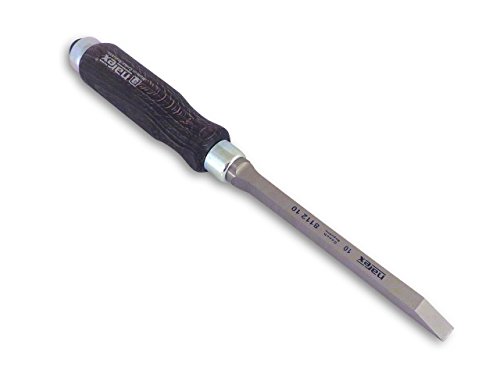
Narex Czech Steel Professional Woodworking…
Made by a highly respected edge tool manufacturer in the Czech Republic Blades are made from fine-grained, nicely tempered chrome-manganese steel and hardened to Rc 59 Available in sizes from…
Narex 4-Piece Mortise Chisel Set

The Narex 863600 set includes four useful metric sizes: 4, 6, 10, and 12 mm. That range covers many cabinet joints, small frame mortises, and medium furniture work. Narex has a strong name among woodworkers because its Czech-made tools often balance good edge life with a fair price. I like this set for people who need more than one size without buying a large collection.
The blades have the stout shape that I expect from a true mortise chisel. You can strike the handle with a mallet and clear waste in small, controlled cuts. The smaller sizes suit narrow hinge recesses and fine joinery, while the 10 and 12 mm tools handle wider pockets. The metric sizes may require a quick conversion when your plans use inches, but the set remains a practical starting point.
Pros:
- Four useful sizes for common mortise work
- Stout blade design supports mallet blows
- Good choice for furniture and cabinet joinery
- Useful range for small and medium mortises
- Strong value for beginners and home shops
- Narex offers a respected woodworking tool name
Cons:
- Metric sizes may not match every project plan
- Not a complete set for very wide mortises
- Some users may prefer a heavier striking handle
My Recommendation
I recommend this set for a new woodworker who wants a capable best mortise chisel collection without a high first cost. It gives you enough sizes to learn proper chopping technique and test different joint widths. It also suits a repair shop that often handles small furniture parts. For large hardwood doors, I would add a wider single chisel later.
| Best for | Why |
|---|---|
| New woodworkers | Four practical sizes cover many early projects. |
| Cabinet and furniture work | The stout blades suit controlled mallet use. |
| Value-focused buyers | A set costs less than buying several tools one at a time. |
Narex 16 mm Professional Mortise Chisel
This Narex professional mortise chisel is the largest option in this individual-size listing, measuring 16 mm, or 5/8 inch. Its Czech steel blade and stained European beech handle give it a classic shop-tool feel. The wide blade can remove waste from larger mortises faster than a narrow chisel. It is especially helpful when you already own smaller chisels and need one strong workhorse.
A 16 mm mortise chisel needs a steady hand and a solid mallet, but it should not feel clumsy when the handle fits well. I use a wide chisel like this to open the center of a joint, then switch to a smaller size for the corners and walls. That method reduces edge strain and helps keep the mortise square. Before heavy use, I would inspect the factory edge and hone it to suit the wood and task.
Pros:
- Wide 16 mm blade removes waste efficiently
- Useful 5/8-inch size for larger joinery
- European beech handle feels natural in the hand
- Suitable for repeated mallet work
- Works well as an addition to a smaller set
- Classic shape supports accurate wall trimming
Cons:
- One size does not cover narrow mortises
- Wide blades require careful control in hard wood
- Metric sizing may need conversion for inch-based plans
My Recommendation
This is a strong choice for an experienced woodworker who already owns a basic set. It can be the best mortise chisel for broad furniture joints, thick rails, and larger frame work. I would not make it the only chisel in a beginner’s toolbox because narrow work still needs smaller blades. Its value is highest when you need a dependable 16 mm tool rather than another general bench chisel.
| Best for | Why |
|---|---|
| Large furniture mortises | The wide blade clears the center of a joint quickly. |
| Experienced users | Skilled control makes better use of the larger edge. |
| Expanding a chisel set | It fills the wide-size gap in many collections. |
Narex 4–12 mm Cabinetmaker Chisel
This Narex listing covers sizes from 4 to 12 mm and represents a useful professional-style option for cabinetmakers. The stained European beech handle gives the tool a warm, traditional look while offering a firm grip during chopping. Its size range fits many small boxes, drawers, cabinets, and furniture frames. I see it as a sensible bridge between a light bench chisel and a dedicated heavy mortise tool.
The narrow blade sizes help when you need to start a joint without bruising the layout lines. A medium size can then widen the pocket, while the 12 mm blade handles more open work. I always mark the waste area first and make shallow cuts near the edges; a sturdy chisel cannot correct poor layout. With that habit, this Narex tool line can produce clean shoulders and crisp walls.
Pros:
- Broad size range from 4 to 12 mm
- Comfortable European beech handle design
- Fits cabinet, box, and furniture projects
- Supports both starting cuts and cleanup work
- Good match for careful hand-tool joinery
- Professional appearance at a moderate price level
Cons:
- Individual-size listings can confuse new buyers
- Does not include the extra-wide 16 mm option
- Metric sizes may not align with imperial plans
My Recommendation
I would choose this Narex model for cabinetmakers and serious hobbyists who care about controlled, clean cuts. It may be the best mortise chisel for a shop that works mostly on drawers, cabinets, and small furniture. The range is practical, but buyers should confirm the exact size before ordering. If you want one specific width, this individual listing can fill that need without forcing you to buy a full set.
| Best for | Why |
|---|---|
| Cabinetmakers | The size range suits small and medium joinery. |
| Fine layout work | Narrow blades help protect marked lines. |
| Growing workshops | You can add the needed size as your work expands. |
Narex 12 mm Cabinetmaker Mortise Chisel

This Narex 12 mm model is a focused choice for woodworkers who know the size they need. A 12 mm blade is close to 1/2 inch, so it fits many common furniture and frame joints. The Czech steel construction and European beech handle give it the shape and balance expected from a traditional mortise chisel. It avoids the extra cost of a set when one size does most of your work.
I like a dedicated 12 mm tool for medium mortises because it feels more stable than a thin bench chisel. The blade can take firm mallet taps when you remove waste in layers. It also gives enough control to pare the final walls after the rough chopping is complete. As with any chisel, sharpness matters more than force, so regular honing will protect both the edge and the wood.
Pros:
- Useful 12 mm, or near 1/2-inch, width
- Focused purchase for users who need one size
- Stout profile supports controlled chopping
- European beech handle offers a traditional grip
- Good fit for medium furniture mortises
- Simple choice for replacing a worn tool
Cons:
- Limited to one blade width
- Not ideal for tiny hinge recesses
- Users may need smaller and larger chisels nearby
My Recommendation
This is a smart buy for a woodworker whose plans often call for a 12 mm mortise. It can be the best mortise chisel for medium-size joints, especially when you want a solid tool instead of a mixed set. I would pair it with a 6 mm or 8 mm chisel for narrow corners. Its focused design keeps the buying decision simple and makes it a useful replacement for a damaged or missing tool.
| Best for | Why |
|---|---|
| Medium mortises | The 12 mm width handles common frame and furniture joints. |
| Replacement buyers | You can buy the needed size without another full set. |
| Traditional hand-tool users | The wood handle and stout blade suit mallet work. |
KAKURI 3-Piece Japanese Wood Chisel Set

The KAKURI three-piece Japanese wood chisel set gives beginners a compact way to explore hand-cut joinery. Japanese-style chisels often use a laminated blade design, with a hard cutting layer supported by softer steel, although exact construction should always be checked in the current listing. The set is aimed at general woodworking rather than only deep mortises. That makes it useful for paring, trimming, and light chopping around a project.
These chisels suit a careful worker who values a keen edge and light hand feel. I would use them for layout cleanup, hinge recesses, small joints, and final fitting rather than aggressive work in thick, tough stock. A wooden handle can feel pleasant and balanced, but it also deserves sensible mallet strikes. If you are new to Japanese chisels, learn to hone the bevel and keep the back flat before asking the edge to do hard work.
Pros:
- Compact three-piece set for general woodworking
- Useful for paring and fine fitting tasks
- Japanese style offers a keen cutting feel
- Good option for small boxes and light joinery
- Easy set to store in a home workshop
- Can serve as a gentle introduction to Japanese tools
Cons:
- May not replace a heavy mortise chisel set
- Wood handles need care around hard mallet blows
- Users should confirm the included sizes before ordering
My Recommendation
I recommend this set for hobbyists who want flexible chisels for more than mortising. It may be the best mortise chisel choice for light joinery, small repairs, and fine paring, but I would select a heavier Narex or dedicated mortise tool for deep hardwood pockets. The set is also a good fit for someone who enjoys Japanese woodworking methods. Its overall value depends on using it with patience rather than brute force.
| Best for | Why |
|---|---|
| Light woodworking | The set handles paring, trimming, and small joints. |
| Small projects | Its compact format suits boxes, drawers, and repairs. |
| Japanese tool learners | It offers a simple entry to Japanese-style chisels. |
HAUTMEC 4-Piece Long Wood Chisel Set
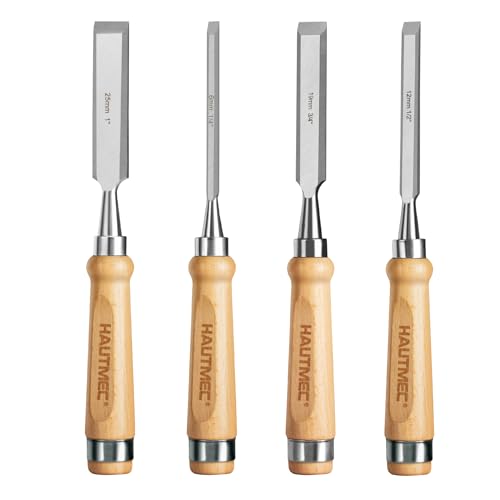
The HAUTMEC set includes four inch-size chisels: 1/4, 1/2, 3/4, and 1 inch. This familiar sizing helps American woodworkers follow plans without converting from metric measurements. The listed 60CR-V steel blades are designed for general woodworking, framing, and mortise tasks. Long blades provide useful reach when you need to work inside a deeper recess or trim an edge from a comfortable stance.
The size spread is practical for large household projects, including door work, framing repairs, and broad timber joints. I would use the smaller chisels for starting corners and the wider tools for clearing waste. The beech handles should feel comfortable for normal use, but I would still use a wood mallet instead of a steel hammer. A long chisel can also magnify hand movement, so careful layout and light cuts remain important.
Pros:
- Four familiar inch sizes
- Includes a useful 1-inch blade for broad cuts
- Long format gives reach inside deeper joints
- 60CR-V steel is suited to general shop work
- Beech handles provide a natural grip
- Useful for carpentry, framing, and mortises
Cons:
- General-purpose design may be less stout than a true mortise chisel
- Long handles can feel less precise in tiny joints
- Edge performance depends on correct honing and wood hardness
My Recommendation
This set is best for homeowners, carpenters, and makers who want inch sizes and broad coverage. It can be the best mortise chisel set for mixed work, especially when one project includes door fitting and another includes furniture repair. I would choose it over a metric set when your plans and hardware use inches. For deep, repeated hardwood mortises, a dedicated heavy chisel may still offer better control and impact resistance.
| Best for | Why |
|---|---|
| American-style projects | The inch sizes match common plans and hardware. |
| Door and frame repairs | Long blades and wide sizes help with larger recesses. |
| Mixed-use workshops | The set covers general chiseling beyond mortises. |
POWERTEC Spring-Loaded Corner Chisel
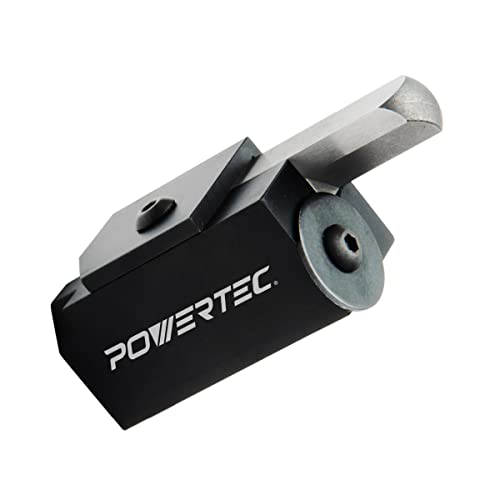
The POWERTEC 71036 is a specialized square corner chisel, not a regular set of straight mortise chisels. Its spring-loaded design helps position the cutting edge in a corner and can make square recesses faster. It is aimed at door hinges, locks, strike plates, frame joinery, and cabinetry. For those jobs, this focused tool can save the slow process of paring each corner by hand.
I see the greatest value when a routed or drilled recess has rounded corners that need to become square. The chisel can help remove that small strip of waste with a direct hammer or mallet strike. It will not replace a normal mortise chisel because it does not offer the same range of widths or long-wall control. Use it as a finishing tool after layout and rough removal, and keep each strike measured to avoid overcutting.
Pros:
- Specialized square-corner cutting action
- Spring-loaded design helps with positioning
- Useful for door hinges and strike plates
- Speeds up corner cleanup after routing
- Works well in cabinetry and frame joinery
- Compact tool for a specific repair task
Cons:
- Not a replacement for a complete mortise chisel set
- Limited use outside square-corner work
- Requires accurate alignment before striking
My Recommendation
I recommend the POWERTEC to installers, cabinetmakers, and DIY users who often fit hinges or lock plates. It is not the best mortise chisel for cutting a full pocket, but it may be the best companion tool for making clean 90-degree corners. It earns its place when repeated door hardware work makes corner paring slow. For occasional use, compare its price with the time it can save on your actual projects.
| Best for | Why |
|---|---|
| Door hinge fitting | It squares corners in hinge and plate recesses. |
| Cabinet installation | It helps clean routed corners with less paring. |
| Specialized repair work | The focused design solves one common problem quickly. |
HURRICANE 12 mm Corner Chisel

The HURRICANE 12 mm corner chisel uses a 90-degree shape for square mortise corners. It is designed for door hinges, strike plates, and related woodworking tasks. The listed metal strike cap supports hammer or mallet use, while the ergonomic grip aims to reduce hand strain. This is another specialist tool, so its success depends on matching it to the right job.
A corner chisel works best after you remove most of the waste with a router, drill, or standard chisel. I would place its right-angle cutting edge inside the marked corner, check both faces, and then use a controlled blow. The 12 mm width suits many common hardware recesses, but it may not match every hinge or plate. Measure the hardware first, since a tool that is too wide can remove wood outside the line.
Pros:
- 90-degree cutting profile squares mortise corners
- 12 mm size suits many common hardware jobs
- Metal strike cap supports mallet or hammer use
- Ergonomic grip may improve handling comfort
- Useful for hinges, locks, and strike plates
- Can reduce hand paring time after rough cutting
Cons:
- Specialized tool with limited general use
- 12 mm width may not fit every hardware recess
- Needs careful placement to prevent overcutting
My Recommendation
I would choose this HURRICANE model for DIY door work and small installation crews that need a simple corner solution. It is not the best mortise chisel for long straight cuts, but it can be a useful answer to rough, rounded corners. The strike cap is reassuring for users who expect regular impact. Check the 12 mm measurement against your hardware before buying to make sure the tool matches your work.
| Best for | Why |
|---|---|
| Door hardware | The right-angle edge fits hinge and strike-plate corners. |
| DIY installers | The design is direct and easy to understand. |
| Post-router cleanup | It squares corners left rounded by a router bit. |
KAKURI 12 mm Japanese Mortise Chisel

This KAKURI Oire Nomi is a dedicated 12 mm Japanese mortise chisel made in Japan. The listing identifies a hand-forged Japanese White Steel No. 2 blade and a white oak handle. Those details appeal to users who want a traditional tool with a refined cutting edge. The 12 mm width makes it suitable for medium mortises, furniture joinery, and careful repair work.
White steel chisels can take a very keen edge, but that edge asks for respect and good technique. I would avoid twisting the blade in the joint and would never use it as a pry bar. Make shallow cuts, clear chips often, and keep the back flat during honing. In the right hands, this chisel feels less like a rough wedge and more like a small surgical tool for wood.
Pros:
- Made in Japan according to the product listing
- Hand-forged White Steel No. 2 blade
- 12 mm width fits many medium mortises
- White oak handle offers a traditional feel
- Can take a very keen edge with proper honing
- Excellent choice for careful furniture joinery
Cons:
- Premium style may cost more than basic options
- White steel needs care to resist rust
- One size cannot handle every mortise width
- Not ideal for careless twisting or prying
My Recommendation
This is my pick for a skilled user who values traditional Japanese tool making and precise cutting. It may be the best mortise chisel for a furniture maker who will maintain the edge and use measured mallet blows. I would not suggest it as a rough construction chisel or a first tool for someone still learning safe technique. Its appeal comes from control, edge sharpness, and craftsmanship rather than the lowest price.
| Best for | Why |
|---|---|
| Fine furniture work | The keen edge supports clean, controlled cuts. |
| Traditional tool users | Hand-forged steel and oak reflect Japanese craft. |
| Experienced woodworkers | Careful maintenance rewards the user with strong cutting feel. |
Narex 3-Piece 6, 10, and 12 mm Set
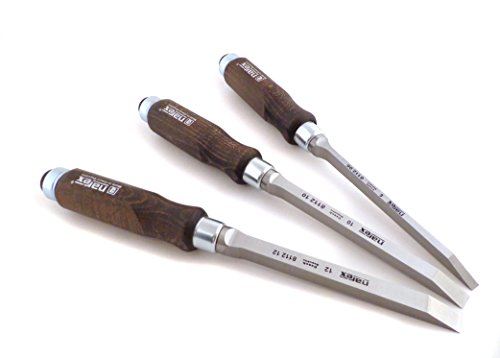
This three-piece Narex set includes 6, 10, and 12 mm mortise chisels. The sizes form a compact progression that works well for many furniture and frame joints. It leaves out the very narrow 4 mm option and the broad 16 mm option, but that can be an advantage for buyers who want only common middle sizes. Narex’s Czech steel construction gives this set a practical workshop focus.
I find a three-size set easier to reach for than a large box of tools. The 6 mm blade can start a narrow opening, the 10 mm tool removes more waste, and the 12 mm blade handles a wider joint. This step-up method helps reduce side pressure and keeps the mortise walls cleaner. If your work mostly uses medium stock, the set offers a balanced kit without many unused sizes.
Pros:
- Three useful middle sizes
- Good fit for furniture and frame joinery
- Compact set is easy to store and carry
- Size progression supports efficient waste removal
- Stout design suits controlled mallet work
- Good option for a focused home workshop
Cons:
- No 4 mm chisel for very narrow mortises
- No 16 mm chisel for large joints
- Metric sizes may require simple conversions
My Recommendation
I recommend this set for woodworkers who want the core sizes without paying for a large range. It can be the best mortise chisel set for medium furniture work and repeat projects with similar joint widths. Beginners may find the three-step range easier to learn than a broad collection. Add a narrow or wide chisel only when your actual projects show that need.
| Best for | Why |
|---|---|
| Medium joinery | The 6, 10, and 12 mm sizes cover common work. |
| Small workshops | The compact set takes little storage space. |
| Focused buyers | It avoids sizes that may sit unused in a drawer. |
How I Choose the Best Mortise Chisel
A mortise chisel must do more than cut wood. It must survive impact, hold a useful edge, and let you feel what the blade is doing. I look first at blade thickness and overall shape. A true mortise chisel usually has thicker steel behind the edge than a delicate paring chisel, which helps resist bending and side loads.
Steel type matters, but the label alone does not decide quality. Heat treatment, edge geometry, and the maker’s finish all affect performance. A well-honed mid-priced blade can beat a poorly prepared premium blade. I check whether the tool is easy to hone, whether the back arrives reasonably flat, and whether the edge looks even from heel to tip.
Handle design also changes the experience. A wood handle can feel warm and light, while a capped or reinforced handle may better suit repeated impact. I match the handle to the job and use a wooden mallet whenever possible. A steel hammer can damage many wood handles and can make a controlled cut feel harsh.
Size selection deserves equal attention. The chisel should usually be close to the width of the mortise, but I do not force one tool to do every step. A narrow blade starts the opening, a wider blade clears the middle, and a smaller tool can clean the corners. This approach protects the cutting edge and gives better control than using force with an oversized blade.
Mortise Chisel Buying Guide for 2026
In 2026, shoppers have more choices than ever, but the basic buying rules have not changed. Start with the joints you actually build. A furniture maker may need 6, 8, 10, and 12 mm sizes, while a door installer may prefer a 1/4, 1/2, or 3/4 inch tool and a square corner chisel.
Metric and inch sizes are close in some cases but not identical. A 12 mm chisel is near 1/2 inch, yet the difference can matter in a tight joint. Check the product title, size chart, and current package details before ordering. Amazon listings can change, so I also suggest checking the latest photos and customer comments.
Look for a blade with enough length to reach the joint and enough thickness to take mallet work. A blade that is too thin may flex or suffer damage when you lever chips. A blade that is too large can feel slow and may remove wood beyond the layout line. The best mortise chisel is the one that fits the joint, not simply the one with the biggest blade.
Think about maintenance before you buy. Carbon and white steel can rust if left damp, so wipe the blade after use and store it dry. A fine waterstone, oilstone, or diamond plate can keep the edge ready. Do not wait until the tool feels dull; a few light honing passes often save much harder sharpening work later.
How to Cut a Clean Mortise With a Chisel
Begin with sharp layout lines. Mark the mortise with a knife or a fine pencil, and show the waste area clearly. Clamp the work so it cannot move. A moving board turns a small error into a large one.
Place the bevel toward the waste when you begin chopping near an end. Tap lightly and make a shallow cut. Move inward in small steps rather than driving straight to full depth at once. This keeps the end grain from splitting and gives the chisel room to lift chips.
Once the edges are safe, remove the center waste. Keep the tool upright and use the mallet as a guide, not as a source of anger. Clear chips often so they do not pack under the blade. When you reach depth, pare the walls with light hand pressure and check the fit often.
For a through mortise, work from both faces when possible. This reduces breakout on the exit side. For a blind mortise, mark a depth line on the blade with tape or a pencil. Stop before the line and finish with careful cuts. Patience is the quiet partner of the best mortise chisel.
Common Mistakes to Avoid
The first mistake is using a bench chisel as a pry bar. Even a strong blade can chip if you twist it inside a packed joint. Lift chips with short cuts and remove large waste by hand when needed.
The second mistake is striking too hard. Heavy blows can crush fibers, split the work, or damage the handle. A sharp edge and a stable setup usually remove wood faster than brute force.
Another mistake is ignoring grain direction. End grain and cross grain can break in surprising ways. Watch the fibers, reduce your cut depth, and support fragile areas with a backer board when the work permits.
Finally, many users skip honing because the factory edge looks shiny. Shine does not prove sharpness. Test the edge on scrap wood and hone until it cuts cleanly without excessive force. Proper setup makes any best mortise chisel feel better.
Care and Storage Tips
Wipe each blade after use. A thin coat of camellia oil or another suitable rust protectant can help during long storage, especially in a humid garage. Keep the edge covered so it does not hit another tool. A simple rack or wooden block can protect both the blade and your hands.
Inspect handles for cracks before striking. Replace or repair a damaged handle instead of hoping it will survive one more project. Keep your mallet face clean and reasonably flat. A soft, clean mallet transfers force in a calmer way and reduces damage to the chisel handle.
Store chisels where children and visitors cannot reach the sharp edges. Label metric and inch sizes if your collection contains both. Good storage saves time because you can choose the right tool without testing every chisel on the workpiece.
FAQs Of best mortise chisel
What is the best mortise chisel for beginners?
A small set such as the Narex 4-piece or 3-piece set is a good starting point. Several sizes let beginners learn how blade width changes the cut. Choose the set that matches your metric or inch-based plans.
Can I use a bench chisel for mortises?
You can use one for light work, but a true mortise chisel is usually thicker and better suited to mallet strikes. Avoid twisting a bench chisel in a deep joint. Use the right tool when the mortise is large, deep, or made in hard wood.
What size mortise chisel should I buy?
Choose a width close to the mortise width. A 6 mm chisel suits narrow work, while 10 or 12 mm handles many medium joints. A set gives more flexibility if your projects vary.
Are Japanese mortise chisels worth the price?
They can be worth it for experienced users who value a keen edge and traditional construction. They need careful honing, dry storage, and proper technique. They may not be the best choice for rough construction work.
Should I buy a corner chisel or a regular mortise chisel?
Buy a corner chisel for square hinge, lock, and strike-plate corners. Buy a regular mortise chisel for cutting and cleaning the full joint. Many installers benefit from owning both types.
Final Verdict: Which Should You Buy?
For most buyers, the Narex 4-piece set is the best mortise chisel choice because it offers useful sizes, stout blades, and strong value. Choose KAKURI for Japanese craft or a corner chisel for door hardware.
Match the blade to your joint, keep it sharp, and use light mallet blows. With the right tool and care, clean mortise work becomes faster, safer, and far less frustrating.