
The best table saw blade storage keeps sharp blades safe, dry, organized, and ready for the next cut.
A loose table saw blade can damage teeth, cut a hand, or get lost under shop clutter. I have seen good blades ruined by rubbing against metal tools or sitting in damp cardboard. The right holder or silicone sleeve acts like a small shield for each blade. It also makes blade changes faster because the right size is easy to find. Below, I compare practical table saw blade storage options for home shops, contractors, and busy woodworkers.

Saw Blade Storage Rack, Safely…
No more fussing with blades stacked directly on top of one another. With the Fulton Saw Blade Storage Rack you can neatly and safely store up eight table saw or…
Tsbelout Saw Blade Storage 10″…
Saw Blade Storage Cover: This silicone saw blade sleeve provides a snug, secure fit that prevents direct contact between the blade and other hard objects. The rim of the silicone…

Sili Circular Saw Blade Storage…
PROTECT YOUR BLADES – Use this silicone saw blade cover to protect edges and carbide teeth from damage during storage, transport, or jobsite handling. KEEP YOUR FINGERS SAFE – The…
Saw Blade Storage Rack for Eight Blades

This wall or bench storage rack is made for woodworkers who own several blades and want them visible. It can hold up to eight saw blades, so it gives a small shop a simple home for common rip, crosscut, plywood, and combination blades. The open design lets me see each blade at a glance. That saves time when I need to change blades in the middle of a project.
A rack also keeps blades from lying flat in a drawer where teeth can strike one another. Its main advantage is capacity, not weather protection, so I would place it in a dry area away from direct dust blasts. It works best when each blade has its own slot and the rack stays firmly mounted or stable on the bench. For many users, this is the best table saw blade storage style when fast access matters most.
Pros:
- Stores up to eight blades in one location
- Keeps blade sizes easy to see
- Reduces tooth-to-tooth contact
- Works well in a compact workshop
- Speeds up blade changes
- Useful for table saw and other circular saw blades
Cons:
- Open design does not fully block dust or moisture
- Needs a stable surface or secure mounting
- Does not protect fingers as well as a closed sleeve
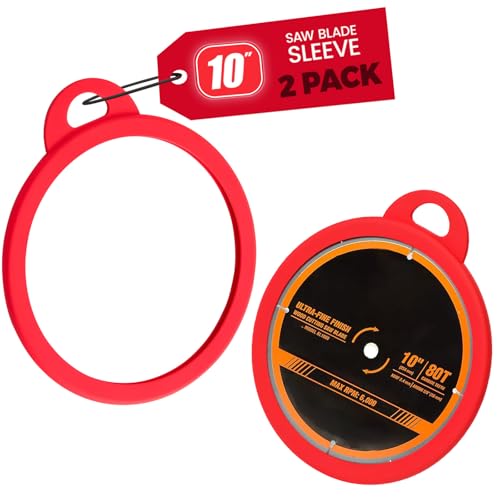
Tsbelout 10-Inch Silicone Blade Sleeves, 2 Pack

These silicone covers target the most common 10-inch table saw blade size. The soft sleeve slides over the blade edge and helps shield carbide teeth from bumps, dust, and careless handling. I like this design for drawers, cabinets, and tool bags because it adds a layer of protection without taking much room. The two-pack also suits a user who keeps a combination blade and a specialty blade ready.
Silicone has a useful balance of grip and flexibility. It does not feel as harsh against the blade edge as a hard plastic case, and it can be easier to remove when my hands are dusty. Still, the sleeve should fit the blade correctly and should not be forced over an unusually wide plate or blade guard. As a simple table saw blade storage solution, this pair is best for basic edge protection and quick access.
Pros:
- Fits many standard 10-inch circular saw blades
- Soft silicone helps cover sharp edges
- Compact for drawers and tool cabinets
- Two sleeves cover two frequently used blades
- Easy to handle during blade changes
- Helps reduce accidental finger contact
Cons:
- Two sleeves may not cover a large blade collection
- Fit can vary with blade plate thickness
- Does not provide a rigid case for transport
Sili 7-1/4-Inch Circular Saw Blade Sleeves
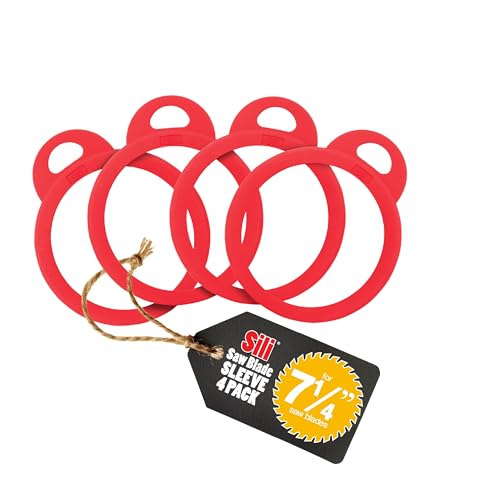
The Sili four-pack is sized for 7-1/4-inch blades, which are common on circular saws and some smaller saw setups. It gives me a neat way to protect several blades without using bulky boxes. The flexible covers wrap the edge and help prevent blades from scraping against other tools. This matters when I store blades in a crowded tool chest.
The smaller size is also useful for users who move between a jobsite and a home workshop. I would check the blade diameter before ordering because a 7-1/4-inch cover is not a replacement for a 10-inch table saw blade holder. The sleeves protect the edge, but they do not replace careful carrying or dry storage. For portable work, this is a convenient table saw blade storage alternative for smaller compatible blades.
Pros:
- Four sleeves provide useful storage capacity
- Designed for common 7-1/4-inch blades
- Lightweight and easy to pack
- Helps protect teeth from tool-box contact
- Flexible material takes little storage space
- Useful for circular saw users and small shops
Cons:
- Not intended for standard 10-inch table saw blades
- Soft covers offer limited crush protection
- Users must confirm blade size before purchase
Big Horn 19176 10-Inch Blade Holder
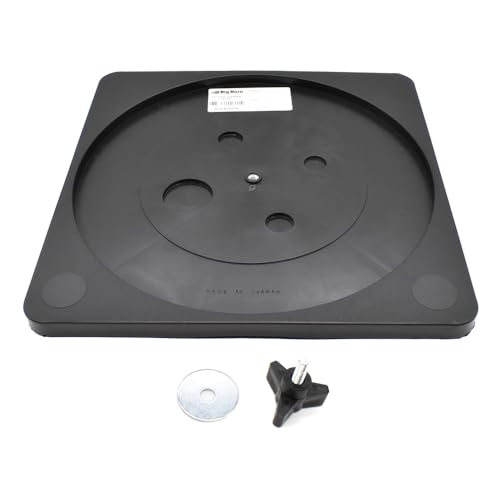
The Big Horn 19176 is a dedicated 10-inch blade holder for people who prefer a firm place to keep a table saw blade. Its holder format gives each blade a more orderly position than a loose stack. I find this useful for a shop where several blades share one cabinet or bench area. It also reduces the chance of grabbing a blade by its teeth.
This type of holder is a good match for standard 10-inch table saw setups, but I would still confirm the dimensions of specialty blades before use. It is a storage tool, not a sharpening or cleaning system, so blades should go in clean and dry. The holder offers a tidy answer when a workshop needs more structure than a drawer. It is one of the better choices for a dedicated table saw blade storage station.
Pros:
- Made for common 10-inch table saw blades
- Creates an organized storage location
- Helps separate blades during handling
- Reduces clutter on a workbench
- Useful for regular blade changes
- More structured than stacking loose blades
Cons:
- Capacity may not suit a large blade collection
- Requires space on a bench or inside a cabinet
- May not fit every specialty blade profile
Sili 10-Inch Circular Saw Blade Sleeves, 4 Pack

This four-pack is a strong fit for woodworkers who rotate several 10-inch blades. I can assign one sleeve to a general-purpose blade, one to a fine-finish blade, and others to plywood or treated lumber work. The covers keep the sharp outside edge contained while making the blades easier to lift from a shelf or drawer. That simple habit can prevent many avoidable cuts.
The sleeves are flexible, so they do not consume much space when stored. They also make sense for a shared shop where different users may not handle loose blades with the same care. I would label each sleeve with the blade type because the cover itself does not identify the tooth pattern. For value and coverage, this is a practical table saw blade storage choice for a growing collection.
Pros:
- Four covers suit a multi-blade setup
- Designed around the common 10-inch size
- Protects edges during drawer storage
- Helps make blades safer to carry
- Uses less room than rigid cases
- Supports simple blade organization
Cons:
- Does not protect the blade face from heavy impact
- Requires labels for quick blade identification
- May not fit extra-thick or unusual blades
Tsbelout 10-Inch Silicone Sleeves, 6 Pack

The six-pack gives serious blade collectors enough covers for a useful range of 10-inch blades. I like this option for a shop that changes blades often and does not want to reuse one sleeve for every task. Each blade can stay covered after cleaning, which reduces handling and keeps teeth from rubbing on other metal parts. The quantity also makes it easier to organize blades by job.
This is still a soft sleeve system, so I would place the covered blades in a dry drawer or cabinet rather than under heavy tools. The flexible material helps with finger protection, but it cannot stop a sharp blade from bending if something heavy lands on it. If you already own several 10-inch blades, the six-pack may offer better value than buying small packs one at a time. It is a sensible best table saw blade storage pick for high-use home shops.
Pros:
- Six sleeves cover a broad blade collection
- Good value for frequent blade users
- Helps separate blades by cutting task
- Soft covers support safer handling
- Compact in a drawer or cabinet
- Useful for shared workshops
Cons:
- Storage still needs a dry, protected location
- Soft silicone cannot prevent strong crushing force
- Large packs may be excessive for one or two blades
Nuanchu 12-Inch Silicone Blade Covers, 5 Pack

The Nuanchu pack serves users with larger 12-inch blades. Many table saw owners use 10-inch blades, but larger saws and specialty tools may require a 12-inch cover. The red silicone is easy to spot in a dark drawer, which helps reduce the chance of leaving a blade exposed. Five covers provide enough room for a useful set of larger blades.
I would choose this product only after measuring the blade diameter and checking the cover fit. A loose cover may slide during storage, while an overly tight cover can be hard to install. Once matched correctly, it provides a soft barrier around the teeth and makes handling less stressful. For larger equipment, it can be the best table saw blade storage option in this group.
Pros:
- Supports 12-inch blade storage
- Five-piece pack suits several large blades
- Bright red color improves visibility
- Helps cover sharp teeth during handling
- Flexible design saves cabinet space
- Useful for larger saw systems
Cons:
- Too large for many 7-1/4-inch and 10-inch blades
- Fit must be checked before purchase
- Does not provide a hard shell against impact
Powhorse 10-Inch Silicone Blade Protectors, 5 Pack

The Powhorse five-pack focuses on 10-inch blades from common brands such as Diablo, Makita, DeWalt, and Craftsman. Brand compatibility is helpful, but the blade diameter and plate shape still matter more than the logo on the blade. I like the pack because it gives a workshop enough covers for daily-use blades without requiring a large rack. The silicone guard also makes it easier to hold a blade by its covered edge.
For best results, I would wipe resin and dust from the blade before putting on the protector. A cover can reduce contact damage, but it cannot replace clean storage or proper rust prevention. This pack works especially well for users who keep several blades in a portable case or cabinet. It offers a balanced mix of quantity, flexibility, and everyday safety.
Pros:
- Five covers support a useful 10-inch blade set
- Works with many popular blade brands
- Soft material helps protect carbide teeth
- Improves grip during blade handling
- Compact for portable and fixed storage
- Good fit for active home workshops
Cons:
- Brand names do not guarantee fit for every model
- Silicone provides less impact protection than a case
- Users must clean blades before covering them
Powhorse 10-Inch Silicone Blade Protector, Single
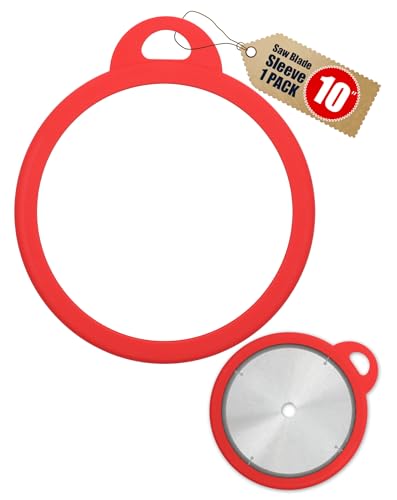
Not every woodworker needs a five-pack. This single Powhorse protector makes sense for someone who owns one premium blade or wants to test a silicone cover before buying more. It keeps the sharp edge covered and takes little space in a drawer. I see it as a focused solution for the blade used most often.
A single sleeve can also replace a worn cover or protect a newly purchased blade during storage. The product is simple, so there are no hinges, latches, or parts to fail. I would confirm that the blade is a compatible 10-inch model and that the sleeve sits evenly around the edge. For a small collection, this may be the most economical table saw blade storage choice.
Pros:
- Useful for a single frequently used blade
- Lower commitment than a large multi-pack
- Easy to install and remove
- Helps reduce accidental contact with teeth
- Takes little drawer space
- Has no hinges or fasteners to break
Cons:
- Protects only one blade
- Not a complete solution for a large collection
- Does not offer rigid impact protection
Big Horn 19175 8-Inch Blade Holder

The Big Horn 19175 is designed for 8-inch table saw blades. That makes it a useful match for smaller saws, compact equipment, and users who do not need a full-size 10-inch holder. Its dedicated design keeps the blade from sliding around with loose hardware. I prefer this style when a blade needs a stable place inside a cabinet or shop drawer.
Size matching remains important because an 8-inch holder is not meant for a 10-inch blade. It also does not create the same soft edge barrier as a silicone sleeve, so I would handle the blade from the center plate and use care near the teeth. The holder is a good choice when organization and a firm home matter more than portability. It fills a specific need very well.
Pros:
- Designed for 8-inch table saw blades
- Helps prevent loose blades from sliding
- Useful for compact saw owners
- Creates a dedicated storage location
- Supports a cleaner, safer work area
- Good alternative to stacking blades flat
Cons:
- Not suitable for standard 10-inch blades
- Provides less edge coverage than a sleeve
- Capacity may be limited for larger collections
How to Choose the Best Table Saw Blade Storage
Choosing storage is not only about finding the cheapest holder. The best table saw blade storage should match the blade diameter, the number of blades, and the way I use my shop. A contractor who carries tools needs a different solution from a hobbyist with a fixed bench. I also need to think about moisture, dust, impact, and safe handling.
Match the Blade Diameter
Blade size comes first. Common sizes include 7-1/4, 8, 10, and 12 inches. A sleeve or holder made for one diameter may not fit another. I always read the product size and measure the blade if the label is unclear.
Do not confuse blade diameter with arbor size. The diameter describes the circle of the blade. The arbor hole describes the center opening that fits the saw shaft. Storage products usually focus on diameter, but both measurements can help confirm whether a particular blade will sit correctly in a holder.
Choose a Sleeve or Rack
Silicone sleeves are light, quiet, and easy to store. They work well in drawers, tool bags, and cabinets. They cover the teeth and help protect fingers, but they do not shield the full blade from a heavy object.
Racks and holders provide better organization and faster access. They let me store several blades upright or in separate positions. However, an open rack may collect dust and offers less protection from moisture. In a dry shop, a rack can be excellent; in a damp garage, I may prefer covered sleeves inside a cabinet.
Consider Capacity
Count the blades I use now, then allow room for one or two more. A single sleeve suits a user with one main blade. A two-pack helps cover a general blade and a fine-cut blade. Five- and six-packs work better for woodworkers who switch between materials.
A rack that holds eight blades may be the better long-term buy for a serious shop. It prevents a collection from spreading across shelves and benches. Still, unused capacity has little value if the rack takes more room than the workshop can spare.
Protect the Teeth and Your Hands
Carbide teeth are hard, but they can chip when blades hit one another. Even a small chip can affect cut quality and create vibration. A cover reduces contact with other tools and helps keep the edge from catching on cloth or cardboard.
Safety matters just as much. I never grab a loose blade by the teeth, even when the blade looks dull. A sleeve gives me a safer place to hold the blade, but I still use slow movements and keep the blade away from children, pets, and untrained helpers.
Control Dust and Moisture
Sawdust can hold moisture against steel. Over time, that moisture can encourage rust, especially in an unheated garage or basement. Storage cannot fix a wet environment, so I keep blades clean and dry before putting them away.
For long storage, I use a dry cabinet and check blades from time to time. I avoid sealing a damp blade in any cover. A small amount of clean, suitable rust protection on exposed steel may help, but it should not reach areas that could affect cutting or safe handling.
Make Blade Identification Easy
Good storage should save time, not create another puzzle. I label sleeves with the blade diameter, tooth count, and main use. For example, a note might say “10-inch, 40T, plywood” or “10-inch, 24T, rip.”
A rack makes identification easy because the blade faces remain visible. Sleeves hide the blade, so labels become more important. This small step also helps prevent putting a fine-finish blade into rough stock by mistake.
Think About Transport
Jobsite users need storage that will not open in a truck or tool box. A flexible sleeve works well when the covered blade sits inside a rigid case. A rack is better for a permanent shop but may be awkward to carry.
Never place a bare blade under a heavy tool or loose fasteners. Movement during transport can bend the blade, chip teeth, or damage the tool box. A covered blade should also stay separate from liquids, damp rags, and sharp hand tools.
Safe Table Saw Blade Storage Tips I Use
I unplug the saw before removing or installing a blade. I let the blade cool after use, then brush away dust with a safe method before storage. I do not wipe across the teeth with a bare hand or a loose cloth.
I store blades upright when the rack supports that position. If I stack blades, I place a protective separator between them and avoid placing heavy objects on top. The goal is simple: keep each blade stable, dry, and away from metal contact.
I inspect the teeth before the next cut. A missing carbide tip, bent plate, deep rust spot, or crack means the blade needs professional evaluation or replacement. Storage helps prevent damage, but it cannot make a damaged blade safe.
Why Blade Storage Improves Cutting Results
It is easy to think of storage as a housekeeping task. In practice, it can affect the quality of the cut. When teeth stay protected, they are less likely to chip before the blade reaches the workpiece.
Proper storage also keeps blades from collecting grit and resin. Dirt can increase friction and heat during use. Clean, undamaged blades usually start a project with a better chance of producing a smooth, accurate cut.
Good organization helps me choose the correct blade. A rough rip blade and a fine crosscut blade have different jobs. When each one has a clear home, I am less likely to use the wrong tool and force a poor result.
Common Mistakes to Avoid
The first mistake is storing loose blades in a pile. Teeth can strike teeth, and reaching into the pile creates a needless hand hazard. I also avoid leaving blades on the saw after a project, especially in a humid shop.
The second mistake is buying storage without checking size. A 7-1/4-inch sleeve cannot protect a 10-inch table saw blade. The same issue applies to 8-inch holders and larger specialty blades.
The third mistake is assuming a cover stops rust. A sleeve protects the edge, but it does not remove moisture. I clean and dry the blade first, then store it in a dry place.
My Recommendation
For most 10-inch table saw owners, I would start with the Sili four-pack or the Tsbelout six-pack. Both give useful coverage for several blades and take little room. The Tsbelout six-pack is better for a larger collection, while the Sili four-pack suits a smaller setup.
I would choose the eight-blade rack when quick viewing and shop organization matter most. It is especially helpful for a woodworker who changes blades often. For a 12-inch blade, the Nuanchu five-pack is the more suitable match, and for an 8-inch blade, the Big Horn 19175 makes more sense than a larger holder.
| Best for | Why |
|---|---|
| Several 10-inch blades | The Tsbelout six-pack covers more blades while using little space. |
| Fast shop access | The eight-blade rack keeps blade types visible and easy to reach. |
| Large or less common sizes | The Nuanchu 12-inch and Big Horn 8-inch options serve specific blade sizes. |
FAQs Of best table saw blade storage
What is the best table saw blade storage for a 10-inch blade?
A 10-inch silicone sleeve is a simple choice for most users. It covers the teeth, saves space, and works well in a drawer or cabinet. A rack is better if I need to see and access many blades quickly.
Should I store table saw blades flat or upright?
Either position can work when the blades remain stable and separated. Upright storage often makes access easier and reduces loose stacking. If I store blades flat, I avoid heavy pressure and use separators between them.
Can silicone sleeves prevent blade rust?
They can reduce contact with dust and moisture, but they cannot guarantee rust prevention. I clean and dry each blade before covering it. A dry cabinet or drawer remains important.
How should I store carbide-tipped saw blades?
I keep each blade in a sleeve, rack slot, or rigid case that prevents tooth contact. I handle it by the center plate when possible and avoid dropping it. I also inspect the carbide teeth before use.
Do table saw blade holders fit every brand?
Brand is only one factor. Diameter, plate thickness, tooth design, and holder dimensions also matter. I check the listed measurements and compare them with my blade before ordering.
Final Verdict: Which Should You Buy?
For most users, the Sili 10-inch four-pack is the best table saw blade storage balance. Choose the eight-blade rack for fast access, or the Tsbelout six-pack for more coverage.
Match the holder to your blade size, keep blades dry, and label each one. Good storage protects costly teeth and makes every cutting session safer.