
The best circular saw for steel cutting combines a cool-running motor, carbide blade, steady control, and safe chip management.
Cutting steel can feel stressful when your saw throws sparks, heats the work, or leaves rough burrs behind. I understand the frustration. A poor blade can waste time and damage a good saw. The right setup makes the cut feel more like guiding a sharp knife through firm wood. In this guide, I review steel-cutting saws and metal-cutting blades for home projects, shop work, and light fabrication. I also explain which option fits thin sheet, tubing, mild steel, and larger stock.
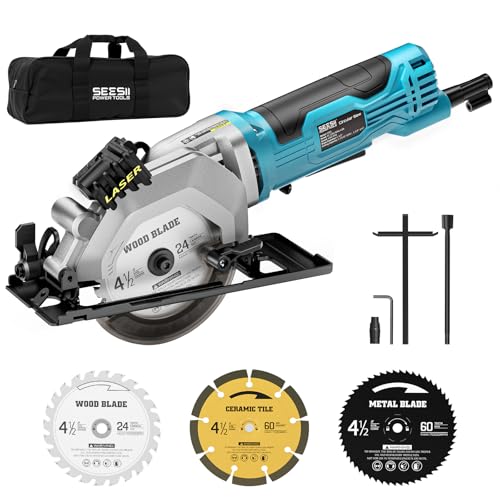
SEESII Mini Circular Saw, 4.8A…
Power corded circular saw:The corded circular saw is equipped with 4.8 Amps motor delivering a no load speed up to 4000 RPM.Compared with general mini circular saws,it has a 20%…

HARDWIN 7-1/4 Inch Metal Cutting…
Professional-Grade Metal Cutting Expert:The 7-1/4″ precision cermet carbide-tipped saw blade features 48 optimized teeth, specifically engineered for efficient cutting of various structural steels including rebar, channel steel, angle iron, metal…

SKIL 15 Amp 7-1/4 Inch…
Powerful 15-amp motor delivers 5 300-RPM for greater speed and faster cuts 7-1 4-inch carbide-tipped blade included. Spindle lock for easy blade changes. 51° bevel capacity with a positive stop…
SEESII Mini Circular Saw With Laser
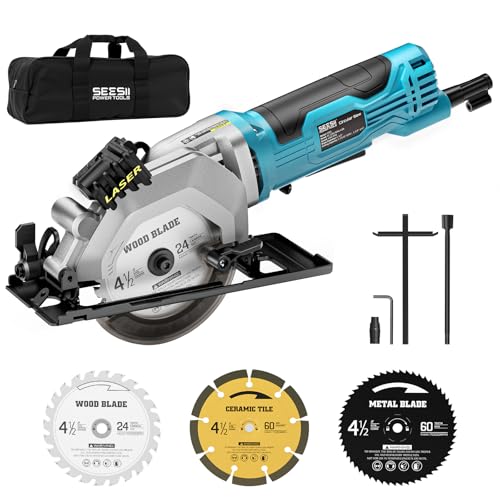
The SEESII mini circular saw is a compact corded tool with a 4.8-amp motor and a listed speed of 4,000 RPM. Its 4-1/2-inch format feels less tiring than a full-size saw during small cuts. The built-in laser can help keep a straight path when you mark a rail or thin panel. Its small body also gives new users a gentler starting point.
I would not treat this model as a dedicated heavy steel saw. Its value depends on using the correct metal-rated blade and staying within the blade maker’s material limits. It may suit thin metal, light sheet, and small repair work better than thick plate. Always check arbor size, guard clearance, and the manual before fitting a steel-cutting blade.
Pros:
- Compact size is easy to control
- 4.8-amp corded motor needs no battery charging
- Laser guide helps with visible cut lines
- Light format reduces hand fatigue
- Useful for small home repair tasks
Cons:
- Not the best choice for thick steel stock
- Small blade limits cutting depth
- Metal work depends heavily on blade compatibility
My Recommendation
I recommend the SEESII for beginners, DIY users, and anyone making short cuts in thin metal. It is especially useful when a full-size saw feels bulky or hard to guide. The laser may help with simple straight work, but it does not replace a clamp and careful marking. For the best circular saw for steel cutting in a small workshop, choose this only when your material and blade match its limits.
HARDWIN 7-1/4-Inch 48T Cermet Blade

The HARDWIN blade uses a 7-1/4-inch size, a 5/8-inch arbor, and 48 teeth with cermet construction. Unlike a complete saw, this product upgrades a compatible circular saw. The tooth count offers a useful middle ground for controlled cuts in suitable metal. It can be a practical way to test metal cutting without buying a new power tool.
Blade choice matters more than many shoppers expect. A standard wood blade is not a safe substitute for a metal-cutting design. I would use this blade only in a saw that the blade instructions approve, with the correct guard and speed rating. It may fit users who already own a strong 7-1/4-inch saw and need a dedicated blade for light steel work.
Pros:
- Fits many common 7-1/4-inch saw platforms
- 5/8-inch arbor suits widely used saw designs
- 48 teeth can support controlled cutting
- Cermet teeth are made for metal-cutting use
- Lower cost than buying a dedicated metal saw
Cons:
- Does not include a saw or extra guard
- Fit and speed must be checked carefully
- Not suitable for every steel thickness or type
My Recommendation
The HARDWIN is best for a DIY owner who already has a compatible 7-1/4-inch circular saw. It can make sense for occasional steel cuts when a new machine would cost too much. I would pair it with solid clamping, eye protection, hearing protection, and slow, even feeding. For users with the right saw, this blade may offer strong value as a budget route toward the best circular saw for steel cutting setup.
SKIL 5280-01 15-Amp Circular Saw
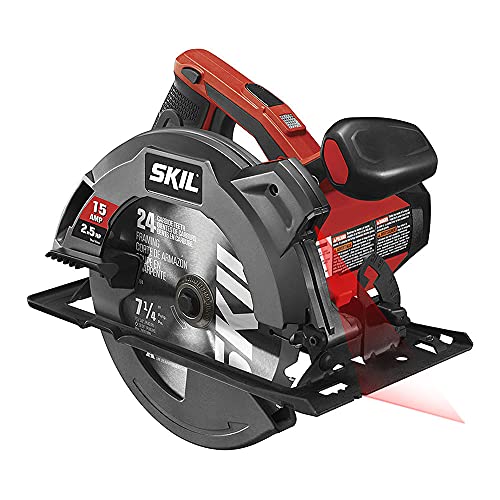
The SKIL 5280-01 is a full-size 7-1/4-inch circular saw with a listed 15-amp motor and single-beam laser guide. That motor gives it more reserve than small compact saws during demanding work. Its familiar size, base plate, and bevel controls make it approachable for construction and home projects. The laser can help users follow a mark across long stock.
This is primarily a general-purpose saw, not a purpose-built cold metal cutter. To use it on steel, you need a compatible metal-cutting blade and must follow the blade and saw instructions. The motor may handle light work, but a wood-saw design may not manage chips like a dedicated metal model. I see it as a flexible platform for users who cut wood often and steel only now and then.
Pros:
- Strong 15-amp motor for demanding general work
- 7-1/4-inch blade size is easy to find
- Laser guide supports straight cuts
- Useful bevel function expands project range
- Good value for mixed home and construction use
Cons:
- Not designed specifically for cold steel cutting
- Metal blade purchase is separate
- Full-size body may feel heavy during overhead work
My Recommendation
I recommend the SKIL 5280-01 for a homeowner who needs one saw for wood, sheet goods, and occasional thin metal. It offers useful power and a familiar layout at a reasonable entry cost. I would not choose it for daily steel fabrication or thick structural stock. With a proper blade, it can become a practical best circular saw for steel cutting option for light, mixed-use projects.
Skil 5080-01 13-Amp Circular Saw

The Skil 5080-01 uses a 13-amp motor and a 7-1/4-inch blade. It offers a little less listed power than the 5280-01, but it remains a capable general-purpose tool for many household jobs. Its red body, standard circular-saw shape, and broad blade availability make it simple to understand. For a first saw, that familiar design can reduce the learning curve.
For steel, I would keep the work light and use only a blade rated for the material. A 13-amp motor does not tell the whole story, because gearing, blade type, feed rate, and material thickness also affect results. The saw may work well for short cuts in thin mild steel when supported correctly. It is not my first pick for continuous production work.
Pros:
- 13-amp motor suits common home projects
- Standard 7-1/4-inch blades are widely available
- Simple controls help new users learn quickly
- Useful for wood and occasional metal work
- Often costs less than specialized metal saws
Cons:
- General-purpose design lacks a metal chip collector
- Not ideal for thick or repeated steel cuts
- Requires a separate metal-rated blade
My Recommendation
The Skil 5080-01 fits budget-minded homeowners who want a basic saw for repair and remodeling tasks. It makes the most sense when steel cutting is occasional rather than the main job. Use a clamp, let the blade do the work, and stop if the motor strains or the blade binds. For light use, it can support a low-cost best circular saw for steel cutting setup without a large investment.
DEWALT DW3330 16-Tooth Metal Blade

The DEWALT DW3330 is a 7-1/4-inch blade with 16 teeth for metal-cutting work. Its low tooth count is aimed at fast removal rather than the very smooth edge of a high-tooth blade. This design may suit users cutting compatible steel sections, pipe, or other metal stock within the stated limits. It is a replacement or upgrade blade, not a complete saw.
I like low-tooth blades when the job values speed and the material does not need a fine finish. However, aggressive teeth can punish a loose workpiece or a rushed feed. Secure the steel, confirm the blade’s rating, and keep your hands outside the cut line. This blade is a good option for a compatible high-power saw, but it cannot turn a weak or unsuitable saw into a dedicated metal cutter.
Pros:
- 16-tooth design can make quick cuts
- 7-1/4-inch size fits many full-size saws
- Made for metal-cutting applications
- Useful for rough and utility cuts
- Recognizable replacement option from DEWALT
Cons:
- Lower tooth count may leave a rougher edge
- Requires careful control to reduce grabbing
- Compatibility must be checked before use
My Recommendation
The DW3330 is best for tradespeople and serious DIY users who need fast cuts in suitable metal. I would choose it for utility work where speed matters more than a polished edge. It works best with a sturdy saw, firm support, and a controlled feed. If your goal is the best circular saw for steel cutting, this blade is a strong part of the setup, but the saw itself remains equally important.
FOXBC 70-Tooth Metal Blade

The FOXBC blade has 7-1/4-inch dimensions and 70 teeth for metal and stainless-steel cutting. A high tooth count can produce a more controlled edge on thin stock when the blade is used within its intended range. It may appeal to users who dislike the ragged edge left by a coarse blade. As with every replacement blade here, it requires a compatible saw.
High tooth count does not mean the blade can cut every steel product. Stainless steel is harder and can create more heat, so feed speed and blade condition matter. I would use this blade for clean, careful cuts in thin material rather than forcing it through thick sections. It may also help reduce the need for extra filing after the cut, though some burrs can still remain.
Pros:
- 70 teeth support cleaner thin-metal cuts
- Designed for metal and stainless-steel work
- Good choice when edge quality matters
- 7-1/4-inch format suits common saws
- Can reduce cleanup on suitable stock
Cons:
- High tooth count may cut slower
- Thin stainless steel can still build heat
- Does not include a compatible circular saw
My Recommendation
I recommend the FOXBC for DIY fabricators, installers, and hobbyists who want a cleaner edge in thin metal. It is a better match for detail work than for fast demolition cuts. Keep the workpiece solid, avoid twisting the saw, and inspect teeth often. For the best circular saw for steel cutting results on thin stainless or mild steel, a fine metal blade like this can make a major difference.
Evolution 14-Inch TCT Mild-Steel Blade
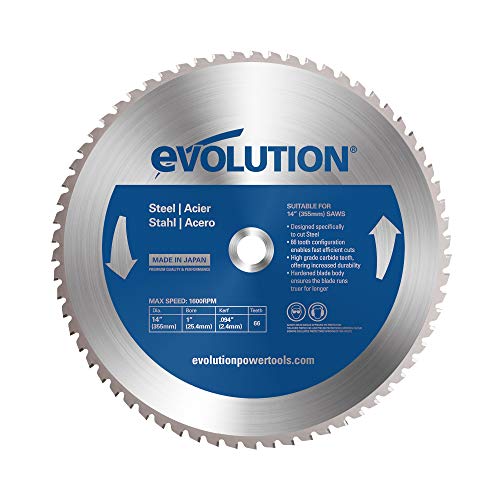
The Evolution 14BLADEST is a 14-inch, 66-tooth TCT blade made for mild steel. Its large diameter targets saws built to accept a 14-inch blade, so it is not a casual fit for a standard 7-1/4-inch circular saw. The carbide-tipped teeth are intended for cold metal cutting. The product design focuses on less heat, fewer burrs, and reduced sparks when used correctly.
This blade is appealing when a clean, cool cut matters. A cold-cutting process can make the work area more comfortable than an abrasive wheel, but it still creates sharp chips and noise. I would use it only with the correct Evolution or compatible saw, guard, arbor, and RPM rating. It is a specialized choice for mild steel, not a universal blade for hardened steel, masonry, or wood.
Pros:
- Large 14-inch size supports deeper cuts
- 66 TCT teeth target mild-steel work
- Designed for cold-cutting performance
- May leave fewer burrs than abrasive wheels
- Can reduce heat and visible sparks in suitable use
Cons:
- Fits only suitable 14-inch saw platforms
- Costs more than common small blades
- Not intended for every metal type
My Recommendation
The Evolution 14BLADEST is best for users who already own a compatible large metal-cutting saw. It suits mild-steel fabrication, repeated section cuts, and jobs where heat control matters. I would not buy it as a first blade without confirming the saw model and full specifications. For the right machine, it can help create the best circular saw for steel cutting system for deeper mild-steel work.
Diablo Steel Demon 70T Blade

The Diablo Steel Demon D0770F is a 7-1/4-inch, 70-tooth carbide blade designed for thin metal and mild steel up to 12 gauge or thinner, according to its listed specifications. Its Tico high-density carbide and triple-chip grind focus on tooth strength and a clean cut. This is the kind of blade that can improve a standard compatible saw. It is aimed at controlled work rather than cutting thick plate.
I value the clear material limit because it helps prevent unrealistic expectations. Twelve-gauge mild steel is not the same as heavy angle iron or thick structural tube. The blade should run at the maker’s approved speed, and the stock must stay flat and secure. When used within its range, this blade is one of the more convincing choices for clean thin-steel work.
Pros:
- Clear focus on thin mild steel
- 70 teeth can produce a clean edge
- Carbide construction supports longer service
- Triple-chip grind helps tooth engagement
- Fits many 7-1/4-inch saws with a 5/8-inch arbor
Cons:
- Limited to thin material by design
- Not a solution for thick plate or heavy stock
- Requires careful compatibility checks
My Recommendation
The Diablo Steel Demon is my preferred blade in this list for thin mild-steel sheet and light-gauge work. It suits installers, metal hobbyists, and contractors who need a tidy cut without buying a dedicated machine. I would select it over a general wood blade every time for suitable thin steel. If your saw is compatible, this blade can be central to a best circular saw for steel cutting setup for thin material.
Evolution S210CCS Metal-Cutting Saw
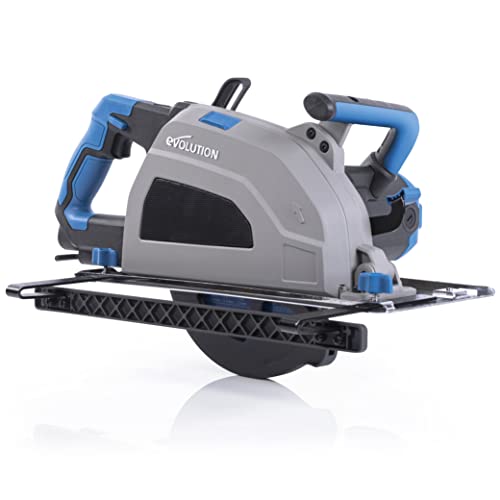
The Evolution S210CCS is the most purpose-built saw in this group. It uses an 8-1/4-inch blade, offers an adjustable cutting depth listed up to 3 inches, and includes a TCT blade. Its design targets steel cutting with a chip collector and a high-torque motor. The cold-cut approach aims to produce cuts with less heat, burr, and sparking than an abrasive wheel.
This is the option I would study first for frequent mild-steel work. A dedicated metal saw gives the operator a better match between blade, guard, motor, and chip control. Still, no steel saw removes the need for eye, face, hearing, and hand protection. Confirm the material limits before cutting stainless, hardened steel, or coated stock, because “metal cutting” does not mean every alloy.
Pros:
- Purpose-built design for metal cutting
- 8-1/4-inch blade offers useful depth
- Adjustable depth improves control
- Chip collector helps contain metal debris
- High-torque motor suits demanding cuts
- Included TCT blade adds immediate value
Cons:
- Larger and heavier than compact saws
- Higher cost than a basic wood saw
- Still needs careful clamping and protective gear
My Recommendation
The Evolution S210CCS is best for serious DIY builders, metal installers, and small-shop users who cut steel often. It gives you the right kind of platform instead of asking a wood saw to do a metal saw’s job. The chip collector and adjustable depth make it easier to manage real work. In my view, it is the strongest candidate for the best circular saw for steel cutting when clean, repeatable mild-steel cuts matter.
DEWALT DW3329 68-Tooth Metal Blade

The DEWALT DW3329 is a 7-1/4-inch, 68-tooth metal-cutting blade. Its higher tooth count favors a more refined cut than a 16-tooth utility blade. This can help users who want less cleanup on suitable thin metal. It is a blade-only purchase, so the host saw must meet all fit and operating requirements.
I see this as a balanced option for users who want a recognized metal blade for occasional shop or job-site use. It is not made to replace a chop saw for thick steel, and it should not be pushed through material beyond its rating. A steady feed and clean alignment protect both the teeth and the saw. Keep spare blades stored dry and inspect them for damage before each job.
Pros:
- 68 teeth support controlled cutting
- 7-1/4-inch size is widely supported
- Designed specifically for metal applications
- Good fit for cleaner utility cuts
- Useful replacement for compatible DEWALT saw users
Cons:
- Not suitable for thick structural steel
- Blade-only purchase adds setup cost
- May cut slower than a coarse-tooth blade
My Recommendation
The DW3329 is best for contractors and home users who already own a compatible 7-1/4-inch saw and want a cleaner metal blade. It is a sensible choice for thin stock, trim work, and light fabrication. Choose the DW3330 when speed matters more, and choose this one when edge quality matters more. Used correctly, it supports a reliable best circular saw for steel cutting combination.
How I Choose a Steel-Cutting Circular Saw
The phrase “circular saw for steel” covers several very different tools. A compact saw may handle thin sheet, while a dedicated cold-cut saw may handle larger mild-steel sections. I first look at the blade size and the material depth. A larger blade can cut deeper, but it also adds weight and demands better control.
Next, I check whether the saw is built for metal. A wood saw may have enough power, yet lack the right guard, chip path, and speed range. A metal saw often uses a lower blade speed and carbide teeth to reduce heat. I never assume that a blade fits just because the diameter looks right.
Blade Type Matters Most
Steel-cutting blades often use carbide teeth, TCT construction, or cermet teeth. These materials can stay sharp longer than an abrasive disc when used within their limits. Tooth count also changes the job. Low tooth counts favor faster rough cuts, while high tooth counts often suit thin stock and cleaner edges.
Match the blade to the steel. Mild steel, stainless steel, galvanized sheet, and hardened steel do not behave the same way. Coated material may create fumes or debris, and stainless steel can generate more heat. Read the blade label instead of guessing from its appearance.
Power and Speed
Motor amperage gives a rough idea of electrical input, not a complete performance rating. A 15-amp saw may have useful reserve, but it still needs the correct blade and feed rate. Too much pressure can slow the blade, heat the teeth, and cause a bind. I use steady pressure and let the teeth remove the metal.
Blade speed is just as important as motor power. Many metal-cutting blades run at a lower maximum RPM than wood blades. Exceeding that limit can damage the blade and create a serious hazard. Compare the saw’s no-load speed with the blade’s approved speed before installation.
Cut Depth and Work Support
Measure the steel before choosing a saw. The listed maximum depth usually applies to a specific blade position and angle. Bevel cuts reduce depth. A cut that looks possible on paper may fail once you account for the shoe, guard, and work angle.
Support the steel close to the cut, but do not pinch the blade. Long tubing can move as the cut opens. A clamp, vise, or stable workbench helps prevent movement. Good support is like a second pair of hands: it makes the saw calmer and the cut safer.
Heat, Sparks, and Chips
Cold-cutting saws can reduce heat and sparks, but they do not make steel cutting risk-free. Hot chips can travel farther than expected. Small metal fragments can damage eyes, skin, floors, and nearby plastic items. I clear the area before starting and keep flammable materials away.
Wear safety glasses under a face shield for demanding work. Use hearing protection, sturdy footwear, and work clothing that will not catch easily. Gloves should fit well and stay away from the moving blade. Follow the tool manual and workplace safety rules every time.
Ease of Control
A saw that feels powerful but hard to guide can produce poor results. I prefer a stable base, clear line of sight, and a guard that returns smoothly. A laser helps with direction, but it cannot correct a warped mark or moving stock. A straightedge and clamp often improve accuracy more than a laser.
Weight also affects comfort. A compact tool may be easier for overhead repair, while a larger saw may feel steadier on a bench. Pick the tool that matches your body, material, and cut length. The best circular saw for steel cutting should feel predictable, not frightening.
Maintenance Tips
Clean chips from the guard, shoe, and vents after each job. Metal dust can collect around switches and motor openings. Inspect the blade for missing teeth, cracks, or unusual wear. A damaged carbide tooth can turn a smooth cut into a rough and unsafe one.
Store blades in a dry case or sleeve. Avoid stacking them where teeth can strike hard surfaces. Check the arbor washer and nut for clean contact. Small maintenance habits protect the tool and help you get repeatable cuts.
Best-For Comparison Table
| Best for | Why |
|---|---|
| Frequent mild-steel cutting | Evolution S210CCS combines a metal-focused motor, TCT blade, chip collection, and adjustable depth. |
| Thin steel with a standard saw | Diablo Steel Demon and FOXBC blades offer high-tooth-count options for compatible 7-1/4-inch saws. |
| Small DIY repairs | SEESII offers a compact format, while SKIL models provide flexible general-purpose saw platforms. |
Common Mistakes to Avoid
The first mistake is using a wood blade on steel. Wood teeth and metal teeth are not interchangeable. The second mistake is forcing the saw because the cut feels slow. Pressure can cause heat, tooth damage, and kickback.
Many users also skip clamping. Even a short metal strip can shift when the blade exits. Another common error is ignoring the maximum material thickness. Respect the blade rating, saw speed, and manual instead of treating them as suggestions.
Finally, do not judge a cut by speed alone. A fast cut that leaves a dangerous burr may need more work than a slower, controlled cut. I look for a stable cut, manageable chips, low heat, and an edge that fits the next step of the project.
FAQs Of best circular saw for steel cutting
Can I use a regular circular saw to cut steel?
Sometimes, but only with a compatible metal-cutting blade and material within the blade rating. Check the saw manual, arbor, guard clearance, and blade RPM. A general-purpose saw is better for occasional thin-metal work than daily heavy cutting.
What blade is best for thin steel?
A carbide, TCT, cermet, or other blade specifically rated for thin steel is usually the right choice. High tooth counts often help produce a cleaner edge. Always match the blade to the steel type and thickness.
Is a metal-cutting circular saw safer than an abrasive saw?
A cold-cutting metal saw can create less heat and fewer sparks than an abrasive wheel. It still produces sharp chips, noise, and possible kickback. Use full protective equipment and follow the manufacturer’s safety instructions.
Should I choose a 16-tooth or 70-tooth blade?
Choose a lower tooth count when you need faster rough cuts in suitable stock. Choose a higher tooth count when thin material and edge quality matter more. The correct choice depends on the blade rating, steel thickness, and saw speed.
Can these blades cut stainless steel?
Only if the product specifically lists stainless steel as an approved material. Stainless steel can generate more heat and may need a blade designed for it. Do not assume that a mild-steel blade is suitable for stainless steel.
Final Verdict: Which Should You Buy?
For frequent mild-steel work, I would choose the Evolution S210CCS. It is the most complete metal-cutting platform here. For thin steel on a standard saw, the Diablo Steel Demon is my blade pick.
The best circular saw for steel cutting is the one matched to your material, blade, and workload. Confirm fit, secure the steel, and cut with patience for safer, cleaner results.