The best long blade for jigsaw work is a sharp T-shank blade with enough reach, strength, and tooth spacing for your material.
You know the problem: a standard jigsaw blade starts well, then runs out of depth halfway through a thick board. The cut may wander, the blade may bend, and the finish can look rough. A long jigsaw blade solves that problem by giving you more cutting reach and better control. I reviewed popular long blades for wood, metal, plastic, and mixed jobs so you can choose with less guesswork and more confidence.

5PCS T Shank Jigsaw Blades…
Versatile T-Shank Design for Secure Cutting: These t shank jigsaw blades feature a universal T-shank design that ensures a stable, vibration-free fit in all compatible jigsaws. The no-screw clamping system…

20Pack T344D Long Jigsaw Blades…
20 Pack T344D, 6-inch overall length, 6 teeth per inch. ★【TOUGHER THAN MOST】: Made with thick gauge high carbon steel.High Quality manufacturing to provide superior wear tolerance and life, ensuring…
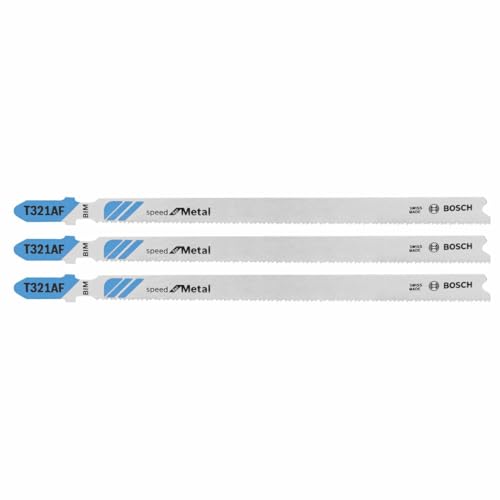
Bosch T321AF3 3 pc. 5-1/4…
FOR PIPES, PROFILES, AND SHEET METAL 10TO 16 GAUGE, THIN METALS 1/16 IN. TO 1/8 IN. THICK (FERROUS AND NON-FERROUS), PIPES LESS THAN 2-1/2 IN. DIAMETER, TUBE STOCK, ANGLE IRON…
5PCS T344D 6-Inch Long Jigsaw Blades

This five-piece T344D set gives you a useful 6-inch blade length for thick wood cuts. The high-carbon steel build suits softwood, hardwood, plywood, PVC, and similar workshop materials. Its coarse tooth pattern favors speed, so it can remove material quickly instead of slowly rubbing through the board. For many home projects, it offers the reach that a short blade cannot provide.
I like this style of blade for rough carpentry, framing repairs, shelves, and large timber pieces. The T-shank design fits many modern jigsaws, but you should still check your tool manual before ordering. A long blade needs a steady hand because extra length can flex if you push too hard. Used with a moderate feed rate, this set can make thick cuts feel far less frustrating.
Pros:
- Six-inch length provides useful reach in thick wood
- Coarse teeth support fast straight cuts
- High-carbon steel suits common wood projects
- Works with wood, PVC, plastic, and some thin materials
- Five blades provide practical replacements
- T-shank style fits many popular jigsaw models
Cons:
- Coarse teeth may leave a rougher edge
- Long length can flex during a hard turn
- Not the right choice for fine metal cutting
20-Pack T344D 6-Inch Contractor Blades

This 20-piece T344D set stands out when you need a long blade for jigsaw work on a regular basis. Each blade is listed at 6 inches and uses a 6 TPI tooth pattern for quick cuts in construction timber, softwood, chipboard, and plywood. The large pack makes sense for contractors, remodelers, and busy DIY users who do not want to stop work when a blade wears out. It also gives you room to keep fresh blades in more than one tool bag.
The coarse teeth are made for progress rather than a polished edge. I would use these blades for cutting studs, thick boards, framing stock, and hidden cuts where speed matters most. Keep the shoe flat on the workpiece and avoid forcing the blade around tight curves. In my view, the quantity is the biggest advantage because long blades can wear faster when used in dense or dirty stock.
Pros:
- Large 20-piece pack lowers the need for repeat orders
- Six-inch length helps reach thick construction wood
- 6 TPI teeth cut quickly through softwood
- Useful for chipboard and plywood work
- Good choice for job sites and renovation work
- Fresh replacement blades can stay in several tool boxes
Cons:
- Coarse teeth are not ideal for clean finish cuts
- May feel too aggressive for thin stock
- Extra-long blades require careful control
Bosch T321AF3 Metal-Cutting Blades
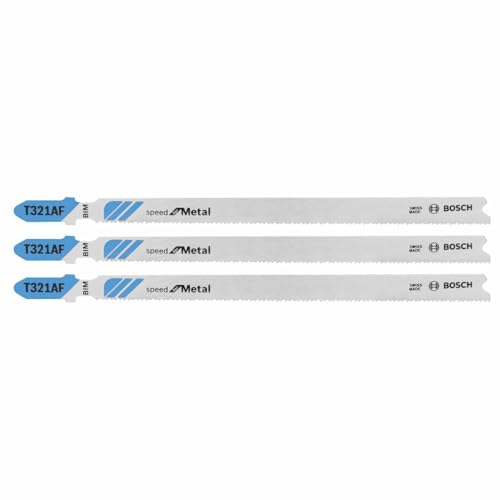
The Bosch T321AF3 set takes a different approach from the coarse wood blades in this guide. These three T-shank blades measure 5-1/4 inches and use a fine 21 TPI pattern designed for metal cutting. The finer teeth help the blade engage sheet metal and other thin metal stock with less aggressive bite. That makes this set a strong option when your idea of the best long blade for jigsaw includes metal work.
I would choose this blade for metal repair, duct work, thin steel, and similar jobs where control matters more than raw speed. A cutting lubricant can help reduce heat, and clamping the workpiece can reduce vibration. The blade is long compared with many common metal blades, yet it still needs the correct speed and light pressure. Do not expect it to replace a coarse wood blade, because tooth design matters more than length alone.
Pros:
- Fine 21 TPI pattern supports controlled metal cuts
- Five-and-a-quarter-inch length offers added reach
- T-shank design suits many compatible jigsaws
- Useful for sheet metal and thin metal stock
- Fine teeth can reduce rough tooth marks
- Bosch design gives the set a familiar workshop name
Cons:
- Only three blades come in the package
- Fine teeth cut wood slowly and may clog
- It is not intended for very thick steel
2PCS T1044DP 10-Inch Contractor Jigsaw Blades

When maximum reach is the goal, a 10-inch blade gets attention quickly. This two-piece T1044DP set is made for contractor-style cuts in wood, hardwood, plywood, plastic, and some lighter materials. Its 6 TPI layout favors a fast cut through thick stock. The extra length can help when a six-inch blade leaves you short of the full depth.
This is the blade I would consider for large timbers, thick lumber, and unusual cuts that push a normal jigsaw blade beyond its comfort zone. Ten inches is a lot of blade above the shoe, so the user must keep the tool square and avoid sideways pressure. It is not a magic answer for every cut; a reciprocating saw or band saw may be better for very thick work. Still, for jigsaw users who truly need reach, this is one of the most specialized options here.
Pros:
- Ten-inch length provides exceptional cutting reach
- 6 TPI teeth support quick wood removal
- Useful for thick wood and hardwood projects
- Can handle plywood and plastic in suitable conditions
- Good match for contractor and renovation tasks
- Two blades offer a backup for demanding jobs
Cons:
- Only two blades are included
- Extra length increases flex and vibration risk
- Needs careful handling and a steady feed rate
5-Piece T744D 7-Inch Assorted Set

This five-piece T744D set gives you a 7-inch blade length for deeper wood cuts. The assortment is aimed at wood, hardwood, plywood, plastic, and selected light-duty materials. The added inch over a 6-inch blade can make a real difference when you cut thick shelves, posts, or stacked boards. Its T-shank format also makes it a practical replacement set for many newer jigsaws.
I see this set as a middle ground between common long blades and very large 10-inch options. It offers more reach without becoming as unwieldy as an ultra-long blade. The coarse pattern should move through wood at a good pace, but it will not create the same smooth edge as a fine-tooth finish blade. For a homeowner who wants the best long blade for jigsaw projects across several wood types, this set offers useful flexibility.
Pros:
- Seven-inch length adds useful depth for thick cuts
- Suitable for wood, hardwood, plywood, and plastic
- Five-piece pack gives practical spare capacity
- Good balance between reach and tool control
- Coarse teeth support fast rough cutting
- Helpful for home repair and workshop projects
Cons:
- Coarse cuts may need sanding afterward
- Not a dedicated blade for precision metal work
- Long blades can wander in thin or flexible stock
EZARC T744D 7-Inch Wood Blades

The EZARC T744D set includes 10 long blades for wood cutting. Each blade is listed at 7 inches with a 6 TPI tooth layout, which is a useful match for fast cuts in thick wood. The larger pack gives frequent users more value than a small two- or three-piece set. It also reduces the temptation to keep using a dull blade when a fresh one would cut better.
I would place this set on the shortlist for carpenters, serious DIY users, and anyone who cuts lumber often. The 7-inch size adds reach while remaining easier to manage than a 10-inch blade. As with any coarse long blade, the best results come from a firm shoe position, a clear cut line, and a steady feed. It is a practical choice when you want depth and quantity without moving into a highly specialized blade.
Pros:
- Ten-piece pack offers strong replacement value
- Seven-inch length reaches deeper into thick wood
- 6 TPI design supports quick rough cuts
- Useful for hardwood, softwood, and plywood
- More manageable than an extra-long 10-inch blade
- Well suited to repeated workshop use
Cons:
- Designed mainly for wood rather than fine metal work
- Rough teeth can leave a cut that needs finishing
- Long reach may reduce precision on tight curves
Bosch T123X Progressor Metal Blades

The Bosch T123X set contains five T-shank blades with a 4-inch length and a 10–24 progressive TPI pattern. Although it is shorter than the other long blades in this review, it belongs here because many shoppers use “long blade” to mean a blade with better reach than a small detail blade. Its progressor tooth spacing is designed to handle changing metal thickness with a mix of speed and control. This makes it a useful specialist option for metal work.
I would choose this set for thin metal, metal tubing, and repair tasks where a fine, controlled cut matters. The shorter body can feel steadier than a 6-, 7-, or 10-inch blade, especially on narrow stock. It is not the best choice if your main goal is cutting very deep timber. For metal users, however, the five-pack and variable tooth pattern can provide a more useful result than a long wood blade.
Pros:
- Progressive 10–24 TPI design supports varied metal work
- Five-piece pack provides convenient replacements
- T-shank format fits many compatible jigsaws
- Shorter length can improve control
- Fine tooth range helps limit harsh metal bites
- Useful for thin metal and tubing projects
Cons:
- Not a deep-cutting blade for thick wood
- Metal cutting needs correct speed and light pressure
- Progressive teeth may not suit one fixed material thickness
5-Piece T344D 6-Inch Wood Blade Set

This five-piece T344D set is built around a familiar 6-inch long format. Its coarse teeth target quick cuts in wood, hardwood, plywood, and selected light materials. The black finish does not change the basic cutting rule: tooth count and blade control matter more than color. Still, the set offers a simple way to add long replacement blades to a home or job-site kit.
I would use these blades for rough cutting where speed and depth matter more than a furniture-grade edge. They can be useful for renovation work, thick panels, and general timber cuts. Before starting, I would check that the blade extends beyond the full material thickness during the stroke. That small check helps prevent the blade from bottoming out and makes this option more credible as the best long blade for jigsaw users on a budget.
Pros:
- Six-inch length suits many thick wood cuts
- Coarse teeth remove wood quickly
- Five blades offer useful replacements
- Works with many T-shank jigsaws
- Useful for hardwood, plywood, and general timber
- Simple option for basic workshop needs
Cons:
- Rough tooth pattern is not for fine finish work
- May flex when pushed through dense hardwood
- Material compatibility should be checked before cutting metal
50-Piece Assorted T-Shank Jigsaw Blade Set
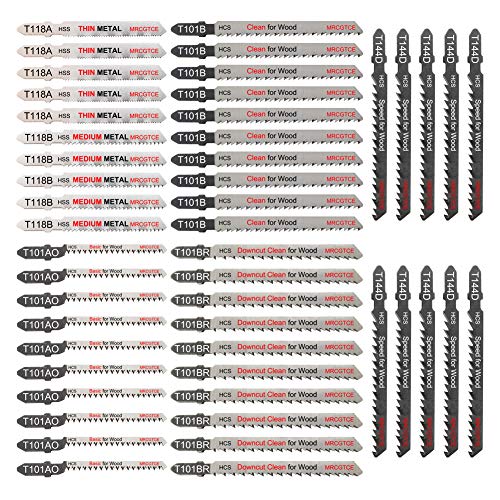
This 50-piece contractor set is the broadest choice in the group. It includes assorted T-shank blades for wood, plastic, and metal, with patterns such as T118A, T118B, T101AO, T101B, T101BR, and T144D. That range matters because no single blade can cut every material well. The included storage case also helps keep fine, coarse, straight, and specialty blades from becoming mixed together.
This set is not the purest answer if you only want the longest blade for thick timber. Instead, it is a strong starter kit for a homeowner who wants one box for many jigsaw tasks. I would use the longer coarse blades for wood and choose the finer patterns for metal or clean finish cuts. The main value comes from variety, since matching the blade to the material usually improves the cut more than simply using the longest blade available.
Pros:
- Large 50-piece assortment covers many cutting tasks
- Includes options for wood, plastic, and metal
- Several tooth styles support different finish levels
- Storage case helps protect and organize blades
- Good starter set for new jigsaw owners
- Reduces the need to buy separate small packs
Cons:
- Not every blade in the set is long
- Quality and use vary across the assortment
- Beginners may need time to learn each blade type
Diablo DJT308BFP5 Fine-Finish Wood Blades

The Diablo DJT308BFP5 set includes five bi-metal jigsaw blades measuring 4-5/8 inches with 12 TPI. It is designed for an ultra-fine finish on the top and bottom of wood, which makes it different from the fast-cutting T344D and T744D options. The bi-metal construction is a useful feature for users who want a balance of flexibility and cutting life. Its length is moderate, but it still gives more reach than many compact detail blades.
I would choose this set for visible cuts in plywood, cabinets, trim, and finished panels. The 12 TPI pattern should produce a cleaner edge than a coarse six-tooth blade, though it will usually cut more slowly. It is a smart reminder that the best long blade for jigsaw work depends on the finish you need, not just the longest measurement. If your project rewards a neat edge, this blade may save sanding time.
Pros:
- Fine 12 TPI pattern supports cleaner wood cuts
- Bi-metal build can improve flexibility and durability
- Designed for top and bottom finish quality
- Useful for plywood, trim, and finished panels
- Five-piece pack provides replacement value
- Moderate length offers better control than very long blades
Cons:
- Shorter than the 6-, 7-, and 10-inch options
- Fine teeth cut thick wood more slowly
- Not the first choice for fast rough carpentry
My Recommendation
Each blade here serves a different user. For thick softwood and routine construction, I would start with the EZARC T744D 7-inch set because it balances reach, control, and quantity. For maximum depth, the 10-inch T1044DP is the specialist pick, but it demands more care. For metal, I would choose the Bosch T321AF3 or T123X based on the material thickness and the control you need.
If you are unsure, the 50-piece assorted set is the safest starter choice. It teaches you an important jigsaw lesson: coarse teeth move fast, fine teeth cut clean, and metal blades need a different design. Always confirm the shank type, exposed blade length, material rating, and your saw’s manual before use. Prices and stock can change, so check the current Amazon listing before buying.
| Best for | Why |
|---|---|
| Thick wood and regular use | EZARC T744D offers 7-inch reach, 6 TPI teeth, and 10 blades. |
| Maximum cutting depth | T1044DP reaches 10 inches for unusually thick timber and lumber. |
| Mixed home projects | The 50-piece set covers wood, plastic, metal, and varied tooth styles. |
How to Choose the Best Long Blade for Jigsaw
Blade length is only one part of the decision. A long blade can reach deep into thick wood, but it can also bend more easily. I always match the blade to the material first, then choose the longest practical length. The blade should extend below the workpiece during the full stroke without leaving a large amount of unsupported steel above the cut.
Check the shank style
Most products in this review use a T-shank. T-shank blades are common on many modern jigsaws and often install without a separate clamp adapter. Some older tools use U-shank blades, so never assume that every jigsaw blade will fit. Check the tool manual or compare the old blade with the replacement before placing an order.
Match the tooth count to the material
Low TPI blades have larger teeth and remove wood fast. They work well for thick softwood and rough cuts. Higher TPI blades make smaller bites and usually leave a smoother edge, but they need more time. Fine metal blades often use much higher tooth counts than wood blades because metal needs a controlled cut.
Understand usable length
Product listings often state the total blade length. The usable cutting length may be shorter because part of the blade sits in the jigsaw clamp or below the shoe. If you need to cut a 3-inch board, a 4-inch blade may work, but a 6-inch blade gives more room for the stroke. More length is not always better, since excess length may create extra vibration.
Think about blade material
High-carbon steel blades are common for wood and general-purpose work. Bi-metal blades combine different metals and can offer better toughness for demanding jobs. Metal blades need a suitable tooth pattern and often benefit from lubricant. Do not use a wood blade on metal simply because it is long; that choice can damage the blade and create a poor cut.
Consider the cut finish
A coarse blade can leave splinters, especially on plywood and laminate. Put the finished face down when your jigsaw cuts on the upstroke, unless you use a blade designed for a different cut direction. Use painter’s tape on the cut line when suitable, and support the workpiece well. A clean setup often matters as much as the blade brand.
Look at pack size and cost
Long blades face more stress than short blades, especially in thick hardwood. A multi-pack can save time when you cut often. However, a large assortment only offers value if the set includes the styles you will use. A small pack of the correct blade is better than a large box of blades that do not match your work.
Long Jigsaw Blade Safety and Cutting Tips
Before cutting, unplug a corded jigsaw or remove the battery from a cordless model. Install the blade fully and check that the locking collar holds it firmly. Wear eye protection, keep both hands away from the cut path, and secure the workpiece with clamps. These basic steps reduce the risk of movement, kickback, and broken teeth.
Let the blade do the work. When you push a long blade too hard, it can bow away from the line or bind in the material. Start at a moderate speed, keep the shoe flat, and guide the saw with slow, even pressure. If the blade begins to smoke, stall, or vibrate sharply, stop and check the tooth pattern, speed, and material thickness.
Long blades need special care during curved cuts. A wide blade resists tight turns, while a narrow blade can follow a curve but may flex more. Do not twist the tool to force a turn. Make relief cuts when needed, and use a blade designed for scroll work if the pattern has tight corners.
For metal, clamp the stock and use a blade made for the exact job. Apply cutting fluid when the material and blade instructions allow it. Keep the speed low enough to limit heat, and remove sharp burrs after cutting. Metal chips can be hot, so eye protection and gloves used away from the moving blade are sensible choices.
What I Looked For During This Review
I compared these blades by length, tooth pattern, material focus, pack size, and likely use. I also considered how a blade feels in real work: whether it offers useful reach, whether it is easy to control, and whether the set gives enough replacements. A product can look impressive in a listing but still be a poor fit for a thin panel or a fine finish cut.
I gave extra weight to clear product specifications. Length claims, TPI ratings, shank type, and intended material all help shoppers make a safer choice. I did not treat every long blade as interchangeable. The right choice for a framing cut may be the wrong choice for cabinet work, sheet metal, or plastic.
My advice follows common power-tool practice and manufacturer guidance: use the correct blade, support the material, wear protection, and avoid forcing the tool. No blade should be judged by length alone. In 2026, that remains the most useful buying rule for anyone searching for the best long blade for jigsaw work.
Common Mistakes to Avoid
Using a wood blade on metal
This mistake often happens when a shopper sees a long, sharp blade and assumes it can handle every material. Wood teeth are usually too coarse and aggressive for metal. The blade may overheat, dull quickly, or produce an unsafe cut. Use a fine metal blade with the right TPI range instead.
Choosing the longest blade every time
A 10-inch blade offers impressive reach, but it is not automatically the best option. Extra length can increase flex and make it harder to hold a straight line. Use a blade that gives enough depth with as little unsupported length as practical. For many users, a 6- or 7-inch blade is easier to control.
Forcing a dull blade
A dull blade makes the motor work harder and can burn the workpiece. It may also bend away from the guide mark. If the cut slows down or the blade produces excess heat, replace it. Fresh teeth often improve the result faster than changing the saw speed.
Ignoring the finish side
Most standard jigsaw blades cut on the upstroke, so the top face may show more tear-out. Place the visible face down when the project allows it. You can also use a fine-tooth blade or a blade made for reduced splintering. Test on scrap wood before cutting an expensive panel.
Failing to support the workpiece
A board that moves can pinch the blade and ruin the cut. Use a stable work surface and clamps when possible. Leave room for the blade to pass below the board. Never cut directly over a surface that could hide screws, wires, or other hazards.
FAQs Of best long blade for jigsaw
What is the best long blade for jigsaw wood cuts?
For many thick wood cuts, a 6- or 7-inch T-shank blade with about 6 TPI is a practical choice. The EZARC T744D is a strong option because it combines useful reach with a 10-piece pack. Choose a finer tooth pattern when you need a smoother edge.
Is a 10-inch jigsaw blade better than a 6-inch blade?
Not always. A 10-inch blade reaches deeper, but it can flex and wander more easily. A 6-inch blade is often easier to control and may cut more accurately. Choose the 10-inch model only when the extra depth solves a real problem.
Can I use a long jigsaw blade on metal?
Yes, but use a blade designed for metal. Metal blades usually have finer teeth and require the correct speed, support, and pressure. The Bosch T321AF3 and Bosch T123X are better choices for metal than coarse wood blades.
What does T-shank mean on a jigsaw blade?
T-shank describes the fitting at the top of the blade. It is designed for jigsaws that accept a T-shank connection. Many newer tools use this style, but you should confirm compatibility with your specific saw before buying.
How can I stop a long jigsaw blade from bending?
Use the correct blade for the material, keep the shoe flat, and feed the saw slowly. Do not twist the tool or push hard through the cut. Clamp the workpiece and replace the blade if it becomes dull or damaged.
Final Verdict: Which Should You Buy?
For most thick-wood users, I recommend the EZARC T744D 7-inch set. It offers useful reach, fast 6 TPI cutting, and ten blades for repeat work. For maximum depth, choose the T1044DP 10-inch set.
The best long blade for jigsaw work depends on material, depth, and finish. Match the teeth to the job, confirm the shank, and shop current Amazon availability before ordering.