
The best plexiglass table saw blade cuts cleanly, stays cool, and leaves fewer chips.
Cutting plexiglass can feel stressful when each pass leaves melted edges, cracks, or rough chips. I understand the frustration, especially when the sheet costs more than the blade. The right blade makes the job calmer and more precise. For most table saw users, a fine-tooth carbide blade made for plastic gives the best balance of edge quality, control, and service life. I compared tooth count, tooth shape, kerf, arbor size, material fit, and value to help you choose the best plexiglass table saw blade for your project.

Freud LU94M010: 10″ Plastic Blade
Specs: Arbor 5/8″, Diameter 10″, Grind MTCG, Hook Angle -3°, Kerf .110″, Plate .087″, Teeth 80 Premium TiCo HI-Density Carbide Plastic Blend for Maximum Performance Modified Triple Chip Grind (MTCG)…
Check Price on Amazon →
CMT K20010 200 Teeth Contractor…
For smooth finish crosscuts, to be used on table and miter saws Excellent cut on plywood, OSB, plastic and veneered 0.095 kerf thickness, 0.071 plate thickness, 5Degree hook angle Heavy-duty…

CMT Orange Tools 222.080.10 -…
Materials: Ideal for Plexiglass; Thin Plastics Machines: Compatible with Slide Miter Saw; Squaring Machine; Stationary Table Saw Laser-Cut Premium Quality Steel Plate Body; Laser-Cut Heat Expansion Slots; Laser-Cut Sound Dampening…
How I Chose the Best Plexiglass Table Saw Blade
Plexiglass, also called acrylic, does not cut like ordinary lumber. It can chip when the tooth shape is too aggressive. It can melt when the blade creates too much heat. A blade that works well on plywood may still leave a poor edge on acrylic sheet.
I looked for blades with carbide teeth, a high tooth count, and a tooth design suited to plastic or non-ferrous materials. In general, a 10-inch table saw blade with 80 to 100 teeth gives a smooth cut on thin and medium acrylic. A low or negative hook angle can also reduce grabbing. This matters because a grabbing blade can pull the sheet forward and ruin both the cut and the workpiece.
I also checked practical details. The blade must match the saw’s diameter and arbor. The saw must have enough power for the sheet thickness. A narrow kerf can reduce waste, but it may need a more stable setup. I gave extra attention to blades that can handle aluminum, plastic, or fine-finish work because these features often translate well to plexiglass cutting.
Before cutting, I recommend leaving the protective film on both sides of the acrylic. Mark the cut on the film, support the sheet well, and use a steady feed rate. Do not force the material. Let the teeth do the work. These simple steps can matter as much as the blade itself.
Freud LU94M010 Plastic Blade
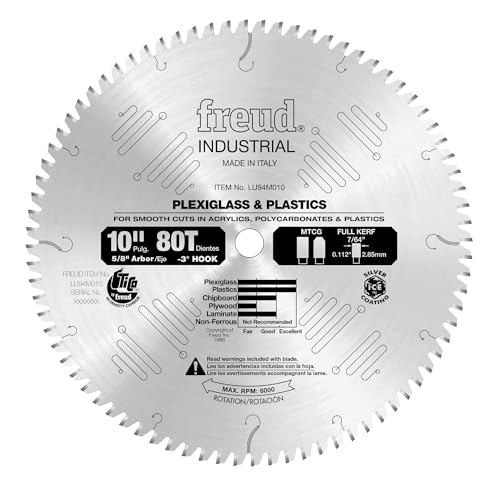
The Freud LU94M010 is one of the most direct choices for plastic and acrylic work. Its 10-inch size fits many common table saws, and its fine tooth count supports a cleaner edge than a standard combination blade. The blade uses carbide teeth, which help it keep a sharp cutting edge through repeated shop use. For anyone who wants a purpose-built option, this is a strong place to start.
I like this blade for careful cuts where edge appearance matters. It is especially useful for signs, guards, shelves, and small display parts made from plexiglass. It still needs a firm fence, proper support, and a controlled feed, since no blade can prevent damage caused by vibration. Among the options here, it has a clear focus and deserves serious attention as the best plexiglass table saw blade for regular plastic work.
Pros:
- Designed for plastic and acrylic cutting
- Fine tooth pattern supports smooth edges
- Carbide teeth help extend blade life
- 10-inch size fits many table saws
- Good choice for repeat shop projects
- Helps reduce rough breakout when set up correctly
Cons:
- Higher price than a basic wood blade
- Not the best choice for fast rough lumber cuts
- Still needs careful feed control to avoid heat
CMT K20010 200-Tooth Plywood Blade

The CMT K20010 uses an unusually high tooth count for a 10-inch blade. Its 200 teeth are aimed at thin plywood and fine panel work, but that fine pattern can also help with thin plexiglass. More teeth mean each tooth removes less material at a time. That can support a neat edge when the operator uses a slow, even feed.
This blade is best for thin acrylic sheets and detailed cuts rather than thick plastic stock. The very dense tooth pattern may cut more slowly, so patience becomes part of the process. I would pair it with strong sheet support and a clean table surface. It is an interesting choice for users who value a fine finish and want the best plexiglass table saw blade for delicate, thin material.
Pros:
- Very high tooth count for fine cuts
- Useful for thin plexiglass and plastic sheet
- Can leave a clean finished edge
- 5/8-inch arbor suits many 10-inch saws
- Also useful for plywood and thin panels
- Fine cut can reduce large chips
Cons:
- Not suited to thick or heavy acrylic
- May cut slowly compared with lower tooth blades
- Small gullets can clear plastic dust less easily
CMT Orange Tools Plexiglass Blade

The CMT Orange Tools 222.080.10 is built specifically for plexiglass and plastic. Its 80-tooth layout gives it a useful balance between smooth cutting and reasonable feed speed. The listed negative hook angle is valuable because it can make the blade less aggressive on brittle sheet goods. Its 10-inch diameter and 5/8-inch bore fit many American table saw setups.
This is one of the most specialized options in the group. I would choose it when acrylic is the main material rather than an occasional task. The thin kerf can help reduce material loss, but the workpiece must stay flat and secure. If you want a purpose-focused best plexiglass table saw blade with a plastic-friendly tooth profile, this CMT model is a compelling match.
Pros:
- Made for plexiglass and plastic
- 80 teeth provide a smooth cutting pattern
- Negative hook angle can reduce aggressive grabbing
- Thin kerf helps limit material waste
- 10-inch diameter fits many table saws
- Strong option for dedicated acrylic work
Cons:
- Less useful for general wood cutting
- Thin kerf demands careful alignment
- May cost more than a multipurpose blade
Freud LU94M012 12-Inch Plastic Blade

The Freud LU94M012 brings the same plastic-focused idea to larger 12-inch table saws. Its 96 teeth are well suited to clean cuts in plastic sheet and other delicate materials. A larger blade can provide more cutting depth, but users must confirm that their saw accepts a 12-inch blade. The arbor, guard clearance, and maximum speed all deserve a check before installation.
This blade makes the most sense in a professional shop or on a large cabinet saw. It can handle projects that demand a broad, finished edge, such as large panels and clear guards. It is not a smart buy for a compact 10-inch saw, and the larger format usually costs more. Still, for compatible equipment, it may be the best plexiglass table saw blade for large acrylic work.
Pros:
- Plastic-focused tooth design
- 96 teeth support a smooth finish
- 12-inch size offers greater cutting depth
- Useful for large acrylic panels
- Carbide teeth support repeated use
- Good fit for larger professional saws
Cons:
- Will not fit most 10-inch table saws
- Usually costs more than smaller blades
- Large blades need careful guard clearance checks
MASTEC 10-Inch 100T TCG Blade

The MASTEC 10-inch blade uses a 100-tooth triple-chip grind, or TCG, tooth pattern. TCG blades are common for aluminum and other non-ferrous materials because their tooth shape spreads cutting work across different tooth forms. That design can also work well on plastic when the saw setup is stable. The high tooth count favors a clean edge over fast stock removal.
I see this as a flexible choice for a shop that cuts acrylic, aluminum, laminates, and other hard sheet materials. It is not labeled as a dedicated plexiglass blade, so I would test it on scrap before a visible project. The blade may produce a smooth, controlled cut with less aggressive tooth action. For mixed material users, it can compete for the title of best plexiglass table saw blade while offering wider use.
Pros:
- 100-tooth pattern supports fine cuts
- TCG design suits aluminum and hard sheet goods
- Useful for plastic and non-ferrous materials
- 10-inch size fits common table saws
- 5/8-inch arbor offers broad compatibility
- Versatile for mixed workshop materials
Cons:
- Not marketed only for acrylic
- High tooth count can slow the feed rate
- Requires a clean, stable setup for best results
FOXBC 10-Inch 80T TCG Blade

The FOXBC 10-inch 80-tooth TCG blade targets aluminum, non-ferrous metal, and plastic cutting. That mix makes it useful for makers who do more than cut acrylic. Its 80 teeth offer a practical middle ground: fine enough for a neat edge, but not so dense that the blade must crawl through every cut. The 5/8-inch arbor fits many standard table saws.
I would consider this blade for a home shop that wants one blade for several hard materials. It may work well on plexiglass when the sheet is supported and the feed stays steady. Since plastic quality and saw speed vary, a test cut remains important. This is a sensible best plexiglass table saw blade candidate for users who value versatility and moderate cost.
Pros:
- Suitable for plastic and non-ferrous materials
- 80 teeth balance finish and cutting speed
- TCG profile can reduce harsh tooth impact
- Fits many 10-inch table saws
- Useful for aluminum projects too
- Practical choice for home workshops
Cons:
- Not a dedicated acrylic-only blade
- May need test cuts on thick plexiglass
- Not intended for ordinary fast wood ripping
Freud LU94M008 8-Inch Plastic Blade

The Freud LU94M008 is the compact member of Freud’s plastic blade family. Its 8-inch diameter and 64 teeth make it a useful option for smaller saws that cannot accept a full-size 10-inch blade. The plastic-focused design is more relevant to acrylic than a general-purpose wood blade. Its smaller size also suits thin stock and compact shop projects.
This blade is a good fit for portable or benchtop equipment, provided the saw maker approves the diameter and arbor specifications. It will not provide the same depth as a 10-inch blade, so I would reserve it for thinner sheets. The lower tooth count may allow a reasonable feed rate while still giving a fine edge. For small projects, it may be the best plexiglass table saw blade because it matches the tool you already own.
Pros:
- Designed for plastic cutting
- Compact 8-inch format fits smaller saws
- 64 teeth support a clean finish
- Useful for thin plexiglass sheets
- Carbide construction supports durability
- Good option for portable workshops
Cons:
- Less cutting depth than a 10-inch blade
- Not compatible with every table saw
- Limited choice for thick acrylic panels
FOXBC 10-Inch 80T Ultra-Finish Blade

The FOXBC ultra-finish blade is designed mainly for wood, but its 80-tooth count makes it worth considering for occasional plexiglass work. A fine-finish wood blade can produce a smooth cut on some plastic sheets when its tooth geometry is not too aggressive. This model uses a common 10-inch diameter and 5/8-inch arbor. That makes it easy to match with many standard table saws.
I would not make this my first choice for thick or expensive acrylic, since it lacks the direct plastic focus of the Freud and CMT options. However, it may serve a woodworker who only cuts plexiglass once in a while. Use scrap material, keep the feed steady, and watch for heat buildup. It can be the best plexiglass table saw blade for a budget-minded user who also needs a fine wood blade.
Pros:
- 80 teeth offer a fine cutting pattern
- Useful for ultra-fine wood projects
- 10-inch size suits common table saws
- 5/8-inch arbor offers wide compatibility
- Can handle occasional thin plastic cuts
- Good value for mixed woodshop use
Cons:
- Designed for wood, not dedicated plastic work
- May create heat on acrylic if pushed
- Needs testing before important plastic cuts
Diablo 10-Inch 60T Fine Finish Blade

The Diablo 10-inch fine-finish blade is a familiar choice for clean wood cuts. Its 60 Hi-ATB teeth are arranged to improve the top-side finish on wood panels and trim. That tooth count is lower than the plastic-specific blades in this review, so it may move through material more easily. Some users may also consider it for thin acrylic when no dedicated plastic blade is available.
For plexiglass, I would treat this as a secondary option rather than a specialist tool. The sharper wood-cutting tooth geometry can be less forgiving on brittle plastic. It may still work for light, occasional cuts with a slow feed and strong support. If you already own this blade, a careful test may save you a new purchase, but it is not my first pick for the best plexiglass table saw blade.
Pros:
- Widely useful for fine wood cuts
- 60 teeth offer a smooth wood finish
- 10-inch size fits many table saws
- Can handle occasional thin acrylic work
- Easy to find and replace
- Useful multipurpose shop blade
Cons:
- Made for wood rather than plexiglass
- Lower tooth count may leave more plastic chips
- Hi-ATB teeth can be too aggressive for brittle sheet
WEN BL1080 10-Inch 80T Blade

The WEN BL1080 is an 80-tooth carbide-tipped blade made for fine woodworking. Its tooth count is useful for users who want a clean edge and a blade that works on both miter saws and table saws. While it is not labeled specifically for plexiglass, its fine pattern may perform well on thin acrylic under controlled conditions. The familiar 10-inch size and 5/8-inch arbor also make it easy to use with many saws.
This blade is a practical budget choice for a shop that mostly cuts wood but sometimes works with plastic. I would keep the acrylic thin, protect the surface film, and feed slowly enough to avoid melting. It may not match a dedicated plastic blade for edge quality or heat control. Still, it can provide good value when you need one fine-finish blade for several light tasks.
Pros:
- 80 teeth support fine cuts
- Carbide tips help with repeated use
- Works on table and miter saws
- 10-inch format fits many saws
- Useful for wood and occasional thin acrylic
- Often attractive for budget shoppers
Cons:
- Not designed specifically for plastic
- May melt acrylic if the feed is too slow
- Less suitable for thick plexiglass
Blade Features That Matter for Plexiglass
Tooth Count
Tooth count affects both finish and feed speed. More teeth usually remove less material per tooth. This can reduce large chips and create a smoother edge. For many acrylic projects, 80 to 100 teeth work well on a 10-inch saw.
A very high tooth count is not always better. Small gullets have less room for dust and chips. If the operator feeds too slowly, the blade can rub instead of cut. That rubbing creates heat, and heat can soften acrylic at the cut line.
Tooth Shape
TCG teeth are often a smart choice for plastic, aluminum, and laminate. The alternating tooth forms spread the cutting load and can reduce harsh impact. A negative hook angle can also help prevent the blade from pulling the sheet into the cut.
A standard aggressive ripping blade is usually a poor match. Its large teeth can grab the plastic and cause chips. The cut may look fine at first, but the exit side can break away. That is why tooth geometry matters as much as tooth count.
Blade Diameter and Arbor
Never buy a blade based on tooth count alone. Confirm the saw’s approved diameter, arbor size, maximum revolutions per minute, and guard clearance. A 10-inch blade normally uses a 5/8-inch arbor on many US table saws, but the exact saw specification controls.
An 8-inch blade may suit a compact saw, while a 12-inch model belongs on a larger machine. Do not install a larger blade simply to gain depth. The guard may not fit, and the motor may not be rated for it.
Kerf and Plate Stability
Kerf is the width of the cut made by the blade. A thin kerf wastes less acrylic and may reduce the power needed from the motor. However, a thin blade can flex if the sheet is pushed too hard or the saw is poorly aligned.
For clean plexiglass cuts, the fence should stay parallel to the blade. The miter slot should also be true. I recommend checking blade runout and table cleanliness before blaming the blade for a rough edge.
How to Cut Plexiglass on a Table Saw
First, read the acrylic maker’s instructions and the table saw manual. Wear eye protection and hearing protection. Use dust control, but do not let a vacuum hose or loose cord interfere with the sheet. Keep hands away from the blade and use a push stick when the cut requires it.
Leave the protective film on the acrylic. The film helps limit surface scratches and gives you a safe place to mark the cut. If the sheet has no film, use low-tack painter’s tape along the cut line. Avoid pressing hard on the sheet, since pressure can start a crack.
Use a sharp, clean blade. A dull blade creates more heat and may leave a white, rough edge. Set the blade height so only a modest amount of tooth extends above the material. This can reduce the amount of exposed tooth and help control the cut.
Support the full sheet before and after the blade. Large plexiglass panels can sag, twist, or vibrate. That movement can cause chips even with the best plexiglass table saw blade. An outfeed table or a helper can make a major difference, but the helper should never pull the workpiece through the blade.
Start the saw before contacting the material. Move the sheet at a steady rate. Do not stop in the middle of the cut unless safety requires it, because a pause can leave a hot spot or mark. If you smell melting plastic, see a glossy melted edge, or hear the motor strain, stop and review the setup.
After the cut, let the edge cool. Remove the film only after the piece is complete and free from dust. A sharp plastic scraper, fine abrasive paper, or a router can improve the edge when the design needs a polished finish. Do not expect every table saw cut to look optically clear without extra finishing.
Common Plexiglass Cutting Mistakes
One common mistake is using a blade with too few teeth. A 24-tooth ripping blade can remove material quickly, but its large gullets and aggressive teeth may chip the acrylic. It may also grab the sheet. A fine-tooth blade gives the operator more control.
Another mistake is moving too slowly. Slow does not always mean careful. When each tooth rubs the plastic for too long, friction raises the temperature. Use a steady feed rather than an extremely slow feed.
Many users also forget to support the offcut. The piece can fall, twist, and break the last part of the cut. Support both sides, but do not pinch the blade with the offcut. Use a proper setup that keeps the sheet flat and the kerf open.
Finally, some users blame the blade when the fence is out of alignment. A fence that pushes the material sideways can create burn marks, rough edges, and unsafe kickback. Check the saw first, then assess the blade.
My Recommendation
For most people, I recommend the CMT Orange Tools 222.080.10 as the leading choice for dedicated plexiglass work. It has a plastic-focused design, 80 teeth, a negative hook angle, and a 10-inch format that suits many common saws. The Freud LU94M010 is a close alternative for users who want a respected plastic blade with a simple, direct purpose.
If you use a large cabinet saw, the Freud LU94M012 is better suited to large panels. If you own a compact saw, the Freud LU94M008 offers a practical smaller format. The MASTEC and FOXBC TCG blades make more sense for people who cut plastic and aluminum. The wood-focused Diablo, FOXBC, and WEN blades are best for occasional acrylic work rather than daily production.
The best plexiglass table saw blade depends on your sheet thickness, saw size, and finish goals. A dedicated plastic blade costs more, but it can save material, cleanup time, and frustration. Product availability and pricing can change, so check the current listing and confirm the specifications before ordering.
| Best for | Why |
|---|---|
| Dedicated acrylic cutting | CMT Orange Tools offers plastic-focused geometry, 80 teeth, and a negative hook angle. |
| Large professional saws | Freud LU94M012 provides a 12-inch plastic blade format for compatible equipment. |
| Mixed plastic and metal work | MASTEC and FOXBC TCG blades can handle plastic along with aluminum and other non-ferrous materials. |
Safety and Maintenance Tips
A clean blade cuts better than a dirty blade. Acrylic dust can collect on the plate and teeth. That buildup may increase friction and make the cut feel rough. Follow the blade maker’s cleaning guidance, and use a cleaner that is safe for carbide and the blade’s coating.
Inspect the teeth before each important project. Look for chipped carbide, missing teeth, or resin buildup. A damaged blade can harm the acrylic and create a safety risk. Replace the blade when cleaning no longer restores smooth cutting.
Store blades flat or in a protective case. Do not toss them into a drawer with screws and other tools. Even a small tooth chip can change how the blade cuts. Keep the blade dry and protected from moisture.
Use the correct table saw guard, riving knife, and anti-kickback equipment when compatible with the cut. Acrylic can bind if the setup shifts. A guard does not replace safe hand placement, but it adds an important layer of protection.
FAQs Of best plexiglass table saw blade
What tooth count is best for cutting plexiglass?
An 80-tooth blade is a strong starting point for many 10-inch table saws. A 96- or 100-tooth blade may give a smoother edge on thin or delicate acrylic. Very thin sheets can also work with a higher tooth count, such as 200 teeth, when the feed remains steady.
Can I use a regular wood blade on plexiglass?
You can use some fine-finish wood blades for occasional thin acrylic cuts, but the results may vary. Wood blades can have tooth angles that are too aggressive for plastic. A blade made for plastic or a TCG blade is usually a safer choice for cleaner results.
Should I remove the protective film before cutting?
No. Keep the film on during cutting whenever possible. It protects the surface and gives you a place to mark the cut. Remove it after cutting and finishing the edge.
Why does my plexiglass melt during cutting?
Melting usually comes from too much heat. A dull blade, a very slow feed, poor chip clearance, or an incorrect tooth design can create heat. Use a sharp fine-tooth blade, keep the sheet supported, and feed at a smooth, steady rate.
Is a negative hook angle good for acrylic?
Yes, a negative hook angle can reduce aggressive grabbing. It may give better control on brittle or flexible sheet materials. The saw must still have proper alignment and support.
Final Verdict: Which Should You Buy?
For most acrylic projects, I would buy the CMT Orange Tools 222.080.10. Its plastic-focused design and fine tooth count make it my top pick for the best plexiglass table saw blade.
Use a Freud plastic blade for a proven dedicated option, or a TCG blade for mixed materials. Set up the saw well, protect the sheet, and let the blade cut at a steady pace.