
The best rip saw blades for a table saw cut fast, stay sharp, and leave clean, straight edges.
A dull blade can turn a simple rip cut into a hard, noisy job. Wood may burn, bind, or splinter, while your table saw works harder than it should. I know how frustrating that feels, especially when a costly board gets damaged near the final cut. The right rip blade uses fewer teeth, strong carbide, and a kerf that matches your saw. Below, I compare popular 10-inch and 8-inch options for solid wood, plywood, glue-line work, and everyday shop use.
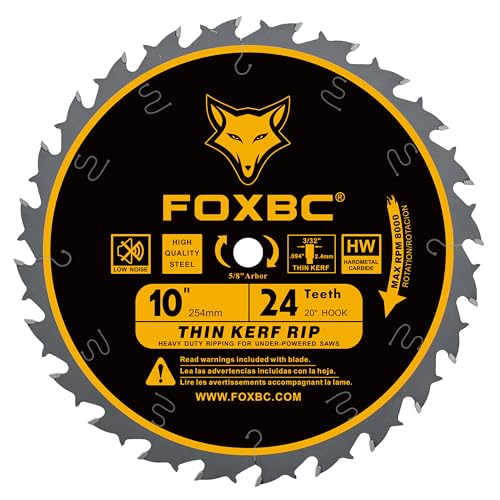
FOXBC 10-Inch Flat Tooth Ripping…
10 Inch Thin Kerf Rip Saw Blade, 24-Tooth, Flat Tooth, Kerf .094″, Plate .071″, Hook Angle 20°, Wood Cutting with 5/8″ Arbor The blades with high-quality thin kerf and plate…

DEWALT 10 in. 24 Tooth…
UP TO 3X LIFE* Optimized Tooth Geometry Designed For Increased Accuracy Ultra Sharp Carbide for Clean Cutting

Freud LM72M010: 10″ Heavy-Duty Rip…
Specs: Arbor 5/8″, Diameter 10″, Grind FLAT, Hook Angle 20°, Kerf .126″, Plate .087″, Teeth 24 Premium TiCo HI-Density Carbide Ripping Blend for Maximum Performance Extra Large, Flat Tooth Design…
FOXBC 10-Inch Flat Tooth Rip Blade

The FOXBC 10-inch rip blade uses 24 teeth and a flat-top grind. That design suits fast cuts along the grain in boards and panels. Its thin kerf removes less wood than a full-kerf blade, which can help a smaller saw maintain speed. The 5/8-inch arbor fits many common 10-inch table saws.
I like this style for rough stock preparation, shelf parts, framing lumber, and general shop work. The flat tooth pattern can leave a useful flat-bottomed cut, though it may not match a fine crosscut blade for finish work. As with any thin-kerf blade, check that the riving knife or splitter lines up with the blade. This FOXBC model is a practical choice when cutting speed and lower waste matter most.
Pros:
- 24 teeth support fast rip cuts
- Flat-top teeth can leave a flat kerf bottom
- Thin kerf may reduce motor strain
- Uses a common 5/8-inch arbor
- Works well for solid wood and rough stock
- Good fit for budget-minded woodworkers
Cons:
- Not the best choice for fine crosscuts
- Thin kerf requires careful riving-knife matching
- Large knots can dull the teeth sooner
My Recommendation
I recommend the FOXBC for DIY users, new woodworkers, and anyone who makes many long rip cuts. It is especially useful when you want less waste and do not need a polished crosscut edge. The 24-tooth layout keeps the blade from feeling slow in thick boards. It is one of the best rip saw blades table saw users can consider for affordable daily work.
| Best for | Why |
|---|---|
| Fast board ripping | Its 24-tooth pattern clears wood quickly. |
| Lower-powered saws | The thin kerf can reduce cutting load. |
| Flat-bottom grooves | Flat-top teeth support a level cut bottom. |
Choose it when value matters and your main task is ripping with the grain. Always confirm the blade diameter, arbor size, and kerf before ordering.
DEWALT DWA11024 10-Inch 24-Tooth Blade

The DEWALT DWA11024 is a 10-inch, 24-tooth carbide blade made for general wood cutting. Its tooth count favors speed over an ultra-smooth finish. That makes it a sensible match for ripping dimensional lumber, construction boards, and common shop stock. The blade uses a standard 5/8-inch arbor for broad compatibility.
DEWALT’s name also gives many buyers confidence when replacing a worn table saw blade. I would use this model for routine cuts where a little sanding or edge cleanup is acceptable. It can handle more than ripping, but its strongest role remains fast wood removal. If you want one familiar blade for a job site or home shop, this model offers a balanced starting point.
Pros:
- Fast 24-tooth cutting action
- Carbide teeth hold an edge better than plain steel
- Useful for job-site and shop projects
- Common 10-inch size fits many saws
- Good brand support and broad availability
- Suitable for many types of wood
Cons:
- May leave rougher edges than a 40-tooth blade
- Not designed as a dedicated glue-line blade
- Hard or dirty lumber can shorten edge life
My Recommendation
This DEWALT is best for homeowners, contractors, and makers who need a sturdy general-purpose rip blade. It is a good pick when you want quick cuts without moving into a specialized industrial blade. I find it particularly useful as a backup blade because it handles common tasks with little fuss. For many users, it is among the best rip saw blades table saw shoppers can buy without overthinking the choice.
| Best for | Why |
|---|---|
| General wood cutting | The 24-tooth design cuts quickly in common stock. |
| Job-site repairs | Its familiar size and brand make replacement easy. |
| DIY projects | It offers a useful mix of speed and durability. |
Buy it when you want a known brand and a simple blade for fast wood cuts. Pair it with a finer blade when your project needs a clean crosscut.
Freud LM72M010 Heavy-Duty Rip Blade

The Freud LM72M010 is a dedicated 10-inch heavy-duty rip blade. Its 24-tooth layout is built for cutting with the grain rather than producing a fine crosscut. Freud’s carbide-focused construction makes this blade attractive to serious woodworkers who cut a high volume of solid stock. The full-size format suits many cabinet and contractor table saws.
This is the type of blade I would reach for when a project includes long rips in hardwood or thick boards. It is not trying to be a do-everything blade, and that focus is its strength. A dedicated rip blade can feel calmer and more direct than a high-tooth combination blade during long cuts. Use a sharp, clean blade and proper support, because even the best carbide blade cannot correct poor stock control.
Pros:
- Dedicated design for ripping hardwood
- 24 teeth remove material quickly
- Heavy-duty build suits frequent use
- Strong carbide construction supports long service
- Good choice for cabinet and furniture shops
- Designed for demanding grain cuts
Cons:
- Costs more than many entry-level blades
- Rip-focused teeth are not ideal for fine crosscuts
- May require a strong saw for thick hardwood
My Recommendation
I recommend the Freud LM72M010 for experienced woodworkers who rip hardwood often. It is also a strong choice for a shop that values repeatable production cuts over one blade for every task. The blade’s focused tooth count helps it move through long stock without the drag of a fine-finish blade. If you want the best rip saw blades table saw option for serious solid-wood work, this Freud deserves close attention.
| Best for | Why |
|---|---|
| Hardwood ripping | The heavy-duty rip layout suits dense stock. |
| Furniture shops | It supports repeated long grain cuts. |
| High-use saws | Its carbide build is made for demanding work. |
This blade brings more value to frequent users than to someone who makes only a few cuts each month. Keep it clean and use a separate crosscut blade for finished ends.
CMT 250.024.10 ITK XTreme Rip Blade

The CMT 250.024.10 uses a 10-inch diameter, 24 teeth, and an ATB grind. ATB stands for alternate top bevel, a tooth shape that can give a cleaner edge than a basic flat-top rip pattern. The blade has a 5/8-inch bore and a thin-kerf design. It aims to balance fast ripping with a more refined cut surface.
I see this blade as a useful middle ground for woodworkers who rip boards but still care about edge quality. It can suit pine, hardwood, plywood, and other wood materials when the feed rate stays steady. Thin kerf can help reduce waste, but it also makes setup more important. Make sure the blade sits flat on the arbor and that the fence remains parallel to the blade.
Pros:
- ATB teeth can improve edge quality
- 24 teeth keep rip cuts fairly quick
- Thin kerf reduces material loss
- 5/8-inch bore fits many table saws
- Useful for mixed shop materials
- Good balance between speed and finish
Cons:
- May not cut as quickly as a flat-top rip blade
- Thin kerf needs correct splitter alignment
- Not a dedicated fine-finish blade
My Recommendation
The CMT ITK XTreme is best for hobbyists and furniture makers who want a cleaner rip without giving up too much speed. I would choose it when the cut edge will show or receive only light sanding. It is also a smart option for smaller saws that benefit from a narrow kerf. Among the best rip saw blades table saw users can select, this one stands out for its balanced ATB design.
| Best for | Why |
|---|---|
| Cleaner rip edges | ATB teeth can reduce rough fiber tear. |
| Small table saws | Thin kerf may place less demand on the motor. |
| Mixed wood projects | It balances speed with a smoother cut. |
Choose this CMT blade when you want a step above a basic construction blade. It offers a useful blend of low waste, speed, and edge control.
Freud LM75R010 Thin Kerf Glue-Line Blade
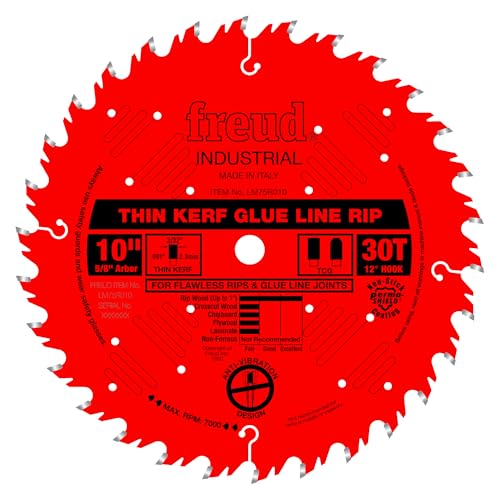
The Freud LM75R010 is a 10-inch industrial thin-kerf glue-line ripping blade. Its purpose is to create smooth, straight edges that can meet well during panel glue-ups. A thin kerf also saves wood and can help a saw work with less resistance. This is a specialized blade for users who care about joint quality.
I would use it for edge joining boards, preparing cabinet parts, and cutting valuable hardwood. The thin profile is helpful, but it demands a well-tuned saw, a rigid fence, and steady feed pressure. A glue-line blade cannot remove a bow in the board or fix a fence that drifts. When the machine and stock are ready, this Freud can make the final glue-up feel much less like a gamble.
Pros:
- Designed for smooth glue-line ripping
- Thin kerf helps reduce wood waste
- Useful for expensive hardwood
- Can reduce load on some saw motors
- Strong choice for cabinet components
- Supports clean edge joining
Cons:
- Costs more than a basic rip blade
- Needs careful saw alignment
- Not the best blade for rough construction cuts
My Recommendation
I recommend the LM75R010 to furniture makers, cabinet builders, and anyone who joins boards edge to edge. It is best when the cut quality saves time during glue-up. Casual users may not gain enough from its specialty design to justify the extra cost. For precision work, however, it is one of the best rip saw blades table saw owners can keep in a dedicated blade set.
| Best for | Why |
|---|---|
| Glue-line joints | Its design targets smooth mating edges. |
| Valuable hardwood | Thin kerf wastes less material. |
| Cabinet parts | Clean rips help panels fit together. |
Buy it for precision edge work, not for demolition or dirty reclaimed lumber. Proper setup matters as much as the blade itself.
Freud LM74R010 30-Tooth Glue-Line Blade
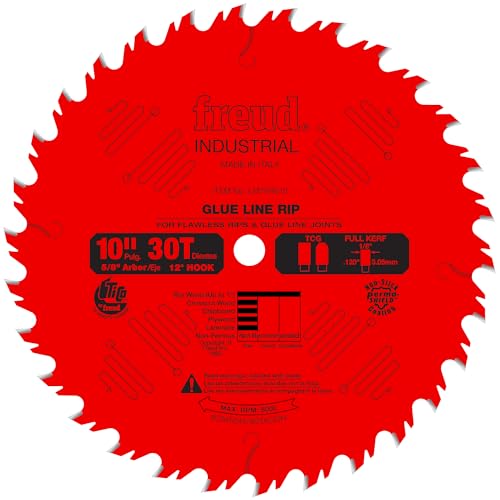
The Freud LM74R010 is a 10-inch, 30-tooth glue-line ripping blade with a TCG grind. TCG means triple-chip grind, a tooth pattern known for durable cutting in many hard materials and for controlled edge wear. This blade uses Freud’s premium Tico high-density carbide blend. Its design focuses on smooth, repeatable rips rather than maximum rough-cut speed.
The 30-tooth count gives it a nice place between a very fast 24-tooth rip blade and a slower fine-finish blade. I would consider it for hardwood panels, laminated stock, and repeated edge-joint work. It may leave a more refined edge than a simple low-tooth blade, but the saw still needs a clean table and a stable fence. The LM74R010 is a shop tool for accuracy-minded users who dislike fixing poor cuts later.
Pros:
- 30 teeth offer a smooth rip balance
- TCG grind supports controlled cutting
- Premium carbide suits repeated shop use
- Strong choice for glue-line edges
- Useful on dense and abrasive wood
- Good option for panel preparation
Cons:
- Higher price than standard rip blades
- Not as fast as a 24-tooth blade in rough stock
- Requires careful feed control
My Recommendation
This Freud is best for serious hobby shops and small production spaces. Choose it when you need clean rips often but still want reasonable feed speed. The 30-tooth TCG layout can make it feel more polished than a basic rip blade. If your work includes hardwood panels and glue joints, this is a strong contender among the best rip saw blades table saw choices.
| Best for | Why |
|---|---|
| Hardwood panels | TCG teeth handle dense stock with control. |
| Repeated glue work | Its edge quality supports reliable joints. |
| Small production shops | It balances finish and useful feed speed. |
This model is worth the investment when blade changes and edge repairs cost you time. It is overkill for occasional rough cuts.
CMT Orange Tools 201.024.10 Rip Blade

The CMT Orange Tools 201.024.10 is a 10-inch, 24-tooth ripping blade. Its listed dimensions show a 5/8-inch bore and a narrow kerf profile. The 24-tooth pattern is suited to fast cuts along wood grain. This blade targets users who want a purpose-built rip tool rather than a combination blade.
I would place it in a home shop that cuts boards into strips, rails, stiles, or rough parts. The orange series has a clear shop-tool identity, and its simple tooth count makes the intended use easy to understand. It should not replace a fine-tooth blade when you need a ready-to-finish crosscut. Still, it can make long rips feel more direct and less tiring.
Pros:
- Dedicated 24-tooth rip configuration
- Thin kerf helps save material
- 5/8-inch bore suits many saws
- Fast for long grain cuts
- Useful for home and professional shops
- Clear focus on wood ripping
Cons:
- Rougher finish than high-tooth blades
- May need alignment checks on thin-kerf saws
- Not intended for every material
My Recommendation
The CMT Orange Tools blade suits woodworkers who want a focused rip blade with a narrow kerf. It is a good fit for repeated strips and parts where speed matters more than a final polished edge. I would keep a finer blade nearby for crosscuts and visible ends. For value, low waste, and fast stock breakdown, it belongs on a best rip saw blades table saw shortlist.
| Best for | Why |
|---|---|
| Strips and rails | The 24-tooth pattern moves through stock quickly. |
| Material savings | The narrow kerf removes less wood. |
| Home workshops | It offers a simple, focused rip setup. |
It is a sensible option for wood-only work. Check your saw manual before fitting any thin-kerf blade.
Freud LU87R008 8-Inch 22-Tooth Rip Blade
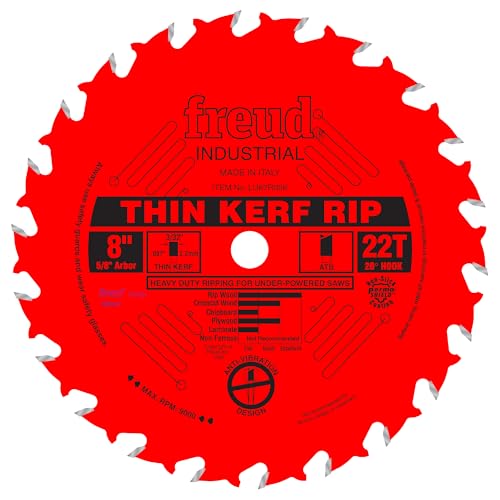
The Freud LU87R008 is an 8-inch thin-kerf rip blade with 22 teeth. Its smaller diameter makes it relevant to compact table saws and saws designed for 8-inch blades. The low tooth count supports quick ripping, while the thin kerf can help a smaller motor keep its speed. This is not a 10-inch replacement, so size and clearance must match your machine.
I like this option for portable saws, compact shops, and users who cut thinner stock. It can be easier for a small saw to drive than a larger blade, but cutting depth will be lower. Measure the required depth before starting a project. When matched to the right saw, this Freud can feel like a light boot on a long walk: efficient, practical, and less demanding.
Pros:
- Fits compatible 8-inch table saws
- 22 teeth provide fast ripping
- Thin kerf may suit smaller motors
- Useful for portable and compact saws
- Good for thinner boards and panels
- Freud carbide supports repeated use
Cons:
- Not compatible with every 10-inch saw
- Offers less cutting depth than a 10-inch blade
- Requires exact size and clearance checks
My Recommendation
Choose the LU87R008 if your table saw calls for an 8-inch blade. It is best for compact machines, light furniture work, and users who do not need deep cuts. Do not buy it simply because it is thin kerf; the diameter must match the saw’s design. For compatible equipment, it is one of the best rip saw blades table saw owners with smaller machines can use.
| Best for | Why |
|---|---|
| Compact table saws | The 8-inch size suits smaller machines. |
| Portable work | Its thin kerf can help lighter saws cut well. |
| Thin stock | Low teeth support quick material breakdown. |
Confirm the arbor, maximum blade size, guard, and cutting depth first. Compatibility matters more than brand here.
DEWALT DWA11040 10-Inch 40-Tooth Blade

The DEWALT DWA11040 has 40 teeth and is marketed for fine finish work. It is not a dedicated low-tooth rip blade, but it can handle lighter ripping when a smoother edge matters. The higher tooth count takes smaller bites and usually produces a cleaner surface than a 24-tooth blade. It fits many 10-inch table saws with its common arbor size.
I would use this blade for plywood, trim, panels, and visible cuts rather than thick, long hardwood rips. A 40-tooth blade may feed more slowly, especially in dense stock. That slower pace is often a fair trade when sanding and tear-out cause more trouble than the cut itself. It is a helpful second blade for a shop that already owns a fast rip blade.
Pros:
- 40 teeth support a smoother finish
- Useful for plywood and trim
- Versatile for light ripping and crosscutting
- Carbide teeth support longer use
- Common 10-inch table saw size
- Good choice for visible project edges
Cons:
- Slower than a dedicated 24-tooth rip blade
- May load the saw more in thick hardwood
- Not the best choice for rapid stock breakdown
My Recommendation
The DWA11040 is best for DIY builders who want a smoother all-around cut. It suits cabinet panels, shelves, trim, and projects where the edge will be seen. I would not call it the fastest option in a best rip saw blades table saw review, but it is valuable when finish quality leads the job. Keep it clean and let the saw feed at a steady pace.
| Best for | Why |
|---|---|
| Fine finish work | More teeth can leave a smoother edge. |
| Plywood panels | It helps reduce rough visible edges. |
| One-blade DIY shops | It offers useful cutting versatility. |
Select it when finish matters more than speed. For thick hardwood, switch to a lower-tooth rip blade.
Luckyway 10-Inch Two-Pack Blade Set

The Luckyway set includes two 10-inch blades: one with 60 teeth and one with 32 teeth. This gives a woodworker a basic way to switch between smoother work and faster cuts. The 32-tooth blade is the closer match for ripping, while the 60-tooth blade favors fine finish work. Both blades use the common 10-inch format found on many table saws and miter saws.
A two-pack can make sense for a new shop because one purchase covers more tasks. I would use the 32-tooth blade for moderate ripping and the 60-tooth blade for trim, plywood, and clean crosscuts. Neither blade replaces a heavy-duty glue-line blade for demanding cabinet production. Still, the set helps beginners learn how tooth count changes the feel of a cut.
Pros:
- Includes two useful tooth counts
- Offers both speed and finish options
- Good starter set for a new shop
- 10-inch size suits many saws
- Useful for wood and panel projects
- Reduces the need for an immediate second purchase
Cons:
- Neither blade is a dedicated industrial rip blade
- Changing blades takes extra setup time
- 60 teeth can cut slowly in thick hardwood
My Recommendation
The Luckyway set is best for beginners, renters, and occasional DIY users who need flexibility. It is a practical way to explore different tooth counts before buying specialized blades. The 32-tooth option can cover moderate ripping, while the 60-tooth option handles cleaner work. If you are building a basic collection of the best rip saw blades table saw tools, this two-pack offers useful starting value.
| Best for | Why |
|---|---|
| New woodworkers | Two blades introduce two common cutting styles. |
| Mixed DIY tasks | You can choose speed or finish as needed. |
| Budget tool setups | One set covers more jobs than one blade. |
Buy this set when flexibility matters more than specialty performance. Check each blade for proper fit before use.
How to Choose the Best Rip Saw Blades for a Table Saw
Choosing a table saw blade feels harder than it should. Package labels use terms such as kerf, ATB, TCG, arbor, and hook angle. I reduce the choice to the wood, the cut, and the saw. Once those three points are clear, the right blade usually becomes easy to spot.
Start With Blade Size
Most full-size table saws use a 10-inch blade. Some compact saws use an 8-inch blade. Never assume that a smaller blade is a safe substitute for a larger one, or the other way around. Check the saw manual for blade diameter, arbor size, maximum speed, and cutting depth.
The blade must also clear the throat plate, riving knife, guard, and arbor hardware. A 10-inch blade with a 5/8-inch arbor fits many common American table saws, but you should still verify the details. A correct fit is the first feature of the best rip saw blades table saw users can trust.
Understand Tooth Count
Low tooth counts remove wood quickly. Blades with 20 to 30 teeth usually suit fast ripping. They leave more marks than a fine blade, but the cut takes less time and places less drag on the saw. This is why many dedicated rip blades use about 24 teeth.
Blades with 40 to 60 teeth make smaller cuts. They work well for fine edges, plywood, trim, and crosscuts. They can rip wood, but they may feed more slowly and create more heat in thick hardwood. Tooth count is a guide, not a complete quality score.
Choose the Right Grind
Flat-top grind teeth cut a level-bottomed kerf and remove material fast. They work well for ripping and dado-related tasks when the blade is designed for that use. ATB teeth alternate their bevel from one tooth to the next. This shape often gives a cleaner edge in plywood and solid wood.
TCG blades use alternating flat and beveled teeth. They are known for controlled cutting and can suit hard, abrasive, or laminated materials. A glue-line blade may use a special tooth sequence to improve edge quality. Match the grind to the job instead of choosing by tooth count alone.
Do Not Ignore Kerf
Kerf is the width of the cut. A thin-kerf blade removes less wood and may help a smaller motor maintain speed. It also saves material over many cuts. That sounds small, but a narrow strip of waste becomes meaningful during a large project.
Thin kerf has a trade-off. The blade body may flex more if you push stock too fast or use poor support. Your riving knife or splitter must match the blade’s kerf. If it does not, the stock can pinch or the setup can become unsafe.
Look at Carbide Quality
Carbide teeth last much longer than plain steel teeth in normal wood use. Better carbide can resist wear and allow more sharpening cycles. Still, carbide does not make a blade immune to nails, dirt, glue, or hidden metal. Inspect reclaimed wood with a reliable detector before cutting.
When a blade starts to burn, wander, or require extra force, clean it first. Pitch can hide a sharp edge and increase friction. If cleaning does not restore performance, professional sharpening may extend its useful life.
Rip Blade Safety and Setup Tips
A sharp blade is safer than a dull blade, but setup controls much of the risk. I always unplug the saw before changing a blade. I check that the teeth point in the correct direction and that the arbor nut is snug. I never rely on hand pressure to hold stock near the blade.
Use the blade guard, riving knife, or splitter whenever the cut allows it. These parts help reduce contact and limit kickback risk. Keep the fence parallel to the blade and support long boards at the front and back. OSHA safety guidance and common woodworking practice both stress guarding, push tools, and proper stock control.
Stand slightly to the side of the cut line, not directly behind the board. Use a push stick when your hand would move close to the blade. Do not reach over a moving blade to remove scrap. Wait until the blade stops, then clear the table.
Feed the wood at a steady pace. Do not force a dull blade, and do not stop halfway through a cut unless you can do so safely. Watch for knots, twists, and internal stress. A board that closes on the kerf can pinch the blade even when the saw is well aligned.
How I Evaluate the Best Rip Saw Blades Table Saw Options
I look at more than a product photo or a high star rating. I compare diameter, arbor fit, tooth count, grind, kerf, intended material, and likely user. I also consider whether a blade solves a real problem, such as motor strain, rough edges, or glue-line gaps. A blade should match the work instead of forcing the work to match the blade.
I pay close attention to product claims. “General purpose” does not always mean “best for ripping.” “Fine finish” does not mean the blade will rip thick hardwood quickly. I use the manufacturer’s listed size and design details as the base, then apply practical shop judgment.
Results also depend on the saw. A well-tuned contractor saw can outperform a poorly aligned cabinet saw. Clean stock, a straight fence, steady feed, and correct support all affect the final edge. Even the best rip saw blades table saw users buy need a fair test on a tuned machine.
FAQs Of best rip saw blades table saw
How many teeth should a table saw rip blade have?
A 20-tooth to 30-tooth blade usually works well for fast ripping. A 24-tooth blade is a common choice for solid wood and construction stock. Use more teeth when you need a smoother edge.
Can I use a 40-tooth blade for ripping?
Yes. A 40-tooth blade can rip wood, especially thinner boards and panels. It may feed more slowly and create more heat in thick hardwood than a dedicated 24-tooth rip blade.
Is a thin-kerf blade better for a small table saw?
Often, yes. A thin-kerf blade removes less material and may reduce motor load. Confirm that the blade matches the saw and that the riving knife or splitter fits the kerf.
What is the best blade for glue-line ripping?
A dedicated glue-line blade is usually the better choice. Models such as the Freud LM75R010 and LM74R010 focus on smooth, straight edges for board joining. Saw alignment still matters greatly.
How often should I clean a table saw blade?
Clean it when you see pitch, burning, slow feed, or rough cuts. Use a cleaner made for carbide blades and follow its directions. Avoid harsh methods that can damage the carbide bond or blade surface.
Final Verdict: Which Should You Buy?
For serious ripping, I would choose the Freud LM72M010. For value, the FOXBC and DEWALT 24-tooth blades are strong daily picks. The best rip saw blades table saw users need depend on wood type, saw power, and finish needs.
Choose a glue-line blade for joints, thin kerf for lower waste, and higher tooth counts for finish work. Confirm fit and use safe support every time.