
The best table saw electric motors deliver steady torque, correct speed, easy wiring, and a dependable fit.
A worn motor can turn a good table saw into a slow, noisy, frustrating tool. You may notice weak cuts, hot windings, belt slip, or a blade that stalls in thick stock. I understand how costly that problem feels, especially when a motor fails during a large project. This guide compares useful replacement motors and related parts by horsepower, speed, frame size, shaft design, voltage, rotation, and practical fit. I also explain where each option makes sense, because the best table saw electric motors are not always the largest or most powerful ones.
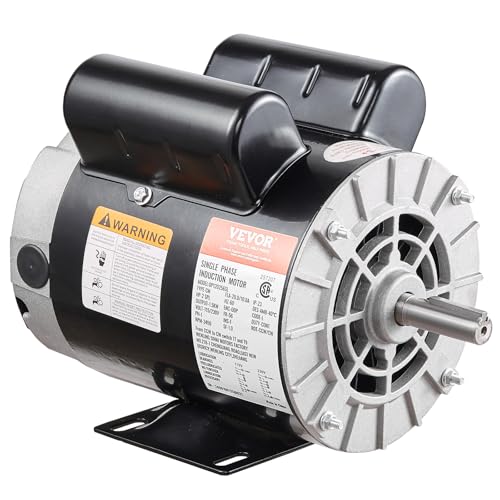
VEVOR 2HP Air Compressor Electric…
High Performance: 2HP SPL 3450 RPM, Single Phase, Full Load Amps: 20/10 Amps, 115V/230V, SF: 1.0. Frame Type: 56 Frame, 5/8″ Keyed shaft, 1.88″ Shaft length, 0.188″ Keyway Size. Open…

VEVOR 1.5HP Electric Motor 3450…
Powerful Performance: 1.5HP, Single Phase, Full Load Current: 15.0/7.5A, AC 115V/230V 60Hz, 3450 RPM High Speed, SF: 1.15. Sturdy Frame Type: 56 Frame, 5/8″ Keyed Shaft, Shaft length: 1.88″, Keyway…

2HP General Purpose Electric Motor…
General Purpose Single Phase Motor: HP – 2, POLE – 2,FRAME – 56C, ENC – TEFC,IP – 55 Detailed Parameters: HZ: 60HZ, Voltage: 115V/230V, AMP: 18.2A/9.1A , RPM: 3450 INS…
VEVOR 2HP Electric Motor for Heavy-Duty Tools

The VEVOR 2HP motor offers the power range many serious home woodworkers want in a replacement motor. It runs at 3,450 RPM, which suits many belt-driven machines that need fast blade speed. The 56-frame design and 5/8-inch keyed shaft are important fit details for compatible equipment. Before buying, I would compare the motor frame, shaft length, pulley position, and mounting holes with the original motor.
This motor supports 115V or 230V input and uses a single-phase setup. That gives a homeowner more wiring flexibility, although the correct voltage connection must follow the motor diagram and local electrical rules. The shaft can run clockwise or counterclockwise, with the factory setting listed as counterclockwise. For a table saw conversion, pulley alignment matters just as much as horsepower, so careful setup remains essential.
Pros:
- Strong 2HP rating for demanding cuts
- High 3,450 RPM operating speed
- Dual-voltage 115V and 230V support
- Common 56-frame format
- 5/8-inch keyed shaft works with many pulleys
- Selectable clockwise or counterclockwise rotation
Cons:
- It may need pulley or belt changes on some saws
- Wiring requires careful attention to voltage and direction
- It may be more power than a light portable saw needs
My Recommendation
I recommend this VEVOR model for a fixed workshop saw, belt-driven saw, or other machine that can accept a 56-frame motor. It is especially useful for users who want a 2HP motor but still need 115V and 230V flexibility. Its speed and shaft size make it a strong candidate among the best table saw electric motors, provided the mechanical fit is correct. Check the saw manual and motor plate before ordering. For the right setup, it offers good power without moving into a much larger industrial motor.
VEVOR 1.5HP 3450 RPM Electric Motor

This 1.5HP VEVOR motor sits in a useful middle ground. It gives more working strength than a small 1HP motor without the extra demand of a 2HP unit. Its 3,450 RPM rating is suitable for many high-speed belt systems. The 56-frame body and 5/8-inch keyed shaft also make it worth considering for compatible table saw assemblies.
The motor accepts either 115V or 230V power and uses a single-phase circuit. It also allows clockwise or counterclockwise rotation, which helps when a pulley must turn in a particular direction. I like this level of flexibility for repair work because it can fit more shop layouts. Still, the motor is not a universal table saw replacement; shaft length, mounting style, and pulley alignment must match.
Pros:
- Balanced 1.5HP output for many home workshops
- 3,450 RPM speed supports fast blade operation
- Dual-voltage design adds installation flexibility
- Single-phase power suits common residential shops
- 5/8-inch keyed shaft helps secure the pulley
- Reversible rotation supports different machine layouts
Cons:
- Not as strong as a 2HP motor for thick hardwood
- It still needs a compatible 56-frame mount
- Incorrect pulley sizing can reduce cutting performance
My Recommendation
This motor is best for woodworkers who want a sensible upgrade over a weak stock motor. It can suit a medium-size stationary saw, shop-built saw, or belt-driven machine that does not require full 2HP output. I see it as one of the best table saw electric motors for balanced performance and household voltage options. It may also help users who want to limit electrical demand while keeping useful torque. Confirm the original motor’s frame and shaft measurements first.
2HP General Purpose 3450 RPM Electric Motor

This 2HP general-purpose motor is designed for users who need a simple, strong replacement. Its 3,450 RPM speed fits many fast belt-driven machines, including compatible saw systems. The 5/8-inch shaft diameter is a common size for pulleys and couplers. However, the word “general purpose” means I would not assume a direct fit without measuring the original motor.
A 2HP motor can help a table saw maintain speed when the blade enters dense wood. That extra reserve may reduce stalling during wide rip cuts, but it also places more demand on the circuit, belt, arbor, and saw frame. The best installation uses a properly sized pulley, a sound belt, and a firm mounting plate. Users should also check whether the motor supports the voltage and rotation required by their machine.
Pros:
- Useful 2HP power for demanding shop tasks
- 3,450 RPM speed suits many belt systems
- Common 5/8-inch shaft diameter
- General-purpose design supports more than one machine type
- Can help maintain blade speed in dense wood
- Simple format may suit custom saw builds
Cons:
- It may not include every feature of a dedicated saw motor
- Fit depends on frame, mount, shaft length, and pulley location
- A 2HP load may need a suitable circuit and switch
My Recommendation
I would point this motor toward experienced DIY builders and repair users who can verify every fit detail. It is a strong choice for a custom table saw or older stationary saw with a replaceable belt motor. It belongs in a discussion of the best table saw electric motors because it offers useful power and a familiar shaft size. It is less suitable for someone seeking a simple plug-in replacement. If you can measure and wire the system correctly, its general-purpose design offers solid value.
VEVOR 1HP 3450 RPM Electric Motor

The VEVOR 1HP motor targets lighter equipment and smaller shop needs. It runs at 3,450 RPM and uses a 56C frame with a 5/8-inch keyed shaft. These details may match some compact table saws, belt-driven saws, and shop-built machines. A 1HP motor will not match the cutting reserve of a 2HP unit, but that does not make it a poor choice for light work.
This model supports 115V and 230V operation and offers clockwise or counterclockwise rotation. That makes it easier to plan around an existing shop circuit or machine layout. I would use it for thinner boards, softwood, trim work, and moderate cuts rather than repeated heavy ripping. A sharp blade and correct feed rate will help this motor perform at its best.
Pros:
- Lower power demand than larger motors
- 1HP output suits light and medium cutting
- Fast 3,450 RPM operating speed
- 115V and 230V voltage options
- 56C frame may fit compact equipment
- Reversible rotation adds setup flexibility
Cons:
- Limited reserve for thick hardwood or deep cuts
- It may stall sooner under a heavy feed rate
- Users must still confirm the exact frame and shaft fit
My Recommendation
This is one of the best table saw electric motors for a light-duty user who does not need maximum power. It can make sense for a compact saw, hobby bench, or small custom machine. I would not choose it for constant cabinet-shop work or thick hardwood production. Its dual-voltage format and modest output make it friendly for many home shops. As always, compare the motor plate and mounting measurements before replacing the old unit.
2HP SPL Air Compressor Motor, 3450 RPM

This 2HP SPL motor runs at 3,450 RPM and uses a 56-frame body with a 5/8-inch keyed shaft. The listed shaft length is 1.88 inches, which is a key measurement when positioning a pulley. It supports 115V or 230V single-phase power and lists commercial-duty counterclockwise rotation. Those specifications may suit a converted or belt-driven saw, but the original saw must accept the motor’s shape and direction.
The motor is marketed for air compressors, so I would treat it as a general replacement candidate rather than a guaranteed table saw motor. Compressor motors often provide useful high-speed power, yet saw applications also require correct pulley ratios and safe guarding. A motor that spins at the right RPM can still produce the wrong blade speed if the pulley sizes are mismatched. Careful alignment will reduce belt wear, vibration, and unwanted noise.
Pros:
- Strong 2HP rating for demanding cuts
- 3,450 RPM speed supports fast belt drive systems
- Dual-voltage single-phase operation
- 56-frame design may fit common mounts
- 1.88-inch shaft length gives a useful fit reference
- Keyed shaft helps prevent pulley slip
Cons:
- Counterclockwise rotation may not suit every saw
- Designed for compressors, not specifically table saws
- Correct pulley ratio and guarding are the buyer’s responsibility
My Recommendation
I recommend this option for a knowledgeable owner who needs a 2HP replacement and can work with counterclockwise rotation. It may serve as one of the best table saw electric motors for a custom belt-driven setup, especially where the shaft length matches the pulley plan. I would avoid it as a blind purchase for a direct-drive saw. Its value depends on the complete installation, not just the horsepower number.
EliteEdge 2HP 230V Electric Motor

The EliteEdge motor is a 2HP model listed for 230V service with a stated draw of 17.6 amps. That makes it a high-demand option that requires more planning than a small household motor. It may provide strong cutting support when a shop has an appropriate dedicated circuit. I would review the full nameplate, wiring diagram, overload protection, and breaker requirements before installation.
For a table saw, electrical fit is as important as mechanical fit. A 230V motor can work well in a fixed workshop, but it may not suit a portable saw or a garage with only a basic 120V circuit. The motor’s power can help with large stock, yet it cannot correct a dull blade, poor belt tension, or a weak arbor. Use the correct switch and disconnect, and have a qualified electrician handle uncertain wiring.
Pros:
- 2HP output offers useful cutting strength
- 230V operation can suit a fixed workshop
- High power reserve may reduce bogging
- Good candidate for heavier belt-driven equipment
- May support demanding work with the right circuit
- Focused power setup can suit a dedicated machine
Cons:
- 230V and 17.6-amp service can limit installation options
- Not ideal for a basic portable or home circuit
- Buyers must verify full motor specifications before use
My Recommendation
This motor is best for a fixed shop with suitable 230V wiring and a compatible motor mount. I would consider it for a serious DIY builder or small professional workspace, not a casual user. Among the best table saw electric motors, it stands out for users who already planned a higher-voltage system. Its value is good only when the circuit, switch, protection, and saw frame all match. Never improvise electrical connections to save time.
Ridgid TS2400 Carbon Brush Motor Kit

This listing is different from the full replacement motors above. It contains a two-pack of carbon brushes for the Ridgid TS2400 table saw motor. Carbon brushes wear over time, and worn brushes can cause arcing, intermittent operation, weak starts, or excess noise. If the saw’s armature and other motor parts remain healthy, replacing the brushes may restore operation at a much lower cost than buying a complete motor.
Compatibility matters greatly here. I would compare the brush shape, dimensions, terminal style, spring arrangement, and saw model before ordering. A brush set cannot repair burned windings, damaged commutators, failed bearings, or a broken switch. Unplug the saw before opening the motor housing, and keep track of the brush orientation during service.
Pros:
- Low-cost repair path for a compatible Ridgid TS2400
- Two brushes provide a matched replacement pair
- May correct weak starts and intermittent running
- Can extend the life of an otherwise sound motor
- Much easier to store than a full replacement motor
- Useful for routine motor maintenance
Cons:
- It is not a complete electric motor
- Fit may be limited to the specified saw and brush design
- It cannot fix serious armature or winding damage
My Recommendation
I recommend this brush kit only for a Ridgid TS2400 owner who has confirmed matching dimensions and symptoms. It is not one of the best table saw electric motors because it is a service part, but it may be the smartest repair when brushes are the true fault. I would inspect the commutator and brush holders at the same time. For a worn but otherwise healthy saw, this small part can provide excellent value.
7.5HP 184T Frame Electric Motor

This 7.5HP motor is in a very different class from normal home table saw motors. It runs at 3,450 RPM and uses a large 184T frame with 208V to 230V single-phase power. That output is intended for substantial machinery, not a typical portable or contractor saw. Its large frame, current demand, and mounting needs make a full machine assessment essential.
More horsepower does not automatically create better cuts. On a table saw, the arbor, belt, bearings, trunnion, blade guard, switch, and structure must all handle the motor’s force. A small saw could become unsafe or suffer mechanical damage if paired with excessive power. I would reserve this motor for a purpose-built heavy machine, industrial conversion, or shop system designed around its size.
Pros:
- Very high 7.5HP output
- 3,450 RPM speed for heavy machinery
- Large 184T frame suits industrial equipment
- 208V to 230V range fits some commercial shops
- Strong reserve for large cutting systems
- Single-phase design may help where three-phase power is unavailable
Cons:
- Far too large for most residential table saws
- Requires major electrical and mechanical planning
- Its cost and power may be wasteful for normal woodworking
My Recommendation
I would not recommend this motor for a standard table saw. It is best for industrial users and experienced builders designing a heavy-duty machine from the ground up. It does not rank among the practical best table saw electric motors for most readers because the saw must be built to match it. If your equipment genuinely requires 7.5HP, verify the frame, shaft, overload system, and electrical service with a qualified professional. For ordinary shop work, choose a smaller motor.
2HP Three-Phase TEFC Electric Motor

This 2HP general electric motor uses three-phase power and runs at 3,450 RPM. It supports 230V or 460V service and includes a TEFC design, which means the motor enclosure helps protect the internal parts from outside dust and moisture. That protection is useful in a busy shop, where fine dust can shorten motor life. The motor also supports clockwise and counterclockwise rotation.
Three-phase power can provide smooth motor operation, but most homes do not have standard three-phase service. A suitable phase converter or variable-frequency drive may be required, and that adds cost and setup work. The 2HP rating is useful for a stationary saw, but the motor’s frame and shaft must match the drive system. I would choose it only when the shop already supports three-phase equipment or the owner understands the conversion plan.
Pros:
- 2HP output suits many stationary machines
- 3,450 RPM speed supports fast cutting systems
- TEFC enclosure helps limit dust entry
- 230V and 460V three-phase options
- Reversible rotation supports flexible installation
- May run smoothly in a commercial shop
Cons:
- Three-phase power is uncommon in most homes
- A converter or VFD may be needed
- It may require more setup knowledge than a single-phase motor
My Recommendation
This motor is best for a commercial shop or advanced woodworker who already uses three-phase power. It can be one of the best table saw electric motors for a fixed industrial setup because of its TEFC enclosure and flexible voltage range. I would not select it for a normal garage saw without first pricing the required electrical equipment. When properly matched, it can offer smooth, durable service. When poorly matched, it becomes an expensive and complex project.
How I Evaluate the Best Table Saw Electric Motors
Horsepower is the first number many shoppers see, but it is not the only number that matters. I start with the saw’s original motor plate and manual. I record voltage, current, phase, RPM, frame, shaft diameter, shaft length, rotation, and mounting style. A motor can have impressive power and still fail as a replacement if one of these details is wrong.
I also consider the work you do. A hobbyist cutting pine does not need the same motor as a cabinet shop ripping thick maple all day. A portable saw often uses a compact universal motor, while a stationary saw may use an induction motor and belt drive. These systems are not interchangeable by appearance alone.
Finally, I look at safety and long-term value. The motor must work with the saw’s switch, overload protection, belt, arbor, pulley, and guard system. I favor a motor that meets the real need without adding needless electrical load. That approach helps narrow the list of the best table saw electric motors to options that make sense in actual workshops.
What Horsepower Do You Need?
A 1HP motor may be enough for light cuts in softwood and thin boards. It can also suit a small saw that was designed around that output. A 1.5HP motor gives a useful step up for general home projects. It offers more reserve while still staying moderate in size and electrical demand.
A 2HP motor is a common target for a serious stationary saw. It can hold blade speed better during wide rips and dense stock. Yet a bigger motor cannot make an undersized saw safe. The arbor, trunnion, belt, and frame must support the added force.
Motors above 3HP belong to larger equipment in most cases. The 7.5HP model in this guide shows how quickly the fit can move from home repair to industrial design. I would never install a high-output motor simply because the horsepower number looks attractive. Match the motor to the saw, circuit, and work.
Induction Motor Versus Universal Motor
Induction motors often appear on stationary and belt-driven table saws. They tend to run smoothly and may produce less high-pitched noise than universal motors. Their service life can be long when the bearings, belt, and cooling openings stay clean. Many of the motors reviewed here are induction-style general-purpose units.
Universal motors are common on portable saws. They can provide strong power from a compact body and standard household power. They also tend to make more noise and use carbon brushes, which wear over time. A brush replacement, such as the Ridgid TS2400 part listed above, can sometimes solve a small motor problem.
Do not replace one motor type with another without checking the design. A portable saw may need its original electronic control, brake system, or direct-drive layout. A belt-driven induction motor may need a separate switch and overload protector. The best table saw electric motors always match the system around them.
Why RPM and Pulley Size Matter
Most motors listed here run at 3,450 RPM. That number describes motor speed, not always the final blade speed. In a belt system, the motor pulley and arbor pulley set the speed ratio. A larger motor pulley can make the arbor turn faster, while a smaller one can slow it down.
Blade speed must remain within the saw and blade maker’s limits. Too much speed can create heat, vibration, and a serious safety risk. Too little speed can reduce cut quality and make the motor work harder. I always check the existing pulley sizes before changing a motor.
Alignment also deserves attention. The motor shaft and arbor shaft should remain parallel, and the pulleys should sit in the same plane. A straightedge can help check alignment. Correct belt tension should stop slip without placing excess load on the bearings.
Frame Size and Shaft Fit
A 56-frame motor is common in many general-purpose applications, but “56” does not guarantee a perfect fit. Some motors use a 56C face mount, while others use a different mounting base. The bolt pattern and shaft center height can vary. Compare the old motor with the new motor drawing or measurements.
The 5/8-inch keyed shaft appears on several products in this guide. The key helps transfer torque from the shaft to the pulley. Shaft length also matters because too little exposed shaft may not fully support the pulley. Too much exposed shaft can create alignment or guarding problems.
Measure before you buy. Note the shaft diameter, keyway, exposed length, frame, mounting holes, and distance from the base to the shaft center. This simple step can prevent a return and a long delay. It is one of the most useful habits when shopping for the best table saw electric motors.
Voltage, Amps, and Phase
Many home shops use 120V single-phase power. A dual-voltage motor may allow 115V or 230V operation, but the connection must follow the nameplate diagram. The motor’s current draw can change with voltage. A lower voltage often requires more amps for the same output.
Some larger motors use 230V only. That may work well in a dedicated shop circuit, but it is not a simple choice for every garage. Three-phase motors need three-phase supply, a VFD, or another approved solution. Do not guess at electrical work.
Amps also affect the switch, cord, breaker, and overload protection. A motor that trips the breaker may have a poor circuit, wrong wiring, a mechanical bind, or a failing motor. A qualified electrician can confirm the circuit and protection. Safety is more important than a quick replacement.
TEFC, ODP, and Shop Dust
TEFC means totally enclosed fan cooled. This enclosure helps reduce the path for dust and debris to reach the windings. It does not make the motor waterproof, and it still needs clear airflow around the housing. TEFC can be a useful feature in a dusty woodworking shop.
ODP means open drip proof. An ODP motor has more open ventilation and may cool well in a clean, dry location. However, the openings can allow more dust inside. The 7.5HP motor listed above uses an ODP design, so I would place it only in a suitable environment with regular cleaning.
Wood dust can collect around vents, cooling fins, and switches. I use dust collection and compressed air only as directed by the motor maker. Blowing dust deeper into a motor can cause trouble. Keep the motor cool, dry, and free from heavy buildup.
Installation Tips for a Replacement Motor
Start by unplugging the saw and documenting the old wiring. Take clear photos before removing the motor. Mark the belt path, pulley position, and rotation direction. This record can save time when the new motor arrives.
Check the motor mount before tightening anything. The shaft should line up with the arbor, and the belt should run straight. Adjust the motor position to set proper tension. A belt that is too tight can damage bearings, while a loose belt can slip and heat up.
Turn the arbor by hand before powering the saw. It should move smoothly without scraping or binding. Then test the motor briefly with the blade removed or safely guarded, following the manufacturer’s procedure. Listen for unusual hum, vibration, grinding, or rapid heating.
Rotation is critical. A reversed motor can send the blade in the wrong direction and create a dangerous condition. Confirm the blade direction and switch operation before cutting wood. If you are unsure about wiring, stop and get professional help.
Common Mistakes to Avoid
The most common mistake is choosing by horsepower alone. A 2HP motor with the wrong frame will not bolt in. A 3,450 RPM motor with the wrong pulley ratio may produce an unsafe blade speed. Numbers must work together.
Another mistake is ignoring the circuit. A motor may start poorly or trip protection when the wire, breaker, switch, or voltage is wrong. Extension cords can also cause voltage drop, especially with high-current motors. Use a properly sized circuit.
Some buyers also forget rotation. A motor that turns counterclockwise may not suit a saw designed for clockwise rotation. Reversible models help, but the direction still must be set correctly. Never rely on an online photo to determine rotation.
Finally, do not overlook the saw itself. Worn bearings, a bent arbor, poor belt tension, and a dull blade can mimic a weak motor. Inspect the full drive system before deciding that the motor has failed. This can save money and improve safety.
Best For Comparison
| Best for | Why |
|---|---|
| Most serious home workshops | A compatible 1.5HP or 2HP dual-voltage motor offers useful power and flexible wiring. |
| Light hobby work | A 1HP motor can handle moderate cuts while limiting size and electrical demand. |
| Industrial or custom machines | Large 7.5HP or three-phase motors suit equipment designed for commercial power and structure. |
Buying Guide: How to Choose With Confidence
First, identify whether your saw uses a direct-drive or belt-drive system. A direct-drive portable saw normally needs a motor made for that exact assembly. A belt-drive stationary saw may accept a general-purpose induction motor if the frame and shaft match.
Next, write down the old motor’s nameplate data. Include horsepower, RPM, voltage, amps, phase, frame, and rotation. If the plate is missing, check the saw manual or manufacturer parts list. Do not estimate these values from the saw’s outside appearance.
Then measure the physical parts. Check the mounting holes, shaft diameter, shaft length, shaft center height, pulley bore, and key size. Compare these measurements with the replacement listing. If one key measurement is unclear, ask the seller before ordering.
Think about your actual cuts. A person who builds small shelves may prefer a moderate motor with low electrical demand. A user who rips thick hardwood may need a stronger motor and a dedicated circuit. The best table saw electric motors should fit your work, not someone else’s shop.
Review safety parts too. Confirm that the saw has a working switch, overload protection, blade guard, riving knife, and dust collection plan. A new motor does not replace these controls. A safe setup protects your hands, your stock, and the motor itself.
Maintenance Tips for Longer Motor Life
Keep the motor clean and dry. Dust the cooling openings and surrounding area often. Make sure the fan can move air and that the motor does not sit against a wall or pile of lumber. Heat is a quiet enemy of electric motors.
Inspect the belt for cracks, glazing, and uneven wear. Check pulley alignment whenever you move the motor or change the belt. Replace a damaged belt before it breaks during a cut. A stable belt also reduces vibration.
Listen during startup and operation. A new hum, rattle, smell, or rise in heat deserves attention. Stop the saw and inspect it rather than pushing through the problem. Early repair often costs less than a burned winding or damaged arbor.
For brushed motors, inspect carbon brushes as part of normal service. Replace them as a pair when they become short or damaged. A brush repair may restore a saw, but continued arcing can point to a deeper fault. Follow the exact service guidance for the saw model.
FAQs Of best table saw electric motors
What horsepower is best for a table saw?
For many stationary home saws, 1.5HP to 2HP is a practical range. Light portable saws may use less, while industrial machines may need much more. Always match the motor to the saw’s original design, circuit, arbor, and belt system.
Can I use an air compressor motor on a table saw?
Sometimes, but not as a guaranteed direct replacement. Check the frame, shaft, RPM, rotation, voltage, mounting holes, and pulley position. You must also confirm that the switch, belt, and saw structure can safely support the motor.
Is a 3,450 RPM motor suitable for a table saw?
It can be suitable for a belt-driven saw, but final blade speed depends on pulley sizes. Check the saw and blade limits before changing pulley ratios. Never assume motor RPM equals safe arbor RPM.
Do I need a 230V motor for woodworking?
No. Many home users can work well with a compatible 115V motor. A 230V motor may reduce current on the supply side, but it needs the correct circuit and wiring. Choose voltage based on your shop and saw requirements.
How do I know if my table saw motor brushes are worn?
Common signs include arcing, weak starts, intermittent power, unusual noise, and reduced performance. Unplug the saw before inspection. Replace brushes only when the replacement matches the saw and brush holder exactly.
Final Verdict: Which Should You Buy?
For many fixed home shops, the VEVOR 2HP dual-voltage motor is the strongest overall pick, while the 1.5HP VEVOR suits lighter work. These are among the best table saw electric motors when frame, shaft, pulley, and wiring match.
Choose by fit first and power second. The right best table saw electric motors replacement can restore smooth cuts, reduce strain, and extend your saw’s useful life.