
The DEWALT DWE7491RS is the best table saw infeed choice for stable support, wide rips, and easy jobsite use.
Have you ever guided a long board into a table saw, only to feel it dip, twist, or push back? That small movement can ruin a cut and make a simple task feel unsafe. The right table saw infeed support keeps stock level as it reaches the blade. It can be a roller stand, folding workbench, saw stand, or a full saw with built-in support. I reviewed the leading options for home shops, remodel work, and jobsite use so you can choose steady support without wasting money.

DEWALT Table Saw 10 Inch…
Rack & Pinion Telescoping Fence System Make fence adjustments fast, smooth and accurate Patented material support, can be used for narrow rip cuts. 32-1/2″ rip capacity easily cuts a variety…

SKIL 15 Amp 10 Inch…
RACK AND PINION FENCE RAILS – Ensures fence stays parallel to blade for fast smooth, and accurate cuts INTEGRATED FOLDING STAND – Legs quickly fold in to provide portability and…

SHALL Roller Stand, Heavy-Duty Folding…
Heavy-Duty Load Capacity: 250 lbs per chrome-plated steel roller stand, easily handling bulky lumber, plywood, and sheet materials for cutting, sanding, or assembly Telescoping Height Adjustment: 27.8 inch to 43…
DEWALT DWE7491RS Table Saw
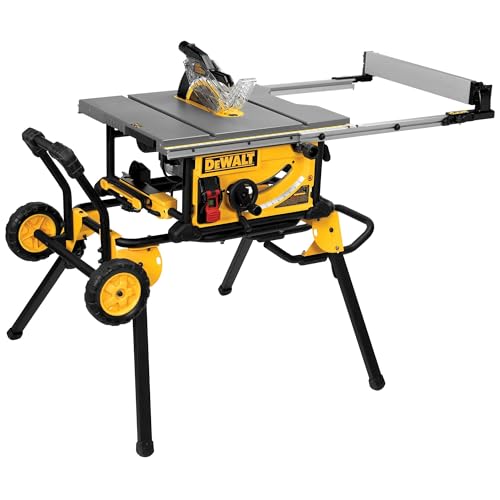
The DEWALT DWE7491RS is a strong choice when you want the saw and infeed setup to work as one unit. Its 15-amp motor reaches 4,800 RPM, and its 10-inch blade handles common framing and cabinet tasks. The rolling stand gives the saw a firm base while still letting you move it around a garage or jobsite. Its wide 32-1/2-inch rip capacity also helps when you cut sheet goods.
I especially like the rack-and-pinion fence because it makes small fence changes fast and repeatable. The telescoping fence gives long boards more support before they reach the blade, which reduces sudden drops. The stand folds for storage, but it still feels solid when locked open. For many woodworkers, this is the best table saw infeed setup because it combines built-in support, a wide fence, and useful mobility.
Pros:
- Wide 32-1/2-inch rip capacity
- Fast rack-and-pinion fence adjustment
- Strong 15-amp motor for demanding cuts
- Rolling stand improves setup and movement
- Telescoping support helps with wide boards
- Large controls are easy to reach
Cons:
- Heavier and larger than basic portable saws
- Costs more than many entry-level models
- Extra infeed support may still help with very long stock
SKIL TS6307-00 Portable Table Saw
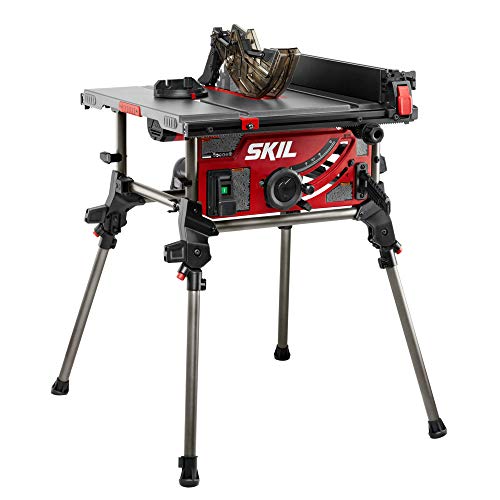
The SKIL TS6307-00 brings useful table saw support to a smaller budget. Its 15-amp motor and 10-inch blade suit ripping, crosscutting, and basic sheet work. The folding stand helps users who need a saw that can move from a shed to a driveway. It also keeps the working height comfortable for most cuts.
The saw has a rack-and-pinion fence system that makes alignment less frustrating than a loose sliding fence. Its wide working surface provides a helpful lead-in area for short and medium boards. I would pair it with a roller stand when cutting long lumber, since portable saw tables have limited room. For a first shop saw, the SKIL offers a practical best table saw infeed foundation without a high price.
Pros:
- Good value for home woodworkers
- 15-amp motor supports common wood cuts
- Folding stand saves storage space
- Rack-and-pinion fence improves adjustment
- Portable design suits small work areas
- Simple controls help new users learn quickly
Cons:
- Less rip capacity than larger jobsite models
- Lightweight design may move on uneven floors
- Long boards need a separate infeed or outfeed stand
SHALL Heavy-Duty Roller Stand

The SHALL Heavy-Duty Roller Stand is made for the moment when your saw table ends but your board does not. Its 250-pound capacity gives it enough strength for many boards, panels, and workpieces. The folding frame stores easily against a wall or inside a vehicle. Adjustable height lets you match the stand to your table saw instead of forcing the saw to fit the stand.
The roller head helps lumber move forward with less drag. That matters when you work alone and cannot hold both the board and the fence at once. I find a roller stand most useful as a simple table saw infeed accessory for rough lumber and long trim. Set it slightly below the saw table so the stock stays supported without lifting away from the fence.
Pros:
- Supports long boards before the blade
- 250-pound rated capacity
- Adjustable height suits many saws
- Folds for quick storage
- Roller reduces friction during feeding
- Useful for saws, planers, and other tools
Cons:
- One stand may not support very wide panels
- Roller support does not replace a stable saw base
- Height must be set carefully for accurate feeding
WORX WX051 Folding Workbench
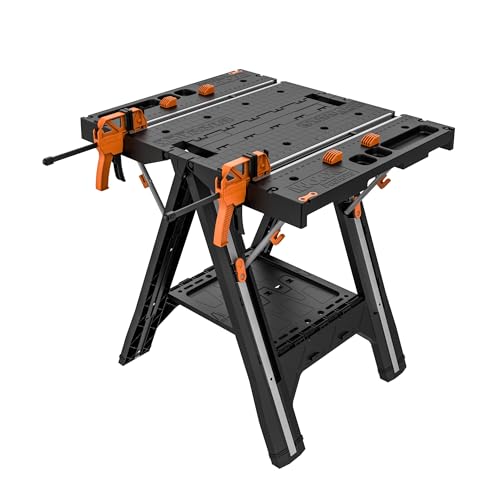
The WORX Pegasus WX051 is more than a support stand. It works as a folding workbench and a sawhorse, so it can serve several jobs in a small workshop. The plastic-and-metal frame is light enough to carry, yet it gives a broad surface for supporting boards. Its built-in clamping points can also help hold work during layout or assembly.
I would use this workbench as a flexible table saw infeed when I need a support surface that can do more than roll lumber. It works well for short boards, trim, and light panels. The top does not act like a precision extension table, so I would check the height before each cut. Its best value comes from its many uses after the sawing task is complete.
Pros:
- Folds for simple transport and storage
- Works as both workbench and sawhorse
- Broad top supports many small projects
- Useful clamping points improve work control
- Lightweight for home and jobsite use
- Versatile design saves space and money
Cons:
- Not ideal for very heavy sheet goods
- Top may need height adjustment beside a saw
- Plastic surface is not a true precision extension
BORA Conveyor Roller Stand

The BORA Adjustable Conveyor Roller Stand gives a smoother path for long stock. Its conveyor-style rollers are helpful when a single roller feels too restrictive or when the board has a wide bottom. The height adjusts to match a table saw, and the frame folds when the job ends. This design can support infeed and outfeed work, depending on where you place it.
Multiple rollers spread the load across the board instead of creating one pressure point. That can make feeding feel more controlled when cutting long boards or panels. I still keep one hand guiding the stock and one hand controlling the feed path; a stand should support the work, not replace safe technique. For users seeking the best table saw infeed for smoother movement, the BORA is a strong accessory choice.
Pros:
- Conveyor rollers help boards move smoothly
- Adjustable height fits many table saws
- Supports wider stock than a narrow roller
- Folding frame stores in limited space
- Can serve as infeed or outfeed support
- Useful for several shop machines
Cons:
- Needs a level floor for best results
- Rollers may not hold tiny workpieces securely
- Requires careful setup beside the saw
WORKESS Rolling Table Saw Stand
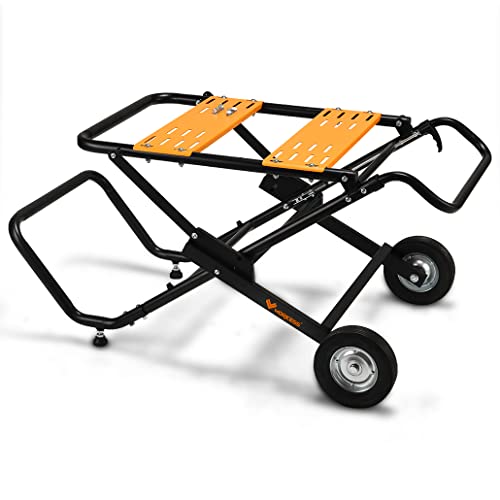
The WORKESS Portable Table Saw Stand focuses on mobility and load support. Its 330-pound capacity gives it useful headroom for a saw, accessories, and normal workpieces. Eight-inch wheels make it easier to move across a garage or smooth jobsite surface. The foldable frame also helps users reclaim floor space when the saw is not in use.
This stand can improve infeed work because it places the saw at a more useful working height. A stable base reduces rocking, and less rocking means less effort when guiding stock. I would confirm the mounting pattern and dimensions before ordering because table saw bodies vary by brand. For a portable shop that needs a rolling base, the WORKESS can be a practical part of the best table saw infeed system.
Pros:
- 330-pound load capacity
- Large wheels improve movement
- Foldable design helps with storage
- Raises the saw to a comfortable height
- Heavy-duty frame supports regular use
- Suitable for many table saw brands
Cons:
- Universal fit still requires measurement
- Large frame may need more storage room
- Wheels work best on firm, level surfaces
SHALL 3-in-1 Roller Stand

The SHALL 3-in-1 Heavy-Duty Roller Stand gives you more than one way to support stock. Its adjustable head can work as a roller, ball support, or wider contact surface, depending on the task. The 250-pound capacity is suitable for many boards and panels. A folding frame makes it easy to carry and store after a cutting session.
This flexibility helps when your material changes from a narrow board to a wide panel. A roller helps with long rips, while a wider support mode can steady stock with a broad base. I like this kind of tool for a mixed-use shop because it avoids buying several single-purpose stands. It is a smart best table saw infeed accessory for users who value flexibility over a permanent extension table.
Pros:
- Three support modes suit different materials
- 250-pound rated load capacity
- Adjustable height for better alignment
- Folds for storage and transport
- Works with table saws and other machines
- Wide support option helps with panels
Cons:
- More moving parts need proper adjustment
- Not as stable as a fixed shop extension
- One stand may not support a full sheet alone
Evolution R10TBLX Jobsite Table Saw

The Evolution R10TBLX is a portable jobsite saw with a wheeled stand and a 15-amp motor. Its 10-inch blade provides a 3-3/8-inch maximum cut depth, while the bevel range reaches 45 degrees. A zero-clearance throat plate can help support smaller offcuts and reduce tear-out around the blade. The included dado plate adds useful flexibility for compatible dado work.
The wheeled stand makes setup easier when you move between rooms or sites. Its 26-inch rip capacity handles many everyday boards and panels, though larger sheet goods may need extra support. The precision fence is important because a good fence keeps the board tracking straight into the blade. For buyers who want a complete portable saw with useful infeed features, this Evolution model deserves attention.
Pros:
- Wheeled stand improves jobsite mobility
- 15-amp motor supports general cutting
- Zero-clearance plate helps smaller workpieces
- Dado plate adds cutting versatility
- 26-inch rip capacity suits many projects
- Bevel adjustment supports angled cuts
Cons:
- May need added support for full sheets
- Less established accessory support than some major brands
- Portable stand still needs a level setup
VEVOR Rolling Table Saw Stand

The VEVOR Portable Table Saw Stand is designed for users who want a rolling base at a competitive price. It lists a 350-pound load capacity and uses eight-inch rubber wheels for movement. The foldable frame can make a portable saw easier to store in a garage or workshop. Its universal design aims to fit many saw brands, but you should check measurements before purchase.
A rolling stand can improve the whole infeed experience by reducing setup time. When the saw sits level and does not shift, you can focus more on the fence and the board. Rubber wheels may also move more quietly over smooth flooring than hard plastic wheels. I see this as a useful best table saw infeed base for budget-minded users who still want strong load support.
Pros:
- 350-pound listed load capacity
- Eight-inch rubber wheels support mobility
- Folds for compact storage
- Universal design suits many saws
- Heavy-duty frame improves stability
- Useful for garage and jobsite setups
Cons:
- Fit must be checked for each saw
- May be too large for very small shops
- Rolling bases need wheel locks during cuts
SKIL SPT99-11 Worm Drive Table Saw
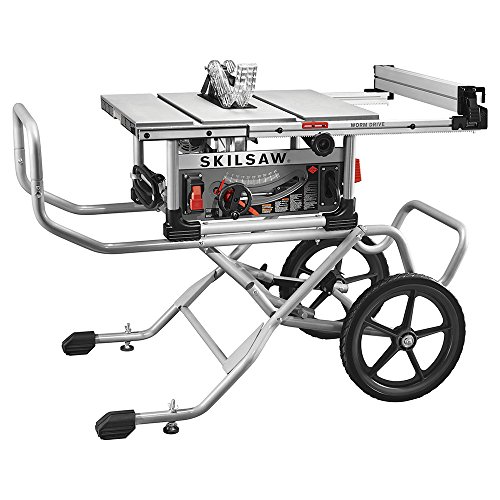
The SKIL SPT99-11 is built for users who want high cutting power and a strong stand. Its 10-inch worm drive design is suited to demanding rip cuts in framing lumber and thick stock. The included stand gives the saw a sturdy platform and helps keep the work surface at a comfortable height. It is larger and heavier than a basic portable saw, but that extra mass can help during long cuts.
The saw includes a wide rip range that makes it useful for larger boards and sheet goods. Its fence and support areas give the operator a better starting point than a very small tabletop saw. I would still add a roller stand for long stock, especially when working alone. If power and stability matter more than light weight, this is a strong contender for the best table saw infeed in a serious home shop.
Pros:
- Powerful worm drive motor design
- Sturdy included stand
- Handles demanding rip cuts
- Suitable for thicker construction stock
- Good working height for repeated cuts
- Strong choice for serious DIY users
Cons:
- Heavier than many portable jobsite saws
- Takes more room to store
- Long stock still benefits from separate support
My Recommendation
I recommend the DEWALT DWE7491RS for most people who want the best table saw infeed with a complete, ready-to-use setup. Its wide rip capacity, rolling stand, and rack-and-pinion fence make it easy to control in a garage, workshop, or jobsite. The SKIL SPT99-11 is a better match for users who value cutting power and a heavy stand. If you already own a saw, the BORA conveyor stand or SHALL roller stand can solve the infeed problem without replacing your machine.
Before buying, measure your saw table height and the space around it. The support should sit level with, or just slightly below, the saw table. It should never push the board upward or pull it away from the fence. I also recommend locking wheels, checking the fence alignment, and keeping the blade guard and riving knife fitted whenever the cut allows it.
| Best for | Why |
|---|---|
| Most home shops | DEWALT DWE7491RS combines a wide rip range, rolling stand, and fast fence adjustment. |
| Long boards and panels | BORA and SHALL roller stands add adjustable support before the stock reaches the blade. |
| Power-focused users | SKIL SPT99-11 offers a strong worm drive motor and a sturdy working platform. |
How to Choose the Best Table Saw Infeed
The best table saw infeed is not always the biggest table or the most expensive stand. It is the setup that keeps your material flat, straight, and easy to control. A good infeed system should match the saw height, the board length, and the work you do most often. I look at six points before I recommend any support tool.
Match the support height
Height is the first thing to check. If the support is too high, it can lift the board and press it away from the fence. If it is too low, the board may drop as it reaches the saw, which can cause a rough cut or a sudden change in feed pressure. Place a straight board across the support and saw table to check the path before turning on the machine.
Consider the material size
A short board may need no extra support. A long board can act like a lever and pull against the saw. Full plywood sheets need broad support, not just a small roller. For large panels, I prefer a wide folding workbench, two roller stands, or a dedicated outfeed and infeed table.
Choose rollers or a flat surface
Rollers reduce friction and help long boards move forward. They work well with straight lumber and repeated rip cuts. A flat workbench gives better support for panels and small pieces, but it may create more drag. Conveyor rollers offer a useful middle ground when you cut different stock sizes.
Check stability
Infeed support must not slide while you work. A lightweight stand can be useful, but it needs a broad base and secure feet. Lock the wheels before cutting. If the floor slopes or has cracks, place the saw and stand on a more stable area rather than trying to force an uneven setup.
Think about storage and transport
Many home woodworkers do not have a permanent shop. A folding stand can turn a narrow garage into a working space in minutes. Wheels help with movement, but they also add height and parts that need locking. If you carry the saw often, choose a frame you can lift or roll without twisting your back.
Check saw compatibility
Universal stands are not truly universal in every case. Compare the mounting holes, table height, base width, and wheel clearance. The product name may say “universal,” but the saw body still needs to sit securely. Never use a loose mounting setup for a high-power saw.
Why Infeed Support Improves Table Saw Safety
Good support does more than improve comfort. It helps you keep the board against the fence and maintain a steady feed rate. When long stock sags, the rear of the board can push into the blade or change the cut line. A stable infeed acts like a calm hand under the wood.
Still, an infeed stand cannot prevent every hazard. Use eye and hearing protection, keep your hands away from the blade, and use a push stick for narrow cuts. Make sure the riving knife, blade guard, and anti-kickback parts are installed when suitable. Disconnect power before changing a blade or adjusting the saw.
Keep the area behind and beside the saw clear. A board needs room to move without hitting a wall, tool, or person. Ask another adult to help with large sheets when needed, but do not let a helper pull the board during the cut. Both people should understand the feed path before the saw starts.
Table Saw Infeed Setup Tips I Use
I begin by setting the saw on a firm, level surface. Next, I place the stand in line with the table and check that the roller or top does not tilt the stock. I then test the path with the saw unplugged. This simple dry run often reveals a height problem before it can damage a board.
I place the support far enough from the blade to give the board a smooth lead-in. A stand that sits too close may interfere with the operator or the fence. A stand that sits too far away may allow the board to sag before it reaches support. The right distance depends on board length and stiffness.
For very long boards, one stand may not be enough. Two supports can create a better path, but they must sit at the same height. I check them with a straightedge or a long board. If the stock rocks, I stop and reset the stands before making the cut.
I also inspect the rollers for dirt, chips, and rough movement. A stuck roller can make the board veer or require extra force. On a flat workbench, I remove loose tools and debris that could catch the stock. Clean support is quiet support.
Roller Stand or Folding Workbench: Which Is Better?
A roller stand is usually the better choice for long, narrow boards. It creates low-friction movement and takes little floor space. It also folds quickly and can serve a miter saw or planer. The tradeoff is that small pieces may not sit well on a round roller.
A folding workbench is better for wide panels and mixed shop tasks. Its flat top gives the material more contact area. It can also hold tools, clamps, or parts when you are not cutting. The tradeoff is more friction and less precise movement than a roller surface.
For many users, the best table saw infeed uses both. Place a flat bench near the saw for broad stock and a roller stand farther out for long boards. This creates a smoother support path without requiring a large permanent table. It also gives you more options when the project changes.
Portable Jobsite Saw or Rolling Stand?
A complete jobsite saw makes sense when you need a motor, fence, blade, and stand in one package. The DEWALT, SKIL, Evolution, and SKIL worm drive models each provide a working solution without much extra planning. This route is simple for a new buyer. You can unpack the saw, inspect it, align it, and begin building your support plan.
A rolling stand makes more sense when you already own a table saw. It can improve height and movement without replacing the saw. The main task is checking compatibility. A stand with a high load rating is useful, but the mounting points and center of gravity matter just as much.
Do not judge a saw only by motor speed. Fence quality, table flatness, support width, wheel locks, and dust control affect daily use. A saw that looks powerful on paper can still frustrate you if the fence shifts. I give extra weight to features that make accurate work repeatable.
Best Table Saw Infeed for Different Users
For beginners
The SKIL TS6307-00 is a friendly starting point because it offers useful power, a folding stand, and simple fence adjustment. It does not overwhelm a new user with a large cabinet-style footprint. Add one adjustable roller stand as your projects grow. This creates a clear path for learning safe feeding habits.
For serious DIY work
The DEWALT DWE7491RS is a strong all-around pick. Its fence adjusts quickly, its stand rolls, and its rip capacity handles many home renovation tasks. I would choose it for users who cut plywood, shelving, trim, and framing lumber on a regular basis. It gives you room to grow without becoming a shop-only tool.
For heavy stock
The SKIL SPT99-11 deserves attention when power and a sturdy base come first. Its worm drive design is aimed at hard work, and its stand supports a more stable cutting position. It is not the lightest option, but that can be a benefit when large stock demands control. Pair it with a wide infeed support for long boards.
For small workshops
The WORX WX051 makes sense when every square foot matters. It folds, works as a bench, and can support several kinds of tasks. It is not a replacement for a precision saw table, but it offers more value than a single-purpose stand. Store it beside the saw and open it only when long stock needs help.
For existing table saw owners
The BORA and SHALL roller stands are easy ways to improve a current setup. Choose the BORA for broad conveyor-style movement. Choose the SHALL 3-in-1 model when you want more than one support mode. The heavy-duty SHALL roller stand is also a simple option when you want height adjustment and a compact folding frame.
Maintenance Tips for Infeed Accessories
Inspect bolts, knobs, and hinges before each work session. A loose height knob can let the stand drop under pressure. Tighten hardware as the instructions direct, but do not strip plastic parts with excessive force. Replace damaged rollers, feet, or locking parts before using the support again.
Keep metal rollers clean and dry. Fine dust can build up and make movement rough. Wipe flat work surfaces so chips do not create a bump under the board. Store folding stands where moisture will not cause rust or swelling.
Check the saw fence and miter slots as well. Infeed support cannot correct a fence that is out of alignment. Confirm that the blade is parallel to the miter slot and that the riving knife follows the blade. These checks support both accuracy and safer feeding.
FAQs Of best table saw infeed
What is the best table saw infeed for most users?
The DEWALT DWE7491RS is the best all-around choice for many users. It combines a rolling stand, wide rip capacity, and a fast rack-and-pinion fence. For an existing saw, the BORA conveyor stand is a strong accessory option.
Should a table saw infeed stand be higher or lower?
Set it level with the saw table or just slightly lower. A higher stand can lift the board away from the fence. A lower stand can let the stock drop. Test the path with the saw unplugged before cutting.
Do I need an infeed stand for a portable table saw?
You may not need one for short boards. Long boards, trim, and full panels usually benefit from extra support. A roller stand or folding workbench can reduce sag and make feeding easier.
Are roller stands safe for table saw use?
Yes, when you set them firmly and lock the base or wheels. Keep the support aligned with the saw table. Do not let the roller push the board away from the fence, and never use it as a reason to reach near the blade.
Can one roller stand support a full sheet of plywood?
One small roller stand is usually not enough for a full sheet. Use a wide workbench, multiple aligned stands, or ask for help with large panels. The support should keep the sheet stable throughout the cut.
Final Verdict: Which Should You Buy?
The DEWALT DWE7491RS is my top pick for the best table saw infeed because its stand, fence, and wide rip capacity work well together. Choose BORA or SHALL if you already own a saw.
A steady infeed protects accuracy and reduces strain. Measure your saw, set support level, and choose the best table saw infeed for your stock and workspace.