
Linseed oil, also known as flaxseed oil, is a favorite among painters, woodworkers, and DIY enthusiasts. People use it for finishing wood, making oil paints, and even protecting concrete. But one of the most common questions is: how long does linseed oil take to dry? The answer is not as simple as you might think. The drying time of linseed oil depends on many factors, including the type of linseed oil, environmental conditions, and the surface you apply it to.
Understanding linseed oil drying time is crucial for a successful project. If you rush, you may ruin your finish, cause sticky surfaces, or even invite mold. But if you wait too long, you lose time and productivity. This article explains everything you need to know about linseed oil drying time, from the science behind it to practical tips for faster results.
Whether you’re a beginner or an experienced craftsperson, you’ll find new insights that help you avoid common mistakes.
What Is Linseed Oil?
Linseed oil is a natural oil extracted from the seeds of the flax plant (Linum usitatissimum). This golden-yellow liquid has been used for centuries as a wood finish, paint binder, and even as a nutritional supplement. In woodworking, linseed oil penetrates deep into the wood, providing protection, enhancing grain patterns, and leaving a subtle sheen.
There are several types of linseed oil:
- Raw linseed oil – This is pure, cold-pressed oil straight from flax seeds. It dries very slowly.
- Boiled linseed oil – Despite the name, it’s not just heated. Manufacturers add chemical driers (like metallic salts) to make it dry faster.
- Polymerized linseed oil – This oil is heated in the absence of air, making it thicker and faster-drying, without using chemical driers.
Each type has a different drying time and is suitable for different applications. Choosing the right linseed oil is the first step to getting the result you want.
Why Drying Time Matters
Drying time is more than just a waiting period. It affects finish quality, durability, and safety.
- Finish quality: Applying a second coat before the first is dry can lead to a sticky or uneven finish.
- Durability: Proper drying allows linseed oil to polymerize, creating a protective layer that resists water and dirt.
- Safety: Wet linseed oil rags can cause spontaneous combustion if not handled correctly. Knowing drying times helps you manage waste safely.
Understanding how long linseed oil takes to dry is essential for planning your project and avoiding costly mistakes.

Credit: www.sciencedirect.com
How Linseed Oil Dries: The Science
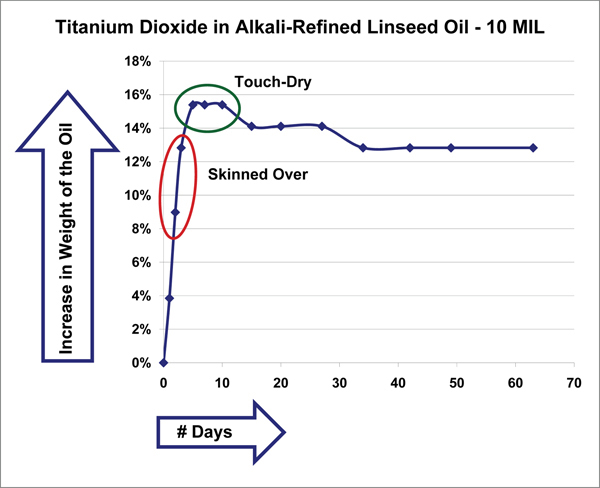
Linseed oil dries by a process called oxidative polymerization. When exposed to air, oxygen molecules react with the oil. This causes the oil molecules to link together, forming a solid film. This isn’t true evaporation, like water-based finishes. Instead, linseed oil chemically changes from a liquid to a solid.
A few things make this process unique:
- Temperature: Warm air speeds up oxidation.
- Humidity: High humidity slows drying, as oil struggles to absorb oxygen.
- Airflow: Good ventilation brings more oxygen to the surface.
- Layer thickness: Thick layers dry much slower than thin ones.
This means drying time is not fixed—it changes depending on your environment and how you apply the oil.
Typical Drying Times For Different Linseed Oils
It’s important to know that “dry to the touch” is different from “fully cured. ” Linseed oil may feel dry but still be soft inside. Curing means it’s completely hardened.
Here are average drying and curing times under standard indoor conditions (70°F, 50% humidity, thin coat):
| Type of Linseed Oil | Dry to Touch | Ready for Next Coat | Fully Cured |
|---|---|---|---|
| Raw Linseed Oil | 3–10 days | 5–14 days | 2–10 weeks |
| Boiled Linseed Oil | 6–24 hours | 1–3 days | 7–14 days |
| Polymerized Linseed Oil | 12–24 hours | 1–2 days | 5–10 days |
Raw linseed oil is the slowest to dry. Sometimes it can take over a week just to dry to the touch. Boiled linseed oil dries much faster because of the added driers. Polymerized linseed oil is somewhere in between, offering a balance of safety and speed.
Non-obvious insight: Many beginners are surprised that “dry to touch” does not mean the oil is ready for use or another coat. Always check the manufacturer’s instructions for your specific product.
Credit: justpaint.org
Factors That Affect Linseed Oil Drying Time
No two projects are the same. Here’s what can change your drying time:
1. Type Of Linseed Oil
As mentioned, raw, boiled, and polymerized linseed oils all dry at different rates due to their chemical structure and additives.
2. Temperature
Linseed oil dries best at 60–80°F (15–27°C). If it’s colder, the process slows down. Too hot, and the surface may skin over while underneath stays soft.
3. Humidity
High humidity (above 60%) can double or triple drying times. Moist air limits the oxygen available for curing.
4. Airflow
Good air movement speeds up oxidation. Stagnant air means longer waits.
5. Surface Material
Porous woods (like oak or ash) absorb more oil and may dry faster on the surface but need more time for full cure. Dense woods (like maple) or non-porous surfaces take longer.
6. Layer Thickness
Thin coats dry much faster than thick, wet coats. Heavy application traps oil below the surface, slowing curing.
7. Additives And Solvents
Some people mix linseed oil with turpentine, mineral spirits, or Japan drier. These can speed up drying—but may change the finish or affect safety.
8. Application Method
Spraying, brushing, or wiping changes how much oil is left on the surface and affects drying.
Practical tip: Always wipe off excess oil after 15–30 minutes. Leaving a thick layer slows drying and can cause a sticky mess.
Comparing Linseed Oil To Other Finishes
Linseed oil isn’t the only finish out there. Here’s how it stacks up against other popular options:
| Finish Type | Drying Time | Durability | Ease of Use |
|---|---|---|---|
| Linseed Oil (Boiled) | 6–24 hrs | Medium | Easy |
| Tung Oil | 24–72 hrs | High | Moderate |
| Polyurethane | 2–6 hrs | Very High | Moderate |
| Lacquer | 15–30 mins | Medium | Advanced |
| Shellac | 30–60 mins | Medium | Moderate |
Non-obvious insight: Linseed oil is not the fastest option. If you need a super-fast finish, consider lacquer or shellac. But linseed oil offers a natural look and is easy to apply, making it popular for traditional woodworking.
Practical Steps To Apply Linseed Oil For Best Drying
If you want linseed oil to dry properly, follow these steps:
- Prepare the surface: Sand the wood smooth and remove all dust. A clean surface helps oil penetrate and dry evenly.
- Apply a thin coat: Use a clean cloth, brush, or sponge. Don’t flood the surface.
- Let it soak in: Wait 15–30 minutes for the oil to penetrate.
- Wipe off excess: Use a lint-free rag to remove all surface oil. This step is crucial—leftover oil will stay sticky.
- Allow to dry: Place in a warm, dry, well-ventilated area.
- Check for dryness: Gently touch the surface. If it feels tacky, wait longer.
- Repeat coats: For best protection, 2–3 coats are common. Always let each coat dry fully before the next.
Pro tip: Increase airflow with a fan, but avoid blowing dust onto the surface.
How To Tell If Linseed Oil Is Dry
Many people struggle to know when linseed oil is dry enough for the next coat or for use. Here’s how to check:
- Touch test: Gently press your finger on the surface. If it feels dry and smooth, not sticky, it’s ready for the next step.
- Smell test: Fresh oil has a strong, nutty odor. As it dries, the smell fades. If it still smells strongly after a day or two, it’s not dry.
- Appearance: Wet linseed oil is glossy. When dry, the gloss fades to a soft sheen.
Remember: “Dry to touch” is not fully cured. Wait at least the recommended time before heavy use.
Common Problems With Linseed Oil Drying
Even experienced users can face problems. Here are the most frequent issues—and how to avoid them:
Sticky Or Tacky Finish
- Cause: Too much oil, poor wiping, or cold/humid conditions.
- Solution: Wipe off excess, move to a warmer/drier area, and wait. If still sticky after a week, clean with mineral spirits and start over.
Patchy Or Uneven Drying
- Cause: Uneven application or wood absorbing oil at different rates.
- Solution: Apply thin, even coats and sand between layers if needed.
Slow Drying
- Cause: Raw linseed oil, thick layers, or bad ventilation.
- Solution: Use boiled or polymerized oil, apply thinner coats, and improve airflow.
Skinning In The Can
- Cause: Oil exposed to air in the container.
- Solution: Store with minimal air space and tightly closed lid. Filter out skin if needed.
Beginner mistake: Storing oil-soaked rags in a pile can cause fires. Always spread them out to dry or store in a sealed metal container.
Ways To Speed Up Linseed Oil Drying
If you’re in a hurry, there are safe ways to reduce drying time:
- Choose boiled or polymerized oil instead of raw.
- Apply thin coats and wipe thoroughly.
- Increase temperature to 70–80°F, if possible.
- Add airflow with a fan (no direct heat).
- Use a drier like Japan drier, but only as directed.
- Mix with solvent (up to 30% turpentine or mineral spirits). This thins the oil and helps it penetrate faster.
- Dry in a low-humidity area for best results.
Caution: Never use open flames or heaters directly near drying oil. Linseed oil is flammable in vapor form.
Linseed Oil Drying Time For Different Surfaces
Not all projects are alike. Here’s how drying time changes based on the material:
Wood
Linseed oil is most common on wood. Softwoods (pine, fir) absorb oil faster, but hardwoods (oak, walnut) often need longer to cure. Drying times range from 6 hours (boiled) to 10 days (raw).
Concrete And Stone
On porous surfaces like stone or concrete, oil soaks in quickly. It may dry to the touch in 1–2 days but can take weeks to fully cure.
Metal
Linseed oil is sometimes used for protecting metal tools or as a rust inhibitor. It dries in about 24–48 hours but is less durable than synthetic coatings.
Canvas And Paint
Artists use linseed oil as a binder in oil paints. Thin paint layers dry in 1–3 days, but thick paint (“impasto”) can take weeks or months.
Outdoor Use
Outdoor projects need more time, especially in damp or cool weather. Rain or dew can ruin wet oil, so watch the forecast.
How Many Coats And How Long To Wait
For most projects, 2–3 coats of linseed oil give a good finish. Here’s a suggested schedule for boiled linseed oil:
- First coat: Dry in 6–24 hours
- Second coat: Wait 1–3 days
- Third coat (optional): Wait another 1–3 days
For raw linseed oil, double these times. Don’t rush—if in doubt, wait longer.
Important: Full cure (maximum hardness) can take up to 2 weeks for boiled and 2 months for raw linseed oil.

Credit: www.furnitureclinic.co.uk
Safe Handling And Disposal
Linseed oil rags can self-ignite if piled up. As the oil dries, it releases heat. If heat builds up, a fire can start—even without a spark.
To stay safe:
- Lay used rags flat to dry outdoors, or
- Store them in a sealed metal container filled with water and a lid
Never leave oily rags in a pile. This safety step is just as important as drying time!
Real-world Examples
Wood Tabletop
A DIYer applies boiled linseed oil to a maple table. They wipe on a thin coat and wait 24 hours. It’s dry to touch, so they add a second coat. After 3 days, the finish is dry and ready for gentle use.
Full cure takes about 2 weeks.
Oil Painting
An artist mixes linseed oil into their oil paints. A thin layer dries in 2 days. However, a thick, textured area stays tacky for a week. The artist waits longer before varnishing.
Outdoor Bench
A gardener uses raw linseed oil on an outdoor bench. With cool spring weather and high humidity, the oil stays sticky for 5 days. Patience pays off: after two weeks, the bench is ready for use.
Key takeaway: Always consider your project’s material, oil type, and weather.
Linseed Oil Myths And Misunderstandings
Many people believe linseed oil dries overnight, no matter what. In reality, only boiled or polymerized oil dries quickly. Raw linseed oil is famous for its slow drying.
Another myth is that more oil means better protection. In fact, thick layers can trap moisture and cause problems.
Finally, some think linseed oil never fully dries. While it remains flexible, it does cure into a hard, protective layer—if you allow enough time.
Advanced Tips For Better Results
- Test on scrap: Every wood and oil batch is different. Test drying time on a scrap piece before starting your main project.
- Mix with other oils: Some experts blend linseed oil with tung oil for faster drying and more water resistance.
- Use a drying box: For small items, a heated drying box with good airflow can cut drying time in half.
Experienced users know that patience is key. Rushing the process usually leads to mistakes.
Environmental Impact And Alternatives
Linseed oil is a natural, biodegradable product. It’s safer for the environment than many synthetic finishes. However, the chemical driers in boiled linseed oil can be toxic in large amounts. Consider using pure polymerized oil if you want a greener choice.
Some alternatives include:
- Tung oil: Dries slower than boiled linseed oil but faster than raw. More water-resistant.
- Danish oil: A blend of oil and varnish. Dries faster and offers a harder finish.
- Water-based finishes: Very quick drying, but less natural in appearance.
Choose what fits your project, values, and schedule.
Summary Of Key Points
- Linseed oil drying time depends on oil type, weather, surface, and application method.
- Boiled and polymerized linseed oils dry much faster than raw.
- Always apply thin coats and wipe off excess.
- Allow enough time for each coat and the final cure.
- Handle oily rags safely to prevent fire.
- Patience and proper technique lead to the best finish.
For more on linseed oil’s chemistry and safe use, see the Wikipedia page on linseed oil.
Frequently Asked Questions
How Long Does Boiled Linseed Oil Take To Dry Between Coats?
Boiled linseed oil usually dries enough for a second coat in 6–24 hours under normal indoor conditions. In cool or humid weather, it may take up to 2 days. Always check the surface for tackiness before recoating.
Why Is My Linseed Oil Finish Still Sticky After Several Days?
Stickiness often means too much oil was left on the surface, or the environment is too cold or humid. Wipe off excess oil with a clean rag and move the project to a warmer, drier area. If it’s still sticky after a week, you may need to remove the oil with mineral spirits and start again.
Can I Mix Linseed Oil With Other Products To Speed Up Drying?
Yes, you can mix linseed oil with up to 30% turpentine or mineral spirits to thin it and help it dry faster. Some people add Japan drier in small amounts. Always follow product instructions, as additives can change appearance and safety.
Is Linseed Oil Safe For Food-contact Surfaces?
Pure raw linseed oil (without chemical driers) is sometimes used for wooden kitchen items, but it dries very slowly and can go rancid. For cutting boards or utensils, food-grade mineral oil or pure tung oil is safer.
How Do I Safely Dispose Of Linseed Oil Rags?
Spread rags flat outdoors to dry fully, or store them in a sealed metal container filled with water. Never pile oily rags—they can spontaneously combust as the oil oxidizes.
Linseed oil is a versatile, traditional finish with unique drying needs. By understanding how it works and following these practical tips, you’ll get a beautiful, durable result every time.