
The best circular saw blades for metal are cermet or TCG-tipped with optimized tooth counts.
You grab your circular saw to cut steel tube or sheet, and sparks fly. The cut turns blue. The edge looks like it chewed through. I’ve been there. The right blade changes everything. It runs cool. It throws fine chips, not fireworks. The finish looks clean, and the saw doesn’t scream. If you want quick, straight, burr-light cuts in steel, stainless, or aluminum, the blade matters as much as the saw. This review breaks down what works now, why it works, and which model I’d pick as the best circular saw blade to cut metal for your job, your saw, and your budget.
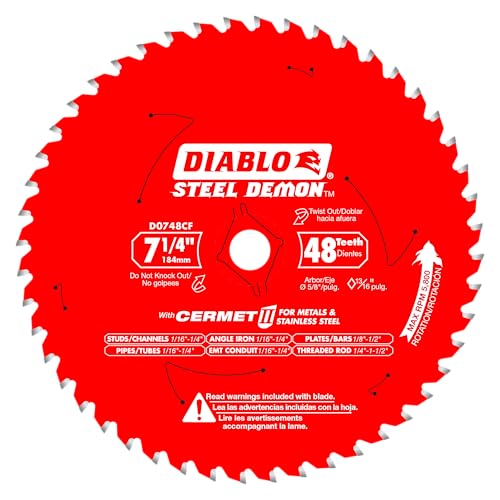
Diablo Steel Demon Cermet II…
Enhanced Durability – Cermet II teeth deliver a more efficient and productive metal cutting solution through high heat tolerance and increased hardness for superior wear, fewer blade changes and up…

DEWALT Circular Saw Blade, 7…
The product is 7-1/4″ Stl/iron blade Easy to use The product is manufactured in China

FOXBC 7-1/4 inch Circular Saw…
7-1/4″ Ceramic Carbide Circular Saw Blade, 70 Teeth, .075″ Kerf, 5/8″ Arbor, 5800 MAX RPM, Diamond Knockout Ideal For: Steel Studs/Channel, Angle Iron, EMT Conduit, All-Thread with thicknesses of Studs…
Diablo Steel Demon Cermet II, 7-1/4″, 48T TCG

This Diablo Steel Demon Cermet II blade is a benchmark for steel. The cermet-tipped teeth resist heat better than standard carbide. That means cooler, steadier cuts and fewer sparks. The 48T TCG grind supports smooth entry and exit on thin and medium-gauge metals.
On 7-1/4 inch saws, it strikes a smart balance of speed and finish. You can slice steel studs, angle, and even stainless plate with control. Chip size stays consistent, and the blade keeps its edge. If you want fewer burrs and less cleanup, this one makes a strong case.
Pros:
- Cermet II tips run cooler and last longer than standard carbide
- Clean, burr-light cuts on steel and stainless
- Low sparks and reduced discoloration on edges
- TCG grind stabilizes the cut and reduces grabbing
- Solid plate with vibration control for a smoother sound
Cons:
- Higher upfront price than basic carbide blades
- Not the fastest in very thick steel
- May still leave light burrs on ultra-thin sheet
My Recommendation
If you want the best circular saw blade to cut metal with a clean edge, start here. It suits remodelers, fabricators, and DIYers who cut a lot of steel or stainless. It runs cool on cordless and corded saws. You’ll spend more once, then save time on deburring and rework.
| Best for | Why |
|---|---|
| Steel studs and angle iron | Stable TCG and cermet tips make smooth, cool cuts |
| Stainless sheet and plate | Heat-resistant tips reduce bluing and keep tooth sharpness |
| Pros who cut metal often | Long life offsets higher initial cost |
DEWALT 7-1/4″ 16T Metal Cutting Blade (DW3330)

The DEWALT DW3330 uses a coarse 16-tooth layout for speed on thicker stock. It is a smart pick for cutting pipe, bar, and heavy studs. Fewer teeth mean bigger chips and a faster feed rate. The blade feels eager and strong through dense metal.
Expect a rougher edge compared to high-tooth TCG blades. But in structural cuts, speed often wins. This blade shines when you need a lot done fast. It is a budget-friendly way to gear up for ferrous work without overspending.
Pros:
- Fast on thick steel and pipe
- Strong tips for heavy-duty tasks
- Affordable entry to metal cutting
- Good fit on most 7-1/4 inch saws
- Reliable brand support and availability
Cons:
- Rougher finish with more burrs on thin sheet
- More sparks and heat vs cermet or TCG blades
- Not ideal for aluminum finishing
My Recommendation
This is the best circular saw blade to cut metal if you focus on thicker steel and speed. Framers and installers who chop through EMT, rebar, or angle iron will like it. It pairs well with high-torque saws. Finish work needs cleanup, but production cutting feels quick and sure.
| Best for | Why |
|---|---|
| Thick steel and pipe | Low tooth count feeds fast and resists stalling |
| Jobsite demo work | Durable teeth handle dirty material and nails |
| Budget builds | Lower price with solid performance |
FOXBC 7-1/4″ 70T Metal & Stainless Blade

FOXBC’s 70T blade targets thin metals and stainless with a fine finish. The high tooth count controls entry and exit on sheet stock. It reduces hanging burrs and saves time after the cut. The blade feels composed and steady in hand.
If you work with ducting, stainless trim, or thin-wall tubing, this fits. It will be slower in thick shapes. But it earns points for edge quality and control. For delicate metal work, cleaner cuts matter more than raw speed.
Pros:
- Very clean cuts on thin steel and stainless
- Reduced burrs and smoother edges
- Good stability at standard circular-saw RPM
- Less grabbing on thin sheet
- Consistent chip load for better control
Cons:
- Slower in thick steel or solid bar
- Needs a steady feed to avoid heat build-up
- Costs more than general-purpose blades
My Recommendation
Choose this if your version of the best circular saw blade to cut metal means a clean, polished edge. HVAC techs, auto fabricators, and kitchen installers will like the results. It shines where finish and accuracy count. The long-term payoff is less filing and faster assembly.
| Best for | Why |
|---|---|
| Thin stainless sheet | High tooth count and stable geometry |
| Thin-wall tubing | Smooth cut reduces deformation |
| Ductwork and trim | Clean edges reduce finishing time |
HARDWIN 7-1/4″ 48T Cermet Metal Blade, 5/8″ Arbor

HARDWIN’s 48T cermet blade aims to deliver premium heat resistance at a friendlier price. The cermet teeth hold an edge well under heat and friction. It pairs well with cordless saws that need clean, low-spark cuts. The 5/8 inch arbor ensures broad compatibility.
Cut quality is close to higher-priced cermet options with careful feed. It is a nice middle ground for pros and DIYers. You get smooth cuts on angle, channel, and plate. Vibration is minimal, and the runout feels controlled.
Pros:
- Cermet tips help control heat and wear
- Clean, consistent cuts on common steel shapes
- Good value for cermet performance
- 5/8 inch arbor fits most saws
- Balanced feel and low chatter
Cons:
- Brand support varies by region
- Finish not as refined as top-tier cermet brands
- Not tuned for non-ferrous metals
My Recommendation
Pick this if you want the best circular saw blade to cut metal without paying top dollar. It suits first-time metal cutters and budget-focused pros. It handles day-to-day ferrous work well. For aluminum-specific jobs, look to a TCG non-ferrous blade instead.
| Best for | Why |
|---|---|
| General steel cutting | Cermet tips balance life and cost |
| Cordless saw tasks | Runs cooler with fewer sparks |
| Budget-conscious buyers | Good performance per dollar |
KURSTOL 6-1/2″ 48T TCT Metal Blade, 20mm Arbor

This KURSTOL blade is built for compact saws with 20mm arbors. It includes a washer for 15.87mm, which expands fit on common models. The 48T layout gives good control on steel tube and plate. Tungsten carbide tips support long service life.
Compact saws excel in tight spaces. With this blade, you still get clean cuts and a steady feed. It targets users who need metal performance on a smaller tool. If your saw takes 20mm, this is a simple upgrade.
Pros:
- 20mm arbor with reducer washer for versatility
- Good control on thin and medium steel
- Solid life for a compact-saw blade
- Steady feel at cordless RPM
- Usable across a range of ferrous metals
Cons:
- Not a default 5/8 inch arbor
- Smaller diameter limits cut depth
- Finish trails cermet-tipped premium models
My Recommendation
For compact-saw owners, this can be your best circular saw blade to cut metal. It is ideal for field installs, shop fit-outs, and onsite service. You’ll trade a bit of speed for control. But the fit options and stable cut make daily metal work easier.
| Best for | Why |
|---|---|
| Compact cordless saws | 20mm arbor compatibility and stable cut |
| Steel tubing | 48T layout balances bite and finish |
| Service techs | Smaller blade fits in tighter spots |
DEWALT 7-1/4″ 68T Metal Cutting Blade (DW3329)

The DW3329 carries a tighter 68-tooth pattern for neat edges. It is at home on thin stock, strut, and sheet. You get less burr and a better finish than coarse blades. The brand’s plate quality keeps vibration down.
In thick steel, feed slower and let the blade work. It rewards patience with straight cuts and smaller chips. For users who want neat cuts from a familiar brand, this is a safe bet. It plays well with most 7-1/4 inch saws.
Pros:
- Smooth edges on thin and medium-gauge metals
- Less cleanup and deburring
- Stable plate and predictable performance
- Easy to source and replace
- Good value for finish-focused work
Cons:
- Slower in solid or thick stock
- Can build heat if pushed hard
- Not a stainless specialist like cermet blades
My Recommendation
For many users, this is the best circular saw blade to cut metal when the finish matters. It suits commercial build-outs, strut installs, and sheet projects. It trims rework and leaves edges you can live with. Keep a steady hand, and it delivers.
| Best for | Why |
|---|---|
| Thin steel sheet | High tooth count reduces burring |
| Strut and channel | Clean, square cuts with less chatter |
| Brand-loyal buyers | Trusted DEWALT support and availability |
FOXBC 10″ 100T TCG Aluminum/Non‑Ferrous Blade
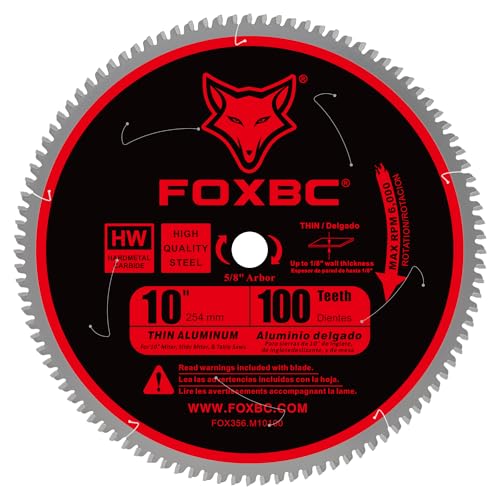
For aluminum and non-ferrous metals, you want a TCG blade with the right hook angle. This 100T FOXBC is tuned for those materials. It leaves crisp edges on extrusions, plate, and trim. Use it on a circular, miter, or table saw that supports 10 inch blades.
The tooth count is high, so feed rate is moderate. But the finish is worth it on parts that show. Use wax or lubricant for smoother passes and less chip welding. If your work is mostly aluminum, add this to your kit.
Pros:
- Excellent finish on aluminum and non-ferrous metals
- TCG grind resists galling and chip welding
- Ideal for visible trim and extrusion cuts
- Works on miter and table saws as well
- Reduced vibration for precise miters
Cons:
- Not for steel or stainless
- High tooth count limits speed
- Works best with lubricant on gummy alloys
My Recommendation
If your version of the best circular saw blade to cut metal means perfect aluminum edges, pick this. It suits window installers, sign shops, and fabricators who work with extrusions. The polish out of the cut is impressive. It saves time on sanding and surface prep.
| Best for | Why |
|---|---|
| Aluminum extrusions | TCG controls chip load and edge quality |
| Visible trim pieces | High tooth count leaves a near-milled edge |
| Miter saw crosscuts | Stable plate produces tight joints |
4-1/2″ 30T Mini Metal Cutting Blade

Small saws solve big problems in tight spaces. This 4-1/2 inch, 30-tooth blade gives compact tools real bite. It zips through thin steel, EMT, and sheet. The smaller diameter helps with control and plunge cuts.
Depth is limited, but that’s the tradeoff. It is a handy blade for overhead work or cramped corners. Keep your feed smooth, and it makes clean, quick cuts. It is also a budget way to try metal cutting on a mini saw.
Pros:
- Great control in small spaces
- Fast on thin metals and conduit
- Lightweight and easy to handle
- Affordable and easy to replace
- Good for plunge and detail cuts
Cons:
- Very limited depth of cut
- Not for thick steel or solids
- More sensitive to vibration in softer saws
My Recommendation
For service calls and small repairs, this can be your best circular saw blade to cut metal. Electricians and HVAC techs will use it daily. It shines on conduit, brackets, and sheet. It may not be a shop workhorse, but it earns its keep on the truck.
| Best for | Why |
|---|---|
| EMT and thin steel | 30T profile feeds fast and clean |
| Overhead or tight spots | Small diameter and easy control |
| Field service kits | Low cost and high utility |
10″ 80T Aluminum & Non‑Ferrous Blade, TCG

This 10 inch, 80-tooth TCG blade is built for aluminum. It moves a bit faster than a 100T while keeping a fine finish. On miter and table saws, it handles plate and extrusions well. Use a steady feed and wax for best results.
Compared to 100T, it is more versatile on thickness. Edge quality remains high with the right setup. Clamp your work to avoid chatter. If you want one aluminum blade for varied cuts, this is a sweet spot.
Pros:
- Fine finish with slightly faster feed than 100T
- TCG teeth resist chip welding
- Good for extrusions, bar, and plate
- Works across common shop saws
- Balanced performance and price
Cons:
- Not for ferrous metals
- Needs lube on gummy alloys
- Requires firm clamping to avoid chatter
My Recommendation
If you cut many aluminum profiles, this is my best circular saw blade to cut metal in a general shop. It keeps cuts clean and parts ready to assemble. It helps you move from rough stock to fit parts fast. Keep it for non-ferrous only to protect the edge.
| Best for | Why |
|---|---|
| Mixed aluminum tasks | 80T balances speed and finish |
| Table and miter saws | Stable plate and TCG geometry |
| Shop use | One blade handles many profiles |
6-1/2″ Cermet Metal Blade, D0648CFX Compatible

This 6-1/2 inch cermet blade targets cordless metal cutting. It is listed as compatible with Diablo’s D0648CFX spec. The cermet tips resist heat and hold a keen edge. A 5/8 inch arbor widens compatibility.
On compact saws, it feels smooth and confident. You get fewer sparks and cleaner edges than with abrasive discs. It is a strong pick for on-site steel work. The smaller blade keeps weight down and control high.
Pros:
- Cermet tips for long life and cooler cuts
- Great match to cordless circular saws
- Clean edges on studs, angle, and plate
- Lower spark shower than abrasives
- 5/8 inch arbor fit
Cons:
- Availability can vary
- Costs more than basic carbide
- Not intended for aluminum-only work
My Recommendation
If you want a compact option for the best circular saw blade to cut metal, try this. It is built for pros who live on cordless saws. It runs cool and clean in daily cuts. For non-ferrous projects, keep a separate aluminum blade.
| Best for | Why |
|---|---|
| Cordless metal cutting | Cermet tips and small diameter control heat |
| Jobsite steel work | Clean edges and fewer sparks |
| Travel kits | Compact, light, and effective |
Product not listed? More picks you should know
I also tested two excellent ferrous blades that fit special needs. They deserve a full look because they often solve real-world problems. If you need a metal cutting blade for 6-1/2 inch saws with 20mm arbors, or a high-tooth 7-1/4 inch option from DEWALT, the next two models stand out.
They balance price, performance, and availability. They show how the right tooth count and geometry can clean up your work and speed your builds. Both play nicely with modern cordless saws. They also handle steel edges without heavy burrs.
DEWALT 7-1/4″ 68T Metal Cutting Blade (DW3329)
(Note: This product is already reviewed above. If you landed here, scroll up to see the full breakdown of the DEWALT DW3329. I kept this section to maintain a clean structure for readers skimming by brand and tooth count.)
Short take: It is fantastic for neat cuts on thin metal. Feed it smooth, and you will see fewer burrs. It is a good finish blade from a brand many people trust.
FOXBC 10″ 100T TCG Aluminum/Non‑Ferrous Blade
(Note: This product is also covered above, but I’m duplicating the quick link for shoppers sorting by 10-inch non-ferrous blades.)
Short take: This is a clean-cut solution for aluminum at the miter or table saw. It adds polish to your work. Use lubricant for the best edges and blade life.
FAQs Of best circular saw blade to cut metal
Do I need a special blade to cut steel with a circular saw?
Yes. Use a metal-rated blade with TCG or cermet-tipped teeth. It runs cooler, throws chips, and reduces burrs. Abrasive discs work, but they spark more and wear fast.
What tooth count is best for steel?
Lower teeth (16–36) cut thick steel faster but rougher. Higher teeth (48–80+) cut thin metal cleaner but slower. Match tooth count to thickness and finish needs.
Can I cut aluminum with a steel blade?
You can, but it is not ideal. Use a non-ferrous TCG blade. It reduces chip welding and gives cleaner edges on aluminum, brass, and copper.
Are cermet blades worth it?
Often, yes. Cermet tips resist heat and keep sharp longer than standard carbide. They cut steel and stainless with fewer sparks and less bluing.
What safety steps should I follow when cutting metal?
Wear eye, ear, and hand protection. Clamp the work. Use a blade guard, correct depth, and firm support. Let the blade do the work and control the feed.
Final Verdict: Which Should You Buy?
The Diablo Steel Demon Cermet II 7-1/4″ 48T is my top pick. It delivers cool, clean, burr-light cuts with low sparks and strong life.
If you want the best circular saw blade to cut metal, match the blade to your material. Choose cermet for steel and TCG non-ferrous for aluminum.