
Many homeowners love the warm, natural look of wooden kitchen worktops. But the big question is: what’s the best finish to protect wood in a busy kitchen? Danish oil is often recommended, but is it really the best for kitchen worktops? This guide explores everything you need to know before making a decision—whether you’re installing new worktops or refreshing old ones.
A kitchen worktop faces water, heat, knife scratches, food spills, and cleaning products every day. The finish you choose matters for both appearance and durability. With so many oils and sealers available, it can be hard to pick the right one.
This article breaks down the benefits and drawbacks of Danish oil, compares it with other popular finishes, and offers practical advice for real kitchens. You’ll also learn tips professionals use, common mistakes to avoid, and get answers to questions most people don’t know to ask.
By the end, you’ll feel confident choosing the right finish for your kitchen worktops.
What Is Danish Oil?
Danish oil is a blend of oil (usually tung oil or linseed oil) mixed with varnish and mineral spirits. Unlike pure oils, it contains some resin, which gives it unique properties. When applied to wood, Danish oil penetrates the surface and hardens, creating a satin finish that feels smooth to the touch.
Danish oil is popular because it’s easy to use, dries faster than pure oils, and gives a natural look. Most brands have a light amber color that deepens wood grain without making it look plastic or glossy. Some people like Danish oil because it’s low odor and doesn’t yellow as much as some varnishes.
However, there are many types of Danish oil. Some are mostly oil, while others have more varnish. This means performance can vary between brands. Always check the label, especially for kitchen use, to ensure the oil is food-safe once cured.
Why Kitchen Worktops Need Special Care
Kitchen worktops are different from other wood surfaces in your home. They come into contact with:
- Water and steam from cooking and cleaning
- Oils, vinegar, and acidic foods that can stain or damage finishes
- Hot pots and pans that might scorch or soften some finishes
- Sharp objects like knives and utensils
- Frequent cleaning with detergents or disinfectants
All these factors mean a finish must do more than just look good. It needs to protect the wood from moisture, resist stains, and handle daily wear. A weak finish can lead to water rings, permanent stains, swelling, or even rot.
Some wood species, like oak or beech, are more porous and absorbent. Others, like walnut or iroko, have natural oils but still need extra protection in the kitchen. No finish is truly “maintenance free,” but the right one makes care much easier.
Danish Oil: Pros And Cons For Kitchen Worktops
Is Danish oil the best for kitchen worktops? To answer, let’s look at the main advantages and disadvantages based on real kitchen use.
Benefits Of Danish Oil
1. Natural Look And Feel
Danish oil brings out the wood grain without making it look shiny or “plastic. ” The surface feels smooth and warm, not slippery.
2. Easy Application And Repair
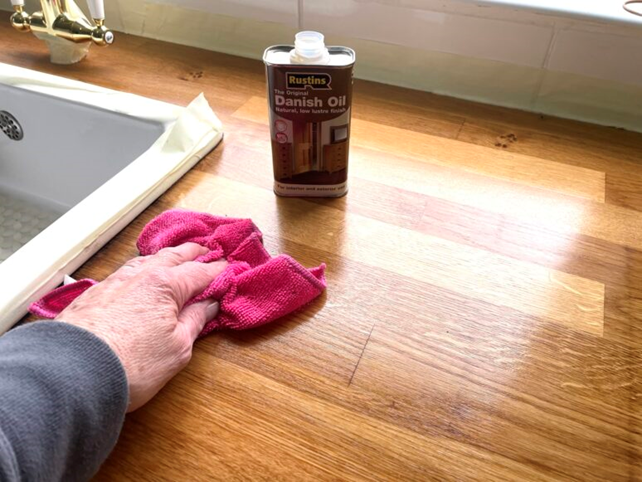
You can wipe or brush on Danish oil, wait, and wipe off extra. If the surface gets scratched or stained, you can sand and reapply more oil without stripping the whole surface.
3. Low Odor And Fast Drying
Most Danish oils have a mild smell and dry within 6–24 hours, so you don’t have to keep the kitchen out of use for days.
4. Water Resistance
Danish oil forms a surface film that repels water better than pure linseed or mineral oil. Spills bead up and can be wiped away if cleaned quickly.
5. Food-safe When Cured
Once fully dried (cured), Danish oil is considered safe for food contact. It doesn’t flake off or contaminate food.
Drawbacks Of Danish Oil
1. Not Fully Waterproof
Danish oil protects against short-term water, but standing water can still cause marks or swelling. It’s not as tough as modern lacquers or two-part finishes.
2. Requires Regular Maintenance
To keep protection strong, you need to reapply Danish oil every 6–12 months, or sooner if the surface looks dry.
3. Not Heat Resistant
Hot pans or trays can scorch or melt the finish. Always use trivets or mats on oiled worktops.
4. Can Stain With Acids And Harsh Cleaners
Vinegar, lemon juice, or strong cleaning products can dull or stain the surface. Wipe up spills fast.
5. Varies By Brand
Some “Danish oils” are mostly oil, others mostly varnish. Quality and protection differ, so results can be inconsistent.
Key Insight: Danish Oil Is Best For People Who Want A Natural Look And Don’t Mind A Bit Of Regular Maintenance. It’s Not For Those Who Want A “set And Forget” Worktop.
How Danish Oil Compares To Other Finishes
To decide if Danish oil is best for your kitchen, it helps to compare it with other popular finishes. Here’s a look at the main types:
1. Tung Oil
Tung oil is a natural drying oil from the seeds of the tung tree. It’s known for deep wood penetration and water resistance.
- Pros: All-natural, good for food contact, excellent water resistance after many coats.
- Cons: Slow drying (can take days), needs 4–6 coats, expensive, can darken wood.
2. Linseed Oil (boiled)
Boiled linseed oil is processed for faster drying. Used for centuries, but not ideal for kitchens.
- Pros: Easy to apply, cheap, traditional.
- Cons: Less water-resistant, slow to dry, needs frequent reapplication, can yellow over time.
3. Hardwax Oil
A blend of natural oils and waxes. Brands like Osmo and Rubio Monocoat are popular.
- Pros: Excellent water and stain resistance, satin-matte look, easy spot repair, safe when cured.
- Cons: More expensive, longer cure time, may require special cleaning products.
4. Polyurethane Varnish
A synthetic, tough topcoat that sits on top of the wood.
- Pros: Very durable, waterproof, heat- and chemical-resistant, less maintenance.
- Cons: Glossy/plastic look (matte versions exist), hard to repair (must sand the whole area), not always food-safe.
5. Mineral Oil
A non-drying oil that stays “wet” and penetrates wood.
- Pros: Inexpensive, food-safe, easy to apply.
- Cons: Needs frequent reapplication (monthly), minimal water resistance, doesn’t harden.
Below is a comparison of these finishes for kitchen worktops:
| Finish Type | Water Resistance | Maintenance | Food Safe | Look/Feel |
|---|---|---|---|---|
| Danish Oil | Good (not waterproof) | 6–12 months | Yes (when cured) | Natural, satin |
| Tung Oil | Very Good | 6–12 months | Yes | Natural, matte |
| Hardwax Oil | Excellent | 12+ months | Yes | Natural, matte/satin |
| Polyurethane | Waterproof | Years | Check label | Gloss/matte, film |
| Mineral Oil | Poor | 1 month | Yes | Natural, oily |
A key insight: Hardwax oil is now seen as a premium choice for kitchens, offering better water resistance than Danish oil with a similar look. But Danish oil is more affordable and easier for beginners.
How To Apply Danish Oil To Kitchen Worktops
Proper application of Danish oil makes a big difference in protection and appearance. Here’s how to do it, with practical tips most guides miss.
Step 1: Prepare The Surface
- Sand the wood to a smooth finish (usually 120–180 grit).
- Remove all dust with a vacuum and a tack cloth.
- Make sure the wood is dry and free of old finishes, wax, or grease.
Step 2: Apply The First Coat
- Use a clean lint-free cloth or brush.
- Apply Danish oil liberally, working along the grain.
- Let it soak in for 15–30 minutes.
- Wipe off all extra oil with a dry cloth—don’t let it puddle or get sticky.
Step 3: Repeat
- Wait for the first coat to dry (usually 6–24 hours, check the label).
- Lightly sand with fine sandpaper (320 grit) between coats for a smooth finish.
- Apply 2–3 more coats, following the same steps.
Step 4: Cure And Maintain
- Let the final coat cure for at least 24–48 hours before using the worktop.
- Avoid water or heavy use for at least 3–5 days.
- Reapply oil every 6–12 months, or when the surface looks dry or faded.
Practical tips:
- Don’t apply too much oil at once—it can get sticky and never fully dry.
- Always wipe off extra oil. If it’s tacky after a few hours, you used too much.
- For extra protection, apply one more coat to the sink area, as it sees the most water.
Common Mistakes To Avoid
- Skipping sanding: Rough wood won’t absorb oil evenly.
- Leaving oil puddles: Causes sticky, uneven finish.
- Using the kitchen too soon: Oil needs time to cure fully.
- Forgetting maintenance: A dry worktop is more likely to stain or warp.
Real-world Performance: What To Expect
Danish oil gives great results in most kitchens, especially if you like a natural look. However, it’s important to have the right expectations.
Water resistance: Danish oil will repel spills if wiped quickly. But if water or juice sits for hours, it can leave marks. Around sinks, splashes can build up and slowly damage the wood if not wiped often.
Heat: Hot mugs are OK, but never put pans straight from the stove on the surface. Heat can soften or discolor the oil.
Staining: Red wine, coffee, or strong acids (like lemon juice) can stain if left too long. Quick cleanup is key.
Repairs: If you scratch or stain the worktop, you can lightly sand the spot and reapply oil. The repair will blend in, unlike with varnish.
Smell: Danish oil has a mild smell when wet, but this fades once cured. Always ventilate the area during application.
Longevity: With proper care, Danish oil can keep a worktop looking good for years. But it does require regular attention, especially in busy kitchens.
When Is Danish Oil The Best Choice?
Danish oil is best for:
- People who want a natural, non-glossy wood look.
- Homeowners willing to do regular maintenance.
- Kitchens where spills are wiped quickly and hot pans are not placed directly on the wood.
- DIYers who prefer easy repairs over a “once and done” finish.
It’s not the best choice if:
- You want a waterproof, maintenance-free surface.
- The kitchen is used heavily by children or guests who may not wipe spills.
- You prefer a hard, shiny finish (like commercial kitchens).
Alternatives To Danish Oil: When To Choose Something Else
Some worktops and lifestyles are better matched to other finishes. Here’s when you might pick a different product:
- For maximum water and stain resistance: Hardwax oil or polyurethane varnish is better.
- For a traditional look but less maintenance: Hardwax oil gives a similar feel with longer durability.
- For food prep zones (like chopping boards): Mineral oil or pure tung oil is safest and easiest to refresh.
- For a glossy, “showroom” look: Polyurethane varnish creates a durable, shiny surface.
Below is a summary comparing Danish oil, hardwax oil, and polyurethane:
| Feature | Danish Oil | Hardwax Oil | Polyurethane |
|---|---|---|---|
| Application | Easy, wipe on/off | Simple, but needs thin layers | Requires brush/roller, careful prep |
| Repairability | Easy spot repair | Easy spot repair | Hard, often need full resand |
| Water Resistance | Good, not waterproof | Excellent | Waterproof |
| Maintenance | 6–12 months | 12+ months | Years |
| Food Safe | When cured | When cured | Check label |
Expert Tips For Long-lasting Oiled Worktops
- Wipe spills quickly—especially water, wine, and vinegar.
- Use cutting boards for food prep—never cut directly on the worktop.
- Dry thoroughly after cleaning—standing water is the enemy.
- Re-oil high-use areas (around sinks and stoves) every 3–6 months.
- Refresh the whole surface at least once a year, or when it looks dry.
- Never use harsh cleaners like bleach, which can break down the oil.
- Sand out stains or scratches before reapplying oil for a seamless look.
A professional secret: Some finishers apply a thin coat of clear wax on top of Danish oil for extra water resistance. Wax does not last as long, but it adds a layer of protection, especially around sinks.
Myths And Misconceptions About Danish Oil
Many online forums and guides repeat common myths about Danish oil. Here are the facts:
- Myth: Danish oil makes wood waterproof.
Fact: It helps, but is not fully waterproof. Water must be wiped away.
- Myth: You can use any Danish oil for food surfaces.
Fact: Only use products labeled food-safe when cured.
- Myth: Danish oil is maintenance-free.
Fact: It needs regular top-ups, just like other oil finishes.
- Myth: It’s the same as hardwax oil.
Fact: Hardwax oil contains more wax and is often more water-resistant.
- Myth: All brands are equal.
Fact: Some have more varnish (stronger film), others are mostly oil (more natural look). Always check reviews and labels.

Credit: www.littlefairs.shop
Environmental And Health Considerations
Most Danish oils are low in volatile organic compounds (VOCs), but always check the label. Some brands use more solvents, which can smell and may cause irritation during application. Always ventilate well.
Once fully cured, Danish oil is considered safe for food contact. However, during drying, keep pets and children away from wet surfaces.
For a greener option, look for brands using natural tung or linseed oil with no synthetic varnishes. These may take longer to cure but are less processed.
For more information on safe wood finishes, see Wikipedia’s guide to wood finishing.
Case Studies: Real Kitchens With Danish Oil
Case 1: Modern oak kitchen
A family with two children installed oak worktops finished with three coats of Danish oil. They found the surface easy to clean and liked the natural look. After a year, water marks appeared near the sink because splashes weren’t always wiped quickly.
The solution was to sand and re-oil that area every 6 months.
Case 2: Busy rental home
A rental kitchen with Danish-oiled beech worktops saw heavy use. Tenants often left wet sponges on the surface. After a year, the wood started to darken and swell near the sink. The owner switched to hardwax oil for better water resistance and reduced maintenance.
Case 3: Small apartment kitchen
A single person used Danish oil on a walnut worktop. Because the kitchen was used gently and spills were wiped up fast, the surface stayed beautiful with just a yearly oiling.
Lesson: Danish oil works best when the kitchen is not abused and maintenance is regular. In homes where water sits or there is heavy, careless use, a tougher finish may be better.
Credit: www.doitwithcans.co.uk
Frequently Asked Questions
Is Danish Oil Safe For Food Contact Surfaces?
Yes, most Danish oils are food-safe once fully cured. This means after drying for several days, the finish is safe to touch food. Always check the product label and follow cure times. Never use oil that is not specifically labeled as food-safe.
How Often Should I Reapply Danish Oil On My Kitchen Worktop?
Most manufacturers recommend reapplying Danish oil every 6–12 months. High-use areas, like near the sink or stove, may need more frequent attention—every 3–6 months. If the wood looks dry or absorbs water quickly, it’s time to re-oil.
Can I Put Hot Pots Or Pans On A Danish Oiled Worktop?
No, you should always use a trivet or mat. Danish oil is not heatproof. Hot pans can scorch, discolor, or even soften the finish, leading to permanent marks.
What’s The Difference Between Danish Oil And Hardwax Oil?
Danish oil is mainly oil and varnish, while hardwax oil contains oil and natural waxes. Hardwax oil provides better water and stain resistance and lasts longer between coats. Danish oil is cheaper and easier to apply, but needs more frequent maintenance.
Can I Switch From Danish Oil To Another Finish Later?
Yes, but you must fully remove the old Danish oil first. Sand the surface back to bare wood before applying a new finish like hardwax oil or polyurethane. Never apply varnish or wax over an oily surface—it won’t stick or protect well.
Final Thoughts
Choosing the best finish for kitchen worktops depends on your needs and habits. Danish oil is a great all-rounder if you love the look and feel of real wood, enjoy simple maintenance, and don’t mind a yearly refresh. It’s easy to apply, easy to repair, and food-safe when dry. But it’s not the toughest or most waterproof option.
If you want a “set and forget” finish, consider hardwax oil or polyurethane instead. If you enjoy natural materials and don’t mind a little care, Danish oil can keep your kitchen worktops beautiful for years. The key is regular maintenance, quick spill cleanup, and understanding what your kitchen really needs.
With the right approach, Danish oil remains a top choice for many wood lovers.
Credit: www.furnitureclinic.com