
A mini table saw might look small, but it can completely change how you work in a home workshop or DIY space. For anyone who enjoys woodworking, model making, or crafts, a mini table saw offers the cutting power of a large saw in a compact package.
It’s not just about size; it’s about precise control, safety, and the freedom to create small, detailed projects without the hassle of a full-size machine. Many people start with hand saws or large table saws and quickly realize those tools are not always the best fit for delicate or tiny pieces.
That’s where the mini table saw shines—it’s simple to use, surprisingly powerful, and can fit almost anywhere.
If you’ve ever struggled to cut thin strips of wood, plastic, or even metal by hand, you know how frustrating and uneven the results can be. Larger saws can overwhelm small pieces, making fine cuts risky or even impossible. Mini table saws fill this gap.
They’re designed for accuracy and safety, making them ideal for anyone working with models, RC planes, jewelry, or home decor projects. Even advanced woodworkers often keep a mini table saw on hand for quick, accurate cuts.
Let’s explore what makes mini table saws so useful, how to choose the right one, and how to get the best results with this versatile tool.
What Is A Mini Table Saw?
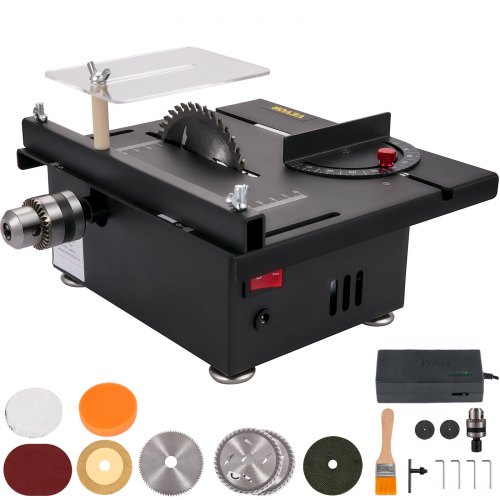
A mini table saw is a compact, electric-powered saw with a flat working surface and a circular blade. Unlike full-size table saws found in large woodshops, a mini table saw is designed for small-scale work. The blade usually ranges from 2 to 4 inches in diameter, and the whole unit often weighs less than 15 pounds.
Mini table saws are used for tasks that require fine, accurate cuts on small materials. This includes cutting thin wood strips, plastic sheets, acrylic, soft metals, and even circuit boards. Many models offer adjustable blade heights and angles, letting you make miter and bevel cuts.
Typical Features
- Small size: Fits on a desk or small workbench
- Lightweight: Easy to move or store
- Fine adjustment knobs: For precision cutting
- Safety guards: Protect fingers during cuts
- Dust ports: Help keep the work area clean
- Low noise: Much quieter than full-size saws
Common Uses
You’ll find mini table saws in the workshops of:
- Model makers (trains, planes, cars)
- Jewelry designers
- Hobbyists (RC vehicles, puzzles, art)
- DIYers making frames, boxes, or crafts
- Electronics technicians (cutting PCBs)
How Does A Mini Table Saw Work?
At its core, a mini table saw works like a full-size table saw but on a smaller scale. The material sits on the flat table surface, and you push it through the spinning blade. The blade’s height and angle can often be adjusted, and a fence or guide helps keep your cuts straight.
Most mini table saws use a small, high-speed electric motor. Blades are usually thin, with fine teeth for smooth, clean cuts. The compact design means you can handle small pieces safely, and some models offer special features like laser guides or variable speed control.
Example: Cutting A Model Airplane Part
Imagine you need a thin piece of balsa wood for a model airplane wing rib. With a mini table saw, you set the fence to the width you need, adjust the blade height for the wood thickness, and gently push the wood through.
The result is a straight, even strip—much more precise than using a hand saw or knife.
Key Benefits Of Mini Table Saws
Mini table saws are not just “smaller” table saws—they’re a unique tool with their own advantages.
Precision Cutting
The main strength of a mini table saw is precision. The small blade and tight tolerances allow you to make cuts as narrow as 1/16 inch (1.5mm) or even less. This is perfect for model parts, inlays, or other detailed work.
Safety
Because they’re designed for small pieces, mini table saws often include extra safety features. The blade is lower to the table, and guards are closer to the workpiece. The low power means less risk of kickback, and the machine is less likely to pull materials out of your hand.
Compact And Portable
Most mini table saws can be lifted with one hand and fit in a closet or on a shelf when not in use. This is a big advantage for people with limited space.
Versatility
Many mini table saws can cut a range of materials—wood, plastic, soft metals, and more. With the right blade, you can switch tasks quickly.
Low Noise And Vibration
Compared to larger saws, mini table saws are much quieter and create less vibration. This makes them more comfortable for long sessions and less disruptive in shared spaces.
When Should You Use A Mini Table Saw?
Not every project needs a mini table saw. But there are many times when it’s the perfect tool.
- Small Workpieces: If your material is smaller than your palm, a mini table saw gives you better control.
- Thin Strips: Cutting thin strips or slats is much safer and easier.
- Delicate Materials: Balsa, basswood, acrylic, and circuit boards are less likely to crack or chip.
- Quick Setup: For one or two quick cuts, a mini saw is faster to set up than a full-size machine.
- Indoor Use: Low dust and noise make it suitable for use in apartments or indoor shops.
Types Of Mini Table Saws
Not all mini table saws are the same. There are three main types, each with its own strengths.
Hobby/model-making Mini Table Saws
These are the most common. They’re designed for light-duty work—wood, plastic, and soft metals. They often come with several small blades and detailed adjustment controls.
Compact Job-site Mini Table Saws
A step up in power, these are for small job sites or light construction. They can handle hardwoods and thicker materials, but still fit on a small bench.
Specialty Mini Table Saws
Some mini saws are designed for a specific task—like tile cutting, PCB work, or jewelry making. These often include special blades and attachments.
What To Look For When Buying A Mini Table Saw
Choosing the right mini table saw can be confusing. Here’s what really matters:
1. Blade Size And Type
Most mini table saws use blades between 2 and 4 inches in diameter. Some accept multiple blade types:
- Carbide-tipped: For wood and plastic
- Diamond: For tile or glass
- HSS (high-speed steel): For metal
Check if the saw comes with extra blades or if replacements are easy to find.
2. Motor Power
Power is measured in watts (W) or amps (A). For most hobby work, 60–100W is enough. If you want to cut hardwood or metal, look for 120W or higher.
3. Table Size And Material
A bigger table makes it easier to handle longer pieces. Metal tables are more durable, but plastic is lighter. Some saws include extension wings for extra support.
4. Fence And Miter Gauge
A good fence keeps your cuts straight. Some mini saws include a miter gauge for angled cuts. Make sure these parts are sturdy and can be locked in place.
5. Safety Features
Look for blade guards, non-slip feet, and a clear on/off switch. Some saws have a safety key to prevent accidental starts.
6. Dust Collection
A dust port or built-in vacuum attachment helps keep your workspace clean—especially important when cutting plastic or soft metals.
7. Noise And Vibration
Check user reviews for complaints about noise or vibration. A quiet saw is more pleasant to use and less disturbing to others.
8. Price And Warranty
Mini table saws range from $40 to over $200. Price often reflects build quality, motor power, and features. A good warranty (at least one year) is a sign of a reliable product.
Mini Table Saw Vs. Full-size Table Saw
Is a mini table saw just a “small” version of a regular table saw? Not exactly. The two are designed for different tasks.
| Feature | Mini Table Saw | Full-Size Table Saw |
|---|---|---|
| Blade Size | 2–4 inches | 7–12 inches |
| Material Thickness | Up to 1 inch | 2–4 inches or more |
| Precision | Very high for small parts | Good for large parts |
| Portability | Very portable | Usually stationary |
| Noise Level | Low | High |
| Best Use | Models, crafts, small parts | Furniture, cabinetry, framing |
The key is to use each tool where it’s strongest. For cabinets or framing, use a full-size saw. For crafts and models, a mini saw is unbeatable.
Top 10 Mini Table Saws In 2024
The market is full of choices. Here are ten standout models, ranging from budget picks to pro-level tools:
1. Proxxon 37070 Fet
Known for its accuracy and build quality, the Proxxon FET features a 4-inch blade, adjustable fence, and a solid aluminum table. It’s a favorite among model makers worldwide.
2. Rockwell Bladerunner X2
This versatile saw handles a wide range of materials, including wood, tile, and metal. It’s lightweight, easy to set up, and includes several blade options.
3. Huanyu Mini Table Saw
Popular for its powerful motor (up to 200W) and sturdy frame, the Huanyu is ideal for both wood and soft metal. It includes multiple blades and a dust port.
4. Wen 3921
Technically a scroll saw, but many use it as a mini table saw for thin wood and plastic. It offers variable speed and a tilting table.
5. Novellife Mini Hobby Table Saw
Extremely compact, this saw is perfect for PCB work and jewelry. It comes with a diamond blade and adjustable fence.
6. Goplus Table Saw For Benchtop
With a 4-inch blade and strong motor, the Goplus is great for small woodworking jobs. It includes a miter gauge and safety guard.
7. Bachin Mini Table Saw
This affordable saw is favored by electronics hobbyists for its precision and multiple blade options.
8. Mini Electric Table Saw, 7-speed
Offers seven speed settings for different materials. It’s lightweight, portable, and comes with safety features.
9. Vogvigo Mini Precision Table Saw
Known for its robust metal construction and quiet operation. Good for both wood and aluminum.
10. Zerone Mini Table Saw
Entry-level, budget-friendly, and easy to set up. Ideal for students and beginners.
When comparing models, focus on your main materials and the size of your typical projects. Some saws are better for wood, others for metal or plastic.
How To Use A Mini Table Saw Safely
Mini table saws are safer than their larger cousins, but accidents can still happen if you’re not careful. Here’s how to stay safe:
- Read the manual: Every saw is a bit different. Learn the controls and safety features before your first cut.
- Wear safety glasses: Even small blades can throw chips or dust.
- Keep hands clear: Use push sticks or tweezers for very small pieces.
- Secure the saw: Clamp it to your workbench if possible. This prevents slipping.
- Check the blade: Make sure it’s sharp and properly installed.
- Use the fence: It keeps your cuts straight and your fingers safe.
- Don’t force the material: Let the blade do the work. Forcing can lead to breakage or kickback.
- Unplug when changing blades: Always disconnect power before maintenance.
- Clean up dust: Dust can hide hazards and reduce visibility.
Non-obvious Safety Tips
- Avoid loose clothing or jewelry: These can catch on the blade.
- Work in good light: Shadows can hide the blade or your fingers.
- Test on scrap first: If you’re unsure, make a practice cut.
Setting Up Your Mini Table Saw
Good setup is key for accurate, safe cuts.
- Flat, stable surface: Place the saw on a solid table or bench.
- Check blade alignment: The blade should be parallel to the fence.
- Set blade height: About 1/8 inch above your material is usually ideal.
- Attach dust collection: If your saw has a port, connect a vacuum or dust bag.
- Plug in and test: Run the saw without material for a few seconds to check for odd noises or vibration.
Example: Setting Up For Acrylic
Cutting acrylic can cause melting if the blade spins too fast or is too dull. Lower the speed if possible, and use a fine-tooth blade. Support both sides of the material to prevent chipping.
Essential Mini Table Saw Accessories
A few small accessories can make your mini table saw even more useful.
- Extra blades: Keep a set for wood, metal, and plastic.
- Push sticks: Essential for safety with small pieces.
- Rip fence extensions: For wider materials.
- Miter gauge: For angled cuts.
- Dust mask: Protects your lungs, especially with plastics.
- Blade lubricant: Helps with metal or sticky materials.
- Work light: A small LED light improves visibility.
Maintenance Tips For Mini Table Saws
Mini table saws need regular care to keep working smoothly.
- Clean the table and fence: Dust and sap can cause sticking.
- Check the blade regularly: Replace if it’s chipped or dull.
- Lubricate moving parts: Use a light oil on adjustment screws and slides.
- Inspect the power cord: Replace if damaged.
- Tighten bolts and screws: Vibration can loosen parts over time.
- Store in a dry place: Moisture can rust the blade and table.
Advanced Tip
If your saw starts making unusual noises or feels rough, stop immediately. Check for stuck debris under the blade or worn bearings. Early maintenance prevents bigger problems.
Credit: www.vevor.com
Common Mistakes Beginners Make
It’s easy to make small errors when you’re new to mini table saws. Here are some to avoid:
- Using the wrong blade: Not all blades work for all materials.
- Setting the blade too high: Increases risk and causes rough cuts.
- Skipping the fence: Freehand cuts are rarely straight or safe.
- Cutting too fast: This can burn wood or melt plastic.
- Neglecting dust collection: Dust can hide hazards and clog the motor.
Real-world Examples: Projects You Can Tackle
Mini table saws are more powerful than they look. Here are some real projects:
- Model airplane wing ribs: Thin, precise balsa strips.
- Jewelry boxes: Tiny miters and inlays.
- RC car chassis: Acrylic or ABS plastic parts.
- Puzzle pieces: Smooth, repeatable shapes.
- Custom picture frames: Accurate corners on narrow stock.
- Circuit board cutting: Straight, clean PCB edges.
- Miniature furniture: For dollhouses or architectural models.

Credit: www.ebay.com
Mini Table Saw Care: Long-term Reliability
A well-maintained mini table saw can last many years. Here’s how to ensure long life:
- Store blades in a dry, safe place.
- Keep the motor clean and dust-free.
- Use the saw regularly—motors that sit unused can seize up.
- Replace worn parts with manufacturer originals, not cheap copies.
Mini Table Saw Troubleshooting Guide
Even the best mini table saw can develop problems. Here’s a quick guide:
| Problem | Possible Cause | Solution |
|---|---|---|
| Blade won’t spin | Loose belt, motor issue, jammed blade | Check belt, clear debris, consult manual |
| Rough cuts | Dull blade, wrong speed, poor alignment | Sharpen/replace blade, adjust speed, check fence |
| Material burns/melts | Too fast feed, dull blade, wrong blade type | Feed slower, use proper blade, check sharpness |
| Vibration or noise | Loose parts, bent blade, uneven table | Tighten parts, replace blade, level saw |
| Dust buildup | No dust collection, small port | Add vacuum, clean port regularly |
Mini Table Saw Blades: What You Need To Know
Blades are the heart of any mini table saw. Here’s what matters:
- Tooth count: More teeth give smoother cuts in wood and plastic.
- Kerf (thickness): Thin-kerf blades cut with less waste and are easier on the motor.
- Material: Carbide-tipped for wood, diamond for glass/tile, HSS for metal.
- Size: Match the blade size to your saw—don’t force a large blade on a small saw.
Always use the right blade for the material. A metal blade on wood will cut poorly and wear out fast.
Upgrades And Modifications
Advanced users sometimes modify their mini table saws to fit special needs. Common upgrades include:
- Custom fences: For repeatable cuts.
- Zero-clearance inserts: Reduce tear-out on small parts.
- Aftermarket blades: Higher quality than the stock blade.
- Extended tables: For longer materials.
Before modifying your saw, check the warranty. Some upgrades can void it.

Credit: www.youtube.com
Environmental And Health Considerations
Cutting plastic, MDF, or treated wood can release harmful dust and fumes. Always use:
- A dust mask or respirator
- Good ventilation
- Dust extraction system
For more about workshop safety, see the OSHA woodworking safety guidelines.
Frequently Asked Questions
What Materials Can A Mini Table Saw Cut?
A mini table saw can cut wood, plastic, acrylic, soft metals like aluminum and brass, and circuit boards. With the right blade, you can even cut tile or glass. Always match the blade to the material for best results.
How Thick Can A Mini Table Saw Cut?
Most mini table saws can cut materials up to 1 inch thick (about 25mm). This depends on blade size and motor power. For thicker wood or metal, a full-size saw is better.
Is A Mini Table Saw Safe For Beginners?
Yes, mini table saws are generally safe for beginners if used correctly. Their small blades, safety guards, and low power make accidents less likely. Still, always follow safety rules—use push sticks, wear safety glasses, and read the manual.
How Do I Choose The Right Blade For My Project?
Choose a blade based on material, tooth count, and thickness. Use fine-tooth blades for wood and plastic, diamond blades for tile or glass, and HSS blades for metal. Thin-kerf blades are best for detailed work.
Can I Use A Mini Table Saw Indoors?
Yes, mini table saws are suitable for indoor use because they make less noise and dust than larger saws. Still, use a dust mask and keep windows open or use dust collection for health and cleanliness.
A mini table saw brings power and precision to your fingertips—no matter your skill level or workshop size. By choosing the right model, using the proper blades, and following safety tips, you’ll enjoy clean, accurate cuts for years to come.
Whether you’re building models, making crafts, or repairing electronics, a mini table saw opens up creative possibilities that larger tools just can’t match.