
The best Japanese chisels deliver razor edges, tough backs, and quiet, precise cuts.
You know that moment when your chisel slips, fibers tear, and a clean line turns fuzzy? I’ve been there. The right tool fixes that. The best Japanese chisels give crisp walls, flat bottoms, and a satisfying “pop” when paring end grain. Their laminated steel and hoop‑reinforced handles hold up to real work. In this guide, I break down sets and singles that deserve a spot on your bench, whether you cut dovetails, mortises, or delicate joinery. I’ll explain what makes them different, how they feel in hand, and which ones to pick for your next project.

KAKURI Japanese Wood Chisel Set…
3 SET OF JAPANESE CHISELS: Ideal Japanese wood chisels set for woodworking beginners. Blade sizes are popular with three widths 9mm (3/8″), 15mm (5/8″), and 24mm (15/16″), and can be…
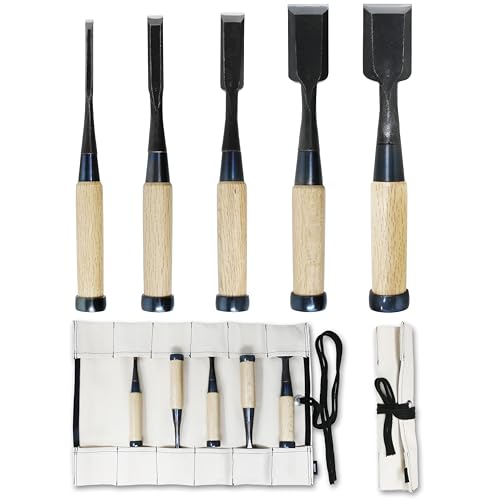
KAKURI Japanese Wood Chisel Set…
[Japanese Chisel Oire Nomi] A set of five chisels in sizes 6mm, 12mm, 18mm, 30mm, and 36mm. Perfect for shallow mortising, finishing rough mortises, trimming tenons, and various types of…
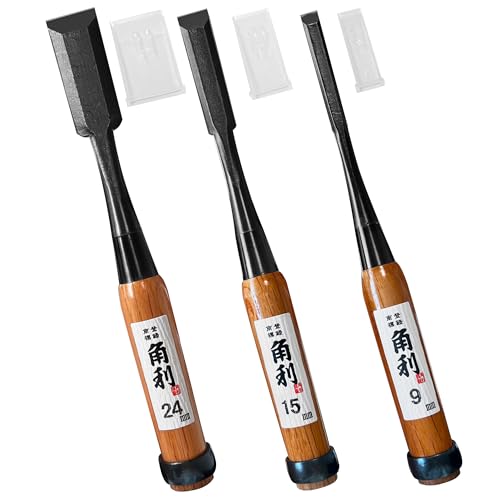
KAKURI Japanese Wood Chisel Set…
3 SET OF JAPANESE CHISELS: Ideal Japanese wood chisels set for woodworking beginners. Blade sizes are popular with three widths 9mm (3/8″), 15mm (5/8″), and 24mm (15/16″), and can be…
KAKURI 3‑Piece Oire Nomi Set (White Oak)

This compact KAKURI 3‑piece set hits the sweet spot for most joinery. The Japanese high carbon steel takes a keen edge, while the white oak handles feel dense and secure. The sizes cover everyday work like dovetails, tenon shoulders, and light paring. Each chisel arrives sharp, and you can refine the back quickly thanks to the hollow (ura) design.
The hoops come pre-fitted but benefit from final setting with a genno. I like the balance between hardness for edge life and toughness for light mallet work. If you cut hardwood, these hold up without crumbling. For beginners building a kit of the best Japanese chisels, this is a smart starting trio.
Pros:
- Well-chosen sizes for common joinery tasks
- Sharp out of the box with easy final tune-up
- White oak handles resist splitting and feel stable
- Hollow ground backs speed flattening and polishing
- Good edge retention on hardwoods with proper honing
Cons:
- Requires hoop setting and light handle tuning
- Not ideal for heavy mortising
- No roll or storage case included
My Recommendation
If you want your first taste of the best Japanese chisels without overbuying, choose this set. It suits cabinetry, boxes, drawers, and precise trimming. The steel is forgiving to sharpen and holds a crisp line. Add a 24–30 mm chisel later for wider paring, and you’ll cover most work. Stock can run low, so grab it when you see it.
| Best for | Why |
|---|---|
| Starter Japanese kit | Three versatile sizes cover most joints |
| Fine dovetail work | Thin lands and keen edges reduce tear-out |
| Everyday bench use | Durable white oak handles with hoop support |
KAKURI 5‑Piece Chisel Set with Roll Case

This five‑piece KAKURI set expands range without bloat. You get narrow sizes for tight pins, medium workhorses, and a wider chisel for paring cheeks and faces. The included roll keeps edges safe and saves time at the bench. The high carbon steel is crisp yet easy to hone, and the white oak handles give a confident grip.
I like this for anyone upgrading from mixed, dull tools. A matched set saves setup time because bevels feel similar and edges respond the same. The best Japanese chisels work like a team, and this set nails that. You’ll still want to set the hoops and lightly flatten the backs to your preferred polish level.
Pros:
- Great size spread for pins, tails, and paring
- Protective roll for transport and storage
- Consistent feel across all chisels
- Sharpness you can refine fast
- Solid value for a five‑piece Japanese set
Cons:
- Roll fabric can pick up shop dust
- Edges may need a micro‑bevel for toughest woods
- Not designed for deep mortising abuse
My Recommendation
If you want the best Japanese chisels for a full bench setup, start here. It suits furniture makers who need range and repeatable control. The roll case makes jobsite trips easy. The steel sharpens cleanly on water stones and lasts long between touch-ups. It’s a tidy, ready-to-go solution with real upgrade value.
| Best for | Why |
|---|---|
| Cabinet and furniture builds | Five sizes handle pins, tails, and paring |
| Traveling woodworkers | Roll keeps edges safe and organized |
| Consistent sharpening | Matching steel and geometry across the set |
KAKURI 3‑Piece Long‑Handle Oire Nomi (Red Oak)
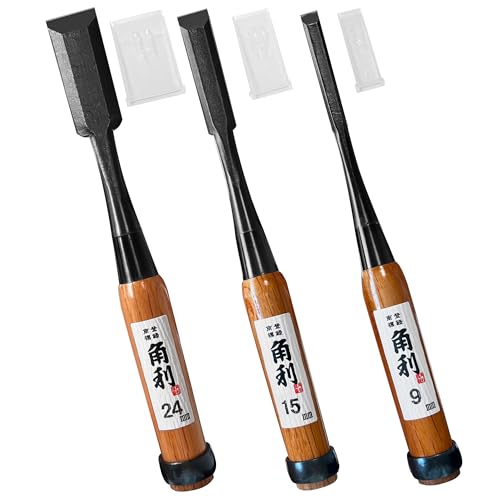
The longer red oak handles on this set give extra control and leverage. If you prefer a two‑hand grip for paring or light striking, the reach helps stabilize your cuts. The blades use Japanese carbon steel with a hollow back for quick flattening. Edges feel crisp and bite cleanly into end grain when you need quiet precision.
Long handles can reduce fatigue because you hold closer to your body. I find them especially nice for trimming face frames and casework flush to a line. For those building a kit of the best Japanese chisels focused on control, this set stands out. Expect to set the hoops and give them a light oil finish to seal the grain.
Pros:
- Long handles improve leverage and comfort
- Stable two‑hand paring control
- Sharp steel with easy maintenance
- Hollow backs flatten fast
- Red oak handles are tough and durable
Cons:
- Longer handles need more drawer space
- Not ideal for tight, cramped areas
- Hoop setting still required for heavy mallet work
My Recommendation
Choose this if you love steady, two‑hand paring and gentle striking. It’s one of the best Japanese chisels sets for control and reach. Ideal for casework, face frames, and flush trimming. The long handles reduce wobble and help you hold the exact line. Availability can swing, so plan ahead if you need it for a build.
| Best for | Why |
|---|---|
| Two‑hand paring | Extra handle length improves stability |
| Precision trims | Edges hold clean, quiet cuts |
| Comfort over long sessions | Better leverage reduces strain |
KAKURI 42 mm Oire Nomi Chisel

A wide 42 mm chisel is a luxury until you use it. This one excels at flattening dados, cleaning tenon cheeks, and paring proud joints flush. The carbon steel takes a fine polish that glides through fibers. The white oak handle and hoop handle light mallet taps without complaints.
In a lineup of the best Japanese chisels, a wide chisel like this saves time. It bridges low spots and keeps surfaces in a single plane. You can also use it for chamfers and soft sculpting. Prepare the back well, and it becomes a go‑to for dead‑flat results.
Pros:
- Wide blade speeds flattening and paring
- Excellent for tenon cheeks and dados
- Holds a crisp edge with a fine polish
- Solid white oak handle with hoop
- Useful for decorative chamfers
Cons:
- Too wide for tight corners or pins
- Needs careful back prep to exploit width
- Heavier than mid‑width chisels
My Recommendation
If you already own narrow and mid sizes, add this for surface work. It turns tedious cleanup into fast, flat results. Among the best Japanese chisels for paring, it shines on cheeks, dados, and flush cuts. The edge stays true if you keep a fresh micro‑bevel. It’s a specialty piece that quickly feels essential.
| Best for | Why |
|---|---|
| Flattening and paring | Wide blade keeps surfaces in one plane |
| Tenon cleanup | Broad support for clean, flat cheeks |
| Flush trimming | Covers more area with fewer passes |
KAKURI 6‑Piece Damascus Blue Steel Set

This premium set features Blue Steel No.2 cores with a Damascus cladding. The steel runs hard, holds a crazy edge, and works best with refined stones. If you push for whisper-thin paring cuts or glassy end grain, these deliver. The mixed Japanese and Western styling gives a familiar feel with artisanal steelwork.
These are serious tools for those who notice steel differences. You’ll want to use water stones, a light touch, and a stropping routine. Among the best Japanese chisels, this set sits at the high end for sharpness and beauty. It’s an heirloom choice you buy once and tune over time.
Pros:
- Blue Steel No.2 core for long edge life
- Damascus cladding adds toughness and looks
- Exceptional performance on end grain
- Mixed style feels balanced in hand
- Six sizes for complete bench coverage
Cons:
- Higher price than standard carbon steel
- Requires careful sharpening to avoid micro-chipping
- Overkill for rough carpentry or site work
My Recommendation
Choose this if you value edge life and refined cuts above all. It’s one of the best Japanese chisels sets for high-end furniture and tight joinery. Blue Steel rewards good technique and patient sharpening. The Damascus cladding adds durability and pride of ownership. Expect limited supply and plan your purchase around major builds.
| Best for | Why |
|---|---|
| High-end joinery | Blue Steel keeps a keen edge longer |
| End grain paring | Holds polish for glass-smooth cuts |
| Heirloom tool set | Damascus cladding and tuned performance |
SUIZAN 24 mm Professional Oire Nomi

This SUIZAN 24 mm chisel is a versatile single that earns its keep. It’s wide enough for cheeks and faces yet nimble for general trimming. The blade arrives sharp, and the steel responds well to water stones. The handle is stout and ready for light mallet taps.
If you want to test the waters with one tool, start here. In a lineup of the best Japanese chisels, a 24 mm size works daily. It pairs well with a narrow dovetail chisel and a wide paring chisel. The result is a simple, three‑chisel core that handles most tasks.
Pros:
- Ideal mid‑width for daily tasks
- Sharp factory edge with easy polishing
- Strong handle with hoop support
- Good price-to-performance ratio
- Plays well with narrow and wide companions
Cons:
- Single size may feel limiting alone
- Hoop may need final setting
- Not for heavy mortising
My Recommendation
Grab this if you want a single workhorse that proves the point of the best Japanese chisels. It fits small shops, travel kits, and focused builds. Add a narrower and wider size later. It’s a smart way to learn Japanese steel without buying a big set. Availability is usually steady and beginner friendly.
| Best for | Why |
|---|---|
| Everyday trimming | 24 mm width is a balanced sweet spot |
| First Japanese chisel | Affordable, sharp, and easy to hone |
| Compact tool rolls | One tool covers many tasks |
KAKURI 7‑Piece Beginner Woodworking Tool Set

This bundle gives you a plane, chisels, saw, genno, marking gauge, and a bag. For newcomers, it’s a full tour of Japanese hand tools in one box. The chisels offer the same crisp steel and hooped handles you expect. The genno pairs perfectly for hoop setting and controlled taps.
It’s a fast track to the best Japanese chisels and their support tools. You learn how each tool plays with the others, from layout to smoothing. The bag keeps things together and encourages good habits. If you’re building a hand tool foundation, this kit makes the jump easier.
Pros:
- Complete starter system in one box
- Chisels, genno, and plane work together well
- Good steel and hooped handles
- Bag for storage and transport
- Great value for a full beginner path
Cons:
- Plane and saw require learning curves
- Not all tools are premium-tier
- Bag offers basic, not rugged, protection
My Recommendation
If you want the fastest route into the best Japanese chisels and their ecosystem, pick this kit. It suits learners who want layout, cutting, and finishing in one bundle. You’ll develop skills in hoop setting, stone work, and gentle striking. It’s an affordable way to build muscle memory with real tools. Watch stock, as bundles often sell out.
| Best for | Why |
|---|---|
| New hand tool users | All key tools included for learning |
| Budget-conscious setups | Strong value for a multi-tool bundle |
| Skill building | Practice hoop setting and sharpening |
RANSHOU 42 mm Wide Oire Nomi

RANSHOU’s 42 mm wide chisel brings a traditional feel with a tough red oak handle. The blade arrives keen, and the edge polishes to a fine, bright line. It shines in flattening tasks, cheeks, and proud joint cleanup. The balance is steady for two‑hand paring or controlled taps.
Compared with other wide chisels in the best Japanese chisels category, this feels robust. It’s good for heavy paring and quick surface leveling. The red oak handle stands up to use, though hoop setting still helps. Keep a consistent micro‑bevel to reduce sharpening time.
Pros:
- Wide blade improves speed and flatness
- Strong red oak handle
- Sharp edge with good polish retention
- Great for cheek trimming
- Stable for two‑hand control
Cons:
- Not suited for fine pin work
- Heavier feel than some alternatives
- Back prep is important to performance
My Recommendation
If you want a wide, durable option in the best Japanese chisels lineup, pick this. It’s great for flattening and robust paring. Ideal for tenons, dados, and flush work where speed meets accuracy. The handle feels secure, and the edge holds a fine polish. Watch for sales to grab strong value.
| Best for | Why |
|---|---|
| Heavy paring | Wide, stable blade for controlled cuts |
| Joinery cleanup | Smooths large faces and cheeks |
| Two‑hand use | Weight and handle give confidence |
KAKURI 24 mm Hand‑Forged White Steel Nomi

This hand‑forged Oire Nomi uses White Steel No.2, known for shaving‑sharp edges. It responds fast to water stones and rewards a light touch. At 24 mm, it handles daily bench tasks with snap and control. The white oak handle and hoop are ready for serious joinery.
White Steel excels if you prize push‑cut sharpness and feedback. Among the best Japanese chisels, this one feels lively and precise. The back flattens neatly, and edges take a mirror finish. Keep a simple honing routine, and it will stay in the sweet spot for long sessions.
Pros:
- White Steel No.2 for extreme sharpness
- Fast, predictable sharpening
- Perfect mid‑width utility
- Quality handle with hoop reinforcement
- Excellent tactile feedback in cuts
Cons:
- Edge life shorter than Blue Steel at same hardness
- Requires careful storage to avoid rust
- Single size limits range alone
My Recommendation
Pick this if you chase peak sharpness and clean paring. It sits high on my list of the best Japanese chisels for pure feel. Ideal for tuning joints, trimming, and precise end grain cuts. Pair it with a narrow and wide chisel for a perfect trio. Supplies can be tight, so don’t hesitate if it fits your plan.
| Best for | Why |
|---|---|
| Razor paring | White Steel achieves extreme sharpness |
| Daily bench work | 24 mm handles varied tasks well |
| Skill development | Clear feedback improves technique |
KAKURI 300 g Carpenter Genno Hammer

A proper genno is the quiet partner to the best Japanese chisels. This 300 g head balances control and authority. Use the flat face for striking hoops and gentle tapping. The peen side can tune nails and hardware as needed.
Matched with hooped chisels, a genno reduces bounce and noise. I like 300 g as a do‑it‑all weight for joinery and careful setting. The handle feels comfortable, and the head geometry delivers accurate blows. If you want consistent chisel work, a genno is not optional.
Pros:
- Ideal 300 g weight for chisel work
- Flat face for controlled strikes
- Comfortable handle for long sessions
- Pairs perfectly with hooped chisels
- Durable head with precise balance
Cons:
- Not a substitute for a heavy mallet
- Requires practice for dead‑on accuracy
- Handle may need light oiling over time
My Recommendation
If you’re serious about the best Japanese chisels, add this genno. It sets hoops, strikes cleanly, and helps edges last longer. Use light, rhythmic taps for control. The weight suits joinery across soft and hard woods. It’s an affordable upgrade that pays off in cleaner cuts.
| Best for | Why |
|---|---|
| Chisel striking | Controlled, accurate blows with less bounce |
| Hoop setting | Flat face and right weight for setup |
| Quiet joinery | Light taps reduce shop noise and chatter |
FAQs Of best japanese chisels
What makes Japanese chisels different from Western chisels?
They use laminated steel: a hard edge for sharpness and a soft body for toughness. They also have a hoop to handle tapping. The backs have a hollow to speed flattening. They excel at crisp, precise cuts.
Do I need to set the hoop before using a Japanese chisel?
Yes. Seat the hoop with light taps, compress the end fibers, and refit. This protects the handle from splitting. It also improves the feel when striking.
Which steel is better: White Steel or Blue Steel?
White Steel takes a keener edge fast. Blue Steel holds the edge longer under heavy use. Choose White for peak sharpness and Blue for edge life. Both are excellent in the best Japanese chisels.
How should I sharpen Japanese chisels?
Use water stones. Progress through grits, polish the back, and add a tiny micro‑bevel. Strop lightly. Keep it simple and frequent.
What sizes should I start with?
Begin with a narrow (6–9 mm), a mid (18–24 mm), and a wide (30–42 mm). That trio covers pins, general paring, and surface work. Add specialty sizes as needed.
Final Verdict: Which Should You Buy?
If you want a simple, trustworthy start, the KAKURI 3‑Piece Oire Nomi Set balances value, sharpness, and control. For a fuller bench kit, the KAKURI 5‑Piece Set with Roll Case is the most practical upgrade.
Chasing premium edges? The KAKURI Damascus Blue Steel Set sits at the top of the best Japanese chisels list. Add the KAKURI Genno to unlock their full potential.