The best jointer hand plane tracks dead straight, holds an edge, and feels balanced.
You know the headache. A long edge looks true on your bench, but your boards still rock when clamped. Glue-ups open. Tabletops bow. That’s where a great jointer plane saves the day. It bridges highs and lows, gives you flat faces, and pulls edges into perfect alignment. I’ve spent years tuning and testing planes, from budget buys to premium beasts. In this guide, I’ll help you pick the best jointer hand plane for your wood, your hands, and your budget—without guesswork. I’ll also show a few smart add-ons that make jointing faster and cleaner.

Taytools #7 Premium Bedrock Style…
Inspired by Stanley Bedrock Planes – Designed for superior rigidity, precision, and durability, ensuring high-performance smoothing with minimal chatter and tearout. Premium Ductile Cast Iron Body & Frog – Provides…
JORGENSEN No.4 10″ Wood Plane…
Professional Level Blade: The blade is made of professional level O1 tool steel, improving cutting efficiency while minimizing blade wear, finely sharpened for efficient wood planing and ideal for woodworking….

Woodriver #7 Jointer Plane
2-7/8″ W x 22″ L with 2-3/8″ W blade Modeled after the Bedrocks, Stanley Tool’s very best line; Commonly known as a jointer plane WoodRiver hand planes feature the same…
Check Price on Amazon →Taytools #7 Bedrock Jointer Plane, 22-1/8 in

This Taytools #7 is a big, steady jointer with a Bedrock-style frog. That frog gives rigid support to the blade. The long 22-1/8 inch sole spans hollows and bumps well. The 2-3/8 inch wide Cryo O1 blade holds a keen edge for a long run between honings.
Out of the box, you should still lap the sole for best results. The fit and finish are solid for the price tier. The handles feel generous and comfortable, even in long sessions. Adjustments are smooth and predictable, which is what I want from the best jointer hand plane on a busy bench.
Pros:
- Long, stable sole excels at jointing long edges
- Bedrock-style frog adds rigidity and fine control
- Cryo-treated O1 blade sharpens easily and lasts
- Wide 2-3/8 inch iron covers more surface per pass
- Good value compared to top-tier premium brands
- Comfortable tote and knob reduce hand fatigue
Cons:
- May need sole flattening before peak performance
- Heavier than vintage counterparts for some users
- Finish quality can vary slightly unit to unit
My Recommendation
If you need reliable straight edges without breaking the bank, this is a strong pick. It feels planted and predictable. That makes it ideal for furniture and glue-up work where accuracy matters. For many users, it could be the best jointer hand plane to grow with as skills improve.
| Best for | Why |
|---|---|
| Long edge jointing | 22-1/8 inch sole bridges highs and lows |
| Budget-conscious buyers | Premium features at a lower price point |
| Frequent sharpening cycles | Cryo O1 steel balances edge life and ease |
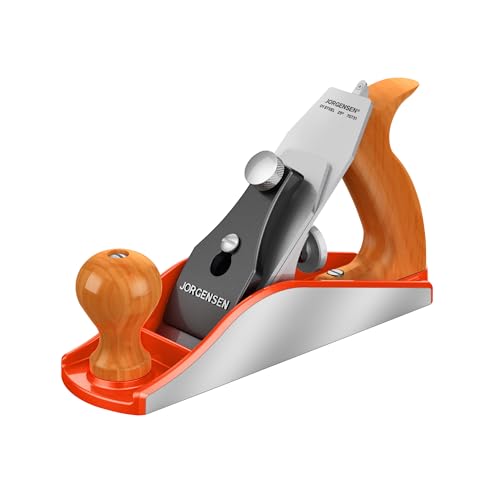
JORGENSEN No.4 Smoothing Plane, 10 in

This is a No.4 smoother, not a jointer, but it pairs well with one. After you joint an edge, the smoother can kiss the face and leave a clean finish. The ductile iron body is tough and resists cracking. The adjuster makes it easy to set a fine cut.
The JORGENSEN No.4 shines on small boards and tricky grain. You can set it for whisper-thin shavings and avoid tear-out. It will not replace the length you need for truing long edges. But as a companion to the best jointer hand plane, it completes a reliable bench setup.
Pros:
- Ductile iron body handles stress and drops better
- Short sole suits smoothing and localized work
- Adjustable depth makes fine tuning simple
- Affordable way to upgrade surface quality
- Good ergonomics for control on small pieces
Cons:
- Not long enough for accurate edge jointing
- Blade may need tuning and honing before use
- Finish level is functional, not premium
My Recommendation
Pair this No.4 with a proper jointer plane to round out your kit. It is best for smoothing and final passes. If you already own the best jointer hand plane for your shop, this is a smart, low-cost add-on. It makes your edges and faces look pro without sanding.
| Best for | Why |
|---|---|
| Final surface prep | Short sole and fine cuts leave a clean finish |
| Small parts | Better control on narrow stock and trim |
| Budget builds | Solid performance for a modest cost |
WoodRiver #7 Jointer Plane

The WoodRiver #7 has earned a strong following for performance near high-end planes. It uses a heavy, ductile iron body that feels planted on the wood. The machining is usually very clean. The blade steel holds an edge long enough for a full day of jointing.
In my shop, it cuts true tracks and makes fine, full-width shavings. Adjustments are crisp. The lateral lever gives precise control, which helps you dial in a square edge. If you want the best jointer hand plane feel without going boutique, this is a leading option.
Pros:
- Heavy, stable body resists chatter
- Good factory machining and fit
- Predictable adjustments with solid levers
- Edge life supports longer sessions
- Consistent quality across many units
- Strong community support and tune-up guides
Cons:
- Weight can tire smaller users
- Price lands in the mid to high range
- May still need a light sole touch-up
My Recommendation
If you want near-premium results without the top-tier price, choose the WoodRiver #7. It balances stability and control very well. It is best for users who demand straight edges on long boards and panel glue-ups. It may be the best jointer hand plane for ambitious home shops and small pro shops.
| Best for | Why |
|---|---|
| Accuracy-focused users | Heavy body and clean machining cut true |
| Panel glue-ups | Long sole tracks flat and square |
| Intermediate to advanced | Fine adjustability rewards skilled hands |
JORGENSEN No.5 Jack Plane
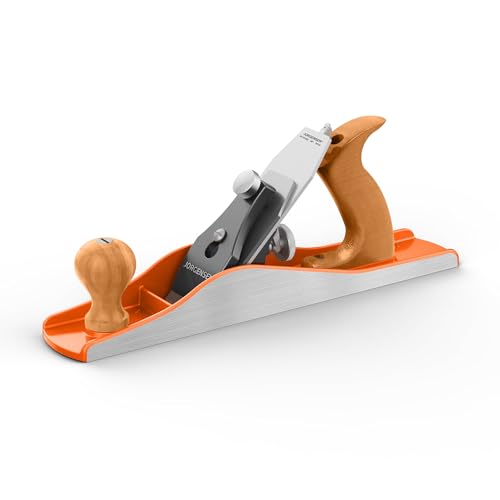
A No.5 jack is the shop workhorse. It is not as long as a jointer, but longer than a smoother. That makes it great for roughing and straightening before a final jointing pass. This JORGENSEN has a ductile iron body and simple, friendly controls.
It is a good first plane to learn with. You can camber the blade for fast stock removal. Then switch to a lighter cut for truing short edges. It will not beat the best jointer hand plane at long edges, but it covers a lot of ground for the price.
Pros:
- Versatile size for roughing and semi-truing
- Ductile iron resists heavy knocks
- Easy depth adjustments for coarse or fine cuts
- Good value for a starter or backup plane
- Comfortable handle shape for control
Cons:
- Not long enough for full-length jointing
- Blade may need frequent honing if worked hard
- Fit and finish are practical, not fancy
My Recommendation
Choose this if you want one plane to do a bit of everything. It is best for prepping boards before final truing. Team it with the best jointer hand plane to move from rough to ready fast. It saves time when you process lumber by hand.
| Best for | Why |
|---|---|
| Beginner toolkits | Versatile and forgiving to learn on |
| Rough stock removal | Can take a cambered, heavier cut |
| Short edge truing | Longer than a smoother, more control |
JORGENSEN 60-1/2 Low-Angle Block Plane

A low-angle block plane is a trim tool that lives in your apron. It is great for end grain, chamfers, and touch-ups. This JORGENSEN includes an adjustable mouth. That lets you open up for thicker cuts or close down for fine work.
It is not a jointer, but it supports jointing tasks. I use mine to break sharp edges on freshly jointed boards. It also pares end grain cleanly on tenons and miters. Alongside the best jointer hand plane, it keeps your joinery crisp and neat.
Pros:
- Low angle excels on end grain and tricky spots
- Adjustable mouth controls tear-out
- Compact body fits one-handed work
- Quick, precise touch-up tool
- Strong value for daily shop use
Cons:
- Too short for flattening or jointing
- Small size can feel cramped with large hands
- Blade steel may need frequent honing under heavy use
My Recommendation
Get this if you trim end grain, chamfer edges, or fine-tune joints often. It is best as a sidekick to your bigger bench planes. Used with the best jointer hand plane, it speeds up cleanups and saves sandpaper. It earns a spot in most toolkits.
| Best for | Why |
|---|---|
| End grain trimming | Low angle slices cleanly across fibers |
| On-the-spot fixes | Compact and fast to adjust |
| Edge chamfers | Controlled cuts with adjustable mouth |
JORGENSEN Chamfer Plane with 4 Cutters

A chamfer plane is a specialty tool. This one includes four cutters and built-in storage. It quickly breaks edges to a consistent profile. That protects edges after you true them on the jointer plane.
The body supports a steady, repeatable angle. You can swap cutters to change the chamfer size. It is fast, clean, and safer than a router for small pieces. With the best jointer hand plane on your bench, this is a smart partner for final detail work.
Pros:
- Four cutters for different chamfer sizes
- Built-in storage keeps parts together
- Safe and quiet compared to power tools
- Great for repeatable edge breaks
- Compact and simple to use
Cons:
- Single-purpose tool, limited beyond chamfers
- Not ideal for hardwood knots or wild grain
- May need light honing of cutters out of box
My Recommendation
If you build tables, shelves, or boxes, this keeps edges consistent. It is best for clean chamfers that protect against splinters. Pair it with the best jointer hand plane to move from straight to styled in seconds. It adds finish-level polish to your projects.
| Best for | Why |
|---|---|
| Consistent chamfers | Preset cutters control the bevel size |
| Small-shop safety | Hand tool control, no tear-out roar |
| Fast edge detailing | Quick swaps and simple setup |
Bench Dog No.7 Jointer Plane

Bench Dog’s #7 aims for consistent, repeatable jointing results. The casting is heavy and confidence-inspiring. The long sole tracks flat. It makes it easy to create edges that clamp tight with minimal pressure.
Adjustment controls have good travel and feedback. The body finish is clean and workmanlike. It performs at a level that puts it in the conversation for the best jointer hand plane in its bracket. Many users find it ready to work with minimal tuning.
Pros:
- Long, stable sole for accurate jointing
- Hefty body reduces vibration and chatter
- Predictable depth and lateral adjustments
- Good fit and finish at the price
- Strong edge quality on long boards
Cons:
- Weight can feel bulky for small users
- Blade may benefit from a quick regrind
- Premium feel without premium extras
My Recommendation
If you want accuracy and value, put this near the top of your list. It is best for furniture builders and anyone gluing panels. Used right, it can be the best jointer hand plane option for an upgrade from entry-level tools. Expect smooth, square edges.
| Best for | Why |
|---|---|
| Glue-ready edges | Long sole tracks flat and true |
| Shop upgrades | Premium feel without extreme cost |
| Daily jointing | Stable, low-vibration performance |
JORGENSEN No.101 Mini Block Plane

This mini block plane is tiny but handy. It fits in a pocket for quick touch-ups. It trims end grain on small parts and cleans up little proud edges. The ductile body gives it surprising strength for the size.
It is not a jointer and not a main bench plane. But as a helper tool, it saves time. I use it for fine tweaks that keep work flowing. With the best jointer hand plane handling long edges, this one handles the tiny stuff well.
Pros:
- Ultra-compact for spot fixes
- Strong ductile iron casting
- Great for tiny parts and inlays
- Fast to deploy and put away
- Budget-friendly helper tool
Cons:
- Too small for most planing tasks
- Limited adjustability compared to larger blocks
- Short sole can dig if technique slips
My Recommendation
Buy this as a pocket plane for trim work and fine edges. It is best as a supplement, not a main tool. Next to the best jointer hand plane, it helps tidy details before glue or finish. It earns its keep when you need one quick pass.
| Best for | Why |
|---|---|
| Tiny adjustments | Small body reaches tight spots |
| On-site fixes | Lightweight and easy to carry |
| Craft work | Delicate control on small pieces |
Hoteche 14-Inch Jointer/Smoothing Plane

This Hoteche occupies a middle ground. At 14 inches, it is longer than a smoother but shorter than a true #7 jointer. It can help straighten moderate edges and faces. The 2-inch blade and adjustable depth give basic control.
Think of it as a budget path into hand planing. You will likely need to hone the blade and tune the sole. Once set up, it handles light jointing on shorter boards. It is not the best jointer hand plane for long panels, but it is a fair start for small projects.
Pros:
- Affordable entry into bench planes
- Usable for light straightening
- Simple adjustments for beginners
- Compact enough for small shops
- Decent for DIY and hobby work
Cons:
- Not long enough for accurate long-edge jointing
- Requires tuning to perform well
- Blade steel may need frequent sharpening
My Recommendation
Pick this if you are new and on a tight budget. It is best for short boards and learning to plane. If you later buy the best jointer hand plane, this Hoteche still works as a backup or roughing tool. Just plan to tune it for best results.
| Best for | Why |
|---|---|
| Beginners | Low cost, easy to adjust |
| Short edge tasks | Length suits modest boards |
| Light smoothing | 2-inch iron covers small areas |
Hoteche No.4 Smoothing Plane

This Hoteche No.4 is a classic smoother form at a low cost. It suits light finishing passes and simple cleanup. The adjuster lets you dial a thin shaving. It fits hands well for small tasks.
Out of the box, plan on sharpening and setup. Once tuned, it is handy on softwoods and straight grain. It will not replace the reach of the best jointer hand plane, but it will raise your surface game. It is a low-risk way to try hand planing.
Pros:
- Very budget-friendly
- Simple and useful for finishing passes
- Easy to adjust and control
- Good learning tool for beginners
- Compact size for small projects
Cons:
- Requires tuning and frequent sharpening
- Limited accuracy for straightening edges
- Not ideal for dense hardwoods
My Recommendation
Buy this to test the waters with smoothing. It is best for finishing boards after machine work. Keep it as a companion to the best jointer hand plane so you can flatten, then finish clean. The price makes it an easy add to your kit.
| Best for | Why |
|---|---|
| Budget smoothing | Low cost and simple setup |
| Softwood projects | Works fine on straight grain |
| New learners | Forgiving size and controls |
FAQs Of best jointer hand plane
What size jointer plane should I buy first?
A #7 jointer at about 22 inches is ideal for long edges. It bridges highs and lows well. If space or budget is tight, a #6 can work on shorter boards.
Which blade steel is best for jointer planes?
O1 sharpens fast and is easy to hone. A2 lasts longer but takes more effort to sharpen. Cryo-treated O1 balances edge life and ease very well.
How flat should the sole be?
Flat enough to avoid significant high or low spots. Focus on the toe, mouth area, and heel. Light lapping with sandpaper on glass often helps.
Do I need a jointer plane if I have power tools?
It still helps. You can true edges after the machine and fix snipe or tear-out. A hand jointer gives you final control before glue.
What is the best jointer hand plane for beginners?
Look for a #7 that is stable and easy to adjust. Taytools #7 and Bench Dog #7 are strong, affordable picks. WoodRiver #7 suits users seeking near-premium feel.
Final Verdict: Which Should You Buy?
If you want the best jointer hand plane for straight, glue-ready edges, pick a true #7. The Taytools #7 and Bench Dog #7 offer stability, reach, and value. The WoodRiver #7 adds a near-premium feel.
Pair your jointer with a No.4 smoother or a low-angle block for finish work. This combo gives accuracy, speed, and clean results across most projects.