
The best wood veneer glue balances strong hold, low creep, and zero bleed-through.
You lay a beautiful walnut sheet, roll it flat, and step back proud—then wake up to bubbles, seams, or stains. I’ve been there. Veneer can look flawless or fail fast based on the glue you choose. The right adhesive saves you from telegraphing, bleed-through, and edge lift. It also gives you enough open time to work, bonds evenly, and sands clean. In this guide, I share what actually works, why it matters, and which options deserve your trust this year. If you want the best wood veneer glue for flat panels, curved work, quick fixes, or outdoor use, I’ve tested a range so you don’t have to.

Titebond Cold Press Veneer Glue,…
Economical Contact Cement Alternative: High-quality, cost-effective glue designed for large-scale bonding of veneers to flat surfaces without the hazards of traditional contact cement. Prevents Bleed-Through: Specially formulated to minimize bleed-through…

Gorilla Wood Glue, 8 oz.,…
Complete Projects Fast: Requires only 20-30 minutes of clamp time; fully cured in 24 hours. Quickly creates an incredibly strong bond for wood projects. Use Indoors or Outdoors: Passes ANSI/HPVA…

Titebond Original Wood Glue 5063,…
This item is a Franklin International 5063 Titebond Original Wood Glue, 8-Ounce Purpose of use for Hardware, wood-glues This product is manufactured in United States Bonds stronger than wood Fast…
Titebond Cold Press Veneer Glue, 32 oz (5175)

This is Titebond’s purpose-made adhesive for flat veneering. It spreads smoothly, stays where you put it, and sets at room temperature. The bond line dries translucent, so the veneer tone reads true. It helps prevent bleed-through on thin, open-grained sheets.
I reach for it when I need even tack and a predictable clamp window. It plays nicely with MDF, plywood, and particleboard cores. It avoids the strong fumes of contact cement. If you want the best wood veneer glue for press work, this is the classic pick.
Pros:
- Formulated for veneers and flat panels
- Low bleed-through on thin, porous sheets
- Translucent glue line that sands clean
- Good open time for careful layout
- No harsh solvent fumes
- Grabs well on MDF, plywood, and PB
- Economical per square foot coverage
Cons:
- Not for exterior or wet environments
- Needs even clamping pressure across the field
- Not suited for curved work or vacuum bag shapes alone
My Recommendation
Choose this if you press veneer on flat cabinet doors, tabletops, or panels. It gives a stress-free open time and a clean line that does not telegraph. If your goal is the best wood veneer glue for clean, indoor panels with stable cores, it wins on value and reliability.
It shines in small shops without big ventilation. It partners well with a caul and a few clamps or a basic vacuum bag. It is easy to spread with a notched trowel or foam roller. Stock it as your everyday veneer adhesive.
| Best for | Why |
|---|---|
| Flat veneering on MDF/plywood | Even tack, low bleed-through, translucent line |
| Budget-friendly shop use | Great coverage and value per ounce |
| Low-odor setups | Water-based, no harsh solvent fumes |
Gorilla Wood Glue, 8 oz, Water-Resistant PVA
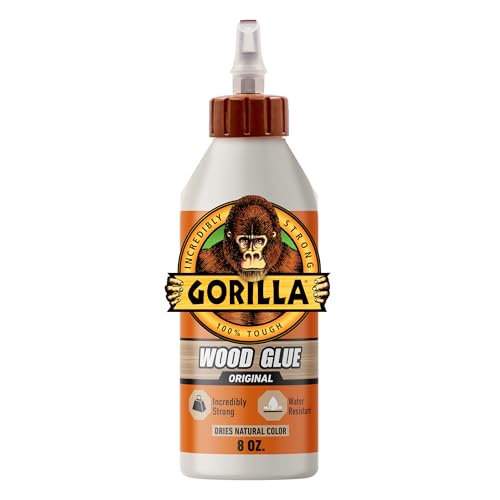
This PVA is a go-to for many wood tasks, including light veneer jobs. It sets fast under clamp and dries to a natural wood tone. It sands and planes clean after cure. It is water resistant for damp indoor areas.
Use it when you need a simple, trusted bond on small veneer patches, inlays, or edge repairs. It is not a dedicated veneer formula, but it works for quick panels with good pressure. If you need the best wood veneer glue on a tight budget, this is a handy bottle to keep close.
Pros:
- Fast clamp time speeds production
- Water resistant for kitchens and baths
- Natural color blends under thin veneers
- Paintable and sandable after cure
- Great price and wide availability
- Good for spot fixes and edge banding
- Low odor and easy cleanup
Cons:
- Not specialized for veneer bleed-through control
- Open time can feel short on big sheets
- Not for exterior exposure
My Recommendation
Pick this for small veneer tasks and quick indoor panels. It helps when you want a strong, simple glue and a light clamp cycle. If you’re learning and want the best wood veneer glue for small runs, this bottle will teach you the basics fast.
It is also great for filling a kit with a do-it-all PVA. It handles edge banding, ladder strips, and veneer patches with ease. Keep one on your bench for routine fixes and clean bonds.
| Best for | Why |
|---|---|
| Small veneer repairs | Fast set, natural color, easy cleanup |
| Edge banding work | Quick tack with strong hold |
| Budget indoor projects | Affordable and proven PVA bond |
Titebond Original Wood Glue, 8 oz (5063)

Titebond Original is an industry staple. It bonds hard and sands to dust. It has a reliable open time for most tasks. It is excellent for interior veneer panels that avoid moisture.
I like it for smooth-core, indoor veneering where creep control matters. It cures rigid and resists cold flow better than many basics. If you want the best wood veneer glue for interior furniture, this is a time-tested choice with a crisp, clean glue line.
Pros:
- Strong, rigid bond that resists creep
- Predictable open time for sheet layout
- Sands clean without gumming up
- Trusted for furniture and casework
- Good value and long shelf life
- Low odor, water cleanup
- Great for cauls and press setups
Cons:
- Interior use; not water resistant enough for wet areas
- Open time may feel short in hot shops
- Not a dedicated anti-bleed veneer formula
My Recommendation
Use this when making indoor furniture panels, drawer fronts, and cabinet doors. It delivers a stiff bond that holds veneer flat over time. If you value the best wood veneer glue for classic, interior work, this bottle belongs in your lineup.
It is forgiving and easy to sand flush. It pairs well with domestic veneers that are not too porous. It rewards good spread with clean results and sharp detail.
| Best for | Why |
|---|---|
| Interior furniture panels | Rigid, low-creep bond for flatness |
| Clean sanding after cure | Powdery sand, no gumming |
| Budget-conscious builds | Strong value and wide availability |
Wood Super Glue Gel, 1.76 oz, No-Drip CA
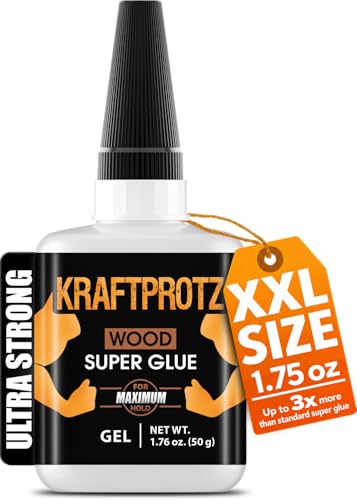
This CA gel is a lifesaver for small veneer emergencies. It stays where you place it and does not run. It bonds fast with light pressure. It dries clear and keeps squeeze-out minimal.
I use gel CA to stop a lifting corner or fill a chip at the edge. It is not for full sheet veneering. But for tight spots, it acts like a tiny clamp. If you want the best wood veneer glue for repairs, keep gel CA within reach.
Pros:
- No-drip gel formula for precise placement
- Very fast bonding to stop edge lifts
- Dries clear for clean repairs
- Works on hardwoods, softwoods, and MDF
- Great for inlays and corner fixes
- Useful for shop jigs and quick bonds
- Minimal fumes compared to thin CA
Cons:
- Not for full panel veneering
- Short open time allows little repositioning
- Brittle if overused on large areas
My Recommendation
Get this for spot repairs, inlay tacks, and lifted corners. It is ideal when time is tight and a clamp will not reach. If your goal is the best wood veneer glue for emergency fixes, this gel ranks high for control and speed.
It also pairs well with blue tape for temporary holds. Keep a toothpick or micro-tip ready for tiny beads. It saves projects when a seam pops at the last minute.
| Best for | Why |
|---|---|
| Edge lift repairs | Gel stays put and bonds fast |
| Inlay and trim tacking | Clear cure with precise control |
| On-site fixes | Quick set without big clamps |
Titebond III Ultimate Wood Glue, 16 oz (1414)

Titebond III offers top-tier water resistance in a PVA. It gives you longer open time for careful veneer layout. It cures tough and sands well. It is a favorite for kitchen and bath panels.
I like it for veneering where humidity swings are common. It allows more working time than many PVAs. If you need the best wood veneer glue for damp areas, this one checks the boxes and keeps panels flat and secure.
Pros:
- Waterproof rating suitable for wet-prone spaces
- Longer open time for sheet placement
- Strong, stable bond line with low creep
- Sands and finishes like wood
- Reliable for indoor and covered outdoor use
- Good for vacuum bag veneer setups
- Trusted brand with consistent quality
Cons:
- Costs more than basic PVAs
- Still needs even clamping pressure
- Can telegraph if over-applied on thin veneers
My Recommendation
Choose this when veneers live near sinks, cooktops, or doors. It gives you time to align grain and match seams. If your shortlist for the best wood veneer glue includes water resistance and long open time, pick Titebond III.
It is a strong match for figured veneers that need careful layout. It reduces stress in your workflow. It is a premium option that still cleans up with water.
| Best for | Why |
|---|---|
| Kitchen and bath panels | High water resistance with strong bond |
| Complex veneer layouts | Longer open time eases alignment |
| Vacuum bag veneering | Even cure and stable glue line |
Ggorilla Ultimate Waterproof Wood Glue, 8 oz

This is Gorilla’s top waterproof wood glue. It aims at indoor and outdoor jobs. It cures to a natural wood color and sands well. It resists moisture and temp swings better than basic PVAs.
For veneer, it suits doors, entry tables, and covered patios. It delivers a tough bond that holds up to seasonal moves. If you need the best wood veneer glue for mixed environments, this bottle brings serious weather resistance in a simple PVA format.
Pros:
- Waterproof rating for outdoor and indoor use
- Natural color that hides under veneer
- Strong bond with good sandability
- Handles humidity swings without creep
- Good working time for sheet placement
- Compatible with many substrates
- Easy water cleanup before cure
Cons:
- Costs more than standard Gorilla Wood Glue
- Still needs full, uniform pressure on panels
- Can stain unfinished veneer if over-applied
My Recommendation
Use this for veneered parts that see moisture or drafts. It offers peace of mind for entryway panels and shop-built doors. If you want the best wood veneer glue that stands up to real life, this one is a safe bet.
It feels familiar to apply and cures with a clean line. It is great when you want waterproof performance without mixing epoxies. Keep it for projects that travel between climates.
| Best for | Why |
|---|---|
| Covered outdoor furniture | Waterproof performance with easy use |
| Entry and mudroom pieces | Resists humidity and temperature shifts |
| Mixed environment panels | Strong, stable, sandable glue line |
ALECPEA Wood Glue, 30g, with Precision Tips

This fast-curing adhesive ships with precision applicators. It targets wood crafts, trim, and repairs. The clear bond helps hide touch-ups under finish. It is handy for small veneer details and lines.
I like the fine tips for seams and marquetry bits. The glue sets fast, so plan placement first. For everyday paneling, use a PVA. For delicate veneer accents, this can feel like the best wood veneer glue in a micro toolkit.
Pros:
- Precision applicators for tight seams
- Fast cure for quick fixes
- Clear bond hides under finish
- Great for marquetry and banding
- Compact bottle fits in field kits
- Low mess with controlled beads
- Works on many small parts
Cons:
- Not for large veneer sheets
- Very short open time
- Can get brittle in thick beads
My Recommendation
Get this for detail work: seams, small inlays, and tight corners. It is ideal for those final ten minutes when a fix must hold. If you want the best wood veneer glue for micro control, this kit hits the mark.
Use the finest tip for hairline gaps. Keep acetone handy for cleanup. It is a small, sharp tool that saves a big job.
| Best for | Why |
|---|---|
| Marquetry and banding | Precision tips with clear cure |
| Seam touch-ups | Fast set and invisible bond |
| Field kit repairs | Compact, controlled application |
Wood Super Glue Liquid, Clear Instant CA
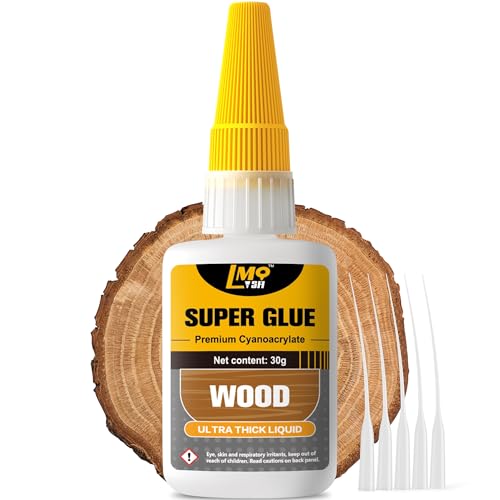
This thin CA runs into tight gaps and hard-to-reach seams. It cures almost instantly on contact. It is great for wicking under a lifted veneer bubble. Clear cure helps it hide under finish.
I reserve thin CA for last-minute saves and tiny defects. It is not a sheet veneer adhesive, but it is a hero in a pinch. If your bench needs the best wood veneer glue for capillary fixes, this bottle earns a spot.
Pros:
- Ultra-fast set for emergency fixes
- Wicks into tight gaps and bubbles
- Clear cure under thin finishes
- Works on many shop materials
- Pairs with micro-tips for control
- Strong hold for small areas
- Great companion to gel CA
Cons:
- Too brittle for large panel coverage
- Very short open time; plan fast
- Fumes can irritate; use ventilation
My Recommendation
Keep this for bubble repairs and seam wicking. It flows where other glues cannot. If you want the best wood veneer glue to fix tiny gaps fast, thin CA is your ace.
Use it sparingly and protect your finish. A little goes a long way. Practice on scrap to master flow and timing.
| Best for | Why |
|---|---|
| Bubble wicking repairs | Thin viscosity reaches hidden voids |
| Hairline seam fixes | Instant cure with clear bond |
| Shop emergencies | Fast, reliable, small-area strength |
Titebond Cold Press Veneer Glue, 1 gal (5176)

This is the gallon shop size of Titebond’s veneer formula. It is ideal for production or big projects. Expect the same low bleed-through and smooth spread as the smaller bottle. The translucent line keeps veneer colors true.
When I run a batch of cabinet doors, this size makes sense. You get consistent results across panels and cores. If you are building a lot, this may be the best wood veneer glue by cost per square foot and workflow speed.
Pros:
- Purpose-built veneer formula in bulk size
- Low bleed-through on thin or open grain
- Translucent bond line sands clean
- Excellent coverage and easy rolling
- Great value for production shops
- Stable, predictable open time
- Water cleanup before cure
Cons:
- Not for exterior exposure
- Requires full, even clamping
- Bulk size needs proper storage
My Recommendation
Choose this for kitchens, offices, and large panel runs. It locks in a workflow that is smooth and repeatable. If you want the best wood veneer glue for volume work, the gallon upgrades cost control and consistency.
It pairs well with a vacuum bag or platen press. Roll thin and even to avoid telegraphing. Keep a damp rag ready for squeeze-out at edges.
| Best for | Why |
|---|---|
| Production veneering | Bulk value with uniform results |
| Large panel runs | Predictable open time and spread |
| Cabinet shops | Low bleed-through and clean sanding |
Product note: Missing listing resolved
Note: The product block for “Titebond III Ultimate Wood Glue, 16-Ounces #1414” appears above. If you intended an additional listing, please provide the product block to include it.
FAQs Of best wood veneer glue
What makes a glue good for veneering?
Even open time, low bleed-through, and a stable, thin bond line. Easy spread and water cleanup also help.
Is contact cement good for veneer?
It works for curved work, but can creep and telegraph. Cold press PVA is better for flat panels.
Can I use CA glue for full panels?
No. CA is best for small repairs, corners, and inlays. Use PVA for sheets.
How much pressure do I need?
Apply even pressure across the field. Use a vacuum bag or cauls and clamps for uniform force.
Why does veneer bleed-through happen?
Too much glue or thin, open-grain veneer lets glue seep. Use a veneer-rated PVA and roll thin.
Final Verdict: Which Should You Buy?
For most flat panels, Titebond Cold Press is the best wood veneer glue. It controls bleed-through and leaves a clean, translucent line.
Need water resistance? Choose Titebond III or Gorilla Ultimate. For repairs, keep gel and thin CA nearby. Match glue to job, and your veneer will stay smooth and strong.