
The best table saw jigs deliver safer, cleaner, repeatable precision cuts.
You know that moment when a simple rip turns tricky? The board burns, the strip wobbles, or the angle is off by a hair. That is where the right jig saves the day. A good jig locks in accuracy, reduces tear-out, and keeps your hands safe. Whether you are tapering chair legs, ripping thin inlays, or dialing box joints, the best table saw jigs turn tough setups into calm, repeatable steps. I have spent years testing these helpers on client builds and weekend fixes. Below, I break down what actually works in the shop, so you can buy once and cut with confidence.

GOINGMAKE Thin Rip Jig Table…
【EASY TO USE】GOINGMAKE thin rip jig is easy to use. Just slide the guide into T-track miter slot of your table saw and lock it in front of the saw…

POWERTEC Table Saw Tapering Jig…
INCLUDES: (1) Table Saw Taper Cutting Jig with 24” rails with work stops, ergonomic handle, lock knob and laser etched scale FUNCTION: Used as a taper cutting guide for table…
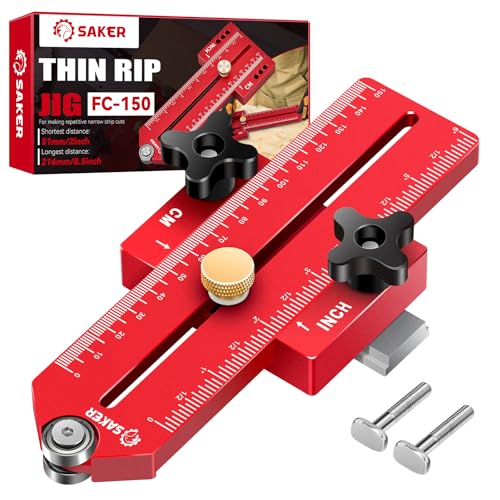
Saker Thin Rip Jig Table…
【High Quality Material】Thin rip jig table saw jig guide is crafted from CNC-machined Anodized Aluminum alloy, anodized surface, metal rigid structure, strong and stable, hold the workpiece firmly and eliminate…
GOINGMAKE Thin Rip Jig for Table Saws

This GOINGMAKE Thin Rip Jig is built for tight, repeatable strips. The guide rides in a 3/8 x 3/4 T-slot. It uses a bearing-style stop to press the workpiece gently, not the blade. That gives smoother edges and reduces burning on thin stock.
Setup is simple. Slide the jig in the miter slot, set your strip width, and keep the fence fixed. Move the stock, not the fence, for each pass. I like this method because it keeps each strip the same size. It is a calm and safe way to rip veneers or edge-banding.
Pros:
- Consistent thin rips without moving the fence
- Roller contact reduces friction and burning
- Fits common 3/8 x 3/4 T-slots on many saws
- Great for veneers, inlay, and edge banding
- Fast micro-adjust by sliding in the slot
Cons:
- Single-slot fit means limited on non-standard tables
- Not a multipurpose jig beyond thin rips
- Works best with a zero-clearance insert you may need to add
My Recommendation
If you cut lots of narrow strips, this one pays off fast. It keeps cuts uniform and safe, which is why I count it among the best table saw jigs for repeat work. Furniture makers, luthiers, and trim carpenters will love the control. It is a great value for shops that need clean, thin stock on demand.
| Best for | Why |
|---|---|
| Thin veneer strips | Roller stop reduces burning and chatter |
| Repeat edge banding | No fence changes; each strip is identical |
| Small shop safety | Keeps hands away from the blade path |
POWERTEC Tapering Jig, 24-Inch, 15° (71035V)

The POWERTEC tapering jig is made for crisp angle cuts. The 24-inch rails are lightweight aluminum with a laser-engraved scale. You can dial up to 15 degrees of taper. It is helpful for chair legs, table legs, and decorative edges.
I find the laser markings easy to read in shop light. The rails glide smoothly on the table saw. I clamp the workpiece, lock the angle, and push with steady pressure. The result is a clean, even taper with less sanding later.
Pros:
- Laser-engraved scale for fast, repeat settings
- Up to 15° tapers for legs and frames
- Lightweight aluminum rails reduce fatigue
- Long rails support longer stock with ease
- Good value for angle cutting tasks
Cons:
- 15° limit may not fit every design
- Best results require solid clamping practice
- Not ideal for very small, delicate parts
My Recommendation
If you build mid-century or Shaker-style pieces, you need this. It is one of the best table saw jigs for repeat tapers on chair or table legs. The scale saves time between matching parts. For hobbyists and pros, it is a simple way to hit precise angles and keep your workflow smooth.
| Best for | Why |
|---|---|
| Chair and table legs | Accurate, consistent tapers up to 15° |
| Repeat angle work | Laser scale speeds matching cuts |
| Shop efficiency | Light rails and easy setup |
Saker Thin Rip Jig for 3/4 x 3/8 Slots

The Saker Thin Rip Jig helps you produce steady thin strips. It fits 3/4 x 3/8 miter slots on many saws. The bearing-guided post acts as a set-width stop. That way you keep the fence fixed and focus on feed rate.
I like the steady control it gives on small parts. You get clean edges for trim and inlay. It also works on router tables and band saws with similar slots. For a small tool, it removes a lot of guesswork.
Pros:
- Simple, reliable thin rip system
- Works across table saws, some routers, and band saws
- Great for repetitive cuts with minimal setup
- Roller stop keeps surface smooth
- Compact size stores easily
Cons:
- Fit depends on standard slot sizing
- No measuring scale on the unit itself
- Best used with a zero-clearance insert
My Recommendation
For small shops and hobby builds, this jig shines. It earns a spot among the best table saw jigs when you need fast, flawless edge strips. If you make picture frames or jewelry boxes, you will see the benefit at once. It is an easy buy for reliable thin stock.
| Best for | Why |
|---|---|
| Inlay and trim | Consistent thin strips every pass |
| Batch work | No fence movement between cuts |
| Small shops | Affordable, compact, quick to use |
POWERTEC Adjustable Box Joint Jig (71759)

This POWERTEC box joint jig lets you dial clean, square fingers. It mounts to table saws and many router tables. The adjustable indexing makes it easy to match bit or blade width. It is a fast path to strong, repeatable box joints.
I like it for drawers and small cases. The jig reduces layout errors that creep in with homemade setups. Once tuned, it repeats cuts with tight fit and little sanding. It builds skills and confidence in joinery work.
Pros:
- Adjustable indexing for different finger sizes
- Works on table saws and router tables
- Stronger joints with clean corners
- Speeds up batch drawers and boxes
- Good alternative to dovetails on shop time
Cons:
- Setup time for first dial-in
- Needs stable, square fence and miter slot
- Best results with sharp, flat-top blades or bits
My Recommendation
If you build drawers often, this is a no-brainer. It ranks with the best table saw jigs for fast, strong finger joints. Woodworkers moving from pocket screws to real joinery will love the upgrade. Solid value for production and custom work alike.
| Best for | Why |
|---|---|
| Drawer boxes | Strong, repeatable joints at speed |
| Gift boxes | Clean corners and tight fit |
| Shop learning | Teaches precise indexing and setup |
Rockler Taper and Straight-Line Jig, 36” Bar
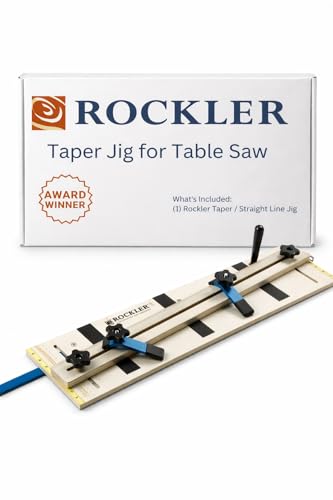
Rockler’s jig handles both tapers and straight-line ripping. The 36-inch miter bar gives long reach for bigger boards. It shines when an edge is too rough to ride the fence. You clamp, set, and cut a true reference edge in one pass.
I have used it a lot on twisted or live-edge stock. It calms the first cut and sets up the rest of the milling. The clamp system is secure, yet quick to adjust. It is a shop staple for anyone who rescues rough lumber.
Pros:
- Dual use: tapers and straight-line ripping
- Long 36” bar supports big workpieces
- Secure clamping for safer first cuts
- Great for live-edge or twisted boards
- Speeds up rough-to-square workflow
Cons:
- Larger footprint on the table
- Clamp setup takes a bit of practice
- Overkill for small parts
My Recommendation
If you mill rough lumber, this jig is gold. It stands with the best table saw jigs for getting a true edge fast. Furniture makers and slab fans will see the value on day one. It is a reliable, long-lasting tool for real-world boards.
| Best for | Why |
|---|---|
| Rough lumber | Secure straight-line ripping on uneven edges |
| Chair/table legs | Repeatable tapers with long support |
| Slab work | Clamps odd shapes with confidence |
Catcan 21-Pc Table Saw Crosscut Sled Kit

This 21-piece sled kit helps you build a crosscut sled your way. It includes two aluminum T-tracks, two UHMW miter bars, knobs, and screws. You supply the plywood base and fence. The result is a sled that matches your saw and your style.
I like the UHMW bars for smooth travel. The T-tracks make adjustable stops and hold-downs easy. A sled is one of the best table saw jigs you can own. This kit gives you the parts without the metalwork hassle.
Pros:
- All key hardware for a custom sled
- UHMW bars reduce play and friction
- T-tracks enable stops, hold-downs, and jigs
- Build to your saw’s exact size
- Great value over buying a full metal sled
Cons:
- You must build and square the base
- Accuracy depends on your setup skills
- No fence wood included
My Recommendation
If you enjoy building shop gear, start here. A crosscut sled belongs on any list of the best table saw jigs. This kit saves time and gives pro-level parts. It is perfect for makers who want a dialed, custom sled on a budget.
| Best for | Why |
|---|---|
| Custom sled builds | Hardware kit with smooth UHMW bars |
| Precision crosscuts | T-tracks enable stops and fixtures |
| Budget-minded shops | DIY saves money over full sleds |
Thin Rip Jig for 3/4 x 3/8 Miter Slots

This thin rip jig is a classic style for repeat strips. It is built for 3/4 x 3/8 miter slots. The adjustable bearing lets you set strip width fast. Then, you pass the board against the roller with the fence fixed.
It also works on some router tables and band saws. That makes it a handy crossover tool in small shops. I use similar jigs for banding and shop-made shims. It is simple, sturdy, and easy to trust.
Pros:
- Fast setup for consistent thin rips
- Roller contact is gentle on edges
- Works across multiple machines
- Great for repeatable shop-made stock
- Compact size stores in any drawer
Cons:
- Dependent on standard slot size
- Precision relies on careful initial setting
- Not a substitute for a splitter/guard
My Recommendation
Need thin strips often? This is a safe, smart answer. It deserves a place among the best table saw jigs for anyone who makes inlays or trim. Pros like the speed. Beginners like the steady results and lower stress at the blade.
| Best for | Why |
|---|---|
| Inlays and banding | Repeatable widths with smooth edges |
| Router table users | Versatile across machines |
| Quick shop fixes | Make shims and spacers on demand |
TANYO Thin Rip Jig, 3 Rollers, Multi-Slot

The TANYO thin rip jig uses three rollers for smooth feeding. It works with 3/8 x 3/4 U slots and 1/4 x 3/8 T slots. That flexibility helps on hybrid tables and band saws. It is great for narrow, delicate stock where friction adds risk.
I like the triple-roller support on long rips. It spreads the contact and keeps strips from wandering. Setup is quick with clear slot fit options. For multi-machine shops, it makes a lot of sense.
Pros:
- Three rollers reduce friction and kickback risk
- Fits multiple slot sizes for wider compatibility
- Ideal for long, narrow strips
- Good crossover to band saw and router table
- Stable feel boosts confidence
Cons:
- More parts mean more to clean and lube
- Bigger footprint than single-roller jigs
- Slot fit must be double-checked before first cut
My Recommendation
If you fight wandering strips or burn marks, try this. It earns a spot with the best table saw jigs by adding control with triple rollers. Makers of guitars, boxes, or trim will enjoy the smooth feed. It is a clever upgrade for tricky thin work.
| Best for | Why |
|---|---|
| Long thin strips | Three rollers keep feed steady |
| Hybrid tables | Multiple slot compatibility |
| Delicate woods | Less friction and fewer burn marks |
MATEWORK Thin Rip Jig, 3 Rollers, Multi-Slot
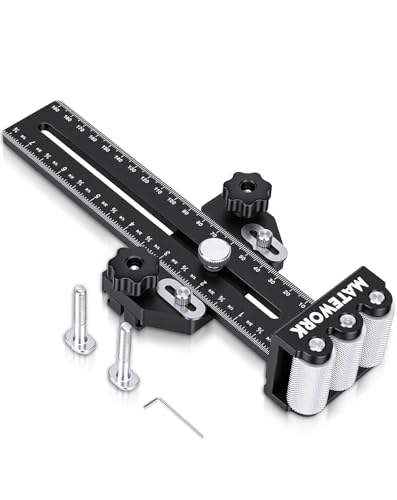
The MATEWORK thin rip jig offers three anti-kickback rollers. It fits 3/4″ T/U and 3/8″ T-slots. That makes it a flexible choice for many saws. The rollers help grip and guide without marring the wood.
I like the stable feed and quiet cut. The rollers reduce chatter on thin maple or walnut. It is a strong pick if you cut strips often. You can also move it to a router table for thin edge passes.
Pros:
- Triple rollers add smooth, safe feed
- Works with several slot types
- Reduces burning on dense hardwoods
- Good crossover to other machines
- Solid value for frequent thin ripping
Cons:
- Heavier than single-roller units
- Needs careful alignment to the blade path
- Rollers need occasional cleaning
My Recommendation
Frequent thin ripping? Choose this for smoother, safer runs. It belongs on any list of the best table saw jigs for accuracy and control. Cabinet shops and detail-focused hobbyists will appreciate the finish quality. It is a workhorse jig for daily tasks.
| Best for | Why |
|---|---|
| Daily thin rips | Rollers stabilize narrow stock |
| Dense hardwoods | Less heat, less burning |
| Multi-machine users | Fits many slot standards |
Thin Rip Jig Guide for 3/8 x 3/4 T-Slot

This thin rip jig targets 3/8 x 3/4 T-slots for fast setup. The bearing stop sets repeat width while the fence stays put. It speeds up making shims, trim, and edge pieces. The simple design keeps your hands clear of the blade.
I value the predictable results on small parts. It is easier to tweak the jig than nudge a fence by a hair. I also like it for matching repair strips. The small size means it is always within reach.
Pros:
- Quick adjust to new strip sizes
- Good safety for thin parts
- Ideal for repeat shims and repairs
- Works with many table saws
- Low cost, high payoff tool
Cons:
- Single-slot compatibility only
- Not a multi-angle or joinery jig
- Requires a flat, square fence for best results
My Recommendation
For quick repair stock, this is perfect. It stands among the best table saw jigs for repeat strip work. Home shops and jobsite saw users will gain speed and accuracy. It is a simple, effective guide you will use often.
| Best for | Why |
|---|---|
| On-demand shims | Fast, repeatable strip sizing |
| Edge banding | Clean, uniform thin cuts |
| Small home shops | Compact, budget-friendly helper |
POWERTEC Tapering Jig, 24-Inch, 15° (71035V)
Note: This is a repeat entry to reaffirm tapering features. The POWERTEC jig provides smooth rails and clear angle marks. It is reliable for matching set pairs of legs. Clamping and a steady feed give clean results.
I often pair this with a zero-clearance insert. That keeps edges crisp and chip-free. The 24-inch length strikes a nice balance. It supports parts without being bulky on smaller tables.
Pros:
- Clear, readable angle scale
- Balanced length for control
- Solid clamps for safe cuts
- Repeatable settings cut time
- Good price-to-performance
Cons:
- 15° limit may not fit all designs
- Learning curve for first-time users
- Needs careful push technique
My Recommendation
If your projects include tapered details, consider this. It sits among the best table saw jigs for clean, matched angles. The finish is tidy, and setup is friendly. A dependable way to level up furniture builds.
| Best for | Why |
|---|---|
| Furniture legs | Easy to repeat precise angles |
| Small shop tables | 24” rails fit well |
| Clean edges | Zero-clearance friendly |
POWERTEC Adjustable Box Joint Jig (71759)
Note: This duplicate highlights joinery value. The adjustable box joint jig is a time-saver. It helps you cut fingers that fit right off the saw. It also makes repeating parts easy for batch drawers.
Use a flat-top grind blade for clean shoulders. Test on scrap and micro-adjust. Once set, the results look pro and fit strong. It is a path into serious joinery without a big learning wall.
Pros:
- Fast finger joint setup
- Clean shoulders with a sharp flat-top blade
- Repeatable accuracy on batches
- Router table ready as well
- Good training tool for joinery
Cons:
- Requires careful first setup
- Fence and miter slot must be square
- Not as decorative as dovetails
My Recommendation
If strong, square joints matter to you, grab it. For many shops, it is one of the best table saw jigs to speed drawers and boxes. The fit is tight and clean. Value and performance make it easy to recommend.
| Best for | Why |
|---|---|
| Batch drawers | Repeatable, strong joints |
| Small cases | Clean, square fits |
| Joinery practice | Teaches precise indexing |
FAQs Of best table saw jigs
Do I need a thin rip jig if I have a good fence?
Yes. A thin rip jig keeps the fence fixed and sets width with a roller. That gives safer, more consistent thin strips than tiny fence moves.
Which jig should I buy first?
A crosscut sled or a thin rip jig. Both improve safety and accuracy daily. They rank high among the best table saw jigs for any shop.
Are tapering jigs safe for beginners?
Yes, with clamps and a steady push. Start with light passes. Follow your saw’s safety rules and use a push stick.
Can box joints be cut on a router table instead?
Yes. Many box joint jigs work on both. Use a straight bit and test the fit on scrap first.
What blade is best for thin rips?
A sharp, thin-kerf blade with a zero-clearance insert. That reduces waste, tear-out, and burning on narrow pieces.
Final Verdict: Which Should You Buy?
If you want instant gains, start with a thin rip jig. It is one of the best table saw jigs for safety and repeat accuracy.
Need angles or joinery next? Add a tapering jig or an adjustable box joint jig. Build a sled with the Catcan kit for perfect crosscuts and a pro workflow.