
The Rockler Crosscut Sled is the most precise, safe, repeatable choice.
You can cut a cabinet side perfect at 90 degrees, but one sloppy crosscut can still ruin a build. I’ve been there. That’s why I lean on a smart crosscut jig or sled to take out the human error. These tools keep your work square, safe, and repeatable. If you’re trimming face frames, squaring panels, or batch-cutting parts, the right jig turns your table saw into a laser-guided cutter. Today, I’ll help you find the best cross cut jig for table saw needs, whether you want a ready-to-run sled or a kit to build your own.
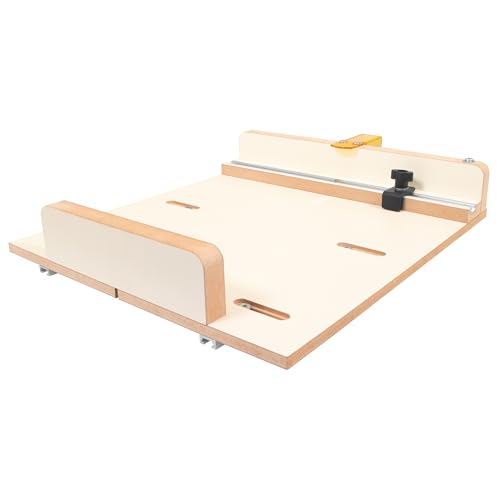
Fulton MDF Crosscut Sled for…
PRECISION & STABILITY – If you own a table saw, you likely need to make smaller cuts or repetitive cuts. A crosscut sled for a table saw enhances precision and…

Rockler Table Saw Crosscut Sled…
Precision Crosscut Miters: Achieve clean, accurate 90° to 45° cuts with this table saw crosscut sled; ideal for repeatable crosscuts, miters, and woodworking jigs that demand accuracy, stability, and smooth…

POWERTEC 71403 Table Saw Crosscut…
COMPLETE TABLE SAW SLED KIT – Includes MDF base (23-13/16”), MDF fence face, extruded aluminum fence, miter bar (3/8″ D x 3/4″ W), flip stop, hold-down clamp, installation hardware, wear…
Fulton MDF Crosscut Sled for Table Saw
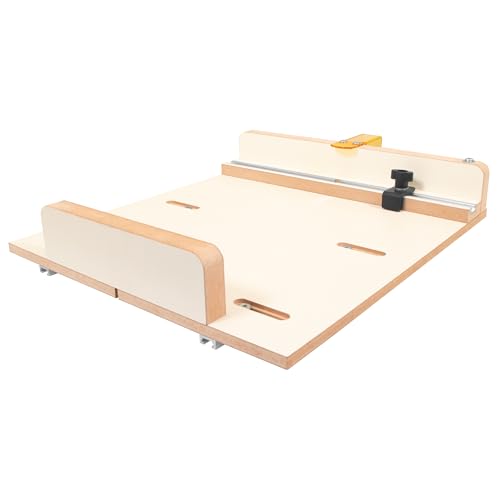
This Fulton MDF Crosscut Sled aims to give you precise, safe crosscuts without the fussy setup. The MDF base helps dampen vibration and offers a flat, stable platform for panels or trim. A straight, square fence and a reliable miter runner keep the sled tracking true in a standard 3/4″ x 3/8″ slot. I like MDF for its predictability, and this sled leans into that by focusing on consistent, square cuts.
As a go-to option for home shops, it shines on everyday projects. It’s not an industrial monster, but it doesn’t need to be. The fence design is straightforward, which I appreciate because it’s easy to calibrate with a five-cut method. If you want the best cross cut jig for table saw tasks on a budget, this makes a strong case.
Pros:
- Flat MDF base reduces chatter for smooth, square cuts
- Tracks well in standard 3/4″ x 3/8″ miter slots
- Simple fence makes calibration fast with basic shop tools
- Good size for small to medium panels and case parts
- Stable platform improves control and safety
Cons:
- MDF can swell if exposed to heavy moisture
- Fence features are basic compared to premium sleds
- May need minor runner tuning for zero play
My Recommendation
If you’re setting up your first sled or want a dependable workhorse, the Fulton is a smart starter choice. It won’t intimidate you, yet it will keep your cuts square. For hobby builds, trim work, and simple case parts, it hits the mark. If you’ve been hunting for the best cross cut jig for table saw accuracy without a steep price, this one deserves a spot on your shortlist.
| Best for | Why |
|---|---|
| Beginners | Easy to set up and square with simple tools |
| Budget builds | Solid performance without premium pricing |
| Everyday crosscuts | Stable MDF base and straightforward fence |
Rockler Crosscut Sled with Telescoping Fence

The Rockler Crosscut Sled stands out with a telescoping fence, a precision flip stop, and smooth runners. The long fence supports large workpieces and the stop makes batch cuts a joy. The zero-clearance kerf helps control tearout and makes it clear where the blade travels. This sled feels dialed-in for accuracy and safety out of the box.
During cabinet builds and face frame runs, I value repeatability most. The flip stop and long fence combo is the star here. It also pairs well with dado blades for shelf notches when you add a backer board. If you need the best cross cut jig for table saw precision in a busy shop, this is the one I keep reaching for first.
Pros:
- Telescoping fence supports wide panels and long stock
- Flip stop delivers dead-on repeat cuts fast
- Zero-clearance kerf reduces tearout on crosscuts
- Glides smoothly with minimal play in the miter slots
- High visibility for blade path and cut line
Cons:
- Higher price than basic sleds
- Larger footprint demands storage space
- May require initial squaring to your saw
My Recommendation
This is my top pick for pros and serious hobbyists. The telescoping fence and flip stop save time and boost accuracy. If you value precision and speed, this is the best cross cut jig for table saw work. It handles panels, frames, and batch parts with ease.
| Best for | Why |
|---|---|
| Cabinet builders | Long fence and stop make case parts consistent |
| Batch cutting | Flip stop produces identical parts quickly |
| Panel crosscuts | Telescoping support reduces deflection and tearout |
POWERTEC 71403 Crosscut Sled Kit
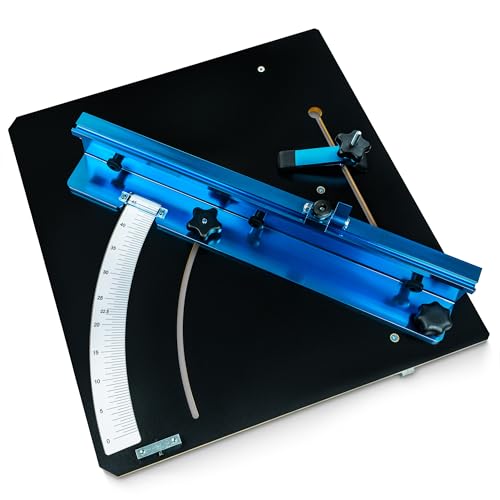
The POWERTEC 71403 delivers a thoughtful crosscut sled and hardware solution for clean, square cuts. The design focuses on user-friendly accuracy, with a fence and runner system meant to seat firmly in standard miter slots. I like how the kit format lets you fine-tune the fence and base to your saw. That tailoring often turns a good sled into a great one.
If you want the best cross cut jig for table saw versatility, this kit gives room to grow. You can replace the base later, swap fences, or upgrade stops. It’s a flexible path for tinkerers who enjoy dialing in shop jigs. The result is a sled that can evolve with your projects and skill level.
Pros:
- Adjustable runner system for minimal slot play
- Fence can be tuned to dead square with a five-cut test
- Kit format allows upgrades and base replacement over time
- Suitable for both small parts and medium panels
- Good value for long-term customization
Cons:
- Some assembly and tuning required
- May lack premium features like telescoping fences
- Instructions vary in depth depending on your experience
My Recommendation
Buy this if you enjoy customizing tools to your workflow. It’s a strong, mod-friendly platform that can grow with you. For budget-minded builders who still chase accuracy, it’s a smart choice, and a contender for the best cross cut jig for table saw owners who like to tinker.
| Best for | Why |
|---|---|
| Tinkerers | Customizable fence and base over time |
| Intermediate users | Teaches tuning skills without overspending |
| Multipurpose shops | Handles both small and mid-size crosscuts |
GOINGMAKE Thin Rip Jig for Table Saws

This GOINGMAKE jig is made for thin, repeatable rips, a great partner for frames, inlay, and edge banding. It rides in a 3/8″ x 3/4″ T-slot and uses a bearing face to guide stock past the blade. Set the jig once, then move your fence to make identical thin strips. That flips the process and keeps your hands safer and your strips consistent.
It’s not a crosscut sled, but it belongs in the same conversation for precision. When I need uniform edge banding or delicate inlay, a thin rip jig saves time and waste. Add this to your shop, and your best cross cut jig for table saw projects gains a strong ripping companion. You’ll appreciate the accuracy on small details.
Pros:
- Fast, repeatable thin strips with micro-adjust style setup
- Roller face helps keep stock smooth and controlled
- Fits 3/8″ x 3/4″ T-slots on most table saws
- Great for edge banding, inlays, and narrow trim
- Improves safety vs. freehand thin rips
Cons:
- Not intended for crosscuts
- Requires careful setup for ultra-thin work
- Best performance with a sharp ripping blade
My Recommendation
Add this if you craft thin, repeatable strips often. It complements a sled by handling the ripping tasks a crosscut jig won’t. For anyone chasing cabinet-grade edge banding or inlay, this is a quiet hero alongside the best cross cut jig for table saw accuracy.
| Best for | Why |
|---|---|
| Edge banding | Consistent thin strips without waste |
| Inlay makers | Precise control over narrow, delicate stock |
| Safety-minded users | Reduces risky thin rip techniques |
Wolfawn Miter Gauge with Flip Stop & Fence

The Wolfawn miter gauge gives you angle control with a sturdy fence, a micro-adjustable flip stop, and quick angle references. For miters, picture frames, and angled joinery, a tight miter gauge can rival a sled for smaller parts. The extendable fence and stop allow repetitive cuts with reliable length control. That precision matters for gap-free joints.
While a sled excels at 90-degree crosscuts, a high-quality miter gauge is crucial for angles. This model aims to balance solid construction with accessible tuning. Pair it with a zero-clearance insert, and it’ll contribute to your best cross cut jig for table saw toolkit. I reach for it when accuracy at 45 degrees makes or breaks a project.
Pros:
- Extendable fence increases support for longer work
- Micro-adjust flip stop aids repeatable miters
- Tracks in standard 3/4″ x 3/8″ slots
- Quick angle stops for common miters
- Solid feel inspires confidence in fine work
Cons:
- Not a replacement for a full crosscut sled
- May require minor calibration for dead-on 90°
- Fence length limited compared with large sleds
My Recommendation
Choose this gauge if you do lots of angled joinery and frames. It pairs perfectly with a dedicated 90-degree sled. Together they form the best cross cut jig for table saw system: a sled for square cuts, and this gauge for miters that close tight.
| Best for | Why |
|---|---|
| Picture frames | Repeatable 45° miters with a flip stop |
| Trim carpentry | Fast angle changes and accurate length control |
| Small parts | Stable fence supports delicate stock |
Rockler Small Parts Crosscut Sled

This Rockler Small Parts Sled is a safety-forward jig with zero-clearance support for tiny work. For knobs, trim, toy pieces, or inlay blocks, it offers control where big sleds struggle. The zero-clearance base reduces tearout and keeps parts supported right up to the blade. It’s compact, easy to store, and quick to set up for a few precise cuts.
When I’m cutting small parts, my priorities shift to control and visibility. This sled checks both. It’s not your only sled, but it is a must-have companion to the best cross cut jig for table saw accuracy. Use it when you need the courage to cut tiny pieces cleanly and safely.
Pros:
- Zero-clearance support fights chip-out on small parts
- Compact size is easier to handle around the blade
- Ideal for delicate, detailed work
- Quick setup between larger sled tasks
- Improves safety and confidence on tiny cuts
Cons:
- Not designed for large panels or wide stock
- Limited capacity versus full-size sleds
- Benefits from a sharp, fine-tooth blade for best results
My Recommendation
Keep this sled on hand if you ever struggle with small parts. It’s a specialist that fills a dangerous gap. For makers, toy builders, and trim crafters, it’s the quiet partner to the best cross cut jig for table saw work on larger pieces.
| Best for | Why |
|---|---|
| Small parts | Zero-clearance support near the blade |
| Inlay and trim | Clean edges on delicate stock |
| Quick setups | Lightweight and easy to position |
21P Table Saw Crosscut Sled Kit

This 21-piece kit supplies runners, hardware, and essentials to build your own crosscut sled. It’s ideal if you want a custom size or special features like dual runners, tall fences, or dedicated stop tracks. You choose the base material, fence style, and dimensions. That freedom lets you tailor the sled to your projects and your saw.
Building a sled teaches you more than any manual could. You’ll learn the five-cut squaring method, how to eliminate runner slop, and where to add support. If you want the best cross cut jig for table saw performance at a low cost, a DIY sled using this kit can rival premium models. It’s a fun, valuable build for any woodworker.
Pros:
- Complete hardware set streamlines DIY sled builds
- Custom size and features for your specific saw
- Dual runners possible for super-stable tracking
- Low cost with high performance potential
- Great learning experience on tuning and squaring
Cons:
- Time investment to build and tune
- Performance depends on your materials and process
- No instant out-of-box solution
My Recommendation
Pick this kit if you love shop projects and want custom performance. You can build the best cross cut jig for table saw size and needs you have right now. It pays off with a sled that fits your workflow like a glove.
| Best for | Why |
|---|---|
| DIY builders | Full control over size and features |
| Budget accuracy | Premium performance at a fraction of the cost |
| Learning tuning | Hands-on practice with squaring methods |
Thin Rip Jig for Narrow Cuts

This Thin Rip Jig is built for making uniform narrow rips safely. Set the bearing to your target strip width, then move the fence for each pass. The strip stays between the blade and fence, while the jig sits to the left in the miter slot. This keeps pressure and alignment predictable on delicate stock.
It supports a range of narrow cuts, which helps reduce waste and improves consistency across batches. It won’t replace your sled, but it is a powerful teammate. With one of these and the best cross cut jig for table saw accuracy, your builds step up a level. Clean edges, identical strips, less drama.
Pros:
- Fast, repeatable thin rips with simple adjustments
- Works in most 3/4″ x 3/8″ miter slots
- Great for banding, shims, and detailed trim
- Safer than freehand thin rips against the fence
- Compact and easy to store
Cons:
- Not a crosscut solution
- Accuracy relies on careful initial positioning
- Best used with featherboards and push sticks
My Recommendation
If your projects include narrow stock often, add this jig. It pays back in clean results and safer workflow. I pair it with my sled so I can claim the best cross cut jig for table saw work and the best setup for thin rips, too.
| Best for | Why |
|---|---|
| Edge banding | Consistent, clean thin strips |
| Shop-made shims | Quick and repeatable widths |
| Detail work | Cleaner results on delicate woods |
TANYO Thin Rip Jig, 3 Pulleys

The TANYO thin rip jig uses multiple pulleys to guide stock, which can reduce friction and improve consistency. It targets repeatable narrow strips with a smooth feed. The UT-slot compatibility and compact body make it flexible on many saws. I like the three-roller concept since it spreads contact along the workpiece.
It’s another specialized tool that pairs beautifully with a crosscut sled. When I’m chasing perfect banding or guitar bindings, this kind of jig shines. Used alongside the best cross cut jig for table saw work, it builds a high-precision workflow. The payoff is clean edges and matching strips again and again.
Pros:
- Three rollers offer smooth, stable material contact
- Adjustable for a wide range of thin rip widths
- Compact design saves space on small saws
- Great for decorative work and lutherie tasks
- Pairs well with push blocks and featherboards
Cons:
- Not designed for crosscutting
- Best performance requires precise setup
- Rollers need to stay clean for smooth feed
My Recommendation
Choose this if you like the feel of roller-style guides and want super-consistent narrow strips. It’s an ideal companion to the best cross cut jig for table saw cuts on frames and panels. Together they create a refined, safe, and accurate shop setup.
| Best for | Why |
|---|---|
| Decorative strips | Three rollers maintain steady feed |
| Instrument work | Smooth guidance on thin, sensitive stock |
| Space-limited shops | Compact footprint with strong results |
FAQs Of best cross cut jig for table saw
What makes a crosscut sled better than a miter gauge?
A sled supports the whole workpiece, improving stability and tearout control. It also keeps hands farther from the blade. For 90-degree cuts and panels, a sled is more accurate and safer than a miter gauge alone.
How do I square a crosscut sled fence?
Use the five-cut method. Make four rotating cuts on a scrap panel, measure the error, and adjust the fence accordingly. Repeat until the fifth cut confirms the fence is dead square to the blade.
Will these jigs fit my table saw miter slots?
Most are designed for standard 3/4″ x 3/8″ T-slots. Check your saw’s manual and each product’s specs. Some runners are adjustable to remove play for a precise fit.
What blade should I use for the cleanest crosscuts?
A high-tooth-count crosscut blade or a quality combination blade works best. Keep it sharp and add a zero-clearance insert. Together, they reduce tearout and improve edge quality.
Do I still need a thin rip jig if I own a crosscut sled?
Yes, they solve different tasks. A sled is for crosscuts. A thin rip jig ensures consistent narrow strips safely. Both raise precision and efficiency in the shop.
Final Verdict: Which Should You Buy?
The Rockler Crosscut Sled with Telescoping Fence is my top pick. It’s the best cross cut jig for table saw precision, speed, and repeatability, thanks to the long fence and reliable flip stop.
Pair it with a thin rip jig for a complete setup. You’ll cover square panels and repeat strips with ease, elevating every cut and every build.