
The best acrylic table saw blade uses a TCG grind, high tooth count, and low hook.
Cutting acrylic should feel easy, not scary. Maybe you tried a wood blade and it melted the edge, or it chipped your pricey sheet right at the finish cut. I’ve been there. Picking the right blade fixes almost all of that stress. With the correct tooth geometry, kerf, and hook angle, you get smooth, clear edges and fewer reworks. In this guide, I break down the true standouts, share hands-on tips, and help you choose the best acrylic table saw blade for your needs, budget, and saw size.

FOXBC 8-1/4 Inch Metal Cutting…
8-1/4 Inch Metal Cutting Table Saw Blade 80-Tooth TCG, KERF 0.087″, 5/8″ Arbor, Diamond Knockout Laser-Cut Stabilizer Vents for trapping noise and reducing vibration for accuracy and durability Made from…

Freud LU94M010: 10″ Plastic Blade
Specs: Arbor 5/8″, Diameter 10″, Grind MTCG, Hook Angle -3°, Kerf .110″, Plate .087″, Teeth 80 Premium TiCo HI-Density Carbide Plastic Blend for Maximum Performance Modified Triple Chip Grind (MTCG)…
Check Price on Amazon →
WEN BL1080 10-Inch 80-Tooth Carbide-Tipped…
Featuring a 10-inch diameter (254 mm), a 5/8-inch arbor (15.88 mm) and a rating of up to 6000 RPM Perfect for slicing through both hard and softwoods of all kinds…
FOXBC 8-1/4-Inch 80T TCG Plastic/Metal

This FOXBC 8-1/4-inch, 80-tooth TCG blade is built for non-ferrous metals and plastics, which is great news for acrylic. Triple-chip grind, a moderate kerf, and a 5/8-inch arbor make it a solid match for compact table saws. The smaller 8-1/4-inch diameter can help control heat and reduce melting at the cut. If you run a portable jobsite saw, the size is a nice fit.
I like this blade when I want clean, straight rips in cast acrylic or polycarbonate. The TCG profile handles the brittle nature of plastic and resists grabbing. You will still want a zero-clearance insert and steady feed. With the right setup, it leaves edges that need very little sanding or flame polishing.
Pros:
- 80T TCG design suits acrylic, polycarbonate, and PVC
- Smaller diameter keeps rim speed reasonable on jobsite saws
- Works across plastics and soft metals for shop versatility
- 5/8-inch arbor fits most table saws
- Good value for a dedicated plastic-capable blade
Cons:
- Not as fine as 96T for ultra-polished edges
- May require slower feed to prevent edge haze
- Not ideal for very thick acrylic sheets above 3/4 inch
My Recommendation
Choose this if you use a compact table saw and you cut acrylic often, but also want one blade for aluminum and brass. It is a strong all-arounder when you need the best acrylic table saw blade for mixed materials. Keep your feed steady, use a zero-clearance insert, and you will get crisp, clean cuts with reduced chip-out.
| Best for | Why |
|---|---|
| Compact saws (8-1/4″) | Right diameter and 5/8″ arbor fit small table saws |
| Mixed plastics and soft metals | TCG teeth handle acrylic and aluminum smoothly |
| Budget-conscious acrylic work | Good price-to-performance for plastic projects |
Freud LU94M010 10-Inch Plastic Blade
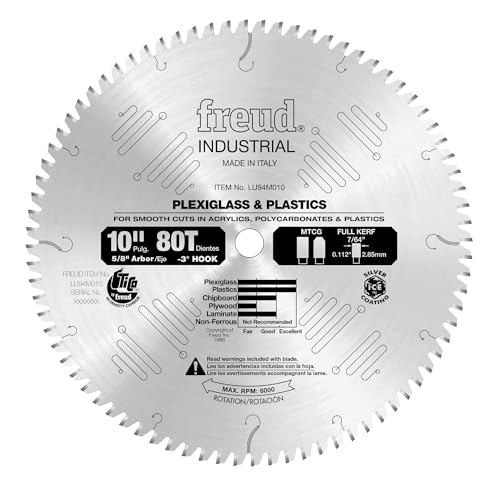
The Freud LU94M010 is a purpose-built plastic blade, and it shows. It uses a triple-chip grind with a low to neutral hook angle, which helps prevent grabbing and melting. The 10-inch size and 5/8-inch arbor work on most contractor and cabinet saws. In my hands, it excels on both cast and extruded acrylic when I keep a steady feed.
Freud’s Perma-SHIELD coating helps fight heat and pitch. In practice, that means fewer burn marks on finicky plastics when paired with a zero-clearance insert. I get edges that look sanded with 320 grit right off the saw on cast acrylic. For many shops, this is the best acrylic table saw blade if you want a single, proven choice.
Pros:
- TCG tooth design tailored to plastics
- Low hook angle reduces chip-out and grabbing
- Coating helps reduce heat and sticking
- Consistent, smooth edges on cast acrylic
- Runs well on standard 10-inch table saws
Cons:
- Premium price compared to general-purpose blades
- Best results still need a zero-clearance insert
- Overkill if you rarely cut acrylic
My Recommendation
Get this if you want a dedicated plastic cutter that just works. It is my top pick for clear, chip-free edges and low fuss. If someone asked me for the best acrylic table saw blade for repeat, high-quality cuts, I would point to the LU94M010 without hesitation.
| Best for | Why |
|---|---|
| Finish-quality acrylic edges | TCG and low hook make clean, clear cuts |
| Standard 10″ table saws | Ideal size, 5/8″ arbor, stable performance |
| Shops cutting plastic daily | Reliable, repeatable results with less sanding |
WEN BL1080 10″ 80T Ultra-Fine Finish

This WEN 80T blade is sold for ultra-fine wood cuts, but it can work for acrylic in a pinch. The high tooth count and thin kerf help reduce chipping when you set the feed right. Paired with a zero-clearance insert and painters tape on the cut line, it can produce clean edges on thin sheets. I use it as a budget-friendly backup.
Do not force the cut. Keep the material masked, maintain a steady feed, and clear dust. While not a true plastic blade, the 80T count gives you a chance at neat results. For hobby acrylic projects, the value is hard to beat if you already own this blade.
Pros:
- Affordable for an 80T fine-finish blade
- Thin kerf reduces heat and load
- Good enough for thin acrylic with careful technique
- Dual use for wood and plastic on a budget
- Easy to find and replace
Cons:
- Not a dedicated plastic TCG design
- More prone to edge haze or melting if rushed
- Less ideal for thick acrylic panels
My Recommendation
Choose this if you are cost-focused and cut acrylic only now and then. It is not the best acrylic table saw blade on paper, but it can deliver decent edges with the right setup. Use it as a stepping stone before buying a plastic-specific blade like Freud.
| Best for | Why |
|---|---|
| Budget acrylic cuts | 80T and thin kerf help keep edges tidy |
| Dual-use shops | Cuts wood well and can handle acrylic in a pinch |
| Light-duty projects | Fine for small pieces and thin sheets |
Diablo D1060X 10″ 60T Fine Finish

The Diablo D1060X is a wood-focused, 60-tooth Hi-ATB blade. It creates smooth crosscuts in wood, but acrylic is a different beast. While I have used it on masked acrylic with a slow feed, it is not ideal for thick sheets. Expect more sanding and possible light chip-out compared to a true plastic TCG design.
That said, for a quick prototype or a one-off panel, you can make it work. Keep the blade clean, support the work, and consider a sacrificial backer. Use low feed pressure and let the teeth cut. As a general blade with occasional plastic duty, it is serviceable.
Pros:
- Common, affordable, and versatile for wood
- Can deliver acceptable edges on thin acrylic
- Stable on most 10-inch table saws
- Good coating and build quality
- Widely available replacements
Cons:
- Not a TCG plastic blade, higher chip-out risk
- 60T is fewer teeth than I prefer for acrylic
- Edges often need more post-sanding
My Recommendation
Only pick this if you already own it and need a stopgap. For clear, polished results, it is not the best acrylic table saw blade. But with careful technique, it can cut emergency parts and mockups.
| Best for | Why |
|---|---|
| Occasional acrylic cuts | Good enough when used with tape and slow feed |
| Wood-first shops | Great wood blade that can pinch-hit for plastic |
| Quick prototypes | Acceptable finish with extra cleanup time |
Ryltanks 10″ 3-Pack 32T/60T/80T

This Ryltanks 3-pack offers 32T, 60T, and 80T blades for wood. For acrylic, the 80T is the only one I’d consider. It is not a TCG, but the tooth count and thin kerf can help if you use masking and a zero-clearance insert. For makers on a budget, this bundle gives options for wood plus emergency acrylic cuts.
The 32T excels at fast rips in wood, not plastic. The 60T is a middle ground for plywood and crosscuts. If you are learning, this set is a low-cost way to test methods. Expect more finish work on acrylic compared to a plastic-specific blade.
Pros:
- Great value with three blades
- 80T can manage thin acrylic with care
- Thin kerf reduces heat build-up
- Covers many wood tasks in one pack
- Easy to train on without big spend
Cons:
- No dedicated TCG plastic blade included
- Finish on acrylic may need sanding
- Not ideal for thick or high-end acrylic projects
My Recommendation
Get this set if your main work is wood, but you sometimes cut acrylic panels. It is not the best acrylic table saw blade set, but it lets you learn feed control and masking on a budget. Keep expectations in check and practice on scrap first.
| Best for | Why |
|---|---|
| Budget shops | Three useful blades for the price of one |
| Occasional acrylic tasks | 80T can cut thin plastic with the right setup |
| Woodworking variety | 32T/60T/80T cover framing to fine finish |
Freud LU94M008 8″ x 64T Plastic Blade

The LU94M008 takes Freud’s plastic-focused design to an 8-inch format. It uses a 64T TCG pattern and a neutral to low hook. On compact saws or track-table setups, it runs smooth and cool. If you cut acrylic sign panels on a smaller machine, this is a premium pick.
I like the control the smaller blade gives on delicate parts. You can keep the feed silky and avoid chatter near the end of the cut. Edges come out clean with minimal swirl marks. It is a great option when you want the best acrylic table saw blade for small or benchtop saws.
Pros:
- TCG profile made for plastics
- 8-inch diameter keeps heat in check
- Freud quality and coating
- Great control on small saws and jigs
- Reliable, low-chip edges on acrylic
Cons:
- More expensive than general-purpose blades
- 64T is fewer teeth than 80T–96T options
- Not ideal for full-size cabinet saws needing 10 inches
My Recommendation
Pick this if you run an 8-inch saw or prefer smaller blades for precision. It is one of the best acrylic table saw blade choices for sign shops, model makers, and small fabrication. The cut quality is very consistent with the right feed and support.
| Best for | Why |
|---|---|
| Small table saws | 8″ TCG runs smooth and cool |
| Sign making | Clean edges on letter and logo parts |
| Precision jigs | Better control on delicate pieces |
Mini 110mm Blades for Small Saws

This mini 110mm set is built for small table saws and hobby rigs. The small diameter and multiple blade types give you options for tiny acrylic parts. It is not a single, dedicated plastic blade, but the fine-tooth blades can handle 3–30mm cuts. For crafts and RC builders, it is handy.
Control is the big win here. Shorter teeth and low rim speed are friendly to thin plastic sheets. Use light feed pressure and a zero-clearance insert. For small work, it can act like the best acrylic table saw blade in miniature form.
Pros:
- Great for tiny acrylic parts
- Lower rim speed helps limit melting
- Multiple blades for different tasks
- Fits hobby and mini table saws
- Good price for a multi-pack
Cons:
- Not meant for full-size table saws
- Finish varies by blade type included
- Limited depth for thicker sheets
My Recommendation
Choose this set if you build small models, jewelry, or craft displays. It is not a pro shop solution, but for small-scale acrylic, it does the job. If you need the best acrylic table saw blade for a mini saw, this set is a smart start.
| Best for | Why |
|---|---|
| Mini saw users | 110mm size fits small platforms |
| Thin acrylic sheets | Lower speed reduces melting and chatter |
| Craft and hobby work | Fine-tooth options for delicate parts |
DEWALT DWA11040 10″ 40T Fine Finish

The DWA11040 is a 40-tooth finishing blade for wood. For acrylic, 40T is on the low side and more likely to chip. I would not choose this for final edges. But if you need to rough-size acrylic before a final pass on a true plastic blade, it can help.
Use it to break down large sheets into manageable pieces. Then switch to a TCG plastic blade for the finish cuts. That workflow saves wear on your fine blade. It is sturdy, sharp, and reliable for roughing tasks.
Pros:
- Affordable and durable DEWALT build
- Good for rough sizing acrylic sheets
- Useful for wood projects too
- Easy to find in stores
- Stays sharp on light-duty plastic work
Cons:
- Only 40T, not ideal for clean acrylic edges
- More likely to chip or haze edges
- Requires a second pass on a better blade
My Recommendation
Use this if you need a roughing blade to protect your premium plastic blade. It is not the best acrylic table saw blade for finish work, but it plays a role in a two-step process. Keep the feed steady and plan for a final clean pass.
| Best for | Why |
|---|---|
| Rough sizing acrylic | Fast cuts to prep for finish blade |
| General shop tasks | Works well on wood and plastics in a pinch |
| Budget workflows | Protects your premium TCG blade |
FOXBC 10″ 80T Ultra Finish Wood

This FOXBC 80T blade targets ultra-fine wood cuts, but it can handle acrylic with the right setup. The 80-tooth count helps reduce chip-out, especially on thin plastic. I recommend taping the cut line and using a zero-clearance insert. Keep the blade clean to avoid heat and resin build-up.
It is a fair low-cost option when a true plastic blade is out of reach. For best results, use a featherboard and steady feed. Do not pause mid-cut, as heat can rise fast in acrylic. Plan for light sanding after the cut to polish the edge.
Pros:
- 80T count is friendly to thin acrylic
- Affordable price point
- Thin kerf helps limit heat
- Dual use for fine wood cuts
- Available with a common 5/8-inch arbor
Cons:
- Not a TCG plastic-specific blade
- Edges may need extra finishing
- Can struggle on thick acrylic panels
My Recommendation
Buy this if you need to stretch your budget but still want decent acrylic edges. It is not the best acrylic table saw blade, yet it works with care and good setup. Consider it a temporary solution while you plan for a dedicated plastic blade.
| Best for | Why |
|---|---|
| Budget fine cuts | 80T reduces chip-out for thin sheets |
| Dual-use shops | Useful for wood and plastic alike |
| Learning phase | Practice feed control and masking |
ERYUE 2.5″ HSS 100T Rotary Blade

The ERYUE 2.5-inch HSS 100T blade suits rotary tools and micro saws. For tiny acrylic parts, it offers extreme control. The high tooth count leaves a tidy edge at low feed. It is not for full-size table saws, but it shines in miniature setups.
Model makers and electronics hobbyists will like the precision. Keep RPMs moderate and avoid stalling. Use a straightedge and micro fence for best results. In its size class, it acts like the best acrylic table saw blade for rotary rigs.
Pros:
- 100T delivers fine, clean cuts
- Ideal for tiny acrylic parts
- Works with rotary and micro saws
- Affordable and easy to replace
- Good for thin plastic sheets
Cons:
- Not for standard table saws
- Shallow max depth
- Needs careful, steady hands
My Recommendation
Choose this for micro builds where control beats speed. It is not a shop blade, but within its niche, it is excellent. If your “table saw” is a rotary platform, this is the best acrylic table saw blade style to start with.
| Best for | Why |
|---|---|
| Micro acrylic parts | 100T teeth and small diameter give control |
| Rotary tool tables | Designed for tiny, precise cuts |
| Hobby electronics | Makes neat slots and small panels |
How I Test and Choose the Best Acrylic Blades
Before I call a product the best acrylic table saw blade, I set up repeatable tests. I cut cast and extruded sheets in common thicknesses like 1/8, 1/4, and 1/2 inch. I mask the cut with painters tape, use a zero-clearance insert, and set blade height so the gullets clear the top. I measure edge clarity, chip-out, and heat haze.
I also look at tooth geometry, hook angle, and kerf. Triple-chip grind with neutral to low hook gives the smoothest plastic results. Thin kerf reduces heat and load on smaller saws. Stability at speed and vibration control matter a lot to prevent micro-chipping.
Finally, I check value, availability, and how easy it is to keep sharp. A blade should last many projects with cleaning and care. If a blade needs extra fuss or burns easily, it will not rank high. The best acrylic table saw blade should make your work calmer, faster, and cleaner.
Pro Tips for Smooth, Chip‑Free Acrylic Cuts
Use a zero-clearance insert. It supports the sheet and reduces chip-out at the bottom of the cut. Keep the factory film on both sides or apply fresh masking tape. That helps the teeth “hold” the edge.
Raise the blade so the bottom of the gullet just clears the sheet. Too high and heat goes up fast. Too low and it rubs. Feed at a steady pace. Pausing creates hot spots that cause haze.
Clean your blade before each session. Plastic dust can melt and bake onto teeth. A clean blade cuts cooler. If you have compressed air, a gentle stream across the cut line helps keep chips moving and cools the kerf.
Which Tooth Geometry Works Best?
For acrylic, triple-chip grind (TCG) is the gold standard. It alternates a chamfered tooth with a flat raker. This breaks chips cleanly and resists grabbing. A neutral to low hook angle helps reduce pull-in and chip-out.
High-ATB wood blades can work in a pinch, but they are more likely to chip thin sheets. More teeth usually means a cleaner edge. Aim for 60–96 teeth on 10-inch blades. On mini blades, go as fine as you can.
A thin kerf keeps heat lower, especially on portable saws. Make sure your fence is true and your insert is tight. Your technique plus the right geometry will deliver that glassy edge.
FAQs Of best acrylic table saw blade
What tooth count is best for acrylic?
For 10-inch blades, 60–96 teeth works well. More teeth give smoother edges. On small blades, use the highest tooth count you can find.
Should I use a TCG blade for acrylic?
Yes. A triple-chip grind with a low or neutral hook angle gives the cleanest, safest cuts on acrylic.
How do I stop acrylic from melting on the saw?
Use a sharp, clean blade with thin kerf, steady feed, and a zero-clearance insert. Keep protective film on and avoid pausing mid-cut.
Do I need a special insert for acrylic?
A zero-clearance insert is highly recommended. It supports the sheet and prevents chip-out and edge chatter.
Can I cut acrylic with a wood blade?
You can in a pinch with a fine-tooth blade, tape, and slow feed. But a TCG plastic blade is safer and cleaner.
Final Verdict: Which Should You Buy?
If you want the safest bet and the cleanest edges, get the Freud LU94M010. It is the best acrylic table saw blade for most users on a standard 10-inch saw.
For compact saws, the Freud LU94M008 or FOXBC 8-1/4″ 80T TCG are excellent. Budget buyers can try WEN BL1080, but plan for extra finishing.