
Best adhesive for gluing wood to concrete: polyurethane construction adhesive, e.g., Loctite PL Premium.
Imagine you’re laying sleepers for a basement floor, mounting a stair nosing over a slab, or fixing a threshold to a porch. Screws into brittle concrete can crack edges, and traditional wood glues simply fail. That’s where the right adhesive shines. The best adhesive for gluing wood to concrete grabs fast, cures strong, and shrugs off moisture. I’ve tested, installed, and repaired with these products on real jobs. Below, I break down top picks, why they work, and how to choose without guesswork.

Loctite PL Premium Polyurethane Construction…
All Purpose: One component polyurethane-based adhesive that covers a wide variety of projects and bonds to most materials for consistently successful results 3X Stronger: 3 times as strong as ordinary…
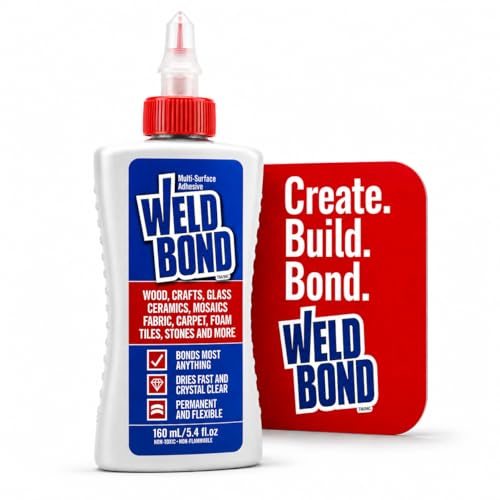
Weldbond Multi-Surface Strong Glue –…
BONDS MOST ANYTHING: Weldbond is a versatile strong glue that bonds to a wide range of materials including wood, ceramic, glass, and tiles. Whether you’re working on DIY crafts or…
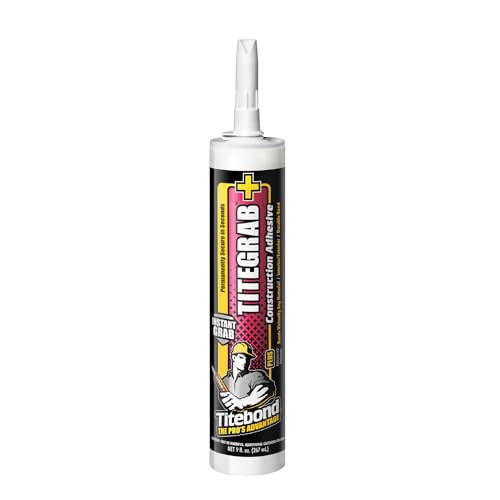
Titebond TiteGrab Plus Construction Adhesive…
Instant Grab & Holding Power: Advanced polymer formula grips materials immediately, reducing the need for bracing and fasteners on vertical and challenging applications. Fast Strength Developent: Rapid bond formation significantly…
Loctite PL Premium 10 oz Polyurethane
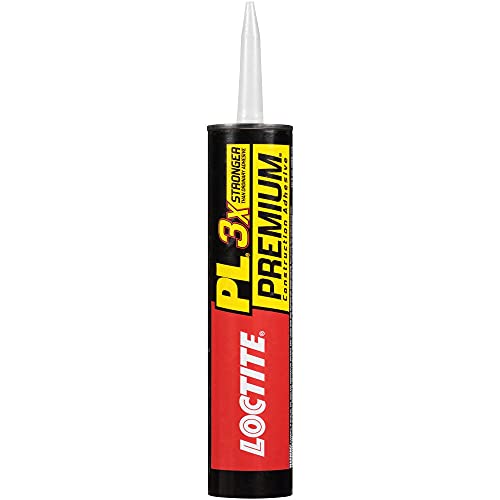
Loctite PL Premium is my long-time go-to when I need a bond that outlasts the project. It is a polyurethane construction adhesive that bonds wood to concrete with serious bite. It expands slightly as it cures, which helps it wet into rough concrete pores. It also resists water and temperature swings, which matters on slabs and garages.
I’ve used it for sleepers, thresholds, and even outdoor steps. It grabs well, but it shines after a full cure. The bond is rigid and strong, so it helps reduce flex noise. For most people asking for the best adhesive for gluing wood to concrete, this is the benchmark to beat.
Pros:
- Outstanding strength on porous materials like concrete
- Water-resistant once cured; good for damp areas
- Expands slightly to fill tiny gaps and voids
- Works on wood, stone, metal, and more
- Good open time for careful layout and placement
- Consistent results across temperatures with proper prep
Cons:
- Requires a caulk gun and careful, even bead
- Foaming expansion can be messy if over-applied
- Full cure takes time; clamping or weight is recommended
My Recommendation
If you want the best adhesive for gluing wood to concrete for general construction, start here. It suits subfloor sleepers, stair treads to slab, sill plates, and thresholds. It has a proven record and is forgiving on less-than-perfect concrete surfaces. For cost, strength, and reliability, it’s hard to beat.
| Best for | Why |
|---|---|
| General wood-to-concrete projects | Strong, gap-filling, moisture-resistant bond |
| Indoor/outdoor thresholds | Handles temperature and humidity swings |
| Sleepers and sill plates | Reliable long-term structural adhesion |
Weldbond Multi-Surface Glue 5.4 oz
Weldbond is a versatile PVA-type adhesive popular for crafts, mosaics, and repair. It bonds a wide set of materials, including wood and some masonry. It dries clear and cleans up with water, which is great for light-duty work. For small trim, crafts, or light indoor uses, it can be a tidy option.
However, for heavy wood-to-concrete tasks, polyurethane or hybrid construction adhesives are stronger. I still keep Weldbond for detail work where squeeze-out control and clarity matter. If you need a cleaner look around visible edges, it’s helpful. Just match your expectations to its strength class.
Pros:
- Easy water cleanup and low odor
- Dries clear for neat edges on visible joints
- Good for crafts and small indoor projects
- Works on many materials beyond wood
- Affordable and user-friendly for beginners
Cons:
- Not ideal for heavy structural wood-to-concrete bonds
- Needs longer clamp time to develop strength
- Lower moisture resistance compared to polyurethanes
My Recommendation
Choose Weldbond for small, light-duty bonds where appearance and easy cleanup matter. It is not the best adhesive for gluing wood to concrete for load-bearing or high-stress joints. But for decorative trim to sealed concrete or indoor craft touches, it can work well. Keep a tube when you want clean lines with less mess.
| Best for | Why |
|---|---|
| Crafts and mosaics | Clear dry and easy cleanup |
| Light trim on sealed concrete | Neat edges, simple application |
| Beginner DIY projects | Forgiving and low odor |
Titebond TiteGrab Plus 9 oz Adhesive

Titebond TiteGrab Plus is a hybrid construction adhesive with strong instant grab. If you need a board to stay put on vertical concrete, this is a lifesaver. It reduces or removes the need for bracing in many cases. That speeds up jobs like mounting stair nosing or attaching furring strips.
I’ve used it where clamps were awkward or impossible. It sets fast and builds strength quickly, yet it cures flexible enough to absorb minor movement. It’s weatherproof once cured, making it fine for indoor or outdoor use. In some jobs, that instant hold is worth its weight in gold.
Pros:
- Excellent instant grab for vertical installs
- Fast strength build; less bracing needed
- Good adhesion to damp and cold surfaces (within limits)
- Waterproof and all-weather suitable once cured
- Bonds many materials beyond wood and concrete
Cons:
- Dense formula; can be harder to gun out in cold temps
- Less gap-filling foam than polyurethane types
- Open time is shorter; plan placement before squeeze
My Recommendation
If you work on stairs, walls, or overheads, this may be the best adhesive for gluing wood to concrete for you. The instant grab cuts frustration and speeds the job. It is ideal for trim, nosing, furring, and panels where slippage is an issue. Keep it on hand for any vertical bonding day.
| Best for | Why |
|---|---|
| Vertical wood-to-concrete | High initial tack reduces bracing |
| Fast-paced installs | Quick strength build saves time |
| Indoor/outdoor joints | Waterproof, all-weather durability |
Loctite PL Premium Max 9 oz
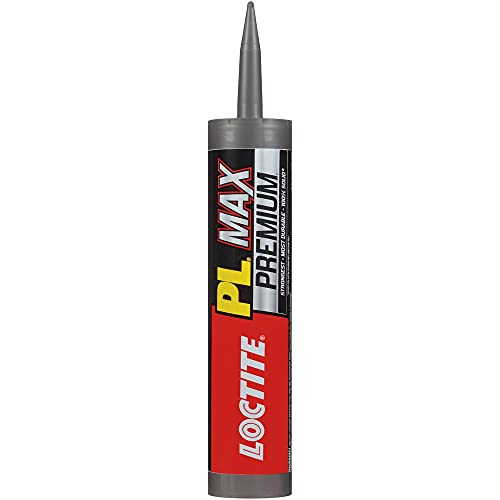
PL Premium Max takes the classic formula and adds better flexibility and weather performance. It bonds to more surfaces, even in colder temperatures or damp conditions. On tricky slabs or exterior jobs, that extra forgiveness matters. The cured bond remains tough but less brittle.
I use PL Premium Max when I expect movement, moisture, or temperature swings. Think garage aprons, porch thresholds, or basement remodels. It sticks, fills, and lasts. If you want the best adhesive for gluing wood to concrete with broader conditions, this is a top option.
Pros:
- Excellent adhesion and weather resistance
- Better performance on damp or cold surfaces
- More flexible cure reduces crack risk
- Wider material compatibility vs. standard poly
- Great for outdoor thresholds and sills
Cons:
- Priced higher than classic PL Premium
- Still needs cure time; weight or clamps help
- Can foam if over-applied, leading to cleanup
My Recommendation
Choose PL Premium Max when you face less-than-ideal conditions. If your concrete is slightly damp, the weather is cold, or you expect movement, it’s safer. For many, this is the best adhesive for gluing wood to concrete outdoors. Pay a bit more and buy peace of mind.
| Best for | Why |
|---|---|
| Outdoor thresholds and steps | Weather-tough and flexible cure |
| Damp or cold installs | Better bonding in tricky conditions |
| Mixed-material projects | Strong adhesion to many substrates |
Heavy Duty Cement Glue 7.4 oz Tube

This heavy-duty cement glue in a squeeze tube is handy for small projects. The tube format helps you apply it without a caulk gun. It is designed to grip rough surfaces, including concrete, stone, and brick. For spot fixes or small trim on a slab, it’s convenient.
It won’t replace a full-size cartridge on larger installations. But for tight spaces and light bonds, the control is excellent. I like it for patch jobs or thresholds where you need careful placement. If you want a tidy option for the best adhesive for gluing wood to concrete in small doses, it works.
Pros:
- No caulk gun needed; easy to carry
- Good control for tight or detailed areas
- Designed for rough bonding surfaces
- Works on wood, tile, stone, and more
- Useful for quick repairs and small installs
Cons:
- Not ideal for large surfaces or structural bonds
- Yield is limited; you may need more tubes
- Varies by concrete condition; prep still matters
My Recommendation
Pick this when you need precision and simplicity for smaller bonds. It’s a solid helper for trim, small thresholds, or patch work on concrete. Use it as a complement to heavier-duty cartridges. It can be the best adhesive for gluing wood to concrete when portability beats raw volume.
| Best for | Why |
|---|---|
| Small repairs and trim | Easy squeeze-tube control |
| Tight spaces | No gun needed, precise placement |
| Rough surfaces | Formulated to bite into texture |
Loctite PL Premium 4 oz Tube
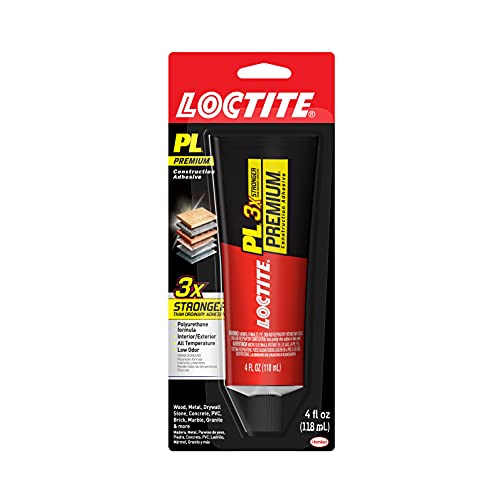
This is the same trusted PL Premium formula, but in a smaller squeeze tube. It’s perfect when you don’t need a full cartridge. You still get the polyurethane bond that excels on wood and concrete. It fills tiny gaps, cures strong, and stands up to moisture.
I keep one in my toolbox for spot fixes or small mounting jobs. It is cleaner for delicate work on visible edges. If you want the best adhesive for gluing wood to concrete in a compact package, this is it. It saves waste and still delivers serious hold.
Pros:
- Proven polyurethane strength in a small tube
- Ideal for small jobs and repairs
- Good gap fill and moisture resistance
- Less waste vs. opening a full cartridge
- Portable and easy to stash in a kit
Cons:
- Not enough volume for big surfaces
- Still needs cure time and good prep
- Foam expansion can require cleanup
My Recommendation
Buy this if your project is small but you want a pro-grade bond. It is the best adhesive for gluing wood to concrete when you only need a few beads. You’ll get performance without cracking open a large tube. Great for service calls and punch lists.
| Best for | Why |
|---|---|
| Small thresholds and trim | Strong hold with minimal waste |
| Repair and punch list work | Portable, reliable formula |
| DIY beginners | Easy squeeze-tube control |
Clear Wood Super Glue (CA) Liquid
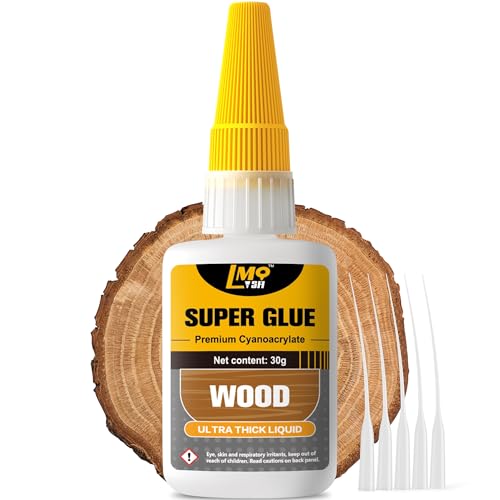
This is a cyanoacrylate (CA) super glue, which bonds fast and dries clear. It is great for quick fixes, small parts, and precision work. On wood-to-concrete, it can spot-bond, especially on smooth, dust-free surfaces. It’s not for large surfaces, but it has a place in a kit.
I use CA for tacking a piece before adding a stronger adhesive, or for temporary holds. It’s helpful for delicate moldings meeting concrete or tile. If you need a clean, instant hold, CA is useful. It’s not the best adhesive for gluing wood to concrete for structure, but it’s a smart helper.
Pros:
- Instant tack and fast cure
- Dries clear; neat for visible spots
- Great for small parts and precise repairs
- Works on many materials when surfaces are clean
- Pairs well with stronger adhesives for tacking
Cons:
- Not suitable for large or structural bonds
- Brittle; poor gap fill on rough concrete
- Can fog or frost near the joint if overused
My Recommendation
Use this for quick tacks and tiny repairs where speed wins. It is best as a helper, not the main bond, for wood-to-concrete. For fast fixture, then follow with polyurethane or hybrid adhesive. Think of it as a useful accessory to the best adhesive for gluing wood to concrete.
| Best for | Why |
|---|---|
| Quick spot bonding | Instant hold and clear dry |
| Fine trim alignment | Precision control on small edges |
| Temporary tacking | Hold in place before final adhesive |
Heavy Duty Construction Adhesive 8.8 oz
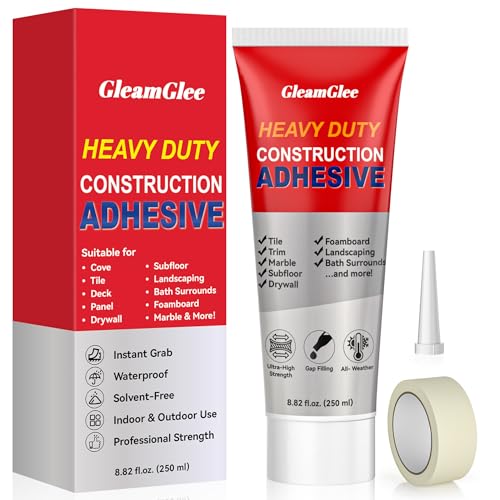
This heavy-duty construction adhesive is built for indoor/outdoor jobs. It’s designed for cement, tile, wood, stone, and more. Waterproof once cured, it suits areas that see moisture. For general-purpose bonding, it can cover a lot of use cases.
I consider it a versatile alternative when brand-specific formulas are not required. It pairs well with rough concrete when surfaces are clean and dry. If you need a reliable all-rounder for the best adhesive for gluing wood to concrete, this fits the bill. Always test a small area if the concrete is sealed or painted.
Pros:
- Waterproof cure for indoor/outdoor use
- Grips many construction materials
- Good for general purpose bonding tasks
- Solid choice for budget-minded projects
- Handles typical temperature swings
Cons:
- Less brand history than top-tier formulas
- May need bracing on vertical surfaces
- Performance varies with concrete coatings
My Recommendation
Pick this for everyday jobs when you want one tube to do most tasks. It balances cost and performance well. It’s a practical choice for many homeowners. For the best adhesive for gluing wood to concrete on a budget, it’s worth a look.
| Best for | Why |
|---|---|
| Budget-friendly projects | Strong value and broad use |
| Indoor/outdoor fixes | Waterproof and versatile |
| Mixed-material bonding | Adheres to tile, wood, and stone |
Rapid Patch Rapid Loc 9.5 oz

Rapid Patch Rapid Loc is a veneer bond designed for stone, tile, wood, and concrete. It focuses on exterior and interior use with waterproof durability. For bonding wood trim alongside stone or tile on concrete, it’s a specialized fit. The formula is built for tough conditions.
I like it for projects that mix materials on masonry facades or exterior steps. It handles moisture and temperature changes well. If your job touches masonry veneers and wood, this is a smart pick. It’s in the running for the best adhesive for gluing wood to concrete where veneer work is involved.
Pros:
- Built for stone and veneer applications
- Waterproof and weather-tough
- Good bond on concrete, tile, and wood
- Ideal for mixed-material facades
- Reliable in exterior conditions
Cons:
- More specialized than general-purpose tubes
- Can be pricier than standard adhesives
- Availability may vary
My Recommendation
Use Rapid Loc for veneer and facade projects that blend wood and masonry. It shines on exterior steps, planters, and trim where durability matters. If you need the best adhesive for gluing wood to concrete in veneer settings, this is tailored for it. It’s a pro-minded solution for harsh weather.
| Best for | Why |
|---|---|
| Veneer and facade work | Formula tuned for stone and masonry |
| Exterior trims and steps | Handles water and temperature swings |
| Mixed-material details | Strong bond across tile, wood, concrete |
FAQs Of best adhesive for gluing wood to concrete
What is the best adhesive for gluing wood to concrete?
A polyurethane construction adhesive, like Loctite PL Premium or PL Premium Max, is usually the best adhesive for gluing wood to concrete. It fills small gaps and cures strong.
Will these adhesives work on damp concrete?
Some, like PL Premium Max and certain hybrid formulas, can handle slightly damp surfaces. For best results, keep it dry and clean.
How long should I clamp or weight the joint?
At least 24 hours is typical. Full cure often takes 24–48 hours, depending on temperature and humidity.
Do I need to prep the concrete first?
Yes. Remove dust, loose particles, and oils. Vacuum, wipe, and let it dry. Good prep improves bond strength.
Can I use super glue (CA) for wood-to-concrete?
Only for small, light, or temporary bonds. CA is not the best adhesive for gluing wood to concrete over large areas.
Final Verdict: Which Should You Buy?
If you want a proven, all-around pick, choose Loctite PL Premium. It is the best adhesive for gluing wood to concrete for most indoor jobs.
For harsh weather, I favor PL Premium Max. For fast vertical holds, Titebond TiteGrab Plus shines. Match your project to your pick, and you’ll get a rock-solid bond.