
Top pick: DEWALT DWE7485 paired with an 8-1/4 in. aluminum blade.
You want clean, burr-free cuts on aluminum without sparks, stress, or guesswork. I’ve been there—trying to square up a channel or slice trim and ending up with ragged edges or a jammed kerf. The right setup turns a tough task into smooth, accurate cuts. In this guide, I’ll help you choose the best aluminum cutting table saw and the right blades to match. I focus on real-world use, safe techniques, and value. Whether you’re cutting extrusions, plate, or trim, you’ll find proven picks and smart tips to cut aluminum with confidence.
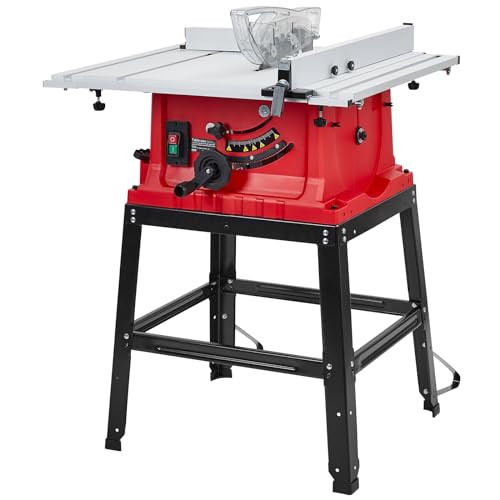
Table Saw 10 Inch, 15…
Adjustable Cutting: The table saws provide 90°cross cutting and 0-45°bevel cutting. Max cutting depth of cross cutting is 74mm, and the depth of bevel cutting is 52mm. Portable Design: The…

SKIL 15 Amp 10 Inch…
RACK AND PINION FENCE RAILS – Ensures fence stays parallel to blade for fast smooth, and accurate cuts INTEGRATED FOLDING STAND – Legs quickly fold in to provide portability and…

MAXXT 2-in-1 Band Saw with…
【Powerful 10 Amp Motor for High Performance】Experience the unbeatable power of our 10 amp motor that ensures exceptional performance without the risk of burnout. This metal band saw cuts through…
10-Inch 15A Table Saw with Stand (5000 RPM)

This 10-inch, 15-amp table saw brings strong power and stability for home and jobsite work. The 36 x 25-inch tabletop gives you room to support longer pieces, which helps when guiding aluminum extrusions or sheet. At 5000 RPM, it has the speed needed for smooth non-ferrous cuts with the right blade. The included stand and protective cover make it easier to set up and safer to store.
I like the adjustable depth and 0-45° bevel capability for mitered aluminum trim and angled brackets. Use a proper non-ferrous TCG blade, a zero-clearance insert, and a sled or miter gauge for repeatable results. The fence looks serviceable; take time to square it. As with all aluminum work on table saws, feed steady and consider wax or a non-stain lubricant to reduce burrs.
Pros:
- Large 36 x 25-inch table supports longer stock
- 15A motor with 5000 RPM for smoother aluminum cuts
- Adjustable depth and 0-45° bevel expand project options
- Includes stand and protective cover for safer storage
- Good value format for mixed wood and non-ferrous work
Cons:
- Fence may need fine-tuning for best accuracy
- Generic branding; parts support may be limited
- Dust collection can struggle with metallic chips
My Recommendation
This is a solid pick if you want a budget-friendly platform to become your best aluminum cutting table saw with the right blade. It suits DIYers and light-duty fabricators who need a larger table for stable feeds. Add an 80T–100T TCG aluminum blade, a zero-clearance insert, featherboards, and a push shoe for safe, clean cuts. It’s a practical base for mixed materials at home or a small shop.
| Best for | Why |
|---|---|
| DIYers cutting aluminum extrusions | Large table supports long profiles and steady feeding |
| Budget metal and wood projects | Strong 15A motor and bevel features at a low price |
| Occasional plate or bar stock | High RPM with proper blade yields clean, square cuts |
SKIL 10-Inch Jobsite Table Saw TS6307-00
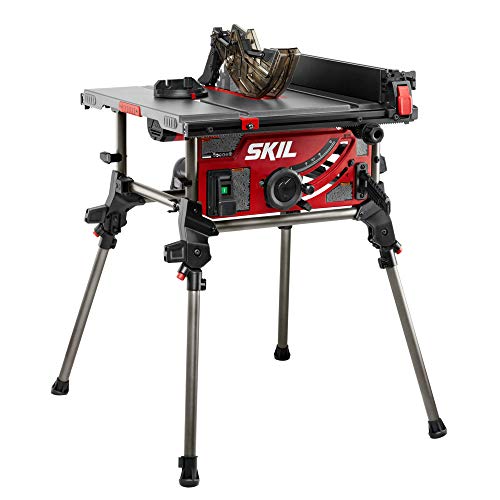
The SKIL TS6307-00 is a proven 10-inch jobsite saw with a folding stand that travels well. It offers a rack-and-pinion fence that helps keep alignment consistent, which matters a lot when you’re ripping thin aluminum strips. With a correct TCG non-ferrous blade, this saw can make neat, low-burr cuts in trim, angle, and small bar stock.
Its onboard storage and quick setup can save time between tasks. I suggest pairing it with an 80T or 100T aluminum blade, a zero-clearance insert, and a crosscut sled for small parts. Keep a dedicated dust setup for metallic chips, as they behave differently than sawdust. Treat it right, and this compact workhorse can be your best aluminum cutting table saw on the go.
Pros:
- Rack-and-pinion fence improves repeatability
- Portable folding stand for easy transport
- Good power for non-ferrous cuts with proper blade
- Quick setup, onboard storage, jobsite friendly
- Reliable support and parts from a known brand
Cons:
- Smaller table than full-size contractor saws
- Aluminum chips can clog ports; adapt dust collection
- Not ideal for very thick aluminum plate
My Recommendation
If you need a portable, accurate platform to serve as your best aluminum cutting table saw for trim, channel, and bracket work, this SKIL hits a sweet spot. It’s great for contractors and DIY users who switch between wood and aluminum. With the right blade and sled, it delivers steady cuts and predictable angles.
| Best for | Why |
|---|---|
| Jobsite aluminum trim | Rack-and-pinion fence holds line on thin stock |
| Mixed material remodels | Fast setup; swaps blades and tasks easily |
| Small shop users | Compact size with dependable accuracy |
MAXXT 2-in-1 Band Saw with Table Base

This MAXXT tool is a 2-in-1: a portable band saw that locks into a small table base. For aluminum, a band saw can be a quieter, low-spark option that leaves fewer flying chips. Its variable speed is a plus because softer metals respond well to dialing in the blade speed. The lightweight aluminum body and rolling base make it flexible for tight shops.
While not a traditional table saw, it can handle non-ferrous cuts with the right metal-cutting bandsaw blade. Think small to mid-size extrusions, bar, and curved profiles. Use a fence or miter guide on the base to keep cuts straight and safe. If you prefer less noise and a compact footprint, this can complement your best aluminum cutting table saw lineup.
Pros:
- Band saw format reduces sparks and flying chips
- Variable speed helps tune for aluminum
- Portable design with rolling base and light body
- Great for curved or odd-shaped profiles
- Handheld or benchtop flexibility
Cons:
- Not a true table saw; smaller cutting surface
- Requires metal-rated bandsaw blades
- Fence/miter accuracy depends on base setup
My Recommendation
Choose this if you want a metal-friendly alternative to a table saw for aluminum. It’s ideal for DIYers or small shops that need quiet, controlled cuts in non-ferrous stock. Use it as a companion to your best aluminum cutting table saw for shapes that are tough to push across a table.
| Best for | Why |
|---|---|
| Low-spark metal cutting | Band saw action is cleaner and quieter |
| Curved/irregular aluminum | Better maneuverability than a table saw |
| Small workshops | Compact setup with dual-use flexibility |
Mini Table Saw for Crafts (Dual-Motor)

This compact, dual-motor mini table saw targets crafts and small materials like wood, PCB, acrylic, and plastics. It’s not designed for thick aluminum. That said, some users work on thin non-ferrous sheets with specialty micro blades and a very light touch. The speed and angle adjustments make it flexible for tiny parts and model-making.
If your projects are jewelry, small frames, or prototyping, this tiny format keeps work close and controlled. Do not push aluminum beyond what the tool and blade are rated for. For anything larger, your best aluminum cutting table saw should be a full-size unit with a proper TCG blade and good hold-downs. Keep this one for ultra-fine hobby use.
Pros:
- Very compact for benchtop craft work
- Speed and angle adjustments for small parts
- Dual-motor design supports varied tasks
- Great for plastics, PCB, and model materials
- Easy to store and set up
Cons:
- Not designed for serious aluminum cutting
- Limited throat and power
- Few blade options for non-ferrous metals
My Recommendation
Pick this only if you are a crafter or hobbyist doing micro work. It’s not your best aluminum cutting table saw for extrusions or bar stock. For very thin soft metals, proceed with care and the correct micro blade. For real aluminum jobs, use a full-size table saw listed here with a TCG non-ferrous blade.
| Best for | Why |
|---|---|
| Hobby crafting | Small size and control for fine details |
| PCB and acrylic | Clean cuts on light materials |
| Tiny prototypes | Precise, close-up work space |
FOXBC 8-1/4-In 80T TCG Aluminum Blade

This FOXBC 8-1/4-inch, 80-tooth TCG blade is sized for compact saws like the DEWALT DWE7485. The triple-chip grind (TCG) is the right geometry for non-ferrous metals such as aluminum, brass, and copper. An 80T count balances feed rate and finish for extrusions, thin plate, and channels. The 5/8-inch arbor fits most compact table saws with this blade size.
Use consistent feed pressure and consider a dry lube or paste wax on the fence to keep chips sliding. A zero-clearance insert and a tall fence help support slim pieces. With correct setup, this blade can help your compact saw act like the best aluminum cutting table saw for small to mid-sized stock. Expect reduced burrs and cleaner edges.
Pros:
- TCG grind designed for non-ferrous metals
- 80 teeth for smooth, controlled cuts
- Fits 8-1/4-inch compact saws
- Good value upgrade for aluminum projects
- Works on plastic and fiberglass too
Cons:
- Not for thick aluminum plate
- Finish depends on your saw’s stability
- Needs careful chip management
My Recommendation
If you run a compact saw and want the best aluminum cutting table saw results possible in that form, this blade is a strong choice. It’s ideal for extrusions, small channels, and thin bar. Keep feed steady and support the work fully. You’ll see a clear upgrade over wood blades in cut quality and safety.
| Best for | Why |
|---|---|
| Compact jobsite saws | 8-1/4-inch size matches popular small saws |
| Extrusions and thin stock | 80T TCG balances speed and finish |
| Mixed non-ferrous tasks | Handles aluminum, brass, plastics, fiberglass |
TOMAX 10-In 80T TCG Aluminum Blade

The TOMAX 10-inch, 80-tooth TCG blade is a staple for non-ferrous cutting on full-size saws. With 80 teeth, it offers a fine finish while still allowing a reasonable feed rate. The TCG profile resists chipping on soft metals and helps reduce burr formation. A standard 5/8-inch arbor means it’s ready for most contractor and jobsite table saws.
Use this blade with a sled or miter gauge for accurate crosscuts on aluminum angle and tubing. Add a zero-clearance insert to support thin pieces right at the kerf. Keep your fence waxed and use light pressure. If you want your current saw to feel like the best aluminum cutting table saw, a proper TCG blade like this is step one.
Pros:
- TCG grind designed for aluminum and non-ferrous
- 80T count for clean edges without crawling feeds
- Common 10-inch diameter for many saws
- Reliable finish on extrusions and trim
- Good price-to-performance ratio
Cons:
- Not as glassy a finish as 100–120T options
- Kerf and plate stiffness vary by batch
- Needs careful setup for shortest offcuts
My Recommendation
Choose this as a go-to for most aluminum projects on a 10-inch saw. It’s a practical pick if you want your existing platform to perform like the best aluminum cutting table saw for extrusions, channels, and bar. Great balance of speed and finish for everyday shop use.
| Best for | Why |
|---|---|
| General aluminum cutting | 80T TCG handles most profiles well |
| Budget-conscious upgrades | Strong performance without premium pricing |
| Mixed non-ferrous work | Also tackles brass, plastics, and composites |
TOYAKI 10-In 120T TCG Aluminum Blade

With 120 teeth and a TCG grind, the TOYAKI blade targets ultra-fine finishes on aluminum and other non-ferrous metals. High tooth count means slower feed, but the edge quality can be excellent on trim and thin-walled profiles. The 10-inch diameter and 5/8-inch arbor suit many table saws and miter saws.
For best results, stabilize your work with featherboards and a sled, and keep the blade slightly above the workpiece. The high tooth count can generate heat; use a light, steady feed and consider a dry lube. If you’re chasing show-quality edges from your best aluminum cutting table saw, this blade is in that conversation.
Pros:
- 120 teeth for ultra-smooth finishes
- TCG design reduces burrs on soft metals
- Good for thin-walled extrusions and trim
- Works on table and miter saws
- Reliable for finishing cuts
Cons:
- Slower feed rates required
- More heat buildup if pushed too hard
- Not ideal for thick bar or plate
My Recommendation
Pick this blade if your priority is the cleanest possible edge on aluminum trim and thin sections. It helps a capable saw behave like the best aluminum cutting table saw for showroom finishes. Match it with careful fixturing and patient feeds for standout results.
| Best for | Why |
|---|---|
| Show-quality finishes | 120T yields very fine edges |
| Thin extrusions | High tooth count minimizes chatter |
| Mitered trim | Clean corners with less filing |
TWIN-TOWN 10-In 80T TCG Aluminum Blade

The TWIN-TOWN 80T TCG blade is a well-liked non-ferrous option that balances cut quality with cost. It’s built for aluminum, plastics, and other soft materials. At 80 teeth, you’ll see clean rips and crosscuts on common aluminum profiles without crawling through the cut. A 5/8-inch arbor fits most 10-inch table saws.
Set up your fence square, use a zero-clearance insert, and add a featherboard when ripping narrow stock. This blade can help your everyday contractor saw step into the role of best aluminum cutting table saw for routine tasks. Expect a clean finish and fewer post-cut deburring steps.
Pros:
- TCG grind for non-ferrous materials
- 80T count provides smooth results
- Affordable upgrade for aluminum work
- Fits common 10-inch saws
- Good for plastics and composites
Cons:
- Not the absolute finest finish vs. 100–120T
- Kerf width and plate quality vary by run
- Chip evacuation needs attention
My Recommendation
This is a strong everyday blade if you want to convert your general-purpose saw into a better aluminum cutter. It supports the goal of building the best aluminum cutting table saw setup on a budget. Pair with a sled and light lube to keep edges clean and square.
| Best for | Why |
|---|---|
| Routine aluminum jobs | 80T TCG gets clean cuts at fair speed |
| Budget builds | Solid results without premium cost |
| Mixed plastic/non-ferrous | Versatile material compatibility |
DEWALT 8-1/4-In Jobsite Table Saw (DWE7485)

The DWE7485 is compact, tough, and accurate. Its rack-and-pinion fence is one of the best at this size, which helps a lot when ripping narrow aluminum extrusions. Paired with an 8-1/4-inch 80T TCG blade, it delivers clean cuts in channels, t-tracks, and thin-walled tubing. The small footprint makes it a top pick for mobile work.
Use a zero-clearance insert, featherboards, and a push shoe, and keep metallic chips out of the standard dust system. This saw’s stability, fence quality, and power-to-size ratio let it act like the best aluminum cutting table saw in a compact form. It’s a smart, reliable base for non-ferrous projects.
Pros:
- Excellent rack-and-pinion fence alignment
- Compact, durable jobsite design
- Pairs perfectly with 8-1/4-inch non-ferrous blades
- Strong power for its class
- Easy to transport and store
Cons:
- Smaller table limits large panels
- Dust collection needs mods for metal chips
- Max cut capacity is modest
My Recommendation
If you need a portable platform that cuts aluminum cleanly, this is my top compact pick. With the right blade, it behaves like the best aluminum cutting table saw for small and mid-size profiles. It’s the one I suggest to contractors and tight shops chasing accuracy on the go.
| Best for | Why |
|---|---|
| Mobile aluminum work | Accurate fence and compact size |
| Extrusions and t-tracks | Clean, straight rips with 80T TCG |
| Small shops | Space-saving design with pro-level control |
FOXBC 10-In 100T TCG Aluminum Blade
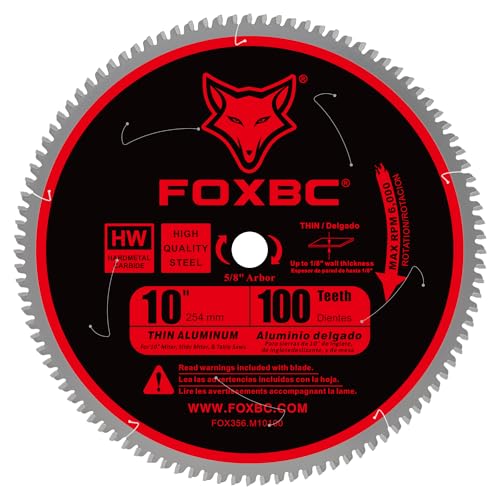
The FOXBC 100-tooth TCG blade focuses on fine finishes with a little more speed than a 120T. It’s a nice middle ground for 10-inch saws that handle both trim and thicker stock. The TCG grind handles soft metals with less grabbing, which helps safety and finish quality. It fits a standard 5/8-inch arbor.
For best results, lock in your fence square and use a sled for crosscuts. Keep cuts cool with a moderate feed and pause if heat builds. If you want your current rig to work like the best aluminum cutting table saw for both finish and efficiency, this 100T option is worth a look.
Pros:
- 100 teeth for fine edges with reasonable feed
- TCG design reduces burrs and chatter
- Versatile for different aluminum profiles
- Standard 10-inch size and 5/8-inch arbor
- Good value for clean non-ferrous cuts
Cons:
- Not as fast as 80T options
- Can heat up if pushed on thick stock
- Finish still depends on saw stability
My Recommendation
Use this when you want a step above 80T in finish without going all the way to 120T. It’s a smart pick for aluminum trim, extrusions, and precise miter work. With a solid fence and support, it helps your setup act like the best aluminum cutting table saw for detailed projects.
| Best for | Why |
|---|---|
| Fine-finish aluminum work | 100T smoothness with workable feed rates |
| Trim and miter cuts | Clean corners and edges |
| Balanced performance | Middle ground between 80T and 120T |
FOXBC 8-1/4-In 80T for Compact Saws
Note: This is the same FOXBC 8-1/4-inch 80T TCG blade listed above, included here for clarity on compact saw compatibility. It’s a match for the DEWALT DWE7485 and similar 8-1/4-inch saws. If you’re building a compact best aluminum cutting table saw setup, this blade is a reliable, budget-forward pick.
Run it with steady feed, light lube if needed, and full stock support. Lock down your fence and consider a sled for short crosscuts. It’s a solid way to unlock aluminum cutting performance on small saws.
Pros:
- TCG geometry for non-ferrous cutting
- 80T sweet spot for compact saws
- Affordable upgrade path
- Fits common 8-1/4-inch platforms
- Clean results on extrusions
Cons:
- Less capacity than 10-inch blades
- Requires meticulous stock support
- Chip management is essential
My Recommendation
For compact-saw users, this blade makes aluminum cutting practical and clean. It’s a key piece if you want the best aluminum cutting table saw performance in a small footprint. Pair it with the DWE7485 and a solid sled for dependable results.
| Best for | Why |
|---|---|
| Compact saw owners | Right size, right tooth geometry |
| Aluminum extrusions | 80T keeps edges smooth |
| Cost-conscious builds | Good finish without high cost |
Table Saw 10-Inch: Summary for Metal Tasks
This is a repeat highlight of the 10-inch, 15A, 5000 RPM model for readers comparing platform sizes. As a reminder, it has a generous table, adjustable bevel, and a stand. With a non-ferrous TCG blade, it’s capable of clean aluminum work. Expect a learning curve to dial in the fence and inserts.
Use push blocks, featherboards, and a crosscut sled, and monitor heat and chips. To feel like the best aluminum cutting table saw in your shop, it needs the right blade and fixtures. Once tuned, it’s a productive mixed-material machine.
Pros:
- Large table and strong motor
- Adjustable bevel and depth
- Includes stand and cover
- Capable non-ferrous performance with TCG blade
- Good reach for longer stock
Cons:
- Fence tuning required
- Dust/metal chip management needed
- Generic parts support varies
My Recommendation
Consider this if you want a larger working surface at a fair price and plan to cut both wood and aluminum. With the right blade, it helps you build a budget-friendly best aluminum cutting table saw setup. Tune it carefully and it will deliver solid results.
| Best for | Why |
|---|---|
| Long extrusions | More table space for support |
| Home workshops | Strong power and flexibility |
| Multi-material tasks | Switches between wood and non-ferrous |
FAQs Of best aluminum cutting table saw
Can I cut aluminum on a regular table saw?
Yes, if you use a non-ferrous TCG blade, proper hold-downs, and safe feed rates. Never use a wood rip blade for aluminum.
What blade should I use for aluminum?
A triple-chip grind (TCG) non-ferrous blade with 80–120 teeth is ideal. Pick 80T for speed, 100–120T for finer edges.
How do I reduce burrs when cutting aluminum?
Use a TCG blade, keep the blade slightly above the work, feed steadily, and use a zero-clearance insert. Light dry lube helps.
Do I need special dust collection for metal chips?
Metal chips differ from sawdust. Use a dedicated, spark-safe can or separator, and avoid mixing chips with wood dust in a bagger.
Is cutting aluminum on a miter saw better?
For short, precise cuts in trim or extrusions, a miter saw with a TCG blade works great. For rips and longer cuts, a table saw is better.
Final Verdict: Which Should You Buy?
For a compact, accurate platform, the DEWALT DWE7485 plus a quality 8-1/4-inch TCG blade is my top pick. It behaves like the best aluminum cutting table saw for trim, extrusions, and small profiles.
Need a full-size table and budget value? The 10-inch 15A model with a 10-inch TCG blade delivers. Either way, pair your saw with the right blade to unlock the best aluminum cutting table saw performance.