
The best electric motor for table saw use balances torque, speed, frame fit, wiring, and safe long-term duty.
A weak or poorly matched motor can make a table saw stall in thick wood, trip the breaker, or leave rough cuts behind. I know how frustrating that feels, especially after spending time setting up a project. The right motor should match the saw’s arbor system, belt drive, voltage, frame, and blade size. I reviewed these options with those needs in mind. Some are strong general-purpose motors, while others suit small custom saws or large shop machines. Always confirm fit and electrical ratings before installation.
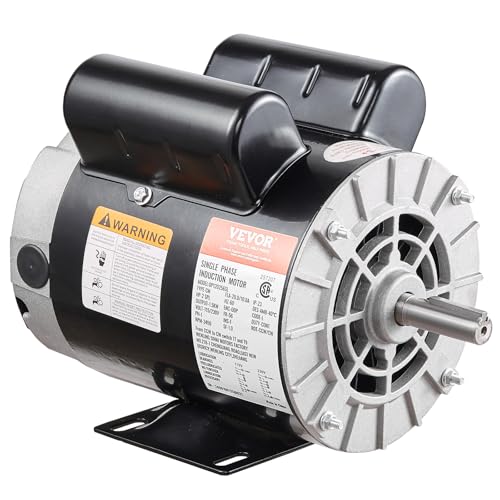
VEVOR 2HP Air Compressor Electric…
High Performance: 2HP SPL 3450 RPM, Single Phase, Full Load Amps: 20/10 Amps, 115V/230V, SF: 1.0. Frame Type: 56 Frame, 5/8″ Keyed shaft, 1.88″ Shaft length, 0.188″ Keyway Size. Open…

VEVOR 1.5HP Electric Motor 3450…
Powerful Performance: 1.5HP, Single Phase, Full Load Current: 15.0/7.5A, AC 115V/230V 60Hz, 3450 RPM High Speed, SF: 1.15. Sturdy Frame Type: 56 Frame, 5/8″ Keyed Shaft, Shaft length: 1.88″, Keyway…

2HP General Purpose Electric Motor…
General Purpose Single Phase Motor: HP – 2, POLE – 2,FRAME – 56C, ENC – TEFC,IP – 55 Detailed Parameters: HZ: 60HZ, Voltage: 115V/230V, AMP: 18.2A/9.1A , RPM: 3450 INS…
VEVOR 2HP Electric Motor, 56 Frame

The VEVOR 2HP motor is a strong choice for a full-size table saw conversion or replacement project. It uses a common 56 frame and a 5/8-inch keyed shaft, so it may suit many belt-driven shop tools. Its rated speed is 3,450 RPM, which matches the speed range used by many woodworking motors. The 2HP rating gives it useful cutting power for hardwood and sheet goods when the pulley ratio is correct.
I like the dual-voltage design because it can run on 115 or 230 volts. That gives homeowners more wiring options and may reduce current draw on a 230-volt circuit. The motor also supports clockwise and counterclockwise rotation, although the factory setting is counterclockwise. Check the rotation before connecting the belt, and do not assume the direction fits your saw.
Pros:
- 2HP output offers strong cutting support
- Common 56 frame simplifies many replacements
- Dual-voltage operation adds wiring flexibility
- 5/8-inch keyed shaft works with many pulleys
- High 3,450 RPM speed suits belt-driven tools
- Reversible rotation helps with custom setups
Cons:
- It may need pulley changes for the correct blade speed
- The factory counterclockwise setting may not fit every saw
- It is not a direct replacement for every frame or mount
My Recommendation
I recommend this VEVOR model to woodworkers who need a powerful, flexible motor for table saw rebuilding. It fits best when your saw uses a belt drive, a 56-frame mount, and a 5/8-inch keyed pulley. It also suits users who want to switch between 115 and 230 volts. As a candidate for the best electric motor for table saw projects, it offers a very useful balance of power, speed, and availability. Confirm shaft height, shaft length, rotation, and circuit size before ordering.
| Best for | Why |
|---|---|
| Full-size belt-driven saws | 2HP power supports demanding cuts |
| Custom replacements | 56 frame and dual voltage improve fit options |
| Hardwood work | High speed and strong output reduce bogging |
VEVOR 1.5HP Electric Motor, 56 Frame

This VEVOR 1.5HP motor gives a practical middle ground for table saw owners. It delivers less power than a 2HP unit, but it can use less current and may place less demand on a small shop circuit. The 56 frame and 5/8-inch keyed shaft match many common general-purpose layouts. Its 3,450 RPM rating works well with the correct pulley and blade setup.
The motor runs on either 115 or 230 volts, which helps during a shop upgrade. Its clockwise and counterclockwise rotation also supports different belt layouts. I would consider it for light or medium woodworking, plywood, trim boards, and moderate hardwood cuts. It may not be the right choice for a large blade buried in thick dense stock, where extra horsepower gives a better safety margin against stalls.
Pros:
- 1.5HP suits many light and medium table saws
- Dual-voltage design supports common shop circuits
- 56 frame may match older replacement motors
- 5/8-inch keyed shaft helps pulley installation
- Reversible rotation supports varied belt layouts
- Lower output can suit modest electrical service
Cons:
- Less reserve power than a 2HP motor
- It may struggle with thick hardwood under heavy feed pressure
- Correct pulley sizing remains essential
My Recommendation
This model is best for a hobby shop, compact cabinet saw, or replacement project that does not need maximum torque. I like it for users who make careful cuts in common boards and want flexible voltage choices. It can be a sensible best electric motor for table saw option when the original saw used around 1.5HP. Do not upgrade or downgrade by horsepower alone; compare the motor mount, shaft, overload protection, and blade speed first.
| Best for | Why |
|---|---|
| Hobby woodworkers | Balanced power for routine projects |
| 115/230V shops | Flexible wiring options simplify installation |
| Light hardwood and plywood | Good output without oversized capacity |
2HP General-Purpose Motor, 3450 RPM

This 2HP general-purpose motor focuses on the basic features many table saw rebuilds need. It spins at 3,450 RPM and uses a 5/8-inch shaft diameter. Those specifications can work well with a belt-driven saw, provided the pulley ratio keeps the blade within its rated speed. The 2HP output also gives useful reserve power for thicker boards.
I see this as a straightforward option for buyers who do not need a specialized motor package. A simple motor can be easier to fit into a custom base or older machine. Still, you must verify the frame, shaft length, mounting holes, voltage, rotation, and run capacitor details. A motor that looks similar online may not align with your saw without a bracket or pulley adjustment.
Pros:
- Strong 2HP rating supports demanding cuts
- 3,450 RPM matches many belt-drive applications
- 5/8-inch shaft accepts common keyed pulleys
- General-purpose design suits varied shop equipment
- Useful choice for custom saw builds
- Simple layout can make troubleshooting easier
Cons:
- Product details may require careful fit verification
- It may need a custom mount on some table saws
- High shaft speed can be unsafe with the wrong pulley ratio
My Recommendation
I recommend this motor to experienced DIY users who can measure their existing motor and understand belt-drive alignment. It is not the easiest plug-and-play answer, but it can provide strong value for a custom replacement. For someone seeking the best electric motor for table saw restoration, this general-purpose design is worth considering when its dimensions match. Have a qualified electrician handle hardwiring, grounding, and overload protection.
| Best for | Why |
|---|---|
| DIY saw restorations | General-purpose design supports custom work |
| Thick stock cutting | 2HP gives useful torque reserve |
| Common pulley systems | 5/8-inch shaft supports many pulleys |
VEVOR 1HP Electric Motor, 56C Frame

The VEVOR 1HP motor targets smaller tools and lighter table saw work. Its 56C frame, 5/8-inch keyed shaft, and 3,450 RPM rating provide a familiar layout for many compact machines. The lower horsepower may suit a small saw used for thin boards, craft stock, and occasional home repairs. It can also replace a worn 1HP motor without forcing a major electrical upgrade.
This motor supports 115 or 230 volts and allows clockwise or counterclockwise rotation. Those features make it more flexible than many basic single-voltage models. I would not pair it with a large blade and heavy production work unless the saw manufacturer specifically allows that setup. Lower power can cause stalls if you force the feed, so a sharp blade and steady technique matter even more.
Pros:
- Compact 1HP output suits light-duty saws
- 56C frame may simplify replacement work
- Dual-voltage operation offers circuit flexibility
- 5/8-inch keyed shaft fits many small pulleys
- Reversible rotation supports different layouts
- Lower power can reduce energy demand
Cons:
- Not ideal for thick hardwood or production cutting
- It may bog down with an aggressive feed rate
- It requires exact frame and shaft measurements
My Recommendation
This VEVOR model is best for compact table saws, small workshops, and users who cut thin material at a calm pace. It is also useful when an original 1HP motor has failed and the owner wants a similar replacement. I would not call it the best electric motor for table saw power users, but it may be the best fit for a light-duty saw. Its value comes from simple specifications, voltage flexibility, and a common frame style.
| Best for | Why |
|---|---|
| Compact table saws | 1HP output fits lighter machines |
| Thin boards and crafts | Enough power for modest cutting loads |
| Small home shops | 115/230V choice helps with limited circuits |
EliteEdge 2HP SPL Motor, 230V

The EliteEdge 2HP SPL motor is designed around a 230-volt shop setup. Its listed 17.6-amp rating makes it important to size the breaker, wire, switch, and overload protection with care. The 2HP class can provide the power needed for many full-size saws and other belt-driven tools. It may work well for a fixed workshop where the electrical circuit already supports the motor.
A 230-volt motor can help lower operating current compared with a similar motor on 115 volts, but it does not remove the need for proper installation. I would measure the shaft, frame, mounting holes, and belt position before purchase. The “SPL” label also means buyers should compare the actual duty details with the saw’s requirements. This is a better fit for a planned shop installation than a quick swap.
Pros:
- 2HP output supports many full-size saws
- 230V operation suits dedicated workshop circuits
- Lower line current can help long cable runs
- Useful for fixed, stationary equipment
- Good candidate for a serious replacement project
- Strong output helps reduce bogging under load
Cons:
- 230V wiring limits use in some home shops
- The 17.6-amp rating needs careful circuit planning
- SPL construction may not suit continuous industrial duty
My Recommendation
I recommend EliteEdge for experienced users with a ready 230-volt circuit and a compatible belt-driven saw. It is best for a stationary shop rather than a portable worksite. If the frame and electrical details match, it can serve as a powerful best electric motor for table saw replacement. I would have a licensed professional check the circuit, disconnect, grounding, and motor protection before use.
| Best for | Why |
|---|---|
| Dedicated 230V shops | Designed around a higher-voltage setup |
| Full-size saws | 2HP helps handle demanding stock |
| Permanent installations | Fixed wiring makes the most sense here |
2HP Commercial-Duty Air Compressor Motor

This 2HP motor is marketed for air compressors, yet its size and shaft layout may interest owners rebuilding belt-driven woodworking tools. It offers 115/230-volt operation, a 56 frame, a 5/8-inch keyed shaft, and a 3,450 RPM speed. Those are useful specifications for a table saw conversion. The commercial-duty description suggests a sturdier choice than a small hobby motor, but the saw’s duty cycle still controls final suitability.
The listed rotation is counterclockwise, so check your belt path before installation. The 1.88-inch shaft length also deserves attention because a pulley that sits too far out can create belt wear and vibration. I like the voltage flexibility for mixed-use workshops. However, buyers should not confuse a compressor motor label with automatic table saw compatibility; the mount and rotation must match.
Pros:
- 2HP capacity supports demanding woodworking
- 115/230V design fits varied shop power
- 56 frame is common in replacement work
- 5/8-inch keyed shaft accepts many pulleys
- Commercial-duty positioning may suit frequent use
- 1.88-inch shaft length gives useful mounting data
Cons:
- Counterclockwise rotation may require a pulley change
- Compressor-focused design is not automatically saw-ready
- Some saws may need a custom bracket
My Recommendation
This motor is best for a capable DIY builder who understands belt alignment and motor specifications. It offers a strong mix of horsepower and voltage flexibility, but it rewards careful measuring. I consider it a serious contender for the best electric motor for table saw use when the 56 frame and shaft length match the machine. It is a good value for a workshop rebuild, but installation should include a proper switch, guard, grounding, and overload protection.
| Best for | Why |
|---|---|
| Frequent shop use | 2HP output and commercial-duty positioning help |
| Dual-voltage users | Supports both common shop voltages |
| Belt-drive conversions | Keyed shaft and known length aid setup |
CHANCS 775 DC Motor Table Saw Kit

The CHANCS kit takes a very different path from the large AC motors above. It uses a 775-style DC motor with a PWM speed controller and supports 12 or 24 volts. The listed speed can reach 10,000 or 20,000 RPM, depending on the setup. That makes it more suitable for a small custom saw, model saw, hobby machine, or battery-powered project than a standard full-size table saw.
The included controller gives the user speed adjustment, which can help during testing and small cuts. Yet high motor speed does not equal high cutting torque. You must use the correct blade, guard, power supply, wiring, fuse, and pulley or direct-drive arrangement. I would not install this kit on a full-size saw without a carefully engineered design, because a small DC motor can overheat or stall under a heavy cut.
Pros:
- Includes a PWM speed controller
- 12V and 24V operation support custom builds
- Very compact compared with 2HP AC motors
- Useful for portable or battery-based projects
- Variable speed helps during setup and testing
- Good option for hobby prototypes
Cons:
- Not a direct replacement for a full-size table saw motor
- High RPM does not provide full-size saw torque
- Requires a suitable DC power supply or battery
- Needs extra attention to cooling and overload limits
My Recommendation
I recommend this CHANCS kit only for compact custom saws, educational builds, and low-load cutting tasks. It is not my first choice for a cabinet saw or thick hardwood. Still, it may be the best electric motor for table saw experimentation when small size and speed control matter more than raw power. Treat it as a project component, not a ready-made industrial replacement. Add a fuse, enclosed wiring, blade guard, and emergency stop.
| Best for | Why |
|---|---|
| Mini table saw projects | Small DC form factor fits compact designs |
| Battery builds | 12V/24V input supports portable power |
| Prototype work | PWM control allows speed testing |
7.5HP ODP Motor, 184T Frame

This 7.5HP motor is a heavy-duty option for large machines, but it is far beyond the needs of most home table saws. It uses a 184T frame, runs at 3,450 RPM, and operates on 208 to 230 volts. That power level can drive large industrial equipment when the machine, drive system, and electrical service are designed for it. It is not a casual upgrade for a 1.5HP or 2HP saw.
The open drip-proof, or ODP, design also matters. An ODP motor needs a clean, dry location because its vents allow air movement through the housing. Wood dust can create a serious maintenance and safety concern in a typical woodworking shop. I would consider this motor only for a properly engineered industrial installation with dust control, correct overload protection, and a saw rated for that horsepower.
Pros:
- Very high 7.5HP output
- 3,450 RPM suits some industrial drive systems
- 184T frame provides a heavy-duty mounting platform
- 208/230V operation fits commercial power systems
- Useful for large production equipment
- Strong torque reserve can handle major loads
Cons:
- Oversized for most residential table saws
- ODP housing is less suitable for dusty shops
- Requires substantial electrical service
- May damage a saw not designed for its power
My Recommendation
This motor is best for industrial users, large custom saws, and equipment designed around a 7.5HP drive. I do not recommend it as a simple way to make a household table saw stronger. More horsepower cannot fix a weak arbor, poor fence, light frame, or unsafe blade system. It is only a best electric motor for table saw application when the entire machine and electrical system support it. For most readers, a properly matched 1.5HP or 2HP motor is safer and more practical.
| Best for | Why |
|---|---|
| Industrial table saws | 7.5HP suits high-load production work |
| Commercial power systems | 208/230V setup matches larger facilities |
| Large custom machines | 184T frame supports engineered installations |
2HP Three-Phase TEFC Motor

This 2HP motor uses a three-phase electrical design and a TEFC enclosure. TEFC means totally enclosed fan cooled, so the housing offers better protection from dust than an open motor. The motor runs at 3,450 RPM and supports 230 or 460 volts. Its clockwise and counterclockwise rotation can help with belt-drive setup and phase correction.
Three-phase power can provide smooth operation and reliable starting, but most homes do not have a native three-phase supply. A variable frequency drive may solve that problem, yet the drive must match the motor voltage, current, frequency, and horsepower. This adds cost and setup work. I like this motor for a commercial shop, but I would not choose it for a basic residential replacement unless the electrical system is already prepared.
Pros:
- TEFC housing gives better dust protection
- 2HP output fits many full-size saw applications
- Three-phase operation can run smoothly
- 230/460V flexibility suits commercial systems
- Reversible rotation helps belt alignment
- 3,450 RPM supports common drive designs
Cons:
- Needs three-phase power or a compatible VFD
- Installation is more complex than single phase
- May cost more after adding controls and wiring
My Recommendation
I recommend this TEFC motor for commercial woodworkers who already have three-phase service or understand VFD installation. Its enclosed housing is a meaningful benefit in a dusty shop. It can be the best electric motor for table saw use in a professional setting when smooth operation and dust resistance matter. For a typical home user, however, a single-phase dual-voltage motor will usually offer simpler and cheaper ownership.
| Best for | Why |
|---|---|
| Commercial workshops | Three-phase operation supports shop equipment |
| Dusty environments | TEFC housing offers better enclosure protection |
| VFD-equipped saws | Speed and direction control can be integrated |
How to Choose the Best Electric Motor for Table Saw
Choosing a motor is not just a horsepower contest. A table saw needs enough torque to keep the blade moving while the teeth enter the wood. It also needs a motor that fits the frame, pulley, belt, arbor, and electrical system. I always treat these points as one complete system.
Match the Horsepower
Many full-size table saws use motors around 1.5HP to 3HP. A 1HP motor may work for a small saw and thin stock. A 1.5HP motor often suits light home use. A 2HP motor gives more reserve for hardwood, wide boards, and repeated cuts. More power is not automatically better if the saw frame, arbor, belt, or circuit cannot handle it.
Horsepower also affects starting current. A larger motor may trip a breaker or require a stronger switch. It can place extra stress on bearings and belts. Before upgrading, check the saw maker’s rating and compare the old motor’s nameplate. If you want a reliable best electric motor for table saw work, match the original design unless you are rebuilding the entire drive system.
Check Frame Size and Mounting
The frame tells you how the motor attaches to the saw. Common numbers include 48, 56, 56C, 143T, and 184T. The letter may describe the mounting style. Even two motors with the same horsepower may have different bolt spacing, shaft height, or body length.
Measure the old motor before ordering. Record the frame number, shaft diameter, shaft length, mounting holes, pulley location, and distance from the base to the shaft center. A small error can push the belt out of line. Misalignment causes vibration, noise, heat, and rapid belt wear.
Understand Shaft and Pulley Fit
A 5/8-inch keyed shaft appears often in the products reviewed here. The pulley must fit that diameter and use the correct key size. The shaft length must also leave enough room for the pulley, washer, and retaining hardware without letting the pulley rub the motor housing.
Do not copy the old pulley size without checking blade speed. Motor speed and pulley ratio determine arbor speed. For example, a motor running at 3,450 RPM can overspeed a blade if the motor pulley and arbor pulley are not sized correctly. Follow the blade maker’s maximum speed and keep the belt fully guarded.
Choose the Right Voltage
Dual-voltage motors offer 115/230-volt wiring options. On 115 volts, the motor may draw more current. On 230 volts, it may draw less current for the same output. That can help a long circuit, but it still requires correct wire size, breaker size, disconnects, and grounding.
Never guess at motor wiring. Read the nameplate and wiring diagram. Turn off power at the breaker before inspection. If you are not trained to work with electrical systems, ask a licensed electrician to complete the installation. A motor cannot be called the best electric motor for table saw use if it creates an unsafe electrical setup.
Consider Rotation
Some motors support clockwise and counterclockwise rotation. Others arrive set to one direction. The correct direction depends on the belt path and blade position. A backward-running blade can cut poorly and create a dangerous work condition.
Check rotation with the belt removed when possible. Keep hands away from the shaft. If the motor rotates the wrong way, follow the maker’s instructions for changing direction. Three-phase motors often change direction by swapping two phases, but only a qualified person should perform that work.
Look at the Enclosure
TEFC motors keep the fan and windings inside a closed housing. They usually suit dusty areas better than ODP motors. ODP motors can cool well, but their open vents may allow sawdust inside. Neither design makes a motor dustproof.
Use dust collection, clean the motor often, and keep vents clear. Avoid placing an ODP motor where falling chips or damp air can enter. In a small shop, enclosure choice may matter as much as horsepower.
Think About Duty Cycle
A motor used for a few weekend cuts has different needs from one used all day. Continuous work creates more heat. A compressor motor may handle its intended load well but may not have the same rating for a table saw. Read the duty information instead of relying only on a product title.
Watch for heat, smell, unusual noise, and repeated breaker trips. These signs may point to overload, a dull blade, poor belt alignment, low voltage, or a failing bearing. Stop the saw and investigate. Do not keep cutting through a problem.
Use Proper Safety Controls
A replacement motor should work with a proper magnetic or mechanical switch. The saw needs a grounded frame, suitable overload protection, and a clear emergency stop. Use a blade guard, riving knife, and dust collection when the saw design supports them.
Keep the belt and pulleys covered. Test the saw at idle before cutting wood. Listen for vibration. Stand to the side of the blade path. These habits protect you better than a large horsepower number.
Best Features to Compare Before Buying
I suggest writing down the old motor’s specifications before opening an online listing. Compare the following items line by line:
- Horsepower: Match the saw’s rated output and expected material.
- Voltage: Confirm the motor fits your available circuit.
- Phase: Single-phase is common at home; three-phase needs special service or a VFD.
- Frame: Check mounting size and shaft height.
- Shaft: Confirm diameter, length, keyway, and pulley fit.
- RPM: Match the drive ratio to the blade rating.
- Rotation: Verify the blade turns in the correct direction.
- Enclosure: Choose TEFC when dust exposure is a major concern.
- Duty: Match the motor to short, medium, or continuous use.
- Controls: Use correct switching, grounding, and overload protection.
Product listings can use broad terms such as “general purpose” or “commercial duty.” Those labels do not prove that a motor is a direct table saw replacement. I place more trust in measurable specifications. A careful fit check can save the cost and stress of returning a heavy motor.
Installation Tips I Would Follow
First, unplug the saw and lock out the circuit. Take clear photos of the old wiring and belt path before removing anything. Label each wire, but rely on the motor diagram rather than memory. Remove the pulley with the right puller instead of striking the shaft or housing.
Next, mount the replacement motor loosely. Align the motor pulley with the arbor pulley before tightening the bolts. The belt should run straight and have the correct tension. Too much tension can harm bearings. Too little tension can cause slip and heat.
After wiring, check the ground connection and switch action. Keep the blade removed for the first test if the design allows it. Run the motor for a short time and watch for vibration, rubbing, smell, or heat. If the rotation is wrong, shut off power before making any change.
Finally, install the blade and guards. Make a light test cut in scrap wood. Feed at a steady pace and listen to the motor. A sharp blade helps any motor perform better. Never use a motor upgrade to justify forcing wood through the blade.
Common Mistakes to Avoid
The most common mistake is buying by horsepower alone. A 2HP motor with the wrong frame may not mount. A 3,450 RPM motor with the wrong pulley can overspeed the blade. A three-phase motor may look attractive but remain unusable without the right power system.
Another mistake is ignoring shaft length. A pulley that sits too far from the motor can wobble. A pulley that sits too close can rub. Buyers also overlook rotation, which can turn a promising replacement into a wasted purchase.
Do not remove safety parts to make a motor fit. Do not run an exposed belt. Do not place an ODP motor in a pile of sawdust. If a motor trips the breaker, stop using it until the cause is known. Small shortcuts can become large injuries in a workshop.
FAQs Of best electric motor for table saw
What horsepower motor is best for a table saw?
A 1.5HP motor suits many small and medium home saws. A 2HP motor gives more reserve for hardwood and thicker stock. Always match the saw maker’s rating, frame, pulley ratio, and circuit before upgrading.
Can I use an air compressor motor on a table saw?
Sometimes, but not automatically. The frame, shaft, rotation, mounting holes, duty rating, voltage, and pulley must match. An air compressor label does not guarantee direct table saw compatibility.
Is 3,450 RPM too fast for a table saw motor?
Not always. Many motors use 3,450 RPM, but the arbor speed depends on the pulley ratio. Check the blade’s maximum rated speed and never assume a direct-drive setup is safe.
Should I choose a TEFC or ODP motor?
TEFC usually offers better protection in dusty shops. ODP motors need a clean, dry location because their vents are open. Good dust collection and regular cleaning remain important with either type.
Can I use a 230V motor at home?
Yes, if your home has a suitable 230-volt circuit and the wiring meets local code. A qualified electrician should confirm the breaker, wire, disconnect, grounding, and overload protection.
Final Verdict: Which Should You Buy?
For most full-size belt-driven saws, I would choose the VEVOR 2HP 56-frame motor. It offers strong power, dual voltage, a common shaft, and useful rotation options.
The best electric motor for table saw work is always the one that fits safely. Measure first, match the circuit, guard the belt, and confirm blade speed before cutting.