The best pushblock for table saw work combines firm grip, steady control, and strong protection for your hands.
A table saw can make fast, clean cuts, but even a small slip can ruin a board or cause a serious injury. I know the uneasy feeling of guiding narrow stock near a spinning blade. A good pushblock acts like a safe extra hand. It keeps pressure over the wood, helps reduce kickback risk, and gives you better control as the cut ends. After comparing grip, adjustability, comfort, cut visibility, and value, I found several strong options for new woodworkers, home shops, and busy professionals.

MICROJIG GRR-RIPPER GR-100 3D Table…
Protect hands and prevent kickback like never before Powerful high-friction durable grip for extreme hold Precision cutting and control down to 1/4″ Ripping Fully adjustable for easy handling Work with…

Zebekk Push Block for Table…
【Enhanced Safety Control for Table Saw Work】: Designed to keep your hands at a safer distance from the blade, this table saw push block improves control when cutting narrow or…

MICROJIG GRR-RIPPER Pro 3D Pushblock…
GRR-RIPPER Pro Includes SafeRip Kit for Enhanced Safety: This kit prevents accidental blade contact with the Center Leg, offering precise guidance and safer setups for every cu Moving-Blade-Guard Hand Protection:…
MICROJIG GRR-RIPPER GR-100
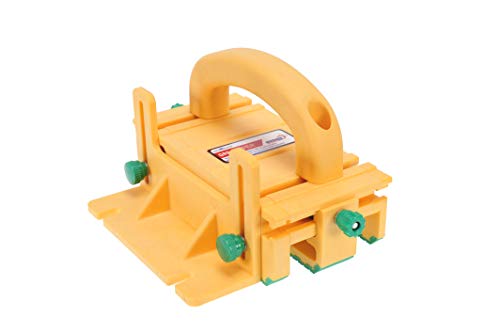
The MICROJIG GRR-RIPPER GR-100 remains one of the most trusted choices for table saw work. Its bright body is easy to see, even in a busy shop, and its three-direction force system helps you press down, inward, and forward at the same time. That matters when you cut narrow boards or work close to a fence. The center handle also keeps your hand well above the blade path.
I like the way this pushblock turns a tense cut into a more controlled task. The adjustable center leg can support different board widths, while the green anti-slip feet hold the workpiece with surprising strength. It also works on router tables, jointers, and band saws, so it earns its space in a small shop. For many users, this is still the best pushblock for table saw projects that need precision and repeatable control.
Pros:
- Excellent three-direction control
- Strong grip on many wood surfaces
- Adjustable center leg for narrow stock
- High visibility yellow body
- Works with several woodworking machines
- Helps keep the hand above the cutting area
Cons:
- Costs more than a simple push stick
- May require setup before the first cut
- Large shape can feel unusual to new users
My Recommendation
I recommend the GR-100 to woodworkers who want one serious safety tool instead of several basic sticks. It suits beginners who want extra confidence and experienced users who make many narrow or repeat cuts. The grip is especially useful when a board feels light, small, or hard to hold against the fence. If you want the best pushblock for table saw control, this model offers a strong balance of safety, accuracy, and long-term value.
Zebekk Push Block for Table Saws

The Zebekk push block is built for users who want broad machine compatibility at a friendly price. Its handle gives you a firm place to guide the tool, while the bottom grip helps hold the workpiece during a pass. The design can be used on table saws, router tables, band saws, and jointers. That makes it a practical pick for a home workshop with several machines.
In use, I find this style helpful when a normal push stick does not give enough downward pressure. The block spreads force over more of the board, which can help reduce wandering and uneven cuts. Assembly may take a little patience, but the adjustable parts let you fit the tool to different jobs. It may not feel as refined as a premium MICROJIG model, yet it gives many occasional users the basic control they need.
Pros:
- Useful across four common shop machines
- Provides more hand distance than a bare stick
- Broad base supports the workpiece well
- Good choice for budget-minded woodworkers
- Adjustable design supports different tasks
- Bright color is easy to spot on a bench
Cons:
- Assembly takes time before use
- Plastic parts may not feel as premium
- Grip can vary with dusty or rough stock
My Recommendation
The Zebekk is best for beginners, DIY users, and small shops that need one low-cost push block for more than one tool. I would choose it for weekend projects, shelves, trim, and general board work. Keep the grip surfaces clean, and always pair the tool with a proper fence setup and blade guard when possible. It is a sensible value option for shoppers who want the best pushblock for table saw use without paying premium-tool prices.
MICROJIG GRR-RIPPER Pro 3D
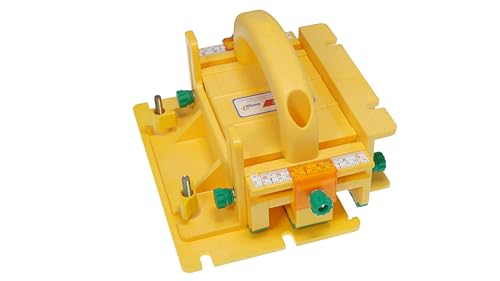
The GRR-RIPPER Pro 3D builds on the well-known MICROJIG system with a more advanced setup and a SafeRip kit. It is designed for precision, control, and safer handling on table saws and router tables. The three-dimensional pressure system helps you guide stock forward while pressing it down and toward the fence. This is useful when a narrow piece needs steady contact from start to finish.
I see this model as a premium tool for people who care about repeatable results. The adjustable design can fit different stock widths, and the added kit helps support safer cuts near the blade. Its structure feels more purposeful than a homemade push stick, especially during fine work. Still, users should read the instructions and set the block correctly, because advanced adjustment is only helpful when the tool sits square and stable.
Pros:
- Advanced three-dimensional force control
- Includes a SafeRip kit
- Strong choice for narrow stock
- Supports accurate, repeatable cuts
- Comfortable central handle design
- Useful on table saws and router tables
Cons:
- Higher price than basic pushblocks
- Adjustment can take practice
- May offer more features than casual users need
My Recommendation
I recommend the GRR-RIPPER Pro 3D to serious hobbyists, cabinet makers, and professionals who make frequent precision cuts. It is also a good fit for users who want a more complete safety setup instead of a simple pusher. If your work demands control over narrow strips, this can be the best pushblock for table saw work in a demanding shop. Its price makes the most sense when you use the tool often and value repeatability.
POWERTEC Push Block and Stick Set

The POWERTEC 5-piece set gives a workshop several ways to move stock safely. It includes push blocks and push sticks, so you can choose the tool that fits the cut. The dual ergonomic handles give you more than one holding position, and the bright red color is easy to see. For a new shop, this is a simple way to cover common table saw, router table, band saw, and jointer tasks.
I like sets because no single push tool suits every cut. A push stick can work well for wider boards, while a block can add downward force to smaller pieces. The handles feel more secure than thin homemade sticks, although the set does not offer the same level of adjustment as the GRR-RIPPER line. It is a practical starter kit for people who want several tools ready before the next project.
Pros:
- Five-piece set covers many common cuts
- Includes both sticks and blocks
- Ergonomic handles improve hand comfort
- Useful on several woodworking machines
- Bright red parts are easy to locate
- Good value for a new workshop
Cons:
- Less adjustable than premium 3D blocks
- Multiple pieces need storage space
- Some users may prefer a single advanced tool
My Recommendation
The POWERTEC set is best for beginners, schools, makerspaces, and anyone building a first woodworking tool kit. It gives you options without requiring a separate purchase for every machine. I would choose it when value and variety matter more than fine adjustment. For shoppers who ask for the best pushblock for table saw work on a budget, this set is an approachable and useful starting point.
MICROJIG GRR-RIPPER+ Push Block

The GRR-RIPPER+ adds SafeRip support to the adjustable 3D pushblock design. It is made for table saws, router tables, band saws, and jointers. The main body gives you a stable grip, while the adjustable parts help match the tool to different stock sizes. The yellow and green color scheme also makes the block stand out in a crowded work area.
During careful cuts, I appreciate a tool that lets me keep pressure where it belongs: on the wood, not near the blade. The GRR-RIPPER+ helps guide stock with forward, downward, and side pressure. This can make narrow ripping feel less awkward and may help keep the piece against the fence. It does require correct setup, and its advanced design may feel like overkill for one or two simple projects each year.
Pros:
- Fully adjustable 3D pushblock design
- Includes SafeRip kit
- Strong grip for narrow workpieces
- Works with multiple power tools
- Bright colors improve visibility
- Supports controlled pressure in three directions
Cons:
- Premium price for occasional users
- Setup takes longer than a basic stick
- Needs clean feet for the best grip
My Recommendation
I would suggest the GRR-RIPPER+ to woodworkers who want an adjustable safety system and expect to use it often. It suits furniture builders, trim makers, and users who frequently rip narrow strips. The SafeRip kit adds useful support for close work, but it does not replace sound machine technique. For many experienced users, this is a strong candidate for the best pushblock for table saw precision and control.
MICROJIG GRR-RIPPER 2GO Push Block

The GRR-RIPPER 2GO focuses on portability without losing the familiar MICROJIG grip. Its compact shape makes it easy to keep near a portable table saw or carry between work areas. The extreme-grip surface helps hold the stock as you guide it through a cut. It can also serve on routers, jointers, and band saws.
This model makes sense for a mobile woodworker who does not want a large safety tool taking up room in a tool bag. I find smaller tools easier to grab when a quick repair or trim job calls for a controlled cut. The compact body may not provide the same broad support as a larger block, so I would use it with careful stock setup and a stable fence. It is convenient, but portability is its main strength.
Pros:
- Compact and easy to carry
- Strong grip in a small body
- Fits mobile and compact workshops
- Works on several woodworking machines
- Easy to store beside a table saw
- Helpful for quick setup and small jobs
Cons:
- Smaller base gives less board coverage
- Not ideal for very wide workpieces
- Costs more than a basic portable stick
My Recommendation
The GRR-RIPPER 2GO is best for contractors, mobile makers, and small-shop users who need a compact safety tool. I would also choose it for anyone who moves between a garage, job site, and shared workshop. It may be the best pushblock for table saw portability, even though a larger model offers more support for broad stock. Its value comes from being available when you need it.
Milescraft 3406 GrabberPRO

The Milescraft 3406 GrabberPRO is a multi-use pushblock designed for table saws, router tables, band saws, and jointers. Its grabber-style base helps keep the workpiece steady while the top handle gives you a clear place to apply pressure. The design is aimed at users who want more control than a simple push stick can provide. Its bright body is also easy to find when the bench gets busy.
I consider this a useful middle ground between a basic block and a highly specialized 3D system. It gives good contact with the board and helps you guide stock in a straight line. The tool feels especially useful when you work with medium-size pieces and want your hand well away from the cutter. It may take a few cuts to learn the best angle, but the learning curve is manageable for most home users.
Pros:
- Versatile design for four shop machines
- Good top and side control
- Helps keep the hand away from the blade
- Bright color improves shop visibility
- Useful middle price range
- Comfortable for repeated short cuts
Cons:
- Less precise adjustment than a 3D MICROJIG
- May feel bulky on very narrow stock
- Grip performance drops when the base is dirty
My Recommendation
The GrabberPRO is best for home woodworkers who want a solid, flexible pushblock without moving to the highest price tier. It works well for general ripping, crosscut support, routing, and jointing tasks. I would pick it for a growing shop that needs one tool to cover many jobs. It is a dependable choice when searching for the best pushblock for table saw versatility.
Milescraft 3405 GrabberPLUS

The Milescraft GrabberPLUS is a simple, friendly pushblock for common woodworking jobs. Its base helps grip the board, and its handle allows you to keep pressure away from the cutting zone. The tool works with table saws, router tables, band saws, and jointers. Its yellow body gives it a clear safety-tool look and makes it easy to spot.
This model suits people who want an upgrade from a thin wooden push stick but do not need many adjustment parts. I find the straightforward layout less intimidating for new users. It gives useful downward pressure and can help guide stock along a fence with less hand strain. It is not the strongest choice for very narrow precision work, but it handles normal shop cuts with confidence.
Pros:
- Simple design for easy learning
- Comfortable handle for steady pressure
- Works on several woodworking tools
- Helps keep fingers away from the blade
- Good choice for general-purpose cuts
- Usually easier to store than larger systems
Cons:
- Limited adjustment for unusual stock sizes
- Not as specialized as a 3D pushblock
- May not cover wide boards as fully as a larger block
My Recommendation
I recommend the GrabberPLUS to beginners and casual woodworkers who want a clear step up from a homemade pusher. It is easy to understand, quick to use, and flexible enough for basic shop work. If you need a simple best pushblock for table saw projects, this model gives you useful control without a complex setup. It offers good everyday value for a garage or hobby shop.
Milescraft 3403 GRABBER

The Milescraft 3403 GRABBER is a practical pushblock for users who want basic control across several machines. Its red and yellow body is easy to see, and the handle gives you a stable point for forward pressure. The block can help with table saw, router table, band saw, and jointer work. It is made for everyday tasks rather than highly specialized cuts.
I like this tool for rough shop work where speed and simplicity matter. It provides a better hand position than pushing stock with an open palm, and the base helps keep the workpiece from sliding. The design feels approachable for a first-time buyer. However, users who often cut very thin strips may want a more adjustable block with stronger side control.
Pros:
- Easy-to-use handle and base
- Useful on multiple woodworking machines
- Bright red and yellow visibility
- Good for everyday boards and panels
- More secure than hand pressure alone
- Accessible choice for new woodworkers
Cons:
- Fewer advanced features than premium models
- May feel basic for professional production work
- Grip needs regular cleaning for best results
My Recommendation
The 3403 GRABBER is best for budget shoppers, new table saw owners, and DIY users who need a dependable first pushblock. It gives you a safer hand position and works with more than one machine. I would choose it for simple rip cuts, board trimming, and general home projects. It is a good candidate for the best pushblock for table saw value when the budget is tight.
Safety Table Saw Push Blocks 2-Pack

This two-pack is made for shoppers who want a basic pushblock at a low entry price. Having two blocks can help when a cut needs pressure from more than one point. The handles provide a safer place to guide the wood, while the bottom surfaces help improve contact. It is a useful option for a small shop that needs a spare tool on hand.
I often tell new users that a simple pushblock is better than reaching toward the blade with bare hands. This set makes that first safety step affordable. The tools may not have the grip, adjustment, or refined balance of premium models, so I would use them with clean, stable stock and a well-set fence. Their main benefit is easy access to two basic push tools.
Pros:
- Two blocks provide useful backup
- Low-cost entry point for beginners
- Simple design needs little learning
- Helps place hands farther from the blade
- Useful for home and school workshops
- Easy to share between two workstations
Cons:
- Limited adjustment options
- Grip may be weaker on dusty surfaces
- Less versatile than premium multi-tool blocks
My Recommendation
I recommend this two-pack for beginners, occasional DIY users, and anyone who needs a spare push tool. It is also useful for teaching shops where more than one person may work at a bench. I would not select it for demanding narrow-stock production, but it can serve well for basic cuts. If low price is your main concern, it may be the best pushblock for table saw safety on a starter budget.
How I Choose a Table Saw Pushblock
I do not judge a pushblock by color or marketing alone. I look first at how well it controls the wood and how far it keeps the hand from the blade. A good tool should let you apply forward and downward pressure without twisting your wrist. It should also stay stable when the board changes from wide stock to a narrow strip.
Grip is just as important as shape. Dust, resin, and rough wood can reduce traction, so removable or easy-to-clean feet are helpful. I also check whether the tool blocks your view of the cut. If you cannot see the blade path, fence, or end of the board, even a premium pushblock cannot solve the setup problem.
Adjustability helps advanced users, but it can add weight and a learning curve. Beginners may do better with a simple handle and clear base. Professionals may prefer a 3D system because it gives more control over narrow work. The best pushblock for table saw use should match the cuts you make most often, not simply have the longest feature list.
Why a Pushblock Matters
A table saw pushblock does not make a table saw safe by itself. It is one part of a safe cutting system that also includes a sharp blade, a stable fence, proper alignment, good lighting, and eye and hearing protection. I always keep my hands out of the blade path and avoid reaching over a moving blade. I also wait for the blade to stop before removing offcuts.
A pushblock helps in three key ways. First, it gives your hand a safe handle instead of asking your fingers to guide the wood. Second, it applies pressure closer to the workpiece, which can reduce wandering. Third, it helps maintain contact with the fence as the cut moves past the blade.
Kickback can happen when the wood closes on the blade, binds, or moves away from the fence. A pushblock cannot remove that danger, but controlled feed and correct setup can help reduce common causes. Follow the instructions for your saw and push tool, and use the blade guard, riving knife, or splitter when the cut allows it.
Best For Comparison
| Best for | Why |
|---|---|
| Overall control | MICROJIG GRR-RIPPER GR-100 offers strong grip and three-direction pressure. |
| Premium narrow-stock work | GRR-RIPPER Pro 3D and GRR-RIPPER+ provide advanced adjustment and SafeRip support. |
| Budget starter shop | POWERTEC and the two-pack provide useful push tools at a lower cost. |
Tips for Using the Best Pushblock for Table Saw Work
Before every cut, inspect the pushblock feet and handle. Replace or repair worn grip parts if they no longer hold the wood. Clean dust from the base because even a small layer can make the block slide. I also check that the workpiece sits flat and does not rock before I start the saw.
Set the fence parallel to the blade and use a riving knife or splitter when appropriate. Stand slightly to the side of the blade, not directly behind the stock. Feed the board at a steady pace and let the blade do the cutting. If the wood binds, burns, or feels hard to push, stop and find the cause instead of forcing it.
Use the right pressure for the job. Too little pressure lets the board drift, while too much pressure can slow the cut or push the board away from the fence. A 3D block helps because it spreads pressure in several directions. With a basic push stick, keep the contact point low and stable, and never let the tool enter the blade path.
Store the pushblock where you can reach it before turning on the saw. This small habit prevents the common mistake of starting a cut and then searching for a safety tool. I keep a block beside the saw and a spare in a nearby drawer. The best pushblock for table saw work is the one you use every time, not the one left in a box.
FAQs Of best pushblock for table saw
What is the best pushblock for table saw use?
For most users, the MICROJIG GRR-RIPPER GR-100 is the best overall choice. It gives strong grip, adjustable support, and three-direction control. The best option still depends on your stock size, machine setup, and budget.
Is a pushblock safer than a push stick?
Both tools can help keep your hands away from the blade. A pushblock usually provides more downward and side pressure, while a push stick can offer better reach for some cuts. Use the tool that gives stable control without entering the blade path.
Can I use one pushblock on other machines?
Many models in this guide work on router tables, jointers, and band saws. Check the product instructions before use. Each machine has different contact points, blade paths, and safe operating methods.
How do I clean a pushblock?
Turn off and unplug the machine first. Remove dust from the grip feet with a dry cloth or soft brush. Avoid oily cleaners because they can reduce traction on the wood.
Does a pushblock prevent kickback?
No. A pushblock can improve control, but it cannot prevent every kickback event. Use a proper fence, riving knife or splitter when suitable, correct blade height, and safe body position.
Final Verdict: Which Should You Buy?
The MICROJIG GRR-RIPPER GR-100 is my top pick for the best pushblock for table saw work. It gives the strongest mix of grip, control, adjustability, and broad use.
Choose POWERTEC for value, GRR-RIPPER Pro for premium precision, or the two-pack for a low-cost start. Match the tool to your cuts, keep it clean, and use safe saw technique every time.