
The best router table top blends a flat work surface, solid support, easy setup, and safe, accurate routing.
If your router feels hard to control by hand, a table top can make the job calmer and more precise. I know the frustration of chasing a board, fighting a weak fence, or stopping work to adjust a bit. The right top turns the router into a steady shaping tool. I compared portable tables, MDF tops, cast iron surfaces, lifts, and extension wings for real shop needs. The guide below helps you choose based on space, router fit, work size, and budget.

BOSCH RA1141 Portable Benchtop Router…
Bit-height Gauge: Provides easier bit setup and enhanced cut precision, making it a valuable addition to woodworking tools No Assembly Required: This portable work table comes preassembled Starter Pin and…

BOSCH Router Table RA1181, Benchtop…
CORD-WRAP STORAGE: Router tables store 6 ft. of power cord STORAGE POCKET: Allows storage of router accessories and router tools ACCESSORY SLOT: Router table insert plate accepts featherboards and 3/4…
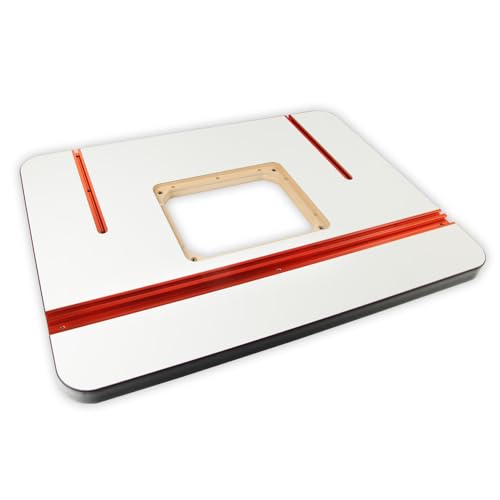
O’SKOOL MDF Router Table Top,…
Sturdy 1-11/32” thick MDF with Melamine Laminates construction provides a flat, stable router table surface for accurate cuts and maximum control. router table top 31-5/8” x 23-3/4” size offers ample…
Check Price on Amazon →BOSCH RA1141 Portable Benchtop Table

The BOSCH RA1141 is a smart pick for a small shop, garage, or job site. Its benchtop design gives you a useful routing station without taking over your work area. I like this style when I need quick setup and easy storage after the project ends. It suits common edge work, trim work, and small joinery tasks.
The table gives a router user more control than freehand work alone. The fence helps guide stock, while the starter pin can support controlled work on curved pieces when used correctly. Its portable build makes it easy to move, but you should still clamp or secure the table before routing. For many new woodworkers, this is a practical way to test whether a router table belongs in the shop.
Pros:
- Portable size fits small benches and work areas
- Quick setup for light and medium routing tasks
- Fence improves control along straight board edges
- Useful for beginners learning table routing
- Easy to store between projects
Cons:
- Small surface limits support for wide boards
- Portable construction may need extra clamping
- Not the best choice for heavy production work
BOSCH RA1181 Benchtop Router Table

The BOSCH RA1181 offers a larger and more serious benchtop setup than many compact tables. Its aluminum work surface feels suited to repeated routing, especially when you need a fence that stays firm during a cut. I see it as a strong middle ground for hobby shops that need more control but lack room for a full cabinet table. It also gives you a useful platform for edge profiles and pattern work.
A larger top can make a real difference when a board needs steady support before and after the bit. The adjustable fence helps you set up common cuts, and the open design can make bit access easier. Still, router compatibility matters, so check the mounting pattern and included hardware before buying. With a stable bench and proper dust control, this table can become a dependable daily tool.
Pros:
- Rigid aluminum top supports steady work
- Larger surface than many portable router tables
- Adjustable fence suits varied cut widths
- Good fit for regular hobby woodworking
- Open design allows useful access below the top
Cons:
- Still needs a sturdy bench for best results
- Router compatibility requires careful checking
- Aluminum can transmit more noise than cast iron
O’SKOOL 32-by-24-Inch MDF Router Top

The O’SKOOL MDF router table top is made for woodworkers who already have a stand, fence, or custom table plan. Its 32-by-24-inch size gives a broad work area for panels, rails, and longer stock. I like MDF tops because they feel smooth and can be easy to integrate into a homemade router station. This option gives you more top space without forcing you to buy a complete table system.
MDF can offer a flat, low-friction surface when you keep it dry and protect its edges. The larger footprint helps keep a board supported, but the top must sit on a well-built base to avoid flex. You may also need to drill or adapt mounting holes for your router and lift. For a careful DIY builder, it can serve as the best router table top when size and customization matter most.
Pros:
- Large 32-by-24-inch work surface
- Smooth MDF supports easy stock movement
- Works well for custom table builds
- Offers good support for wider workpieces
- Often costs less than a complete cast iron system
Cons:
- Requires a separate base or stand
- MDF edges need protection from moisture
- May require custom drilling for some routers
SKIL SRT1039 Portable Router Table
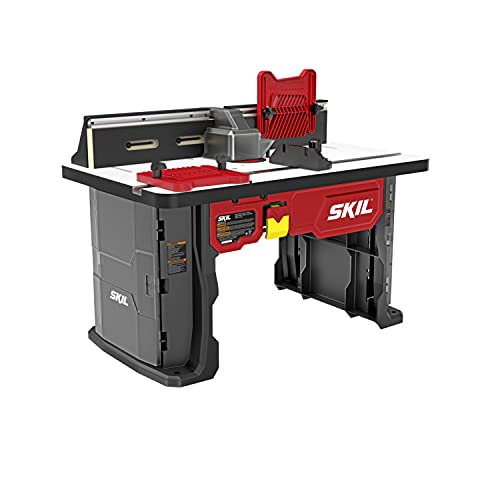
The SKIL SRT1039 is designed for use with selected SKIL routers, including the RT1323-00 and RT1322-00 models. That focused design can simplify setup when you already own one of those routers. The portable format suits apartment workshops, small garages, and users who pack tools away after each project. It is important to remember that the router is not included.
I would choose this table when brand matching matters more than universal fit. A dedicated table can reduce guesswork during mounting, but you should confirm your exact router model before ordering. The compact footprint helps with small parts, trim, and simple edge profiles. Secure it to the bench, use the guard, and make shallow passes when learning the setup.
Pros:
- Designed for compatible SKIL router models
- Portable size saves valuable shop space
- Useful entry point for new router users
- Convenient for trim and small edge work
- Simple option for a matched tool system
Cons:
- Router is not included
- Limited compatibility outside listed SKIL models
- Small top is less suited to large panels
Rockler Compact Trim Router Table
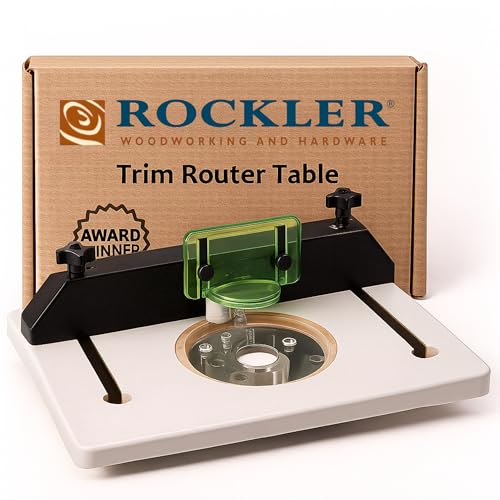
The Rockler trim router table targets small jobs where a full-size table would feel excessive. It gives a compact router a guided surface for light edge work and small parts. I find this format helpful for easing edges, cutting small profiles, and making repeated trim pieces. Its bit guard adds a useful layer of protection and helps keep hands away from the cutting area.
This is not a replacement for a large table when you work with doors, wide shelves, or long boards. It is more like a nimble pocket tool: small, quick, and easy to keep near the bench. The adjustable design can help you tune the setup for different trim routers, but fit still deserves a close check. For detail work, it may be the best router table top for a user who values compact size.
Pros:
- Very compact for small workshops
- Good match for trim router tasks
- Bit guard helps improve user protection
- Easy to keep near a primary workbench
- Useful for light edge profiles and trim
Cons:
- Not intended for large or heavy stock
- Small surface limits workpiece support
- Trim router fit must be verified
Leegol Electric Benchtop Router Table
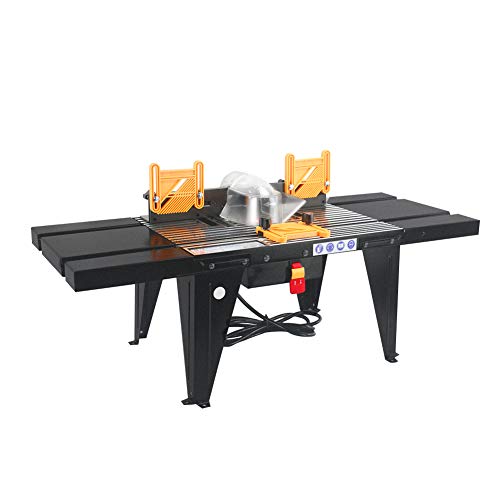
The Leegol benchtop router table is a compact station for users who want a ready-made setup. It can make basic routing feel less intimidating than holding a router freehand. The small table format works well for simple boards, trim pieces, and occasional home projects. It is a useful choice for a buyer who wants a low-cost entry into table routing.
Before using any powered table, I would inspect the switch, fasteners, fence, and mounting area. A small table can move if you push too hard, so clamp it to a solid bench and take light passes. The surface and included features are best suited to modest work rather than cabinet-shop production. If your expectations match its size, this table can save setup time and reduce the need to build a station from scratch.
Pros:
- Ready-made benchtop format
- Compact footprint suits home workshops
- Helpful for basic routing and trim work
- Accessible option for occasional users
- Can reduce the time needed to build a DIY table
Cons:
- Small work area limits large projects
- May need extra clamping for firm support
- Heavy-duty users may want a stronger top
O’SKOOL Cast Iron Extension Wing
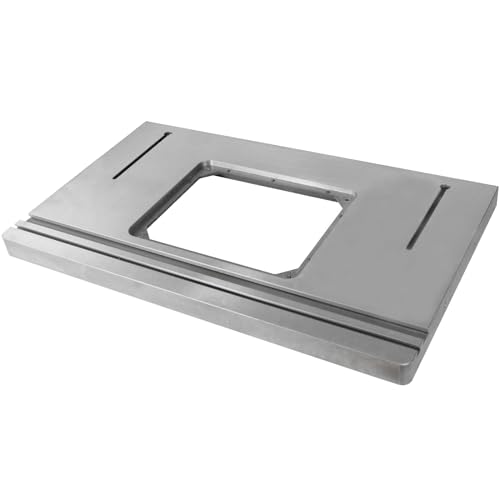
The O’SKOOL cast iron extension wing is aimed at woodworkers who want to add routing power to an existing table saw setup. Its 27-by-16-inch size offers useful room while keeping the router station close to the saw. Cast iron brings weight and helps resist movement during a cut. I would look at this type of top when stability matters more than easy portability.
An extension wing is not a universal plug-and-play purchase for every shop. You must measure your saw, check mounting points, and plan for the router plate and lift system. Once installed correctly, the heavy surface can feel calm under a board, much like a firm road under a car. It may be the best router table top for a serious hobbyist who wants a stable integrated workstation.
Pros:
- Heavy cast iron helps reduce vibration
- Useful size for an integrated table saw setup
- Durable surface suits frequent woodworking
- Supports smoother feeding on longer stock
- Professional-style upgrade for a growing shop
Cons:
- Requires careful table saw measurement
- Heavier and harder to move than MDF
- May need a separate plate, lift, and fence
Rockler ProMax Cast Iron Router Top

The Rockler ProMax cast iron router table top is built for woodworkers who want a dense, smooth work surface. Its thick top can help reduce vibration and keep stock moving in a straight line. Cast iron also stays stable when a project demands repeated passes. This is a premium choice for a dedicated shop rather than a table you carry from room to room.
The smooth surface feels especially useful when routing hardwoods or making repeated cabinet parts. Its weight is a benefit during use, but it also means your base must be strong enough to carry it safely. You should confirm the required insert plate, lift, fence, and mounting hardware before planning the build. For an experienced user, it offers the feel and durability many people expect from the best router table top.
Pros:
- Thick cast iron surface offers excellent stability
- Low-friction top supports smooth stock movement
- Helps reduce vibration during demanding cuts
- Durable choice for frequent shop use
- Professional feel for cabinet and furniture work
Cons:
- Heavy and not suited to portable setups
- Higher cost than basic MDF tops
- May need separate accessories to complete the station
JessEm Rout-R-Lift 3.5XT Lift System

The JessEm Rout-R-Lift 3.5XT is not a complete table top. It is a lift system for compatible 3.5-inch router motors, and it can transform how you adjust bit height. Instead of reaching below the top for every change, you can make controlled adjustments from above. I value that feature when a project calls for several bit changes or fine height changes.
A lift improves precision, but it does not replace a flat top, safe fence, or strong base. Compatibility is the key issue, so match the lift to your motor diameter and follow the current fit information. The mechanism can make setup feel more like tuning a camera than wrestling with a tool. Pair it with a quality top, and it can help turn a good router table into a far more refined station.
Pros:
- Above-table height adjustment improves convenience
- Helps make fine bit changes more precise
- Designed for compatible 3.5-inch motors
- Useful for repeat work and detailed setups
- Can extend the life of a custom router table
Cons:
- Not a complete router table top
- Limited to compatible motor sizes
- Adds cost to a custom table build
Kreg PRS1025 Router Table Top

The Kreg PRS1025 is a dedicated router table top for a user who wants a clean, organized work surface. Kreg products often appeal to woodworkers who like clear adjustment points and modular shop design. This top can serve as the center of a custom station with a matching fence, plate, lift, and base. I would consider it when I want room to grow rather than a tiny table for occasional use.
A router top should stay flat, resist wear, and let the workpiece glide without snags. The Kreg platform gives you a useful starting point, but you need to confirm the included plate and mounting details for your router. It works best when installed on a rigid cabinet or stand. For a developing shop, this can be the best router table top because it leaves space for a more complete system later.
Pros:
- Strong foundation for a custom router station
- Suitable for modular Kreg-style shop setups
- Supports repeatable routing with a proper fence
- Good choice for growing woodworking skills
- More upgrade-friendly than a tiny portable table
Cons:
- May require a separate base and fence
- Check plate and router compatibility first
- Less convenient to move than a compact table
My Recommendation
I recommend the BOSCH RA1181 for most hobby woodworkers who want a ready-to-use benchtop table with useful support and a sensible size. It offers a better balance of portability, surface area, fence control, and price than the smallest models. Choose the O'SKOOL MDF top if you plan to build a custom station, or choose the Rockler ProMax cast iron top if stability and long-term shop use matter most. The JessEm lift is best for users who already have a strong top and want finer adjustments.
Before buying, I always check four points: router compatibility, top flatness, fence quality, and base support. A flat top cannot fix a weak bench, and a great fence cannot make an unstable table safe. I also look for dust collection, an accessible power switch, insert rings, and enough room around the bit. Current product details, mounting patterns, and included parts can change, so confirm the listing and manual before placing an order.
| Best for | Why |
|---|---|
| Most hobby woodworkers | The BOSCH RA1181 balances size, control, setup, and value. |
| Custom shop builders | The O’SKOOL MDF top offers a wide surface for a tailored base. |
| Heavy-duty routing | The Rockler ProMax cast iron top provides weight and a smooth surface. |
How to Choose the Best Router Table Top
Choosing a router table top starts with the work you do most. A person making small picture frames needs a different surface from someone building cabinet doors. I ask how wide the stock is, how often I will use the table, and whether I need to move it. These simple questions remove much of the noise from product shopping.
Top Material
MDF is smooth, affordable, and easy to use in a custom build. It can be a good choice for a home shop, but moisture can swell exposed edges. Aluminum is light and usually easy to handle, while cast iron brings more weight and can help reduce vibration. A cast iron top needs a strong base, yet it often feels more settled during a deep or wide cut.
Flatness Matters
A router table top must be flat from edge to edge. Even a small dip can change the depth of a profile as the board passes over it. I check the surface with a reliable straightedge before final assembly. I also check that the insert plate sits flush, since a raised plate can catch stock and spoil a cut.
Size and Work Support
More surface area gives a board more support. That matters when you route long rails, wide panels, or narrow parts that need careful control. A small table takes less room but can let a board tip near the bit. If your shop has limited space, consider a table that stores vertically or mounts to a folding bench.
Router Compatibility
Do not assume every router fits every top. Check the mounting holes, plate opening, motor diameter, and lift requirements. Some tables suit only certain brands or models. A few minutes spent reading the current fit list can prevent a costly return and a frustrating day in the shop.
Fence Quality
The fence guides the workpiece, so it deserves as much attention as the top. I look for a fence that locks firmly, adjusts smoothly, and stays square. Split fences can help with jointing or dust collection, but they also add setup steps. If the fence flexes when you press a board against it, the whole table loses accuracy.
Insert Plates and Rings
Insert rings close the gap around the router bit. A smaller opening gives narrow stock more support and helps limit chips near the bit. A larger opening may be needed for a large cutter. Look for a plate that remains level with the top and rings that lock securely without excessive play.
Dust Collection
Routing creates fine chips and dust. A fence port or enclosed cabinet can capture much of it before it spreads through the shop. I still wear eye protection and suitable hearing protection, even with dust collection in place. Good airflow keeps the work area clearer, but it never replaces safe technique.
Stability and Mounting
Portable tables are useful only when they stay put. Clamp a benchtop table to a solid surface, or attach it to a heavy base. A moving table can ruin a cut and raise the risk of kickback. Think of the base as the roots of a tree: the top can be excellent, but weak roots make the whole system unsafe.
Safe Use Tips for a Router Table
I treat a router table with respect every time I switch it on. I inspect the bit, collet, insert ring, fence, and power cord before starting. I unplug the router before changing a bit or reaching below the top. These habits feel slow at first, but they soon become as natural as locking a door.
Use the correct bit speed for the cutter size and follow the router maker’s instructions. Feed the stock in the proper direction so the bit does not pull the workpiece away from you. Take several shallow passes instead of forcing one deep cut. A calm feed gives a cleaner edge and puts less stress on the router, bit, and table.
Use featherboards or hold-downs when they suit the task. Keep your hands clear of the bit and use push blocks for small or narrow stock. Never route a loose piece that cannot stay flat. I also test each setup on scrap wood, because a test cut can reveal a height, fence, or grain problem before it reaches the finished part.
FAQs Of best router table top
What is the best router table top for most users?
The BOSCH RA1181 is a strong general choice for hobby woodworkers. It offers a useful benchtop size, a practical fence, and good access for common routing jobs. Confirm that your router fits before buying.
Is cast iron better than MDF for a router table?
Cast iron is heavier and usually offers excellent stability. MDF is lighter, less costly, and easier to use in a custom table. The best material depends on your shop space, budget, and work size.
Can I use a router table top with any router?
No. Tables and lifts use different mounting patterns and motor sizes. Check the product fit list, plate opening, and required hardware for your exact router model.
Do I need a router lift?
You do not always need one. A lift helps when you want fast, precise height changes from above the table. It adds cost and must match the router motor, so it makes the most sense for frequent or detailed work.
How do I keep a portable router table stable?
Place it on a firm, level bench and clamp it before routing. Do not rely on its weight alone for demanding cuts. A stable base improves accuracy and helps reduce unwanted movement.
Final Verdict: Which Should You Buy?
For most users, I would buy the BOSCH RA1181. It gives the best balance of size, control, and value. Custom builders may prefer the O’SKOOL MDF top, while serious shops should consider the Rockler ProMax cast iron model.
The best router table top is the one that fits your router, work, and bench. Check compatibility, secure the base, and route with patience for safer, cleaner results.