
For most woodworkers, a 10-inch, 60-tooth Hi-ATB thin-kerf blade is best.
You want clean cuts, no burn marks, and fewer do-overs. I get it. Few things sting more than tearing out the face of a pricey plywood sheet or watching your motor bog on a rip. The right blade fixes that fast. In this guide, I break down the best saw blade for table saw use for clean rips, fine crosscuts, and smooth sheet-goods work. I’ll share how each option handles hardwoods, softwoods, and composites, and who each blade serves best. Let’s get your table saw cutting like a dream.

WEN BL1040 10-Inch 40-Tooth Carbide-Tipped…
Featuring a 10-inch diameter (254 mm), a 5/8-inch arbor (15.88 mm) and a rating of up to 6000 RPM Perfect for slicing through both hard and softwoods of all kinds…

Diablo Fine Finish Saw Blade…
Shock Resistant Design -azing reinforces carbide tips to withstand high impact, making this blade suitable for demanding jobs.
DEWALT Table Saw Blade, 10″,…
UP TO 3X LIFE* Optimized Tooth Geometry Designed For Increased Accuracy Ultra Sharp Carbide for Clean Cutting
WEN BL1040 10″ 40T Carbide Blade
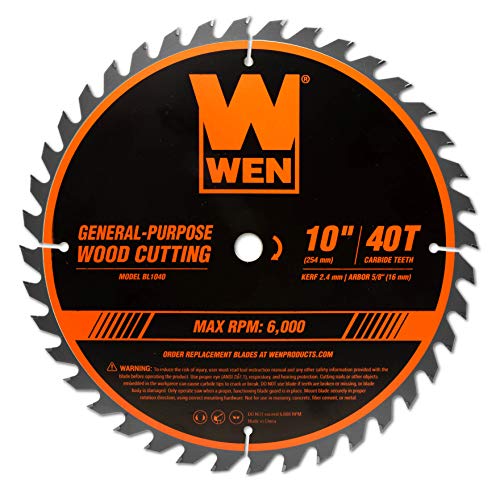
The WEN BL1040 is a budget-friendly 40-tooth general-purpose blade that punches above its weight. It handles everyday ripping and crosscutting in softwoods and most hardwoods without drama. The carbide-tipped teeth hold an edge well for the price and deliver a tidy surface that sands fast. If your stock blade is tired and you want a quick upgrade, this is a smart first step.
Feed rate is steady on a contractor or jobsite saw, and the kerf is forgiving if your saw isn’t a powerhouse. Tear-out is controlled on clean plywood when paired with a zero-clearance insert. It will not match a high-ATB 60T on veneered panels, but it is a sturdy daily driver. For shop users who need one blade that “just works,” this one fits the bill.
Pros:
- Solid all-purpose cut for rip and crosscut tasks
- Good carbide for the price; holds up for weekend use
- Balanced plate reduces chatter on lighter saws
- Clean edges on 2x lumber and common hardwoods
- Easy upgrade from a dull stock blade
Cons:
- Not a dedicated fine-finish blade for veneered panels
- Will burn on dense hardwoods if feed stalls
- Less refined than premium brands on tear-out control
My Recommendation
If you want the best saw blade for table saw tasks on a tight budget, start here. It is great for homeowners, DIYers, and jobsite users who cut a mix of framing lumber and hardwood. Pair it with a riving knife and a zero-clearance insert for cleaner edges. The value is strong and replacements are easy to source.
| Best for | Why |
|---|---|
| General shop use | Balances rip and crosscut tasks well |
| Budget upgrades | Affordable carbide with good durability |
| Contractor saws | Forgiving kerf and stable plate reduce bog |
Diablo D1060X 10″ 60T Fine Finish

Diablo’s D1060X is a shop staple for silky crosscuts and sheet goods. The 60-tooth Hi-ATB grind and thin .098″ kerf leave a polished edge on hardwoods, plywood, and melamine. It tracks true with minimal deflection and runs cool thanks to the red Perma-Shield coating. Laser-cut stabilizer vents help keep vibration down and reduce whine.
I’ve used this blade on casework where clean edges save time. Plywood veneers exit clean, and end-grain crosscuts look planed. On a smaller saw, the thin kerf also reduces feed effort, which helps avoid burn marks. If you want the best saw blade for table saw projects that demand a fine finish, this is a proven pick.
Pros:
- Hi-ATB teeth give ultra-smooth crosscuts and panel cuts
- Thin kerf reduces motor load and improves feed
- Perma-Shield coating resists pitch and heat
- Laser-cut vents improve stability and reduce noise
- Outstanding on veneered plywood and melamine
Cons:
- Slower for heavy ripping in thick hardwoods
- Thin kerf can flex if the fence is misaligned
- Costs more than budget blades
My Recommendation
Choose this if you want showroom edges and minimal sanding. Cabinet builders, furniture makers, and anyone who loves clean plywood cuts will be happy. It is often the best saw blade for table saw owners who cut a lot of sheet goods. Keep it clean, use a zero-clearance insert, and it will last.
| Best for | Why |
|---|---|
| Plywood and melamine | Hi-ATB tips fight tear-out |
| Fine trim and crosscuts | Glass-smooth surfaces save finish work |
| Smaller motors | Thin kerf eases the load |
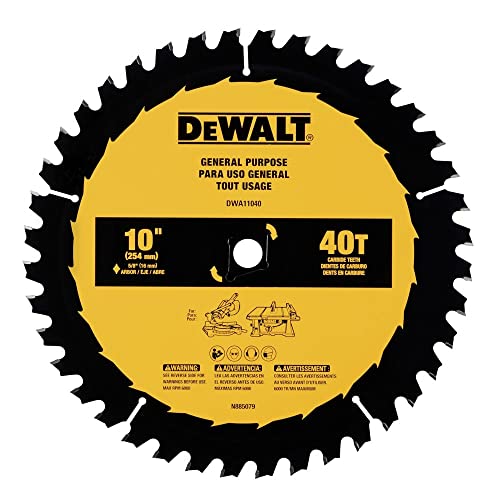
DEWALT DWA11040 10″ 40T Fine Finish

DEWALT’s 40T DWA11040 is a reliable crosscut and rip combo for everyday use. The ultra-sharp carbide tips and thin-kerf plate make smooth work of 2x lumber and common hardwoods. It is a smart swap for the stock blade on many jobsite saws. Noise is controlled and the plate feels well tensioned under load.
This blade shines when you cut a mix of tasks in one day. Rip a few boards, crosscut face frames, and trim sheet goods with fair results. It is not a specialist, but it is steady and forgiving. If you need the best saw blade for table saw chores on site or in a small shop, it covers a lot of ground.
Pros:
- Balanced general-purpose performance
- Thin kerf helps underpowered saws
- Clean enough crosscuts for paint-grade work
- Holds an edge through tough pine and oak
- Good price-to-performance ratio
Cons:
- Not ideal for ultra-fine panel work
- May burn on very hard, thick stock if feed is slow
- Edges need light sanding on veneered sheets
My Recommendation
Pick this when you want one blade to keep on the saw. It suits remodelers, builders, and DIYers who switch between rip and crosscut often. For many users, it feels like the best saw blade for table saw versatility at a fair cost. Keep it clean and it will serve well for months.
| Best for | Why |
|---|---|
| Mixed tasks | Handles rips and crosscuts without a swap |
| Jobsite work | Durable and forgiving under field conditions |
| Upgrading stock blades | Sharper teeth, smoother cuts right away |
FOXBC 10″ 80T Ultra Finish Blade

FOXBC’s 80-tooth blade targets ultra-fine crosscuts and panel work on a budget. With a high tooth count, it leaves crisp edges on plywood, MDF, and thin hardwood trim. The cuts are slow but smooth, and tear-out is low when you use a zero-clearance insert. It is a handy dedicated blade for parts that show.
This is not a blade for fast ripping. But when you need a clean line on a shelf or face frame, it shines. Keep your feed steady and let the teeth do the work. For those seeking the best saw blade for table saw finesse without a big spend, this is a practical pick.
Pros:
- Very smooth crosscuts for painted and clear finishes
- Controls chip-out on plywood and MDF
- Good choice as a dedicated trim blade
- Works well on smaller saws due to thin kerf
- Affordable way to get fine edges
Cons:
- Not designed for heavy ripping
- May dull faster on abrasive sheet goods
- Plate refinement is not on par with top-tier brands
My Recommendation
Use this as your “finish pass” blade for trims and shelves. It suits DIY furniture builds and shop projects where edges matter. If you want a low-cost path to the best saw blade for table saw clean cuts on panels, this covers it. Save your 40T blade for rips, and keep this one ready for finish work.
| Best for | Why |
|---|---|
| Fine panel cuts | 80 teeth leave crisp, low-tear edges |
| Trim and moldings | Clean crosscuts reduce sanding |
| Budget finishing | Strong finish at a low price |
WEN BL1060 10″ 60T Fine-Finish Blade
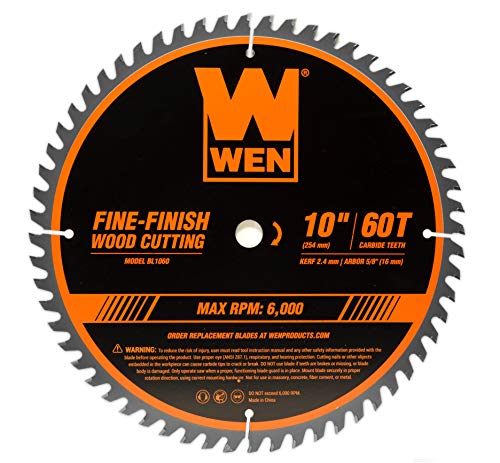
The WEN BL1060 brings a 60-tooth fine-finish profile to a friendly price point. It is a step up in surface quality over a 40T general-purpose blade. Crosscuts on oak and maple come out tidy and need less sanding. On plywood, tear-out is low, and melamine cuts improve with a slow feed.
It is a great “second blade” to keep next to a 24T or 40T ripper. If you need one pass for finish edges and do not want premium pricing, this fits well. For many budget-conscious woodworkers, this is the best saw blade for table saw finesse without overspending. Clean it often to keep pitch from building up.
Pros:
- Fine-finish performance at a budget price
- Good on hardwood crosscuts and cabinet parts
- Solid pick for plywood with a zero-clearance insert
- Less sanding needed on many cuts
- Easy to replace and keep as a spare
Cons:
- Not a premium micrograin carbide
- May not stay sharp as long on abrasive panels
- Slightly slower feed vs. 40T general-purpose blades
My Recommendation
Keep this blade for crosscuts and panel parts, and use a 40T for rips. It is ideal for DIY cabinets, shop storage, and trim details. If your goal is the best saw blade for table saw value in fine cuts, this is a top option at its price. A smart add to any small shop kit.
| Best for | Why |
|---|---|
| Cabinet parts | Cleaner edges and less sanding |
| Hardwood crosscuts | 60T teeth reduce tear-out |
| Budget finesse | Good finish without premium pricing |
ANGELSWORD 10″ 40T/60T Blade 2-Pack

This two-pack covers both ripping and fine finish needs with 40T and 60T blades. Tungsten carbide tips give decent life, and the plates appear well tensioned for the price. The 40T handles rips and crosscuts in solid wood. The 60T blade improves finish on panels and trim.
I like kits like this for a new table saw owner. You can match the blade to the task without a big spend. If you are hunting the best saw blade for table saw flexibility on a budget, this combo works. Keep a simple blade-change routine and you’ll see cleaner results fast.
Pros:
- Two blades for the price of one premium option
- 40T covers rips and general work well
- 60T upgrades finish for crosscuts and panels
- Good balance and quiet enough operation
- Smart first set for a new saw
Cons:
- Not as refined as top-tier premium blades
- Edges on melamine may still need tape or slow feed
- Durability depends on cleaning and storage
My Recommendation
Buy this if you want to cover most shop cuts right away. Home shops, renters, and new table saw owners will get a lot of value. This can be the best saw blade for table saw users who are still learning what they cut most. Swap as needed and protect the teeth between uses.
| Best for | Why |
|---|---|
| New table saw owners | Two key tooth counts in one bundle |
| Mixed workloads | Switch blades for rip or finish tasks |
| Budget-conscious buyers | Good performance per dollar |
10″ 80T TCT Fine-Finish Blade
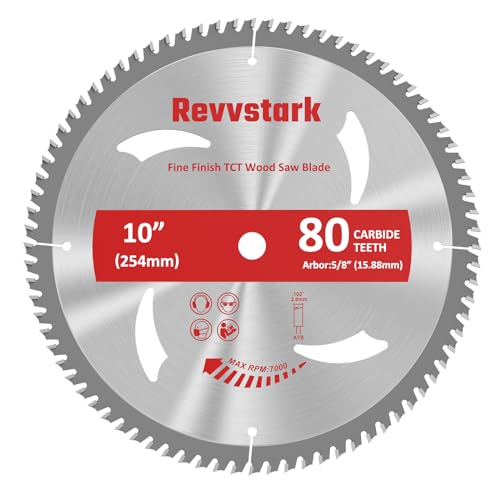
This 80T TCT blade aims at fine edges on hardwood trim and plywood. The high tooth count favors smooth crosscuts and keeps chip-out low when you take a steady feed. On MDF and particleboard, it holds up decently if you clean it to avoid pitch buildup. The 5/8″ arbor fits most 10″ table saws and miter saws.
The plate is not boutique-level, but it feels stable for a thin-kerf design. For best results, add a zero-clearance insert and use a slow, even push. If you need the best saw blade for table saw finish cuts without paying a premium, this one has a place in the stack. Keep it for showcase edges and use a 40T for rips.
Pros:
- Very smooth on crosscuts and veneered panels
- Affordable “finisher” blade for clean edges
- Compatible with common 10″ saws
- Good choice for MDF trim if kept clean
- Predictable performance for weekend projects
Cons:
- Not meant for heavy rips in thick hardwoods
- Longevity trails premium micrograin options
- Requires slow feed to avoid edge polish or burn
My Recommendation
Use this as your budget panel and trim blade. It suits renters, students, and DIYers who want nicer edges at low cost. For many casual users, it is the best saw blade for table saw upgrades that show quick gains. Do your rips with a tougher blade and bring this in for the final cut.
| Best for | Why |
|---|---|
| Panel finishing | 80 teeth reduce chip-out |
| MDF and particleboard | Clean cuts when kept resin-free |
| Budget shops | Low cost, high finish potential |
ANGELSWORD 10″ 32/60/80T Blade 3-Pack
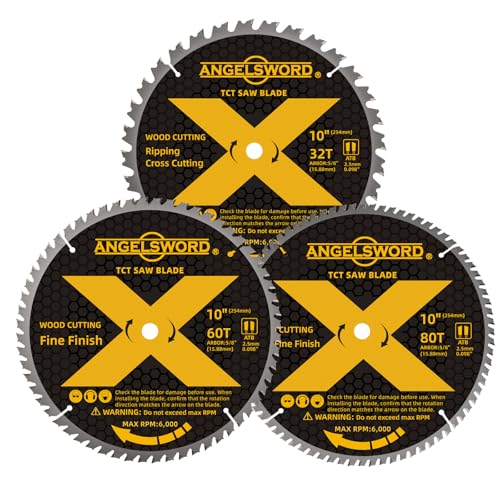
This three-pack covers framing, fine finish, and ultra-fine finish with 32T, 60T, and 80T blades. It is a flexible set for a small shop that cuts mixed materials. The 32T favors fast rips and framing lumber. The 60T steps in for crosscuts and cleaner plywood work, and the 80T is for showcase edges.
Swapping blades to match the job is the fastest way to improve cut quality. This set lets you do that without hunting for brands and grinds. If you want the best saw blade for table saw flexibility with one purchase, this kit is a good start. Label each blade and store it in sleeves to protect the teeth.
Pros:
- Three tooth counts to match most cuts
- Good value compared to buying singles
- Clear path from rough rip to ultra-fine finish
- Decent carbide and tensioning for the price
- Works on table saws and miter saws
Cons:
- Not as durable as top-tier, single-purpose blades
- Edges on melamine may need tape for best results
- Quality control can vary with multi-packs
My Recommendation
Choose this if you want a simple system: rip with 32T, crosscut with 60T, finish with 80T. It’s ideal for new woodworkers, small shops, and renters. For many, it becomes the best saw blade for table saw sets because it builds good habits. You will cut safer and cleaner when you match blade to task.
| Best for | Why |
|---|---|
| All-in-one starter kit | Covers rough to refined cuts |
| Learning proper blade use | Encourages task-specific choice |
| Small shop workflow | Reduces rework and sanding |
Ryltanks 10″ 32/60/80T Blade 3-Pack

Ryltanks’ 3-pack mirrors the smart spread of 32T, 60T, and 80T blades. The idea is simple: keep a ripper on hand and swap to higher tooth counts for finish cuts. The carbide tips are sharp out of the box, and the plates track straight when fences are well aligned. It is a pragmatic kit for a broad range of tasks.
Keep your expectations clear: this is a value package, not a pro-daily set. Used well, it can deliver clean work and save time. If you want the best saw blade for table saw coverage for a growing shop, it is a worthy option. Sharpen or replace as needed, and you’ll stay productive.
Pros:
- Three blades match most common cuts
- Good out-of-box sharpness
- Works across hardwood, softwood, and panels
- Easy to recommend for small shops
- Strong overall value
Cons:
- Durability trails premium, single-purpose blades
- May need slower feed on melamine for best results
- Quality can vary slightly pack to pack
My Recommendation
Buy if you want broad capability from day one. New homeowners, weekend builders, and makers who cut many materials will like it. It can be the best saw blade for table saw kits when you need results on a budget. Set your fence true and use a riving knife to keep cuts safe and clean.
| Best for | Why |
|---|---|
| Home workshops | All common cuts covered |
| Budget finish work | 60T/80T improve edge quality |
| Fast setup | Quick blade changes for better results |
ANGELSWORD 10″ 60T Fine Finish 2-Pack

This 60T twin-pack is for users who do a lot of fine finish cuts. Keep one blade on the saw and one clean in reserve. The tooth count is ideal for crisp crosscuts and tidy plywood work. Combined with a zero-clearance insert and a steady push, it brings edges close to ready-to-finish.
Two of the same blade is practical if your work repeats or you hate mid-project cleaning. Swap to the spare and keep going. For many small-shop builders, this feels like the best saw blade for table saw value when finish matters. Mark one blade for sheet goods, one for hardwood, to extend life.
Pros:
- Two 60T blades for continuous fine-finish work
- Good on hardwood, plywood, and trim
- Easier scheduling: run one, clean one later
- Smoother edges reduce sanding time
- Solid value for frequent cutters
Cons:
- Not ideal for heavy ripping
- Carbide is serviceable, not premium
- Coating and anti-vibration features are basic
My Recommendation
Get this if you build cabinets, bookcases, or trim often. It suits steady workloads where downtime costs more than the extra blade. If you are hunting the best saw blade for table saw finish consistency, this pair is a smart move. Clean blades cut cooler, safer, and better.
| Best for | Why |
|---|---|
| Cabinet runs | One in use, one spare avoids delay |
| Hardwood crosscuts | 60T reduces tear-out and burn |
| Production-like flow | Blade swaps keep momentum |
How to choose the best saw blade for table saw
Picking the right blade is like choosing the right chisel: the grind matters. I look at six things every time. Diameter and arbor must match your saw. Tooth count matches the job: 24T–32T for ripping, 40T for general, 60T–80T for fine finishes. Tooth grind matters too: ATB for wood, Hi-ATB for veneers, and TCG for laminates and non-ferrous metals.
Kerf thickness should match your saw’s power. Thin-kerf blades help small motors. Full-kerf blades track straighter on big cabinet saws. Hook angle affects feed: positive is faster and better for rips, lower or negative is smoother for crosscuts and miter work. Last, check plate quality: look for tension rings, expansion slots, and a coating that fights pitch and heat.
To get the most from any blade, align the saw. Set the fence parallel to the miter slot. Set the blade parallel too. Add a riving knife and a zero-clearance insert. Clean blades cut cooler and last longer. Do these steps, and the best saw blade for table saw performance gets even better.
FAQs Of best saw blade for table saw
What tooth count should I choose for everyday cuts?
A 40T blade is the best balance for most shops. It rips fair and crosscuts clean. If you want cleaner crosscuts, step up to 60T.
What is the difference between ATB and TCG grinds?
ATB has alternating beveled teeth for wood and clean edges. TCG has a triple-chip grind for laminates, plastics, and non-ferrous metals. Use ATB for most wood work.
Do thin-kerf blades cut as well as full-kerf?
On small saws, thin-kerf can cut better because they need less power. On big saws, full-kerf tracks straighter in thick hardwood. Pick based on your saw and task.
How do I reduce tear-out on plywood?
Use a 60T–80T Hi-ATB blade, a zero-clearance insert, and a slow, steady feed. Blue tape on the cut line also helps.
How often should I clean or replace a blade?
Clean when you see pitch or burn marks. Replace or sharpen when cuts take more force or leave fuzzy edges. A clean blade is a safe, accurate blade.
Final Verdict: Which Should You Buy?
For the cleanest all-around work, the Diablo D1060X is hard to beat. It is often the best saw blade for table saw users who cut plywood, hardwood, and trim and want silky edges.
On a tight budget, the WEN BL1040 and BL1060 pair covers most tasks. If you need a quick starter kit, grab an ANGELSWORD 3-pack for rip-to-finish range.