
The best table saw feeder improves control, reduces strain, and helps wood pass the blade with a steady, safer feed.
A rough cut often starts with a simple problem: the board moves, twists, or drifts as you push it across the table saw. That can spoil an edge and make a long work session tiring. A good table saw feeder acts like a calm second hand. It keeps stock against the fence, supports the work, and helps you make more even cuts. I reviewed power feeders, featherboards, roller guides, supports, and stands to help you choose the right tool for your saw, shop size, and type of work.

Infinity Tools Mini Power Feeder…
Compact & powerful – 1/8 HP motor delivers steady feed for smoother cuts and safer operation. Variable speed – adjust from 6.5–56 FPM; reversible for climb or conventional feed. Flexible…

Powermatic 3-Roll Power Feeder, 1…
Continuous duty motors transfer power from the gear box to the feed roller Moveable universal joints and locking mechanisms lock the feeder in horizontal, vertical, or angle feed positions Roller…

BOW Products XT1 Feed Supports…
Use Only With XT XTENDER Fence: XT1 Feed Supports fit into the bottom slot of the XTENDER Fence to provide additional infeed or outfeed support. Extends feed area and improves…
Infinity Tools Mini Power Feeder
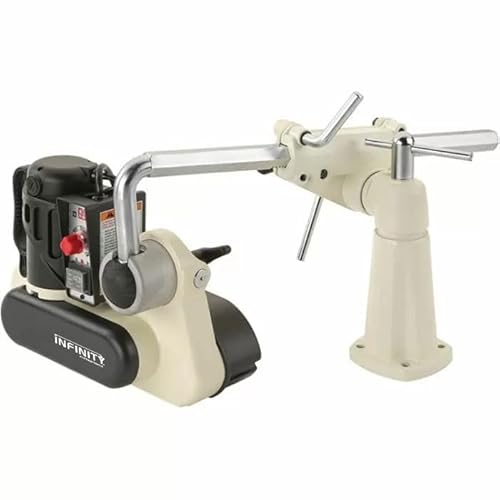
The Infinity Tools Mini Power Feeder is a compact powered guide for woodworkers who need steady stock movement without giving up much bench space. Its 1/8 HP motor offers variable feed speeds from 6.5 to 56 feet per minute. That range lets you slow down for a careful cut or increase the pace for repeat work. The reversible feed direction also helps when your setup requires a different approach.
I like the flexible horizontal and vertical modes for small router tables, shapers, band saws, and table saws. The 26-pound body should feel more stable than a light featherboard, while its mini size suits home shops and small production spaces. It is not a replacement for a large industrial feeder, but it can give a small saw a more controlled feel. For many hobbyists, this is the most complete powered option in this review.
Pros:
- Variable speed supports both slow and fast stock feeding
- Reversible feed direction adds setup flexibility
- Compact design works well in smaller workshops
- Horizontal and vertical positions suit several machines
- Powered feeding can reduce hand fatigue during repeat cuts
- Useful across table saws, shapers, routers, and band saws
Cons:
- Small motor is not intended for heavy industrial production
- Mounting takes more planning than a simple featherboard
- Powered feeders cost more than basic roller guides
My Recommendation
I recommend this model for a serious home woodworker, a small cabinet shop, or anyone who makes repeated cuts and wants more than passive stock control. It is a strong choice when you need variable speed, reverse travel, and multi-machine use in one unit. If you are searching for the best table saw feeder with powered movement but have limited room, the Infinity Tools Mini Power Feeder is a practical match. Check the mounting space and machine compatibility before ordering.
Powermatic PF-31 Three-Roll Feeder

The Powermatic PF-31 is built for shops that need a more powerful and stable feed system. Its 1 HP, 115-volt motor and three-roll layout are suited to steady work on a table saw, shaper, or other compatible machine. Three contact points can help maintain pressure as stock moves through the cut. That matters when you work with long boards or repeat the same profile many times.
This feeder has the size and weight of a serious shop tool, so it needs a firm mounting surface and enough room around the saw. It may be more machine than a casual user needs, but that extra capacity can pay off in a busy shop. I would place it near the top for users who value repeatability over portability. It is best viewed as a fixed production aid, not a quick accessory.
Pros:
- 1 HP motor provides strong continuous feeding power
- Three rollers help keep stock engaged during the cut
- Well suited to repeat work and small production runs
- Heavy design can resist movement during operation
- Useful for larger stock than many mini feeders can handle
- Professional format supports consistent feed pressure
Cons:
- Large and heavy for a compact home workshop
- Requires a sturdy mount and careful alignment
- Higher cost than passive featherboards and roller guides
My Recommendation
The Powermatic PF-31 is best for professional woodworkers, cabinet shops, and users who run a table saw feeder for long sessions. Choose it when motor power, three-roll contact, and repeat performance matter more than a small footprint. In my view, it is one of the strongest options here for production use, but it is not the most sensible pick for occasional weekend cuts. Confirm the voltage, mounting system, and available clearance before purchase.
BOW Products XT1 Feed Supports

The BOW Products XT1 Feed Supports are passive supports made for XT and XTENDER fences, including the XT536 and XT546. They add table surface area near the fence, which can help a small saw support narrow or long workpieces. The two-piece design gives you more control over where support is needed. This is not a powered feeder, but it can solve the awkward balance problem that causes stock to dip or shift.
I see these supports as a smart add-on for a compact table saw or band saw setup. They can make the fence area feel less cramped and help your hands stay in a better position. Since they are designed exclusively for compatible XT fence systems, buyers must check fit before ordering. For the right owner, they offer a simple way to improve feed control without adding a motor.
Pros:
- Increases working surface on smaller saws
- Pack of two allows balanced or custom placement
- Supports long and narrow boards near the fence
- Passive design needs no power or motor care
- Can help reduce board tipping during a cut
- Useful for both table saw and band saw setups
Cons:
- Works exclusively with specified XT fence systems
- Does not actively pull stock through the blade
- May not add enough support for very large panels
My Recommendation
I recommend the XT1 supports for owners of compatible BOW XT or XTENDER fences who want a larger, calmer work area. They are especially helpful for small saws where the factory table gives little room for stock control. If your idea of the best table saw feeder is a simple support system rather than a motorized unit, this pair deserves attention. Check your fence model carefully because compatibility is the main buying factor.
Two-Piece Table Saw Bearing Feeder

This two-piece table saw feeder set uses bearing rollers and featherboard-style pressure to guide stock through a cut. The roller contact can reduce drag while the featherboard action helps keep wood against the fence. It is designed as a multi-purpose auxiliary tool for carpentry and woodworking. The format is simple, which makes it more approachable than a powered feed system.
For a home shop, this type of guide can be a useful middle ground. It offers more moving support than a standard rigid featherboard, yet it does not need electricity or a complex motor mount. I would use it for common board cuts, rips, and general stock control, while still using push sticks and proper blade guards. Fit and adjustment matter, so take time to align the rollers with the feed path.
Pros:
- Two-piece set gives flexible placement options
- Bearing rollers can make stock movement smoother
- Featherboard pressure helps hold material to the fence
- No electrical outlet or motor setup is required
- Useful for basic carpentry and home woodworking
- Usually easier to store than a powered feeder
Cons:
- Passive guides cannot feed stock by themselves
- Roller alignment may need adjustment for each setup
- Not ideal for very thick, warped, or heavy boards
My Recommendation
This product is best for beginners and hobbyists who want affordable feed guidance without committing to a powered machine. It can improve fence contact and make routine cuts feel more controlled. I would call it a good entry-level table saw feeder for users who understand that it assists the cut but does not replace safe hand technique. It offers useful value when adjusted correctly and paired with a stable saw table.
WORKESS Rolling Table Saw Stand
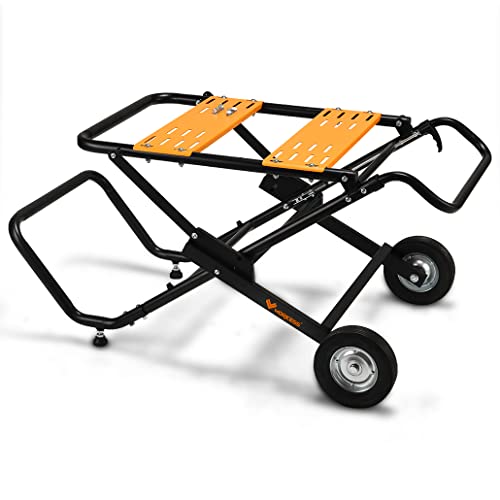
The WORKESS Portable Table Saw Stand supports up to 330 pounds and uses eight-inch wheels for movement around the shop. Its foldable format can help a garage woodworker clear floor space after a project. A stable stand matters because even the best table saw feeder cannot correct a saw that rocks or shifts. This product focuses on the foundation beneath the tool rather than the feed point itself.
I consider a rolling stand a useful part of a complete stock-control setup. When the saw sits at a comfortable height, you can guide boards with less bending and fewer awkward reaches. The universal design may fit many brands, but you should compare mounting points and saw dimensions before buying. It is especially helpful for contractors and home users who move tools between storage and the work area.
Pros:
- 330-pound load rating supports many saw setups
- Eight-inch wheels make shop movement easier
- Foldable design saves storage space
- Raises the saw for a more comfortable working height
- Can improve overall stability during long stock cuts
- Useful for mobile garages and jobsite-style workshops
Cons:
- It is a stand, not a direct stock-feeding device
- Universal fit still requires careful measurement
- Wheels must lock securely before cutting
My Recommendation
The WORKESS stand is best for anyone whose main feed problem starts with poor saw height, weak support, or limited mobility. I would pair it with a featherboard or powered table saw feeder for a complete solution. It offers good practical value for small shops that need to fold and roll the saw away. Before use, confirm that the mounting hardware holds your exact saw firmly and that the wheels remain locked.
Toolcool Clear Cut Stock Guides

The Toolcool Clear Cut Precision Stock Guides combine one-way bearing rollers with featherboard-style guidance. The one-way action is intended to let stock move forward while resisting unwanted backward movement. That can help maintain a more consistent feed path on a router table or table saw. The clear guide format also makes it easier to see the work area while setting up.
This product suits woodworkers who want a compact, non-powered guide with a focus on controlled stock movement. It is less demanding than a full power feeder and may fit shops where space is limited. I would pay close attention to the mounting track, fence position, and pressure setting because too much force can make feeding harder. Used with a push stick and correct blade protection, it can add a helpful layer of control.
Pros:
- One-way bearing design supports forward stock travel
- Featherboard action helps guide material along the fence
- Clear construction can improve setup visibility
- Works with router tables and table saws
- Compact alternative to a powered feed unit
- Can help reduce kickback-related stock movement when properly installed
Cons:
- Requires correct pressure to avoid excess feed resistance
- Does not provide motorized or automatic feeding
- Fit may depend on the table or fence mounting system
My Recommendation
I recommend the Toolcool guides for a hobbyist who wants better stock control in a small shop. They are a good fit for repeat routing and table saw work where forward movement should stay smooth and backward drift should stay limited. For many buyers, this can be the best table saw feeder style because it gives useful guidance without the size and cost of a motor. Inspect the guide before each session and keep the rollers clean.
Infinity Tools Magnetic Base

The Infinity Tools Magnetic Base is an accessory for the Infinity mini power feeder. It gives the feeder a faster way to attach to a suitable ferrous machine surface. That can be valuable when you change from one machine to another or remove the feeder for open table work. Instead of treating the feeder as a permanent fixture, you can use the base to make your setup more flexible.
This accessory makes the most sense for owners who already use the compatible Infinity mini feeder. It does not function as a stand-alone stock guide, so new buyers should include the feeder itself in the budget. A magnetic connection can save setup time, but it still needs a flat, clean, secure surface and careful testing before operation. I would never rely on convenience alone; verify that the base holds firmly and stays clear of the blade.
Pros:
- Can speed up feeder installation and removal
- Supports a more flexible multi-machine workshop setup
- Reduces the need for a permanent feeder mount
- Pairs with the Infinity mini power feeder system
- Helpful for shops that change tool layouts often
- Can make storage and cleanup more convenient
Cons:
- Requires a compatible Infinity mini power feeder
- Not a complete feeder or guide by itself
- Magnetic mounting still needs a clean, suitable surface
My Recommendation
I recommend this base to existing Infinity mini feeder owners who value quick setup and flexible placement. It is especially useful for a shared workshop where one feeder moves between a table saw, router table, and other compatible tools. As a stand-alone purchase, it will not meet the needs of someone seeking the best table saw feeder. As part of the matching system, it can improve convenience and reduce the frustration of repeated mounting.
Double-Bearing Roller Featherboards

This two-piece roller featherboard set uses double-wheel bearings to support smoother stock travel on a table saw or router table. The rollers can reduce rubbing while the featherboard body helps press material toward the fence. That combination can make a basic saw feel more guided during rips and repeated passes. It is a passive system, so the operator still supplies the feed force.
I see this set as a useful upgrade for a woodworker who has outgrown a plain plastic featherboard. The bearing rollers can help when a board drags against a guide, yet the design stays simple enough for routine shop work. It will not solve every problem with warped lumber or an unstable table. Still, with proper alignment and light pressure, it can help create a straighter, less tiring feed path.
Pros:
- Double-wheel bearings support smoother stock movement
- Two units allow placement before and after the blade area
- Featherboard pressure helps maintain fence contact
- Useful on both table saws and router tables
- Passive design avoids motor noise and electrical needs
- Compact format fits many small woodworking benches
Cons:
- Operator must still push the board through the cut
- May need compatible slots, tracks, or mounting hardware
- Pressure can be too strong if adjusted without care
My Recommendation
This roller featherboard set is best for home woodworkers who want an affordable and simple feed guide. It can help with fence contact and smooth travel without the expense of a powered table saw feeder. I would choose it for small and medium stock, basic rips, and router table work. Buyers should test the roller pressure with the blade off before making a cut.
VEVOR Rolling Table Saw Stand

The VEVOR Portable Table Saw Stand has a stated 350-pound load capacity and eight-inch rubber wheels. It is made for users who need to roll a saw into position and fold it away after work. A solid stand can improve feed control by keeping the saw steady and setting the work surface at a better height. This model serves as a support platform rather than a direct roller or power feeder.
Compared with a fixed bench, a rolling stand can make a small shop much easier to manage. The rubber wheels may help with movement across common workshop floors, while the foldable design supports simple storage. As with any universal stand, the saw must fit the mounting area and remain level before use. I would also check wheel locks, frame bolts, and balance before feeding a long board.
Pros:
- 350-pound capacity supports a broad range of saws
- Eight-inch rubber wheels help move the tool across the shop
- Foldable frame can reduce storage demands
- May improve working height and operator comfort
- Useful for garage shops with limited permanent space
- Can provide a steadier base for a separate table saw feeder
Cons:
- Does not guide or propel stock on its own
- Universal designs need careful fit checks
- A rolling base must be locked firmly during cutting
My Recommendation
The VEVOR stand is best for mobile users, garage woodworkers, and contractors who need to store a saw between jobs. It makes the most sense when poor height or unstable placement causes feed trouble. Pair it with a roller featherboard or power feeder if you need active stock guidance. For buyers who need a stable base first, this stand offers useful value and broad load support.
SHALL Heavy-Duty Folding Roller Stand

The SHALL Roller Stand is a simple way to support long stock as it enters or exits a table saw. It has a heavy-duty folding design with a stated 250-pound capacity. The roller gives a board a place to rest instead of letting its weight pull down on the cut. That extra support can make a major difference when one person handles long boards.
This stand does not press material against the fence, so it works best beside a proper fence, featherboard, or other guide. Its main job is height support, and it does that without taking much time to set up. The folding format is useful for a crowded garage or a shop that shares space with a vehicle. I would place it level with the saw table and keep the roller clean so stock moves freely.
Pros:
- 250-pound capacity supports many long workpieces
- Folding design stores easily between projects
- Helps prevent long boards from sagging at the outfeed side
- Quick setup suits occasional woodworking tasks
- Useful with table saws, planers, and other machines
- Simple passive design needs little maintenance
Cons:
- Does not hold stock against the fence
- One roller gives less control than a full support table
- Height and position must match the saw precisely
My Recommendation
I recommend the SHALL roller stand for anyone who struggles with long boards but does not need powered feeding. It is a helpful partner to a table saw feeder because it supports the work after the main guide has set the path. This is a good low-cost choice for home shops, trim work, and occasional projects. It provides the most value when you position it level and use it with safe cutting habits.
Which Type of Table Saw Feeder Should You Choose?
Not every buyer needs the same kind of feed aid. A powered feeder uses rollers and a motor to move stock at a set pace. It can reduce fatigue and improve repeat cuts, but it needs more space, money, and setup time. A featherboard or bearing guide gives passive pressure, costs less, and works well for common home-shop cuts.
A support stand solves a different issue. It keeps long boards from dropping before or after the blade, but it does not guide the board against the fence. I often see users blame the feeder when the real issue is poor outfeed support. The best table saw feeder for your shop may be a guide plus a roller stand, not one product alone.
What I Look For in the Best Table Saw Feeder
I start with compatibility. A feeder must fit the saw table, fence, track, or mounting surface without blocking the blade guard or controls. For a powered model, I check motor size, feed speed, roller count, direction, and adjustment range. For a passive guide, I look at bearing action, pressure control, mounting strength, and how easily the unit can be removed.
Stability comes next. A feeder that shifts under pressure can create more risk than a basic guide that stays fixed. The work path should remain clear, and the roller should contact the stock without lifting it or pushing it away from the fence. I also value simple adjustments because a tool that takes too long to align often stays in the drawer.
Finally, I consider the user. A professional shop may need a strong three-roll power feeder. A hobbyist may get better value from bearing featherboards. A contractor may need a rolling stand and fast setup. There is no single winner for every task, but the right match can make the saw feel more predictable.
Best Features at a Glance
| Best for | Why |
|---|---|
| Small home workshops | The Infinity Mini Power Feeder offers variable speed and a compact multi-position design. |
| Professional repeat production | The Powermatic PF-31 provides a powerful motor and three-roll stock contact. |
| Low-cost passive control | Bearing featherboards and roller guides improve fence contact without power or a large mount. |
How to Install and Use a Table Saw Feeder Safely
Start with the saw turned off and unplugged. Read the feeder instructions, then place the unit so its rollers push the stock in the same direction as the blade cut. The feeder should not touch the blade, guard, splitter, or riving knife. Keep enough room to stop the machine and remove the work if something feels wrong.
Set the pressure with a scrap board. The roller or featherboard should guide the stock, not crush it against the table. Too little pressure allows drift, while too much pressure causes drag and can overload a small motor. Make a few test passes with the blade off, then inspect the cut and the board path.
Use a push stick when your hands approach the blade. Keep your body out of the kickback zone, wear eye and hearing protection, and never bypass the guard for convenience. A feeder supports safe technique; it does not replace it. Even the best table saw feeder needs a sharp blade, a sound fence, and an operator who stays focused.
Power Feeder Versus Featherboard
A power feeder actively moves the workpiece. This makes it useful for repeated cuts, long runs, and work that would quickly tire your hands. Variable speed can also help match the feed to the material and cut. The trade-off is a larger price, a more involved mount, and more parts to maintain.
A featherboard applies spring pressure to keep the stock near the fence or table. It is quiet, compact, and easy to store. Bearing rollers make some featherboards smoother than solid plastic models. Still, you must push the stock by hand, so they do not offer the same level of automation as a motorized feeder.
For many home users, a passive guide is enough. For a shop that makes dozens of similar cuts, a powered unit may quickly earn its space. I would not buy a large machine simply because it looks professional. Choose based on the length of your stock, the number of repeated cuts, and the space around your saw.
Common Buying Mistakes to Avoid
The first mistake is ignoring compatibility. Some accessories fit only one fence system, while others need a ferrous surface or a specific track. Measure the table, fence, slots, and clearance near the blade. Product photos can look universal even when the mounting system is not.
The second mistake is treating a roller stand as a fence guide. A stand supports weight, but it may not stop a board from drifting sideways. If your cuts wander, you likely need featherboard pressure or a powered feeder. If the board sags, you need outfeed support.
The third mistake is choosing too much pressure. A guide should hold the board in its path while letting it move with steady force. Excess pressure can burn the edge, slow the cut, or cause the operator to push harder than needed. Make small adjustments and test on scrap material.
Maintenance Tips for Better Feed Control
Dust is the quiet enemy of feed systems. Clean rollers, bearings, tracks, and magnetic surfaces often. Sawdust can reduce grip, block adjustments, and make a roller feel rough. Use the care method listed by the manufacturer, and avoid adding oil where dust can turn it into paste.
Inspect cords, switches, fasteners, springs, and mounting hardware before use. On a powered model, listen for unusual motor noise and watch for uneven roller motion. On a passive guide, check that the bearings turn freely and that the featherboard has no cracks. Replace worn parts rather than trying to force a damaged feeder to work.
Keep the saw table clean and wax-free where the instructions call for a proper low-friction surface. A clean table helps the board slide without extra force. Check that the fence remains parallel to the blade. A feeder cannot correct a fence that is out of alignment.
FAQs Of best table saw feeder
What is the best table saw feeder for home use?
The Infinity Tools Mini Power Feeder is a strong home-shop choice because it offers variable speed, reverse feeding, and a compact design. For a lower-cost passive option, a bearing roller featherboard may be enough.
Does a table saw feeder replace a push stick?
No. A feeder does not replace a push stick, blade guard, riving knife, or safe body position. Use the correct safety tools even when a powered unit moves the stock.
Can I use a router table feeder on a table saw?
Some feeders support both machines, but compatibility depends on the mount, clearance, roller position, and stock size. Check the product instructions before moving a feeder between tools.
Are roller stands the same as table saw feeders?
No. A roller stand supports the weight of long stock. A feeder or featherboard helps control the stock path. Many shops use both for better results.
How much pressure should a feeder apply?
Use only enough pressure to keep the board against the fence or table. Test with scrap wood. If the board drags, bows, lifts, or needs unusual force, reduce the pressure and realign the guide.
Final Verdict: Which Should You Buy?
The Infinity Tools Mini Power Feeder is my top pick for most serious home users. It offers useful speed control, reverse feed, and a compact footprint. The Powermatic PF-31 is better for production shops that need more power.
For simple work, bearing featherboards offer excellent value. Choose the best table saw feeder by matching the tool to your saw, stock, space, and safety plan.