
The best table saw rip blade balances clean cuts, low waste, safe control, and long-lasting carbide teeth.
If your table saw burns hardwood, wanders during a rip cut, or leaves a rough edge, the blade may be the real problem. A good rip blade works like a sharp kitchen knife: it enters the wood with less force and leaves a cleaner path. I compared tooth count, grind, kerf, carbide, arbor fit, and likely use. The picks below cover fast framing cuts, cabinet work, glue-line joints, thin stock, and fine finish jobs, so you can choose with less guesswork.
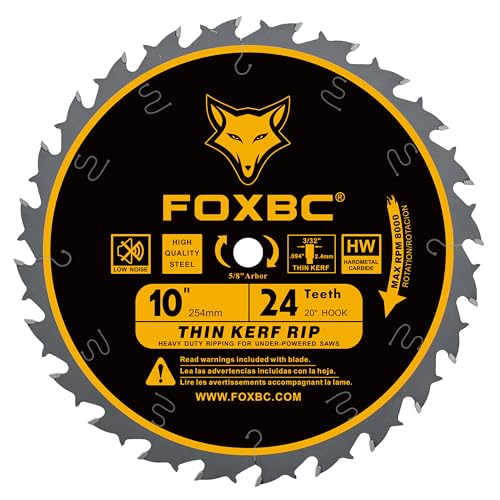
FOXBC 10-Inch Flat Tooth Ripping…
10 Inch Thin Kerf Rip Saw Blade, 24-Tooth, Flat Tooth, Kerf .094″, Plate .071″, Hook Angle 20°, Wood Cutting with 5/8″ Arbor The blades with high-quality thin kerf and plate…

DEWALT 10 in. 24 Tooth…
UP TO 3X LIFE* Optimized Tooth Geometry Designed For Increased Accuracy Ultra Sharp Carbide for Clean Cutting

Freud LM72M010: 10″ Heavy-Duty Rip…
Specs: Arbor 5/8″, Diameter 10″, Grind FLAT, Hook Angle 20°, Kerf .126″, Plate .087″, Teeth 24 Premium TiCo HI-Density Carbide Ripping Blend for Maximum Performance Extra Large, Flat Tooth Design…
FOXBC 10-Inch Flat Tooth Rip Blade

The FOXBC 10-inch blade uses 24 flat-top teeth for fast ripping in common solid wood and sheet stock. Its thin-kerf design removes less material than a full-kerf blade, which can help a smaller saw keep its speed. The 5/8-inch arbor suits many standard 10-inch table saws. I like this layout for users who value a flat-bottom cut and quick stock removal.
A flat-top grind can leave a very clean groove bottom, which helps with dados, box joints, and similar work when the blade is suitable for that task. Still, this is mainly a ripping blade, not a fine crosscut blade. Check your saw’s arbor, guard clearance, and maximum blade size before installation. Use a push stick and keep the fence parallel to the blade for safer, straighter cuts.
Pros:
- 24 teeth remove wood quickly during long rip cuts
- Flat-top teeth can leave a flat-bottom kerf
- Thin kerf may reduce waste and motor strain
- 10-inch size fits many full-size table saws
- 5/8-inch arbor matches a common table saw standard
- Useful for rough and general shop ripping
Cons:
- Not the best choice for fine crosscuts
- Thin kerf requires careful fence and riving-knife alignment
- Very hard stock may shorten the edge life
DEWALT DWA11024 10-Inch 24-Tooth Blade

The DEWALT DWA11024 is a practical 10-inch, 24-tooth carbide blade for fast general-purpose work. Its tooth count favors rip speed, so it can move through framing lumber, construction boards, and many common shop cuts without feeling overly slow. The carbide tips are designed for repeated use, while the blade’s broad purpose makes it easy to keep as a daily backup. It is a sensible pick for a busy home workshop.
I would choose this blade when I need one affordable cutter for repair work and basic woodworking. It can rip faster than a high-tooth-count finish blade, but the edge will not look as polished on delicate crosscuts. As with any table saw blade, feed rate matters: forcing the board can cause heat, burn marks, and roughness. Let the teeth do the work and inspect the cut before changing the fence or blade setup.
Pros:
- Fast 24-tooth pattern suits many rip cuts
- Carbide teeth support useful edge life
- Versatile choice for home and job-site tasks
- Common 10-inch diameter is easy to match
- Useful as an everyday or spare blade
- Usually offers strong value for basic work
Cons:
- May leave a rougher finish than a 40-tooth blade
- Not a dedicated glue-line ripping blade
- Always verify the exact kerf and saw clearance
Freud LM72M010 Heavy-Duty Rip Blade

The Freud LM72M010 targets demanding rip work where a strong blade matters more than a silky crosscut. Its 10-inch format and low tooth count help clear chips quickly through thick hardwood and softwood. Freud’s industrial-style carbide approach gives this blade a reputation for holding an edge through serious shop use. I see it as a tool for users who often rip wide boards or process a large amount of stock.
This blade makes the most sense on a saw with enough power and a well-tuned fence. A heavy-duty rip blade can expose weak alignment, a dull splitter, or a poor feed setup very quickly. It is not my first choice for visible finish edges, but it can save time when production speed is the goal. Clean the blade after resin-heavy wood and store it where the teeth cannot strike metal.
Pros:
- Built for demanding longitudinal cuts
- Low tooth count clears chips at a good rate
- Strong carbide design supports repeated sharpening
- Good match for thick hardwood ripping
- Can reduce time on production-style work
- Made by a well-known cutting-tool brand
Cons:
- Requires a properly tuned and powerful saw
- Rip-focused edge is not ideal for crosscuts
- May cost more than basic general-purpose blades
CMT ITK Xtreme 24-Tooth Rip Blade

The CMT 250.024.10 ITK Xtreme is a 10-inch, 24-tooth ripping blade with an alternate-top-bevel tooth pattern. That grind gives it a more versatile cutting action than a pure flat-top design. The 5/8-inch bore fits many standard saws, and the blade is aimed at fast wood ripping with controlled chip removal. It is a strong middle ground for a woodworker who wants speed without using a highly specialized blade.
I would consider this model for solid wood projects, shop furniture, and repeated board breakdown. Its 24 teeth should move faster than a fine finish blade, yet the ATB geometry may produce a more useful edge for mixed work. It cannot replace a dedicated crosscut blade in a demanding cabinet project. Confirm the blade’s kerf, arbor, and saw rating, then make a test cut in scrap before using expensive lumber.
Pros:
- Fast 24-tooth design supports efficient ripping
- ATB grind offers broader use than a pure rip grind
- 10-inch size fits many full-size table saws
- 5/8-inch bore is a common arbor size
- Good option for solid wood project work
- CMT provides a respected woodworking blade line
Cons:
- Not as specialized as a glue-line rip blade
- May need a separate blade for fine crosscuts
- Users must confirm kerf and clearance details
Freud LM75R010 Thin-Kerf Glue-Line Blade
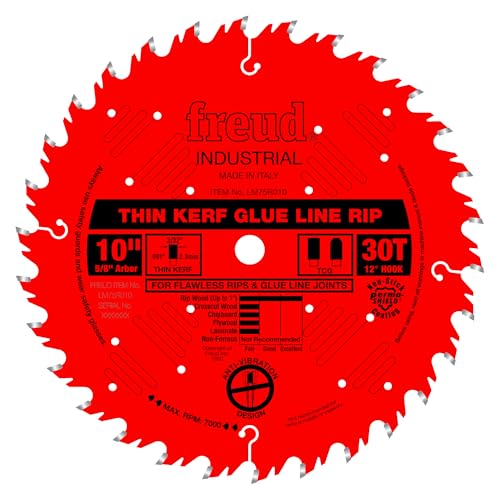
The Freud LM75R010 is made for thin-kerf ripping and glue-ready edges. Its design removes less wood, which can help a lower-powered table saw maintain blade speed in thick stock. The blade uses a rip-focused tooth layout and industrial carbide intended for long service. For a small shop that cuts costly hardwood, the reduced kerf can also limit material waste.
A glue-line edge does not mean every cut will need no sanding. Wood movement, fence alignment, moisture, and feed control still affect the result. I like this blade for edge joining, board milling, and repeat rip cuts where a smooth side matters. Check that your riving knife or splitter matches the thin kerf, because a mismatch can create binding and reduce safety.
Pros:
- Thin kerf can save valuable hardwood
- May reduce load on compact table saw motors
- Designed for smooth, glue-ready rip edges
- Industrial carbide supports repeated shop use
- Useful for edge joining and board preparation
- Good choice for careful furniture work
Cons:
- Thin-kerf setup must match the riving knife
- Not intended as a universal finish blade
- Alignment errors may cause binding
Freud LM74R010 30-Tooth Glue-Line Blade
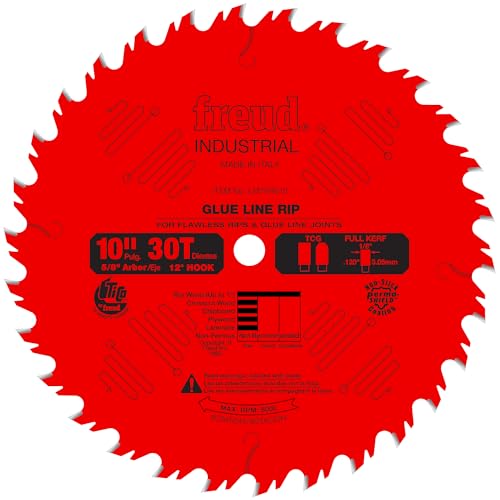
The Freud LM74R010 uses 30 teeth and a glue-line rip design for users who want a smooth edge without moving to a very fine-tooth blade. Its TCG-style geometry is built for controlled cutting and can work well on demanding wood stock. The premium carbide blend is intended to resist wear during regular production use. This model fits the needs of cabinet shops, furniture makers, and serious hobbyists.
Compared with a 24-tooth rip blade, the 30-tooth layout may trade some raw speed for a cleaner edge. I would choose it when the next step is edge glue-up and I want less hand cleanup. It still needs a sharp fence, stable stock, and a steady feed. The blade is more specialized than a low-cost general-purpose option, so it offers the best value when you use its glue-line purpose often.
Pros:
- 30 teeth balance speed and edge quality
- Glue-line design suits furniture and cabinet work
- TCG grind helps control the cut on suitable stock
- Premium carbide supports long working life
- Good fit for repeated production ripping
- Can reduce cleanup before edge joining
Cons:
- Higher cost than entry-level rip blades
- Not the fastest option for rough stock breakdown
- Specialized design may be unnecessary for casual users
CMT Orange 30-Tooth Glue-Line Rip Blade

The CMT Orange Tools 203.630.10 is a heavy-duty 10-inch glue-line ripping blade with 30 teeth. Its specification shows a 5/8-inch bore and a listed kerf and plate size for controlled, stable work. The tooth count makes it a useful choice for clean ripping rather than fast rough breakdown alone. It is aimed at woodworkers who want repeatable edges for boards that will later meet in a glue joint.
I see this blade as a close alternative to other industrial glue-line models. It should appeal to a shop that values edge quality, carbide life, and a professional feel. It may be more blade than a beginner needs for a few weekend cuts. Keep the stock flat on the table, support long boards, and avoid twisting the work as it passes the teeth.
Pros:
- 30-tooth pattern supports smooth rip edges
- Heavy-duty build suits regular shop use
- Glue-line purpose helps with edge joining
- 5/8-inch bore fits many standard saws
- Useful for furniture and cabinet production
- Good balance of finish and cutting pace
Cons:
- Costs more than a basic 24-tooth blade
- Not the best choice for the fastest rough cuts
- Requires proper setup to show its full value
CMT Orange 24-Tooth Ripping Blade

The CMT Orange Tools 201.024.10 is a direct, no-nonsense 24-tooth rip blade. Its 10-inch diameter, 5/8-inch bore, and rip-focused grind make it suitable for fast cuts along the grain. The lower tooth count leaves more room for chip clearance than a fine finish blade. That matters when you cut thick boards and do not want packed sawdust to slow the cut.
This blade fits the role of a dependable shop workhorse. I would use it for breaking down rough lumber, trimming panels, and preparing stock before a final cleanup pass. It will not give the same edge as a dedicated glue-line blade on every species. Even so, it can be a smart choice for users who need speed, simple setup, and a known 10-inch format.
Pros:
- 24 teeth deliver fast rip-cut performance
- Large gullets help clear chips from the cut
- 10-inch size suits many table saws
- 5/8-inch bore is widely used
- Useful for rough lumber and panel breakdown
- Simple design is easy to understand and use
Cons:
- Edge may need sanding for visible joinery
- Not designed for fine crosscut work
- Large boards still need a powerful, aligned saw
Freud LU87R008 8-Inch Thin-Kerf Rip Blade
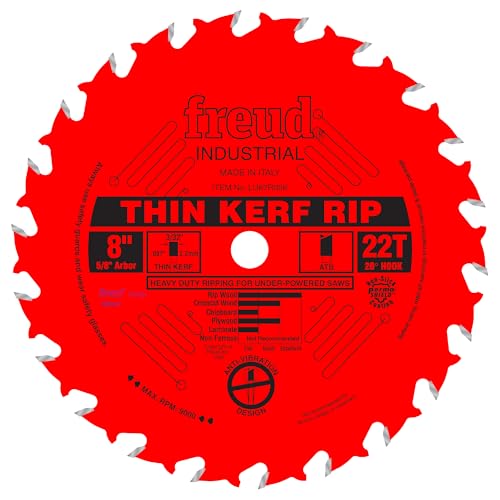
The Freud LU87R008 is an 8-inch, 22-tooth thin-kerf rip blade for saws that accept that smaller diameter. Its compact size and low tooth count make it useful where reduced cutting load matters. This can be helpful on smaller table saws, compact shop saws, and selected portable machines. The carbide teeth are made for wood ripping rather than delicate finish cutting.
Do not treat an 8-inch blade as a drop-in replacement for every 10-inch saw. The saw manual must approve the diameter, arbor, guard position, and cutting depth. I like this model for a user whose machine specifically calls for an 8-inch blade. It can make a small saw feel less strained, but the cut height will be lower than with a standard 10-inch blade.
Pros:
- Compact 8-inch size suits compatible smaller saws
- 22 teeth support quick ripping
- Thin kerf may lower motor demand
- Carbide tips support repeated wood cuts
- Useful for portable and compact machines
- Can reduce waste on narrow stock
Cons:
- Only fits saws rated for an 8-inch blade
- Offers less cutting depth than a 10-inch blade
- Not intended for fine finish or crosscut work
DEWALT DWA11040 40-Tooth Finish Blade

The DEWALT DWA11040 uses 40 teeth for a smoother finish than the 24-tooth rip blades above. It is marketed as a fine-finish blade, so I would select it for clean cuts in plywood, trim, shelving, and visible project parts. The ultra-sharp carbide edge helps the blade enter the material with less tearing when the stock and feed are controlled. Its 10-inch size fits many full-size table saws.
This is not my first pick for ripping thick hardwood all day. More teeth mean smaller gullets, so the blade can clear chips more slowly and may need a steadier feed. However, it can be a valuable second blade when the cut will be seen. For the best result, support the panel, use a zero-clearance insert when appropriate, and cut with the good face positioned correctly for your saw.
Pros:
- 40 teeth can produce a cleaner visible edge
- Good for plywood, trim, and shelving
- Ultra-sharp carbide helps reduce roughness
- Useful companion to a dedicated rip blade
- 10-inch size fits many standard saws
- Works well for finish-minded home projects
Cons:
- Slower for long, thick rip cuts
- Not a dedicated heavy-duty ripping blade
- May show more burning if the feed is too slow
What Makes the Best Table Saw Rip Blade?
The best table saw rip blade is not simply the blade with the lowest price or the highest number of teeth. Ripping means cutting with the wood grain, so the blade needs gullets that carry chips away. A low or medium tooth count often works well because each gullet has more room. A fine blade may cut more slowly and can heat up when used for thick stock.
I judge a blade by five main points: fit, tooth design, kerf, carbide, and the work planned for it. A blade that fits the arbor but clashes with the riving knife is not a good choice. A blade that cuts fast but leaves a torn edge may also be wrong for a cabinet project. Think of the blade as a tire: the right tread depends on the road.
Tooth Count
For many 10-inch table saws, a 24-tooth blade is a common starting point for fast ripping. A 30-tooth blade can offer a useful balance between speed and edge quality. A 40-tooth blade is often better for finish work, but it is not always the best tool for thick hardwood ripping. Tooth count alone does not tell the whole story, because grind and gullet shape also affect the cut.
Tooth Grind
Flat-top grind teeth are well suited to direct ripping and can leave a flat-bottom kerf. ATB teeth alternate their bevel and can provide a more versatile edge for mixed cuts. TCG teeth use a combination of tooth shapes and often suit hard materials or glue-line work. I always match the grind to the material and the planned finish.
Kerf Width
A full-kerf blade removes more wood and can feel stable on a powerful cabinet saw. A thin-kerf blade wastes less material and may place less load on a compact motor. That benefit comes with a setup check: the riving knife or splitter must be suitable for the blade’s kerf. If the safety parts are too thick, the stock may bind. If they are too thin, the setup may not control the cut as intended.
Carbide Quality
Carbide teeth last much longer than plain steel teeth in normal woodworking use. Good carbide can also be sharpened more than once by a qualified service. Resin, glue, dirty lumber, and hidden nails can still damage a tooth. Never use a blade with a cracked body, missing carbide, bent plate, or damaged arbor hole.
How I Evaluate a Rip Blade
I start with the saw, not the product box. I check the arbor size, blade diameter, maximum cutting depth, guard, riving knife, and motor power. I then consider the material: softwood, hardwood, plywood, reclaimed boards, or laminated panels. This order prevents a common mistake—buying a blade that looks impressive but does not suit the machine.
Next, I look at the tooth count and grind. I favor open gullets for fast ripping and a moderate tooth count for a cleaner edge. I also check the manufacturer’s listed kerf and intended use. A glue-line blade earns its higher price only when the user needs smooth mating edges on a regular basis.
Finally, I think about value over time. A cheap blade that dulls quickly may cost more after several replacements. A premium blade may be a poor buy if it sits unused in a casual garage. The best table saw rip blade should match your real workload, your saw, and your tolerance for cleanup.
Table Saw Rip Blade Safety Tips
A sharp blade is safer than a dull one, but sharpness does not replace good technique. Wear eye protection and hearing protection. Keep hands away from the blade path, use a push stick for narrow stock, and support long or wide boards before the cut begins.
Use the blade guard and riving knife whenever the cut allows them. A riving knife helps reduce the chance of the kerf closing on the blade. Keep the fence parallel to the blade, and never stand directly behind the stock. Kickback can send wood back with great force, so take a moment to set the saw correctly.
Inspect lumber for nails, screws, staples, dirt, and knots that may shift during a cut. Stop the saw before clearing waste or adjusting the fence. Follow the saw and blade manuals, plus current workplace safety guidance, when you work in a professional setting. These simple habits protect your hands and also improve cut quality.
How to Get Cleaner Rip Cuts
Start with a clean blade. Pitch on the teeth creates heat and makes a good blade act dull. Use a blade-cleaning product made for carbide saw blades, and follow its instructions. Do not scrape carbide with a hard steel tool.
Check the fence before every important job. The fence should sit parallel to the blade, or slightly open toward the outfeed side if the saw maker allows that setup. Use a square to check the blade, and make sure the stock stays flat on the table. A perfect blade cannot fix a board that rocks or twists.
Set the blade height so the gullets rise just above the stock. Feed at a steady pace. If the motor slows, smoke appears, or the wood burns, stop and find the cause instead of pushing harder. A test cut on scrap often saves a costly board.
My Recommendation
For most woodworkers, the DEWALT DWA11024 is the easiest starting point because its 24-tooth layout supports fast general ripping and its 10-inch format suits many saws. For serious edge joining, I would step up to the Freud LM75R010 or LM74R010. The FOXBC is attractive for users who want a thin-kerf, flat-bottom rip option at a practical price.
| Best for | Why |
|---|---|
| Daily general ripping | DEWALT DWA11024 combines a fast tooth count with broad use. |
| Glue-line furniture work | Freud LM75R010 offers thin-kerf cutting and a smooth rip focus. |
| Small or lower-power saws | Freud LU87R008 uses an 8-inch thin-kerf format for compatible machines. |
The right best table saw rip blade can make a rough saw feel more controlled. It can also reduce waste, burning, and hand cleanup. I would buy the blade that matches your saw manual first, then your material and finish needs. Availability and price can change, so check the current listing and exact specifications before ordering.
FAQs Of best table saw rip blade
What tooth count is best for ripping on a table saw?
A 24-tooth blade is a strong starting point for fast ripping in many solid woods. A 30-tooth blade may provide a smoother edge, while a 40-tooth blade favors finish work. The best choice depends on stock thickness, saw power, and the final surface you need.
Can I use a rip blade for crosscuts?
You can make some crosscuts, but a rip blade is not the ideal tool for clean, visible crosscuts. Its large gullets and lower tooth count may cause tear-out. Use a combination or fine-finish blade when the crosscut edge matters.
Is a thin-kerf blade better for a small table saw?
Often, yes. A thin-kerf blade removes less wood and may reduce motor load. However, the blade must match the saw’s riving knife, splitter, guard, and approved diameter. Always check the manual before changing blade size or kerf.
How often should I sharpen a table saw rip blade?
Sharpen the blade when cuts become rough, the saw needs more force, or burning appears despite good alignment. The timing depends on wood type, use, and blade quality. A professional sharpener can inspect the carbide and plate before servicing it.
Why does my rip blade burn the wood?
Common causes include a dull blade, slow feed, a fence that pinches the stock, poor alignment, resin buildup, or a motor that lacks power. Stop the saw and inspect the setup. Do not keep forcing the board through a burning cut.
Final Verdict: Which Should You Buy?
For most users, the DEWALT DWA11024 is the best table saw rip blade because it offers fast 24-tooth cutting and broad everyday value. Choose Freud for demanding glue-line work or FOXBC for a thin-kerf flat-top option.
Match the blade to your saw, stock, and finish goal. A well-tuned saw paired with the best table saw rip blade delivers cleaner cuts, less waste, and safer control.