
The best table saw runners slide smoothly, lock firmly, and keep every cut straight, safe, and repeatable.
If your sled drifts, sticks, or wiggles in the miter slot, even a sharp blade cannot save the cut. I know how frustrating that feels, especially after spending time on a careful layout. The right table saw runners act like quiet rails under your sled. They reduce play, improve control, and help boards move with less force. I reviewed the options below for fit, material, length, adjustment, hardware, and value. This guide should help you choose runners that match your saw, sled, and woodworking style.

Crosscut Sled for Table Saw…
Predrilled Holes: We reserve 5 screw holes on each plastic strip and provide matching screws. You don’t need to process it in addition when you use, it’s easy to operate…

O’SKOOL Aluminum Miter Bars, 430mm,…
Expansion collars help reduce sled play: Fine-tune each expansion collar from above with the included hex key to reduce side-to-side movement without removing the bars, helping crosscut and table saw…

21P Table Saw Sled Kit,…
Table Saw Sled Kit: You will receive 2 UHMW miter bars for table saw (17 in), 2 universal T-tracks (12 in), 1 star knob and bolt, 1 round washer, and…
UHMW Plastic Crosscut Sled Runners, 2 Pack

This two-bar set uses UHMW plastic, a material I often like for homemade crosscut sleds. The 3/4-inch width and 3/8-inch thickness fit many standard table saw miter slots. The 17-inch length gives a sled enough support without making installation awkward. The smooth plastic surface helps the sled glide instead of grabbing the slot.
I would choose this set when I need a simple and affordable starting point. You can drill mounting holes to suit your sled and fine-tune the fit during installation. UHMW plastic does not rust, so it works well in shops where steel hardware may show wear. Still, measure your slots before ordering because saw brands can vary slightly.
Pros:
- Smooth UHMW plastic slides with low friction
- Standard size suits many common miter slots
- Two bars support a compact or medium sled
- Rust-free material works well in humid shops
- Easy to drill and customize
- Good low-cost choice for DIY sled projects
Cons:
- May need drilling and fitting before use
- Two bars may not suit a very wide sled
- Fit depends on the exact saw slot size
My Recommendation
I recommend these runners for new woodworkers, hobby shops, and anyone building a basic crosscut sled. They offer the main benefit most users need: smooth movement without metal rust. They are also easy to shape and adjust with common tools. Among the best table saw runners for a simple custom build, this set gives strong value.
| Best for | Why |
|---|---|
| DIY crosscut sleds | Easy to drill and mount |
| Small shops | Compact two-bar design saves space |
| Budget buyers | Simple design keeps the cost low |
O’SKOOL Adjustable Aluminum Miter Bars
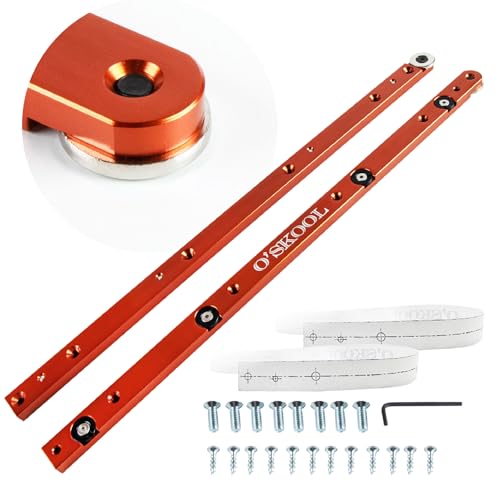
The O’SKOOL bars use aluminum and include an adjustable design for a closer miter-slot fit. Their 430-millimeter length gives a sled or fixture useful front-to-back support. I like adjustable bars because they can reduce side play without forcing the sled to move too tightly. This feature matters when a small amount of wiggle can spoil a square crosscut.
The aluminum body should resist rust and remain stable in normal shop use. Adjustment screws let you tune the fit as your saw or sled changes over time. Installation still needs care, since overtightening can make the sled drag. I suggest adjusting one point at a time and testing the slide after each small change.
Pros:
- Adjustable design helps reduce miter-slot play
- Aluminum resists rust and shop moisture
- 430-millimeter length supports many sled sizes
- Good choice for repeatable crosscuts
- Can be tuned after installation
- Feels firm under a properly built sled
Cons:
- Costs more than basic plastic bars
- Needs careful adjustment for smooth travel
- Metal may require more patience during setup
My Recommendation
I would pick the O’SKOOL set for woodworkers who care about a snug, controlled fit. It suits crosscut sleds, router-table fixtures, and other shop jigs that need less side movement. These are some of the best table saw runners for users who want adjustment rather than a fixed fit. Their value is strongest when accuracy matters more than the lowest price.
| Best for | Why |
|---|---|
| Precision sled work | Adjustable parts help limit play |
| Humid workshops | Aluminum does not rust like plain steel |
| Longer sleds | 430 mm gives useful support |
21P Table Saw Sled Runner Kit

This 21-piece kit targets makers who want more than loose runners. A larger kit can include the bars, screws, adjustment parts, and other pieces needed for a crosscut sled project. That can save a trip to the hardware store. It also gives beginners a clearer path from a blank sled panel to a working jig.
I see this type of kit as a useful project bundle rather than a fully assembled product. You still need to measure the miter slots, mark the sled, and align the fence with care. The extra parts may help with several builds, but not every piece will suit every saw. Check the included hardware and compare it with your sled plan before cutting material.
Pros:
- Large kit offers useful project parts
- Good option for first-time sled builders
- Can reduce separate hardware purchases
- Supports custom jig and fixture work
- Useful for repair or spare parts
- Flexible choice for active workshops
Cons:
- More setup work than a ready-made sled
- Some parts may remain unused
- Fit still depends on your table saw
My Recommendation
This kit is best for a hands-on woodworker who enjoys making jigs and wants a broad supply of parts. It may also suit a shared shop where several sleds need different hardware. I would not buy it only for a quick repair if you need one exact runner. For project flexibility, it earns a place among the best table saw runners and sled kits for DIY users.
| Best for | Why |
|---|---|
| New sled builders | Offers more parts in one kit |
| Multiple jigs | Extra pieces add project options |
| Busy home shops | Spare parts can reduce delays |
UHMW Plastic Sheet for Custom Runners

This half-inch UHMW sheet is aimed at makers who prefer to cut their own table saw runners. It gives you control over length, width, hole placement, and the number of bars you make. That freedom helps when your saw has an unusual slot or your sled needs a custom layout. UHMW is slick, tough, and resistant to moisture.
The sheet does require more work than a pre-cut runner set. You need a straight cutting method and accurate measurements to make bars that track well. A table saw, router, or careful guide can help, but rough edges may cause drag. I like this option for experienced users who already know how to fit runners and want material for more than one project.
Pros:
- Lets you make runners to a custom size
- Useful for unusual miter-slot dimensions
- Slick surface supports smooth sled travel
- Moisture-resistant material will not rust
- Can supply several small projects
- Good material for repairs and replacements
Cons:
- Requires cutting and shaping tools
- Needs careful work for a straight fit
- Not ideal for beginners seeking a quick install
My Recommendation
I recommend this sheet to advanced DIY builders, school shops, and makers who need custom table saw runners. It is especially useful when standard 3/4-inch bars do not fit your slot. The sheet can offer excellent value if you use most of it. For a single small sled, however, pre-cut bars may save time and effort.
| Best for | Why |
|---|---|
| Custom saw setups | You choose the final size |
| Experienced builders | Supports precise fabrication work |
| Several sleds | One sheet can serve many builds |
Four-Piece Crosscut Sled Runner Kit
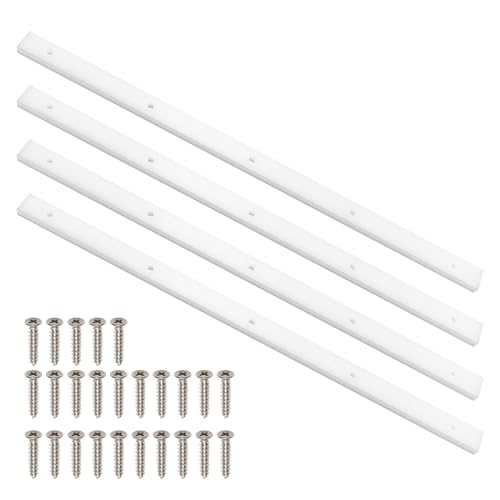
This four-piece kit gives a builder enough runners for a larger sled or more than one fixture. Four bars can spread support across a wide crosscut sled and help keep the base stable. The kit format also makes it easier to keep matching parts together. That matters when you want the same feel across several shop jigs.
I would inspect the bars, hardware, and slot fit before permanent mounting. A wide sled can still bind if the runners are not parallel, so careful layout remains important. Use a flat base and test the slide before tightening every screw. With a clean setup, four runners can make a large sled feel steady and controlled.
Pros:
- Four bars suit wide sled designs
- Useful for multiple jigs or fixtures
- Matching parts create a consistent setup
- Can spread load across a large base
- Good choice for repeat crosscut work
- Provides useful spare capacity
Cons:
- Parallel alignment takes extra care
- May be more than a small sled needs
- More mounting points mean more setup time
My Recommendation
This set fits woodworkers building wide crosscut sleds, panel fixtures, or several shop jigs. I would choose it when two runners do not provide enough support. It ranks among the best table saw runners for broad sled bases, but it may feel excessive for a small benchtop saw. Its overall value improves when you plan more than one project.
| Best for | Why |
|---|---|
| Wide sleds | Four runners spread support |
| Several fixtures | Extra bars support more builds |
| Heavy workpieces | More contact can improve stability |
19-Inch Precision Aluminum Miter Bar

This 19-inch aluminum miter bar offers a long, firm contact path under a sled or jig. The extra length can help keep a fixture aligned as it moves through the cut. Aluminum gives it a solid feel while avoiding the rust concerns of untreated steel. It is a practical choice for users who want one precision runner rather than a large kit.
A single bar works well for narrow sleds, miter gauges, and compact fixtures. A wide crosscut sled may need two bars for better control and balance. I would also check the bar against the slot before drilling, since length does not correct a wrong width. If your project needs a long guide surface, this runner offers a useful blend of strength and simplicity.
Pros:
- 19-inch length supports steady travel
- Aluminum offers a firm, durable feel
- Rust resistance suits regular shop use
- Useful for sleds and other fixtures
- Single-bar format fits narrow projects
- Long guide path can improve tracking
Cons:
- One bar may not balance a wide sled
- Requires accurate mounting and alignment
- May not fit every miter-slot size
My Recommendation
I recommend this bar for narrow sleds, miter fixtures, and repair work. It is a good fit for someone who wants a longer aluminum runner without buying a full kit. For a wide sled, pair it with a matching runner if the design allows. It is one of the best table saw runners for focused, single-bar projects.
| Best for | Why |
|---|---|
| Narrow fixtures | One long bar gives direct support |
| Repair jobs | Replaces a worn or damaged runner |
| Long sled bases | 19 inches improve contact length |
Catcan Crosscut Sled Runner Kit

The Catcan crosscut sled kit is made for users who want a complete runner-focused package. It can simplify the early stage of a sled build by putting related parts in one order. That is helpful when you want to spend your shop time cutting wood instead of searching for small hardware. The kit format also makes a useful gift for a new woodworker.
Like any sled kit, it cannot replace careful measurement and a square fence. I would dry-fit the runners, move the base through the slots, and check for drag before final assembly. The set is most useful when your saw has common miter-slot dimensions. It gives a cleaner starting point than making every runner from scratch.
Pros:
- Convenient kit for a new sled build
- Reduces the need to source small parts
- Supports guided crosscut work
- Helpful for beginners and gift buyers
- Can make setup more organized
- Useful for replacing worn sled parts
Cons:
- May require extra tools during assembly
- Slot compatibility must be checked first
- Experienced users may prefer custom parts
My Recommendation
I would choose this kit for beginners who want a clear path into sled building. It also suits hobbyists who prefer a bundle over buying each component separately. These are among the best table saw runners for a convenient project start, not necessarily for the most advanced custom build. The value is good when the included parts match your saw and planned sled.
| Best for | Why |
|---|---|
| Beginners | Bundle makes the project easier to start |
| Gift buyers | Useful woodworking kit in one package |
| Basic crosscut work | Provides a practical runner foundation |
Premium UHMW Crosscut Sled Runners, 4 Pack

This four-bar UHMW set includes predrilled holes and screws, which can reduce some of the work in a sled build. The 3/4-inch by 3/8-inch profile suits many standard miter slots and U-track setups. Four bars provide options for a broad sled or more than one project. The plastic surface glides quietly and does not need oil to prevent rust.
Predrilled holes can save time, but they do not guarantee the right layout for your sled. I would use the holes as a guide and confirm the bar position before tightening the screws. The included hardware may help, though a different screw length could be needed for a thick base. Overall, this set is practical for makers who want convenience without giving up a custom sled design.
Pros:
- Four bars offer flexible project options
- Predrilled holes can speed assembly
- UHMW plastic slides quietly and smoothly
- Included screws simplify basic installation
- Rust-free material suits damp conditions
- Works with several fixture concepts
Cons:
- Predrilled holes may not match every sled
- Included screws may not suit thick bases
- Four bars can be excessive for small projects
My Recommendation
This set is best for woodworkers who want predrilled UHMW runners and enough parts for a larger project. It is a strong middle ground between raw sheet material and a complete hardware kit. I consider it one of the best table saw runners choices for convenient custom sled work. It offers good overall value when you need four bars and plan to use the extra capacity.
| Best for | Why |
|---|---|
| Fast DIY builds | Predrilled holes can save time |
| Wide sleds | Four bars provide broad support |
| Moist shops | UHMW avoids rust concerns |
UHMW Plastic Crosscut Sled Runners, 4 Pack

This four-bar set offers the same useful 3/4-inch by 3/8-inch profile in a simple, flexible format. The 17-inch bars work well under crosscut sleds, router fixtures, and other shop jigs. UHMW plastic keeps the motion smooth and resists swelling better than many wood runners. I like the fact that the set leaves room for different sled layouts.
Because the bars are intended for custom assembly, you should plan the mounting process before drilling. A straight fence and flat sled base matter just as much as the runner material. Test each bar in the slot and remove any burrs before installation. When fitted well, these runners give a quiet glide and a dependable feel.
Pros:
- Four matching bars offer strong flexibility
- UHMW surface moves smoothly in the slot
- 17-inch size fits many sled designs
- Rust-free and resistant to shop moisture
- Useful for crosscut and router fixtures
- Good supply for future projects
Cons:
- Requires user drilling and alignment
- May need trimming for a special setup
- Not a ready-to-use assembled sled
My Recommendation
I recommend this set for makers who want four simple plastic runners without extra complexity. It is a good fit for a home shop that builds many jigs over time. For users comparing the best table saw runners, this pack stands out for flexible quantity and easy customization. It offers strong value when you need dependable plastic bars for several builds.
| Best for | Why |
|---|---|
| Multiple projects | Four bars give useful spare capacity |
| DIY fixtures | Easy to customize for different bases |
| Quiet operation | Plastic slides with little noise |
Catcan Crosscut Sled Kit With Miter Bars

This Catcan kit combines sled-building parts with miter bars for a more complete project setup. It is designed for users who want to make a crosscut sled rather than buy a finished fixture. A kit like this can help keep the build focused and reduce the guesswork around basic components. It may also help a new user learn how a sled rests and travels in the miter slots.
I would still treat the kit as a starting point, not a replacement for careful woodworking. Mark the slot center, confirm the bar spacing, and check the sled for square before making the first cut. A good fit should feel smooth but not loose. If you take time during installation, this kit can become a useful part of a safe and repeatable cutting system.
Pros:
- Combines runners with sled-building parts
- Helpful starting point for beginners
- Supports repeatable crosscut work
- Can reduce separate shopping trips
- Useful for home and hobby workshops
- Encourages a guided sled design
Cons:
- Requires a custom sled base and fence
- Compatibility must be checked before assembly
- May include parts you do not need
My Recommendation
This kit suits a beginner who wants more support than loose runners provide. It is also useful for a hobbyist making a first crosscut sled with common parts close at hand. I would place it among the best table saw runners kits for guided DIY builds. Its value depends on whether the included parts match your saw and the sled size you plan to make.
| Best for | Why |
|---|---|
| First sled projects | Offers a guided way to begin |
| Home workshops | Useful parts in one package |
| Learning woodworkers | Shows how runners support a sled |
How I Evaluate the Best Table Saw Runners
I start with fit because a runner cannot perform well if it does not match the miter slot. Many table saws use a nominal 3/4-inch slot, but small differences can still affect the result. I check width, thickness, length, and the space needed for adjustment parts. A tight fit is not always a good fit; the sled must slide freely without side-to-side shake.
Next, I look at material. UHMW plastic offers low friction, does not rust, and works well for many home-built sleds. Aluminum gives a firm feel and can include adjustment features, but it may cost more. Wood can work in some cases, yet it may swell or wear as shop humidity changes. The best table saw runners match both the saw and the environment.
I also consider installation. Predrilled bars can save time, while raw sheet stock gives the most freedom. A two-bar set often suits a normal sled, but four bars can help support a wide base or several fixtures. I never judge runners by material alone. The final result depends on a flat sled, parallel bars, a square fence, and a test fit before the first cut.
What to Check Before Buying Table Saw Runners
Measure your miter slot with care. A ruler can give a rough idea, but calipers provide a better reading. Check the slot depth too, since a bar that sits too high can lift the sled base. Also inspect whether your saw has standard slots, T-slots, or a special track design. This small step can prevent an annoying return.
Think about the sled you want to build. A compact sled may need only two 17-inch runners. A wide panel sled may benefit from four bars or longer aluminum guides. If you plan to make many fixtures, a UHMW sheet or larger kit may offer better long-term value. Buying more parts does not help if they sit unused in a drawer.
Finally, consider your skill level. Precut runners suit beginners who want less fabrication. Adjustable aluminum bars suit users who enjoy fine tuning. Raw UHMW stock suits experienced makers with reliable cutting tools. The best table saw runners are not always the most expensive; they are the ones you can install accurately and maintain with confidence.
How to Install Table Saw Runners Correctly
Begin with a flat sled base. Place the runners in the miter slots and set the base on top. Use spacers, coins, or small washers to lift the runners slightly above the slot while you position the base. This method keeps the bars in place while you mark or drive the first screws.
Install only a few screws at first. Move the sled back and forth after each adjustment. If it binds, loosen the nearest screw and shift the bar slightly. Do not force the sled because pressure can bend the runner or damage the slot edge. Smooth travel should feel light, even, and free of a loose side shake.
After the runners move well, attach the fence and check it against the blade path. Make a test cut on scrap wood and compare both corners with a reliable square. A sled can move perfectly and still cut poorly if the fence is not square. Good runners support accuracy, but they do not create it by themselves.
Safety Tips for Crosscut Sled Runners
Always disconnect power before fitting or adjusting a sled. Keep the blade below the sled base while you test movement. Once the sled is ready, use a blade guard or suitable safety setup when the task allows. Keep your hands away from the blade path and use push blocks or handles for small workpieces.
Inspect the runners from time to time. Look for loose screws, packed sawdust, cracks, burrs, or unusual drag. Clean the miter slots before blaming the runners, since dust can act like a tiny wedge under the sled. Replace a damaged bar instead of trying to work around a sudden loose fit.
FAQs Of best table saw runners
What size table saw runners do I need?
Many table saws use runners close to 3/4 inch wide and 3/8 inch thick, but you should measure your saw first. Slot sizes can vary by brand and model. Choose a length that supports your sled without extending into an obstruction.
Are UHMW plastic runners better than aluminum runners?
Neither material is best for every user. UHMW plastic slides quietly and resists rust, while aluminum feels firm and often offers adjustable features. Choose based on fit, budget, and the type of sled you plan to build.
How many runners should a crosscut sled use?
Two runners suit many standard sleds. Four runners can help with a wide base, a heavy fixture, or several projects. Too many runners can add alignment work, so use only what the design needs.
Should table saw runners fit tightly?
Runners should fit snugly without side play, but they must still slide freely. A tight runner that binds can make the sled unsafe and hard to control. Adjust it in small steps until the motion feels smooth.
Can I make table saw runners from UHMW sheet?
Yes, if you have a reliable way to cut straight, accurate strips. Measure the slot first and smooth the edges before testing the fit. This approach works best for experienced DIY builders who need custom sizes.
Final Verdict: Which Should You Buy?
For most DIY sleds, I recommend the O’SKOOL adjustable aluminum bars for their tunable fit. The UHMW four-pack is the better value for several custom projects. Both rank among the best table saw runners for smooth, controlled sled travel.
Measure your miter slots before ordering, then install slowly and test with scrap wood. The right table saw runners can turn a shaky sled into a calm, accurate guide for safer woodworking.