
The best table saw thin rip jig makes narrow, repeatable cuts safer, faster, and far more accurate.
If you have ever tried to rip a tiny strip beside a table saw blade, you know how tense it feels. The workpiece can drift, your fingers can get too close, and each strip may come out a little different. A thin rip jig solves that problem by guiding the board from the side opposite the fence. I reviewed the listed options with fit, roller control, setup, repeatability, and daily shop use in mind. My goal is simple: help you choose a reliable jig without guesswork.

GOINGMAKE Thin Rip Jig Table…
【EASY TO USE】GOINGMAKE thin rip jig is easy to use. Just slide the guide into T-track miter slot of your table saw and lock it in front of the saw…

Thin Rip Table Saw Jig…
SAFE, PRECISE NARROW CUTS – This thin rip jig for table saw keeps your hands safely away from the blade while allowing you to make clean, repeatable thin strip cuts…

TANYO Thin Rip Table Saw…
Upgrade 3-Pulley Design: Compared with a single pulley, 3-pulley thin rip jig can contact more areas and ensure the workpiece moves forward without rebounding, making table saw accessories easy to…
GOINGMAKE Thin Rip Jig

The GOINGMAKE Thin Rip Jig is built for woodworkers who need fast, narrow strip cuts. Its guide design helps keep the stock moving in a steady path while the table saw fence sets the main cut line. The listed fit is for a 3/8-inch by 3/4-inch T-slot, so you should measure your saw before ordering. That small check can prevent a frustrating setup.
I like this style of jig for edge banding, small trim, and repeated stock preparation. It can also suit a band saw or router table when the mounting path matches. The guide does not replace a riving knife, blade guard, push stick, or safe feeding habits. Still, it can make a difficult narrow cut feel more controlled, like adding a handrail to a steep stair.
Pros:
- Designed for repeated narrow strip cuts
- Helps keep fingers farther from the blade
- Fits the listed 3/8-inch by 3/4-inch T-slot size
- Useful for trim, edge banding, and small parts
- Can support table saw, band saw, and router table work
- Compact design takes little bench space
Cons:
- Slot size must match your machine
- It may need careful alignment before the first cut
- Not a substitute for a guard, riving knife, or push tool
My Recommendation
I recommend the GOINGMAKE for hobby woodworkers who want a simple guide for regular thin ripping. It is especially useful when you cut many equal strips from one board. The broad tool compatibility may also appeal to small shops with more than one machine. If the T-slot matches your saw, this is a practical candidate for the best table saw thin rip jig title.
Thin Rip Table Saw Jig for Narrow Cuts

This thin rip jig focuses on one main job: making narrow cuts beside the table saw blade. Its simple purpose can be a strength because there are fewer parts to understand. A side guide can hold the workpiece on a repeatable path while the fence controls the board’s position. That setup is often easier than trying to measure every strip by eye.
I would consider this model for a basic workshop that does not need a large adjustment range. It may work well for occasional trim work, small molding, and craft stock. As with every jig in this guide, fit and alignment matter more than the product name. Check your miter slot, keep the guide parallel to the blade, and test on scrap wood first.
Pros:
- Focused design for narrow table saw cuts
- Simple concept for new woodworkers
- Useful for repeated strip work
- Can reduce measuring time between cuts
- Helpful for small trim and craft projects
- Usually easy to store when not in use
Cons:
- May offer fewer adjustment options than newer roller designs
- Compatibility depends on the saw’s slot and table layout
- Users should verify hardware fit before installation
My Recommendation
This model suits a beginner who wants a dedicated narrow-cut accessory without a complex learning curve. I would choose it for light shop use and simple repeat work. It may not be the most flexible option for demanding production tasks, but its direct approach has value. For a straightforward best table saw thin rip jig setup, it deserves a close look.
TANYO Thin Rip Jig With Three Pulleys

The TANYO thin rip jig uses three pulleys to guide the stock during a narrow cut. Multiple contact points can help the workpiece stay steady as it passes the blade. The listing also identifies a UT slot and a black finish. Before use, I would confirm that the slot style matches your table saw and that the jig can sit square to the blade.
A three-point guide can feel reassuring when you cut long, thin pieces. It spreads the guiding action rather than relying on one small contact area. That can help reduce side movement, though the operator still needs to feed smoothly. I would use a featherboard or other approved support when the project and machine setup call for it.
Pros:
- Three pulleys provide several guide points
- Designed for repetitive narrow ripping
- May feel stable on longer workpieces
- Black finish has a clean shop appearance
- Useful for trim and strip preparation
- Can reduce repeated tape-measure work
Cons:
- UT-slot compatibility needs checking
- More moving parts may need cleaning and inspection
- Incorrect pulley pressure can affect smooth feeding
My Recommendation
I would point this TANYO jig toward woodworkers who value multi-point guidance. It may be a good fit for repeated strips and longer stock where one contact point feels too light. New users should spend time setting the pulleys before making a real cut. If your saw accepts the UT slot, this could be a strong best table saw thin rip jig choice for controlled feeding.
Matework Thin Rip Jig With Three Rollers

The Matework thin rip jig uses three rollers as its main guiding feature. Rollers can help a board move with less drag than a fixed rubbing surface. That is useful when you make many thin strips in one session. The design also gives the workpiece several points of contact, which may help limit small changes in direction.
I see this as a practical option for a busy home shop. A roller guide can be pleasant to use when the stock has a clean edge and the jig is set correctly. It will not correct a twisted board or a poorly aligned fence. I recommend checking the blade, fence, slot, and roller pressure before starting the project.
Pros:
- Three rollers support steady stock movement
- May reduce friction during feeding
- Good match for repeated narrow strips
- Helpful for edge banding and small trim
- Multi-point guidance can improve confidence
- Suitable for woodworkers who make many cuts
Cons:
- Rollers can collect dust and pitch
- Setup must be square for reliable results
- It may not fit every table saw slot
My Recommendation
The Matework is best for users who prefer roller contact and make thin strips often. I would consider it for cabinet shops, furniture hobbyists, and anyone who prepares repeated stock. Clean the rollers and inspect their movement as part of normal care. For smooth feeding and simple repeat work, it is a worthy best table saw thin rip jig contender.
Preciva Thin Rip Jig With Three Higher Pulleys
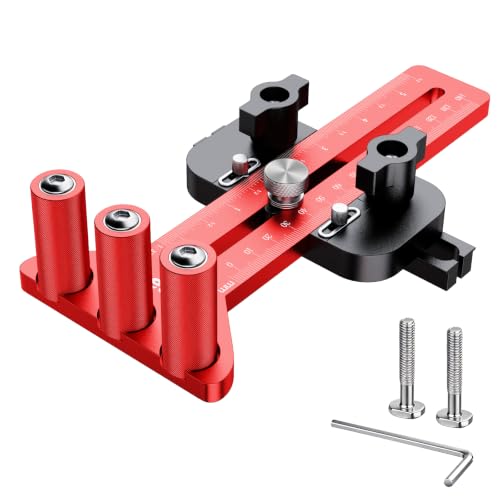
This Preciva model uses three higher pulleys to guide narrow stock. The raised pulley layout may give extra clearance for certain workpieces and table setups. That can be useful when a lower guide would interfere with the material or nearby hardware. Still, the actual clearance depends on your saw, blade height, and stock thickness.
I would test this jig with a short scrap piece before using valuable hardwood. Higher contact points can be helpful, but they must still press the stock with even force. A smooth feed is safer than a rushed one, especially with thin pieces. Follow the safety instructions for your saw and keep your hands away from the blade path.
Pros:
- Three pulleys offer multi-point guidance
- Higher pulley layout may improve clearance
- Useful for repeated narrow cuts
- Can support small trim and strip projects
- May suit users who need more space around the guide
- Compact accessory for a home workshop
Cons:
- Clearance benefits vary by table saw design
- Requires careful pressure adjustment
- Moving parts need regular dust checks
My Recommendation
I recommend this Preciva jig for woodworkers who need a little more room around the guide area. It may suit saws where a standard low roller position feels cramped. Measure your setup carefully before buying, then make several test cuts. For the right machine, it can serve as a useful best table saw thin rip jig for repeated work.
Preciva Thin Rip Jig for T and U Slots

This Preciva thin rip jig is listed for both a 3/8-inch by 3/4-inch U slot and a 1/4-inch by 3/8-inch T slot. That range may make it easier to match different table saw layouts. It also uses three pulleys for guidance during repetitive narrow cuts. The dual-slot claim is useful, but I still suggest measuring the actual slot before placing an order.
Compatibility is one of the most important features in a table saw jig. A well-made guide cannot perform well if it rocks, binds, or sits loose in the slot. Once fitted, this design may help with thin strips for shelving, boxes, trim, and edge banding. I would mark a reliable setup position on my saw table so future jobs start faster.
Pros:
- Listed for two common slot sizes
- Three pulleys support the workpiece
- Useful for repetitive narrow strip cuts
- May fit more saw layouts than a single-slot jig
- Can reduce setup time for repeat projects
- Helpful for cabinet and furniture work
Cons:
- Users must confirm slot dimensions carefully
- Extra compatibility hardware may need adjustment
- Loose or tight fit can reduce accuracy
My Recommendation
This Preciva model is best for woodworkers who use more than one table saw or want broader slot compatibility. It is also a sensible choice for a shared workshop with different machines. Take the extra minute to measure the slot with a caliper or a trusted gauge. When the fit is correct, this is one of the more flexible best table saw thin rip jig options in the group.
Preciva Red Thin Rip Jig With Three Pulleys
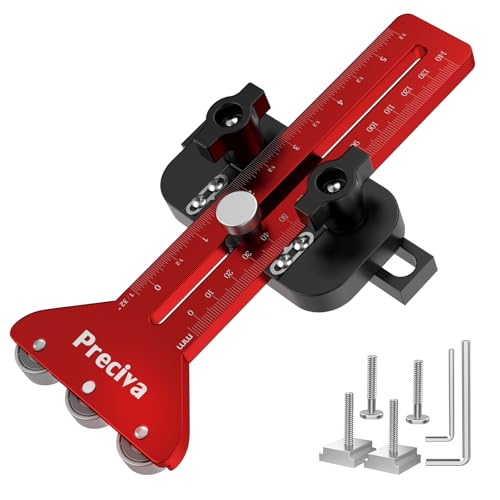
The red Preciva thin rip jig offers the same useful three-pulley concept with a bright finish. A visible color can make a small accessory easier to spot on a crowded workbench. The listed fit includes a 3/8-inch by 3/4-inch U slot and a 1/4-inch by 3/8-inch T slot. That makes measurement a key part of the buying decision.
I value tools that are easy to find and easy to set. The red body may help prevent the jig from being buried under offcuts or clamps. Its main job remains steady side guidance, not blade protection or stock flattening. I would pair it with a sharp blade, a stable fence, proper dust control, and a push stick suited to the cut.
Pros:
- Bright red finish is easy to see
- Three pulleys provide several guide points
- Listed for U-slot and T-slot use
- Designed for repeated narrow strip cuts
- Useful for trim and edge banding
- Good choice for organized workshop setups
Cons:
- Color does not improve cutting accuracy by itself
- Slot and pressure settings still require care
- Rollers may need cleaning after dusty work
My Recommendation
I would choose the red Preciva for users who want broad slot support and a highly visible tool. It can be a nice fit for a busy shop where small jigs often disappear under scrap. The three pulleys make it suitable for repeat work, but careful setup remains essential. It is a practical best table saw thin rip jig alternative for buyers who like a clear, bright design.
Saker Thin Rip Jig Table Saw Guide

The Saker Thin Rip Jig is made for woodworkers who want a dedicated guide for narrow cuts. Its simple product format may appeal to users who prefer a clean setup over a large collection of parts. A thin rip guide can hold the board against a repeat path while the fence stays at the chosen distance. This helps make uniform strips without repeated manual measuring.
I would consider Saker when brand familiarity and a focused tool matter to the buyer. It can support projects such as drawer parts, small rails, craft stock, and edge banding. The most important test is whether the guide fits your saw and remains parallel during use. Always make a dry run with the blade off before cutting real material.
Pros:
- Dedicated design for thin ripping
- Can simplify repeated narrow cuts
- Useful for small furniture and cabinet parts
- May be approachable for newer users
- Compact and easy to keep near the saw
- Supports more consistent strip width
Cons:
- Product details may be less broad than multi-slot models
- Users should confirm the mounting system
- It does not replace standard table saw safety gear
My Recommendation
The Saker guide is best for hobbyists who want a focused thin-rip accessory from a recognizable tool brand. I would use it for small and medium projects where repeat width matters. It is less attractive if you need one jig for several slot types. For a clean and simple best table saw thin rip jig setup, it remains worth considering.
Universal Thin Rip Jig Table Saw Guide

This thin rip guide is listed for repetitive narrow strip cutting and a 3/8-inch by 3/4-inch T slot. Its stated use across a table saw, band saw, and router table may appeal to makers with several machines. A tool that can move between machines saves storage space. Yet “universal” never means every machine, so I would still verify the mounting dimensions.
This style may work well for a small workshop that handles mixed projects. It can help prepare thin strips for frames, boxes, inlays, and edge banding. I recommend setting the guide once, locking the hardware firmly, and checking for side play before each session. A few minutes of setup can save a whole afternoon of uneven cuts.
Pros:
- Designed for repetitive narrow strip cutting
- Listed for table saw, band saw, and router table use
- Useful for shops with several machines
- Can reduce the need for separate jigs
- Helpful for trim, inlay, and box projects
- May save space in a compact workshop
Cons:
- Cross-machine use depends on matching slots
- Changing machines may require a new setup
- Users should not assume universal fit without measuring
My Recommendation
I recommend this guide for makers who want one accessory for several compatible machines. It is a smart idea for a compact shop, but compatibility must come first. If you use only one saw, a more specialized jig may be simpler. If flexibility matters, this universal model has a strong claim as the best table saw thin rip jig for multi-tool users.
POWERTEC Thin Rip Jig 71972

The POWERTEC 71972 is a sliding guide for accurate ripping and safer operation. Its listed compatibility with standard miter slots and T-tracks gives it a useful advantage for many shop layouts. Sliding hardware can help the guide travel in a straight line when the track fits correctly. That makes this model interesting for users who want a more adaptable table saw accessory.
POWERTEC has a broad woodworking accessory range, so this jig may appeal to buyers building a matched shop system. I would pay close attention to track fit, lockup, and parallel alignment during setup. The guide can support narrow ripping, but the operator must still control the board and use proper protection. For repeat jobs, a marked reference point on the table can make the process feel quick and natural.
Pros:
- Listed for standard miter slots and T-tracks
- Sliding guide design supports repeatable movement
- Useful for accurate narrow ripping
- May fit a range of woodworking tables
- Good option for users who value track versatility
- Suitable for hobby and small professional shops
Cons:
- Track compatibility still needs confirmation
- Sliding parts must stay clean and properly locked
- More setup detail may challenge complete beginners
My Recommendation
The POWERTEC 71972 is best for experienced woodworkers who want a sliding guide that can work with miter slots and T-tracks. I see it as a strong choice for a shop with a well-planned table layout. It may offer more flexibility than a single-slot design, but setup accuracy is vital. For adaptable track use, it may be the best table saw thin rip jig in this review.
Best For Comparison
| Best for | Why |
|---|---|
| First-time thin-rip users | A simple guide can reduce measuring and make repeat cuts easier to learn. |
| Multi-machine workshops | A jig listed for more than one slot or machine can save space and setup time. |
| Experienced daily users | Three-roller or sliding-track designs can provide steady guidance for frequent work. |
After comparing these products, I would judge a thin rip jig by how well it fits the saw, not by its color or the number of features alone. A loose guide can create poor cuts, while an over-tight guide can bind. The best setup moves smoothly, stays parallel, and leaves enough room for safe hand placement. I also inspect the blade, fence, riving knife, guard, and push tools before every session.
For the best table saw thin rip jig result, measure the slot first. A common listed size is 3/8 inch by 3/4 inch, while some products also list 1/4 inch by 3/8 inch T slots. Your machine may use a different profile. Product listings can change, and hardware details may vary, so confirm the current fit and parts before purchase.
How a Table Saw Thin Rip Jig Works
A thin rip jig guides the workpiece from the side away from the fence. You set the fence for the desired strip width, then place the jig in the table slot. As the board passes the blade, the jig keeps the waste side or workpiece edge against a controlled path. This lets you make narrow cuts without placing the fence extremely close to the blade.
The idea is simple, but the setup needs care. The guide must run parallel to the blade and move without side play. The rollers or pulleys should touch the stock with light, even pressure. Too little pressure may allow movement, while too much can make the board hard to feed.
What I Look For in the Best Table Saw Thin Rip Jig
Slot Compatibility
Fit comes first. Measure the miter slot or T-track on your saw before you shop. Look at both width and depth, not just the opening at the top. A jig that fits the wrong slot can rock or bind, and that can hurt both accuracy and safety.
Roller or Pulley Control
Rollers and pulleys help guide the stock. Three contact points may spread pressure across the board. They should spin freely and stay clean. I prefer a guide that offers enough pressure to control the workpiece without making the feed feel stiff.
Adjustment Range
Projects use different strip widths. A useful jig should let you make small changes without a long rebuild. Clear adjustment points help, but more parts are not always better. I want a design that locks firmly after adjustment.
Build Quality
Look for solid hardware, smooth edges, and parts that do not flex during use. A thin strip can show even a small error. The jig does not need to be heavy, but it should feel stable on the table. Check screws and guide parts from time to time.
Ease of Setup
A jig that takes too long to align may stay in a drawer. I value simple steps and a clear reference point. Make the first setup with the saw unplugged. Then test the guide with scrap wood before cutting project stock.
Safe Operation
A thin rip jig is an aid, not a complete safety system. Use the blade guard and riving knife when the cut allows them. Keep your hands away from the blade and use a push stick for narrow stock. The Occupational Safety and Health Administration and table saw manufacturers stress training, guarding, and safe feeding for a reason.
How to Use a Thin Rip Jig Safely
Start by unplugging the saw while you install or adjust the jig. Clean the table and slot so dust does not change the guide height. Check that the blade is sharp and that the fence is parallel. A dull blade can increase force and make a narrow cut harder to control.
Place the jig in the correct slot and set it beside the blade. The guide should not touch the blade. Lock the hardware, then move the guide by hand to check for binding. Use scrap stock for a test cut and measure the result at more than one point.
Feed the board at a steady rate. Do not push harder when the cut feels slow. Stop if the stock binds, moves sideways, or shows signs of kickback. Turn off the saw, wait for the blade to stop, and find the cause before trying again.
Never reach across the blade to grab a thin offcut. Use a push tool, a stop procedure, or another safe method suited to your saw. Do not wear loose clothing or gloves near a rotating blade. Good technique is the quiet partner of the best table saw thin rip jig.
Common Thin-Ripping Mistakes
Skipping the Slot Measurement
Many buyers assume that table saw slots use one standard size. They do not. Portable saws, cabinet saws, and aftermarket tables can use different profiles. Measure first, and compare the result with the current product details.
Setting the Guide Too Close
The jig should guide the stock without touching the blade. A small gap helps prevent contact. Make sure the board cannot slide into the blade from the guide side. Test with the saw unplugged.
Using Twisted or Crooked Stock
A jig cannot make bad stock straight. A bowed board may lift or shift as it passes the blade. Flatten or joint the reference edge first when needed. Use short, stable pieces until you understand the setup.
Forcing the Feed
Fast feeding is not the same as safe feeding. Let the blade cut at a steady pace. If the motor strains, check the blade, stock, and alignment. Forcing the board can create burns, rough edges, or kickback.
Ignoring the Cutoff
Thin offcuts can move after they leave the blade. Keep them clear of the blade path and do not try to catch them by hand. Plan where the pieces will go before you begin. A clean outfeed area makes the whole job calmer.
Best Uses for a Thin Rip Jig
Thin rip jigs are useful for making edge banding from matching wood. They also help produce small strips for drawer parts, picture frames, boxes, inlays, and decorative slats. A jig is especially helpful when several pieces must share the same width. It turns repeated measuring into a repeatable machine setup.
You can also use narrow strips for spline keys and small repair parts. The exact use depends on your blade, machine, and material. Dense hardwood needs a sharp blade and a steady feed. Test every new material because wood can behave differently from one board to the next.
Thin Rip Jig Versus a Standard Fence Setup
You can make a narrow cut with a standard fence, but the fence may sit very close to the blade. That leaves less room for your hand and can make the workpiece harder to guide. A thin rip jig moves the reference point away from the blade while keeping the cut width repeatable.
This does not mean a jig removes every risk. Kickback can still happen if the stock pinches or the operator feeds poorly. Use the safety equipment designed for your saw. The jig improves control, but it cannot replace sound table saw technique.
Care and Maintenance Tips
Brush dust from the rollers, pulleys, and track after each use. Fine dust can slow movement or change the guide pressure. Check that screws remain tight, but do not over-tighten small hardware. A quick inspection before a project can catch play before it affects the cut.
Store the jig flat or in a place where the guide cannot bend. Avoid dropping it onto the table or floor. If a roller feels rough, inspect it before using the tool again. Keep the contact surfaces free from pitch and glue.
FAQs Of best table saw thin rip jig
What is a thin rip jig used for?
A thin rip jig helps make narrow, repeatable strips on a table saw. It guides the stock from the side opposite the fence. This can improve consistency and keep the fence farther from the blade.
How do I choose the right thin rip jig?
Measure your table slot or T-track first. Then compare the fit, guide style, adjustment range, and build quality. Choose a model that matches your saw and the type of stock you cut most often.
Are three rollers better than one guide point?
Three rollers can spread contact across the workpiece and may improve control. They are not automatically better for every saw. Correct alignment, clean rollers, and light pressure matter just as much.
Can I use a thin rip jig on any table saw?
No. Table saw slots and track systems vary. Check the product dimensions and your machine manual before purchase. Never use a guide that rocks, binds, or does not lock firmly.
Is a thin rip jig a replacement for a blade guard?
No. A thin rip jig only helps guide the stock. It does not stop blade contact or prevent every form of kickback. Use the guard, riving knife, push stick, and other safety tools recommended for your saw.
Final Verdict: Which Should You Buy?
For most users, I favor the POWERTEC 71972 for its sliding guide design and listed miter-slot and T-track fit. The Preciva dual-slot model is a strong alternative for broader compatibility. Choose the GOINGMAKE if you want a simple, focused guide.
The best table saw thin rip jig is the one that fits your saw, locks securely, and guides stock smoothly. Measure first, test on scrap, and work with care for clean, repeatable results.