
Many people who use firewood come across the term “rick” and wonder exactly how many pieces of wood it contains. If you are new to buying firewood or just want to be sure you’re getting what you pay for, understanding what a rick is—and how many pieces of wood are in a rick—is essential.
The answer is not always simple, but with the right knowledge, you can make smart decisions and avoid common mistakes. This article will break down everything you need to know about a rick of wood, what affects the number of pieces, and how you can compare a rick to other firewood measurements.
You’ll also learn how to estimate, measure, and store your firewood more efficiently.
What Is A Rick Of Wood?
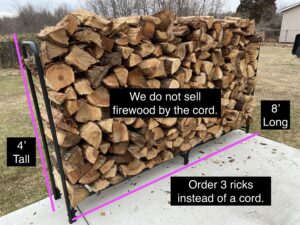
The word “rick” has a long history in describing piles or stacks, especially for hay or wood. In the world of firewood, a rick of wood is a stack of wood that measures 4 feet high by 8 feet long, with the width depending on the length of the firewood pieces. Sometimes, people use the term “face cord” instead of rick, but there are important differences to know.
A rick is not a fixed volume like a full cord. Instead, it is a way to describe a stack of wood with certain dimensions. The actual amount of wood in a rick depends on how long each piece is—usually 16, 18, or 24 inches. This means the number of pieces can change a lot. In short, a rick is a face of a full cord, but not always the same size.
Rick Vs. Face Cord Vs. Full Cord
Many people confuse a rick with other common firewood measurements. Understanding these differences can help you buy the right amount of wood.
| Measurement | Dimensions (ft) | Typical Piece Length (inches) | Approximate Volume (cubic ft) |
|---|---|---|---|
| Full Cord | 4 x 4 x 8 | 16, 18, 24 | 128 |
| Face Cord / Rick | 4 x 8 x 16 in (piece length) | 16 | 43 |
| Half Cord | 2 x 4 x 8 | 16, 18 | 64 |
Key differences:
- Full cord: Standard legal measurement for firewood.
- Face cord/rick: Only as deep as the length of the firewood piece.
- Half cord: Half the volume of a full cord.
A rick and a face cord are often used to mean the same thing, but always ask your seller for exact dimensions before buying.
How Many Pieces Of Wood Are In A Rick?
The main question: how many pieces of wood are in a rick? The answer depends on several factors:
- Length of each piece: Standard firewood is cut to 16 inches, but sometimes to 18 or 24 inches.
- Stacking method: Tighter stacking means less air, more wood.
- Wood thickness: Split pieces can be small or large.
- Type of wood: Hardwoods and softwoods split differently.
Let’s look at the numbers.
Standard Calculation
A rick is usually 4 feet high, 8 feet long, and as deep as the wood pieces (often 16 inches). If each piece is about 16 inches long, a rick is roughly one-third of a full cord.
A full cord contains about 600 to 800 pieces of split wood. So, a rick will have about 200 to 275 pieces, depending on how the wood is split and stacked.
Example Calculation
Suppose you have standard 16-inch pieces:
- If a full cord (128 cubic feet) has 700 pieces, then a rick (about 43 cubic feet) will have:
- 700 ÷ 3 ≈ 233 pieces
If the pieces are shorter (12 inches), you will get more pieces in the same space. If the pieces are thicker or longer, you’ll get fewer.
Factors That Change The Number Of Pieces
You might find that not every rick has the same number of pieces. Here’s why:
1. Piece Length
Shorter pieces (12 inches) allow more to be stacked in the same 4×8 foot face. Longer pieces (24 inches) mean fewer pieces fit in a rick.
2. Wood Thickness
If the wood is split into thin pieces, more will fit into a rick. Large, unsplit logs take up more space and reduce the piece count.
3. Stacking Method
A loose stack with lots of air spaces holds fewer pieces than a tightly packed stack. Some sellers stack loosely to make a rick look bigger, but you actually get less wood.
4. Wood Type
Hardwood like oak or maple tends to split into heavier, denser pieces. Softwood like pine or spruce is lighter and splits more easily, so you might get more pieces per rick.
5. Local Traditions
In some areas, a rick might be used differently. Always clarify with your seller to avoid misunderstandings.

Credit: www.firepitsurplus.com
How To Measure And Count Your Rick
It’s easy to be confused by firewood measurements, but you can check your rick yourself.
Step 1: Measure The Stack
Use a tape measure. The standard size is 4 feet high by 8 feet long. Measure the depth (piece length):
- 16 inches deep is most common.
Step 2: Estimate The Number Of Pieces
Count the number of pieces in one row (top layer). Multiply by the number of layers (rows stacked high).
For example:
- Top row: 25 pieces (across 8 feet)
- Number of rows high: 10
- 25 x 10 = 250 pieces in your rick
This number can change based on how tight or loose the stack is.
Step 3: Spot-check Random Pieces
Pick a few random pieces, check their length and thickness. If most are similar, your estimate will be close. If they vary a lot, the total piece count may be higher or lower.
Comparing Rick To Other Firewood Quantities
Knowing how a rick compares to other firewood sizes helps you buy the right amount for your needs.
| Firewood Size | Approximate Pieces | Best For |
|---|---|---|
| Full Cord | 600–800 | Whole season’s heating |
| Rick / Face Cord | 200–275 | Occasional use, short-term heating |
| Quarter Cord | 60–70 | Fire pit, camping, or short trips |
| Bundle (store-bought) | 5–10 | Single fire, emergency |
Why The Number Of Pieces Matters
Some people focus only on the volume of wood, but the number of pieces affects how you use and store your firewood.
- Smaller pieces burn faster and are easier to stack.
- Larger pieces burn longer but may be harder to light.
- If you have a small wood stove, more small pieces are useful.
- For open fireplaces, bigger pieces are better.
Knowing the piece count helps you plan for winter, avoid running out, and get the best value for your money.
How To Buy A Rick Of Wood The Smart Way
Many buyers make mistakes when buying firewood by the rick. Here’s how to protect yourself and get what you pay for.
1. Always Confirm The Size
Ask the seller:
- What are the exact dimensions of the rick?
- How long are the pieces?
If a seller can’t answer, or gives you vague sizes, be careful.
2. Check How The Wood Is Stacked
A rick should be neatly stacked to show the true amount of wood. Wood thrown in a pile takes up more space with air gaps.
3. Inspect The Quality
Look for:
- Dry, seasoned wood (lighter color, cracks at ends)
- No mold or rot
- Consistent piece size
4. Ask About The Type Of Wood
Hardwoods (oak, hickory, maple) burn longer and hotter. Softwoods (pine, spruce) burn faster.
5. Get It In Writing
Get a receipt or written description of what you are buying. This protects you if there’s a dispute later.
Common Mistakes When Buying A Rick
Even experienced buyers sometimes make mistakes. Here are some to avoid:
- Assuming all ricks are the same size: Always measure.
- Not asking about piece length: This changes your total wood amount.
- Falling for big, loose piles: These look large but hold less wood.
- Ignoring wood type: Some woods burn poorly or produce more smoke.
- Not storing wood properly: Wet wood is hard to burn and creates creosote.
How To Stack And Store Your Rick
Once you have your rick, proper storage keeps your wood dry and ready for use.
Steps To Stack Firewood
- Find a dry, well-ventilated spot.
- Lay a base with pallets or boards to keep wood off the ground.
- Stack wood in a single row, bark side up.
- Leave small gaps for airflow.
- Cover the top with a tarp, but leave sides open.
Why Proper Stacking Matters
- Air flow dries wood faster.
- Off the ground prevents rot and bugs.
- Neat stacks let you see how much wood you have left.
Credit: firewoodtulsa.com
How Much Firewood Do You Need?
The amount of firewood you need depends on:
- Your climate
- House size and insulation
- How often you burn wood
If you heat your home all winter, you may need 3–5 full cords (9–15 ricks). For occasional fires, one or two ricks may be enough.
How To Calculate Value When Buying A Rick
To compare prices, you need to know how much you’re getting. Here’s a simple method:
- Measure the stack size (should be 4 x 8 x piece length).
- Estimate the number of pieces (see earlier sections).
- Check the price per piece or per cubic foot.
- Compare with other sellers.
Tip: If one seller offers a rick with 18-inch pieces and another with 16-inch pieces, the 18-inch rick is actually larger.
Regional Differences In Rick Measurements
In some parts of the US, a rick means something different. For example:
- In the Midwest, a rick almost always means a 4×8-foot face cord with 16-inch pieces.
- In the South, a rick might be a loose pile, not a measured stack.
- In other places, “rick” and “face cord” are used for any pile of wood, regardless of size.
Always ask for exact measurements to avoid misunderstandings.
Firewood Sizes And Weights
Weight is another way to compare firewood. A rick of oak can weigh over 1,000 pounds when green, but much less when dry.
| Wood Type | Weight (green, per rick) | Weight (dry, per rick) |
|---|---|---|
| Oak | 1,200–1,500 lbs | 900–1,100 lbs |
| Maple | 1,100–1,400 lbs | 800–1,000 lbs |
| Pine | 900–1,100 lbs | 600–800 lbs |
| Hickory | 1,300–1,600 lbs | 1,000–1,200 lbs |
Insight: Heavy wood usually means it’s not fully dried. Dry wood burns better and gives more heat.
How To Stack A Rick For Maximum Pieces
To get the most pieces in your rick, stack your firewood tightly with the cut ends facing out. Avoid cross-stacking (which looks nice but wastes space). Split pieces should be of similar size for a tighter fit.
Tip: If you split your own wood, cut pieces to 16 inches for the most efficient rick.
Estimating Your Winter Needs
If you’re not sure how many ricks you need, start with these tips:
- Small house, occasional fires: 1–2 ricks per winter
- Medium house, frequent fires: 3–4 ricks
- Large house, wood stove as main heat: 6–10 ricks
Non-obvious insight: The first winter in a new home, buy a little extra. Use what you need, then adjust your order next year.
Should You Buy By The Rick Or The Cord?
Buying by the cord is more consistent, but a rick can be a good choice for smaller needs. Always compare prices per cubic foot or per piece if possible.
- Pros of buying a rick: Cheaper upfront, easier to handle, good for small needs.
- Cons: Less wood overall, can be confusing if sellers use different definitions.
How To Avoid Being Cheated
Unfortunately, some sellers try to cheat buyers with small ricks or loosely thrown piles. Protect yourself:
- Measure the stack when it arrives.
- Check piece length.
- Ask for seasoned wood (not freshly cut).
- Never pay cash before seeing the wood.
Non-obvious tip: Take a photo of your stack when delivered. This helps if there are problems later.
The Legal Side Of Buying Firewood
In many states, selling firewood by the “cord” is required by law. “Rick” is not a legal term in most places. If you have a dispute, always refer to the cord measurement.
For more on firewood measurement laws, check the National Institute of Standards and Technology’s official firewood measurement page:
nist Firewood Fact Sheet
Frequently Asked Questions
How Many Pieces Of Wood Are In A Rick?
A rick usually has 200 to 275 pieces of split wood, depending on the length and thickness of each piece, as well as the stacking method. If your pieces are standard 16 inches and split to a medium size, 225–250 is a safe estimate.
Is A Rick The Same As A Face Cord?
Most of the time, yes. Both mean a stack 4 feet high, 8 feet long, and as deep as the firewood pieces (usually 16 inches). However, always ask your seller for exact dimensions, as some people use the terms differently.
How Much Does A Rick Of Wood Cost?
Prices vary by region, wood type, and season. On average, a rick costs $75–$150, but hardwood ricks can cost more. Ask if the price includes delivery and stacking.
How Long Will A Rick Of Wood Last?
It depends on your usage. For weekend fires or occasional use, a rick can last all winter. If you heat your home with wood daily, you may use a rick in just 2–3 weeks.
Can I Store A Rick Of Wood Outside?
Yes, but keep it off the ground and covered on top (not the sides). Good airflow keeps wood dry and ready to burn.
When you know how many pieces are in a rick—and what affects that number—you can buy, stack, and use your firewood with confidence. Whether you use wood for heat, camping, or just a cozy fire, understanding a rick helps you get the most value for your money and avoid common mistakes.
Now, you’re ready to stack your next rick like a pro.
:max_bytes(150000):strip_icc()/firewood-cord-storage-1b5179c998f741afa48342b50192dffe.jpg)
Credit: www.thespruce.com