
Cutting angles on a table saw opens up a world of possibilities for woodworkers, DIY enthusiasts, and even casual hobbyists. Whether you are building picture frames, custom moldings, or furniture, mastering angled cuts can bring your projects to a new level.
But for many, the process can seem confusing or even risky. If you want clean, precise angles and safe operation, it’s essential to understand the right methods, tools, and tips.
This guide covers everything you need to know about how to cut angles on a table saw. You’ll learn about the types of angled cuts, the tools and accessories you need, detailed step-by-step instructions, safety advice, and troubleshooting. Even if you’re new to table saws, you’ll find practical guidance, expert insights, and real-world examples to boost your confidence and skills.
Let’s cut through the confusion and help you make accurate, professional-looking angled cuts every time.
Understanding Angled Cuts On A Table Saw
Before you start, it’s important to understand what an angled cut means on a table saw. There are two main types:
- Miter cuts: These are made by turning the workpiece at an angle, usually across the width. Common for picture frames, boxes, and trim.
- Bevel cuts: These are made by tilting the saw blade itself, cutting an angle through the thickness of the board. Used for decorative edges, joining panels, and more.
Sometimes, you need a compound cut, which combines both a miter and a bevel. Knowing the difference helps you choose the right method for each project.
Why Use A Table Saw For Angled Cuts?
A table saw is popular for angled cuts because of its accuracy, repeatability, and speed. Unlike handheld saws, a table saw lets you set precise angles and make the same cut multiple times. This is especially useful for projects that need many identical pieces.
Common Applications
- Picture frames: 45-degree miter cuts for corners
- Trim and molding: Custom angles for wall corners
- Furniture making: Angled joints, decorative features
- Boxes and cases: Clean, tight-fitting corners
Whether you’re a beginner or an experienced woodworker, learning to cut angles on a table saw is a must-have skill.
Essential Tools And Accessories
To cut angles safely and accurately, you’ll need more than just your table saw. Having the right accessories makes a big difference in both quality and safety.
Basic Table Saw Features
- Adjustable fence: Guides your wood for straight or angled cuts
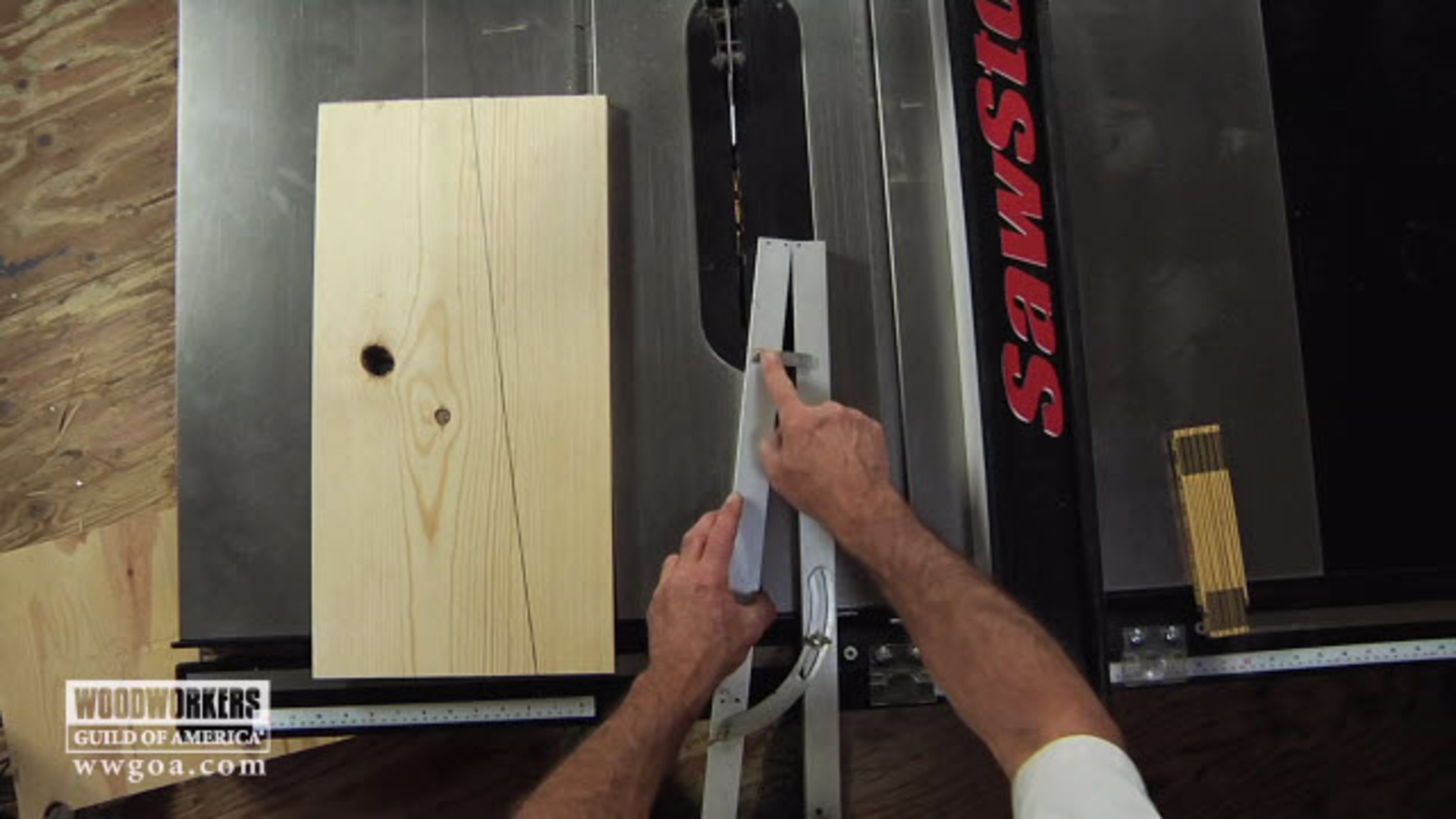
- Miter gauge: Slides in the saw’s slot, adjustable to specific angles
- Bevel adjustment: Tilts the blade for bevel cuts, usually up to 45 degrees
Must-have Accessories
- Miter gauge: Most table saws include one, but aftermarket gauges offer higher precision and better locking mechanisms.
- Digital angle gauge: For checking blade angle, far more accurate than built-in scales.
- Crosscut sled: Provides extra support and safety for miter cuts, reducing tear-out and improving accuracy.
- Push sticks/blocks: Keep your hands safe when making narrow or angled cuts.
- Clamps or hold-downs: Secure your workpiece, especially for small or tricky angles.
- Stop blocks: For repeatable cuts at the same length and angle.
Optional Upgrades
- Aftermarket fences: Offer more adjustment and smoother operation.
- Zero-clearance inserts: Reduce tear-out, especially for thin or angled cuts.
- Laser guides: Help visualize the cut line, though not essential.
Even with basic equipment, you can achieve great results if you know how to set it up and use it properly.
Setting Up Your Table Saw For Angled Cuts
Preparation is just as important as the cut itself. Spending a few extra minutes to set up your saw will pay off with cleaner, more accurate results and a safer experience.
Step 1: Clean And Inspect
Wipe down the table surface, fence, and miter gauge slot. Dust and debris can throw off your angles or make the wood slip.
Step 2: Check Blade And Fence Alignment
A misaligned blade or fence causes crooked cuts or even dangerous kickback. Use a combination square or a digital angle gauge to ensure everything is perfectly square before you start.
Step 3: Choose The Right Blade
For angled cuts, a sharp combination blade or crosscut blade works best. Avoid dull or damaged blades, as they can burn the wood or cause rough cuts.
Step 4: Set The Blade Height
Raise the blade so it extends about 1/8” to 1/4” above the thickness of your workpiece. This minimizes tear-out and makes cleaner cuts.
Step 5: Adjust Safety Features
Make sure your blade guard, riving knife, and anti-kickback pawls are in place if your saw is equipped with them. Never remove safety equipment unless absolutely necessary.
These setup steps are often skipped by beginners, but they are essential for consistent, high-quality results.
How To Cut Miter Angles On A Table Saw
Miter cuts are one of the most common angled cuts. Here’s how you can make them accurately and safely.
Step 1: Set The Miter Gauge
Most miter gauges have a scale from 0 to 60 degrees. Loosen the handle, adjust to your desired angle (for example, 45 degrees for a picture frame), and lock it down firmly. For high accuracy, use a digital protractor or angle gauge to verify the angle.
Step 2: Mark Your Workpiece
Mark the cut line clearly with a pencil. For best results, always cut just to the waste side of your line, then sneak up on a perfect fit with fine adjustments if needed.
Step 3: Position The Workpiece
Place the wood against the miter gauge’s fence, making sure it’s flat and stable. If the piece is long, support the far end with a stand or helper.
Step 4: Make The Cut
Start the saw, let the blade reach full speed, and push the miter gauge and workpiece smoothly through the blade. Keep hands well away from the blade and use a push stick if needed.
Step 5: Check And Repeat
Check the angle with a square or protractor. If you need multiple pieces, set up a stop block for repeatable accuracy.
Pro Tip
For extra safety and accuracy, use a crosscut sled with a built-in miter fence. It supports the workpiece better and reduces the chance of the wood shifting.
Example: Making A 45-degree Miter Cut
Suppose you want to make a picture frame. Set the miter gauge to 45 degrees, mark your boards, and cut one end of each piece. Then, flip the board and cut the opposite end at the same angle. This ensures each corner fits together perfectly.
How To Cut Bevel Angles On A Table Saw
Bevel cuts require you to tilt the saw blade instead of the workpiece. These are often used for decorative edges, joining panels, or making angled boxes.
Step 1: Adjust The Blade Angle
Locate the bevel adjustment wheel or lever on your saw. Most table saws tilt the blade up to 45 degrees. Set the desired angle using the saw’s scale, but always double-check with a digital angle gauge for accuracy.
Step 2: Lock The Angle
Once set, lock the bevel adjustment securely. Even a slight movement can change your cut.
Step 3: Set The Fence
Position the fence so the workpiece will pass safely and evenly across the tilted blade. Leave enough space for your hands and push tools.
Step 4: Make The Cut
With the saw running, feed the wood through steadily, keeping it flat against the table and fence. Use push sticks or featherboards for narrow pieces.
Step 5: Inspect The Cut
Check the angle with a bevel gauge or square. If you need to adjust, make tiny changes and test on scrap before cutting your final workpiece.
Pro Tip
Cutting bevels on thin stock can be tricky, as the blade can grab and lift the wood. Use a zero-clearance insert or tape the waste side to reduce tear-out.
Example: Cutting A 30-degree Bevel
Say you’re making a decorative edge on a panel. Tilt the blade to 30 degrees, lock it, and run the board through with the edge against the fence. Test on scrap first to avoid mistakes on your final piece.
Compound Angled Cuts: Combining Miter And Bevel
Some projects, like complex frames or angled boxes, need compound cuts—where both the miter gauge and blade are set to angles.
Step 1: Set Miter Gauge And Blade
Set the miter gauge to the desired miter angle (for example, 30 degrees), and tilt the blade to the required bevel angle (for example, 15 degrees). Always double-check both angles with accurate tools.
Step 2: Secure The Workpiece
Because the piece is cut on two angles, it can shift easily. Use clamps, sleds, or hold-downs for extra support.
Step 3: Make The Cut
Push the workpiece slowly and steadily. Compound cuts can create odd-shaped offcuts, so stand clear and use push tools.
Step 4: Test Fit
Check the fit with a dry assembly before moving on. Small errors in angle or alignment become more obvious with compound cuts.
Real-world Example
Crown molding often requires compound cuts to fit correctly at inside and outside corners. By adjusting both the miter and bevel, you can match the complex geometry of walls and ceilings.
Safety Guidelines For Angled Cuts
Cutting angles on a table saw brings unique risks. Here’s how to stay safe:
- Always wear safety glasses and hearing protection.
- Keep hands at least 6 inches from the blade.
- Use push sticks for narrow cuts.
- Never reach over the blade to retrieve cut pieces.
- Make sure the blade guard and riving knife are in place.
- Stand to the side of the blade, not directly in line, to avoid kickback.
- Allow the blade to stop completely before removing offcuts.
- If a piece feels unstable, stop and readjust before cutting.
Non-obvious Safety Insight
Many accidents happen when users try to cut pieces that are too small or unstable. For anything less than 12 inches long, use a crosscut sled or add temporary fences for better support.
Common Mistakes And How To Avoid Them
Even experienced users make errors. Here are mistakes to watch for—and how to avoid them:
- Relying on built-in angle scales: These are often off by a degree or more. Always verify with a digital gauge.
- Not supporting long pieces: Unstable wood can shift, causing bad cuts or kickback. Use roller stands or a helper.
- Cutting with a dull blade: Dull blades burn wood and leave rough edges.
- Skipping test cuts: Always make test cuts on scrap to confirm angles.
- Incorrect fence position: Placing the fence on the wrong side of the blade during bevel cuts can trap wood and cause kickback.
- Forgetting to lock angles: Double-check that both the miter gauge and bevel are locked before cutting.
Advanced Tip
For perfect miters, sneak up on the final angle. Start with a slightly wide cut, then trim small amounts until the fit is flawless.
Practical Projects Using Angled Cuts
Learning to cut angles is more rewarding when you use these skills in real projects. Here are some ideas and their required angled cuts:
| Project | Type of Cut | Common Angle | Skill Level |
|---|---|---|---|
| Picture Frame | Miter | 45° | Beginner |
| Crown Molding | Compound | Varies | Intermediate |
| Box Sides | Bevel | 45° | Beginner |
| Hexagonal Tray | Miter | 30° | Intermediate |
| Table Legs | Bevel | 5–15° | Advanced |
Each project offers a chance to practice and improve your angled cutting skills.
How To Troubleshoot Angled Cuts
Sometimes, even when you follow every step, the results aren’t perfect. Here’s how to solve common problems:
Problem: Gaps In Miter Joints
- Possible Cause: Angle was slightly off, or the board moved during cutting.
- Solution: Re-check angles with a digital gauge. Use a stop block for repeatability and add clamps during cutting if possible.
Problem: Rough Or Burned Edges
- Possible Cause: Dull blade or feeding the wood too slowly.
- Solution: Sharpen or replace the blade. Maintain a steady, moderate feed rate.
Problem: Tear-out Or Splintering
- Possible Cause: No zero-clearance insert, or poor support under the cut.
- Solution: Install a zero-clearance insert, and use painter’s tape along the cut line for fragile woods.
Problem: Wood Pinching Between Fence And Blade
- Possible Cause: Fence is too close to the blade during bevel cuts.
- Solution: Move the fence to the correct side, or use a miter gauge or sled instead.
Problem: Inconsistent Results
- Possible Cause: Not using a stop block or test cuts.
- Solution: Always test on scrap and use stop blocks for repeatable cuts.

Credit: www.wikihow.com
Choosing The Right Table Saw For Angled Cuts
If you’re shopping for a table saw or want to upgrade, not all saws are equal for angled cuts. Here’s what to look for:
| Feature | Why It Matters | Budget Saw | Pro Saw |
|---|---|---|---|
| Bevel Range | Allows more angle options | 0–45° | 0–50° |
| Miter Gauge Quality | Accuracy and repeatability | Basic, loose fit | Precision, tight fit |
| Blade Tilt Direction | Left-tilt is safer for bevel cuts | Right-tilt | Left-tilt |
| Fence System | Smoother, more secure cuts | Basic clamp | High-precision rail |
| Safety Features | Protects the user | Standard | Advanced (riving knife, sensors) |
If you plan to do a lot of angled cuts, investing in a saw with a high-quality miter gauge and a left-tilting blade can make a big difference.
Angle Measurement Tools: Accuracy Matters
Relying on built-in angle scales is a common beginner’s mistake. For precise results, use dedicated tools:
- Digital angle gauge: Reads blade tilt to 0.1° accuracy.
- Bevel gauge: Transfers angles from your project to the saw.
- Combination square: Checks for 90° and 45° angles.
These tools cost little but make a huge difference in your results.
Advanced Tips For Perfect Angled Cuts
If you want your work to stand out, go beyond the basics with these techniques:
- “Sneak up” on angles: Cut slightly wide, then trim in tiny increments for a perfect fit.
- Use blue tape: Place painter’s tape along the cut line to minimize splintering on delicate woods.
- Warm up with scrap: Always test your setup on scrap wood before working on your actual project.
- Upgrade to a high-quality miter gauge: Many stock miter gauges are not accurate. Aftermarket versions with positive stops (e.g., at 22.5°, 30°, 45°) make the job easier.
- Use a crosscut sled for tricky angles: For angles over 45°, a custom sled is often safer and more accurate.
Maintenance And Care For Accurate Angled Cuts
A well-maintained table saw is essential for quality angled cuts. Here’s how to keep your saw in top shape:
- Clean the table and slots regularly: Dust and debris can throw off your angles.
- Lubricate moving parts: Miter gauge, bevel gear, and fence rails should move smoothly.
- Inspect and replace blades: Dull or chipped blades cause poor cuts.
- Check alignment: Periodically check that the blade is parallel to the miter slot and fence.
A few minutes of maintenance can save hours of frustration and wasted material.

Credit: www.youtube.com
Real-world Example: Building A Custom Box With Angled Sides
Let’s put the techniques together with an example. Suppose you want to build a decorative box with angled sides.
- Design: Four sides, each cut with a 45-degree bevel for seamless joints.
- Setup: Set the blade to 45°, use a digital angle gauge, and install a zero-clearance insert.
- Cut: Rip each side to width, then bevel both top and bottom edges.
- Assembly: Test fit all pieces, adjust as needed, then glue and clamp.
- Result: Crisp, clean corners with no visible end grain.
This project combines both accuracy and creativity, showcasing the power of angled cuts.
When To Use Other Tools For Angled Cuts
While table saws are powerful, sometimes a miter saw or track saw is better for certain angles or very large pieces. For example, if you need to cut a 12-foot baseboard at 45°, a miter saw is easier to handle. Use the table saw for smaller, precise pieces and more complex compound angles.
For more information on different saw types, see the overview on Wikipedia.
Credit: www.wwgoa.com
Frequently Asked Questions
What Is The Difference Between A Miter Cut And A Bevel Cut On A Table Saw?
A miter cut is made by rotating the workpiece at an angle (using the miter gauge), so the cut is across the width of the board. A bevel cut is made by tilting the saw blade, so the cut is through the thickness of the wood. Both are essential for different types of joinery and design.
How Do I Ensure My Table Saw Angles Are Accurate?
Use a digital angle gauge to set and verify both your blade and miter gauge angles. Avoid relying solely on the built-in scales, which are often inaccurate. Always make test cuts on scrap to check your setup before cutting your actual workpiece.
Can I Make Compound Angles On Any Table Saw?
Most modern table saws can handle compound cuts by adjusting both the miter gauge and the blade tilt. However, for very complex angles or heavy pieces, a specialized saw or jig might be needed. Always check your saw’s maximum tilt and miter range before starting.
What Is The Safest Way To Cut Small Angles On A Table Saw?
For small pieces or acute angles, always use a crosscut sled or a miter gauge with added supports. Never try to cut tiny pieces freehand, as they can be dangerous. Use push sticks, clamps, and stop blocks for added safety and precision.
Why Are My Miter Joints Not Fitting Tightly?
Loose miter joints usually result from small errors in angle setting, wood movement during cutting, or a dull blade. Double-check your angles with a digital gauge, support your wood well, and use a sharp blade. Sneak up on the perfect fit by trimming small amounts if needed.
Final Thoughts
Cutting angles on a table saw is both an art and a science. By understanding the difference between miter and bevel cuts, setting up your saw correctly, and using the right accessories, you can create professional-quality work with confidence. Always prioritize safety, accuracy, and patience—test your setup, use the right tools, and take your time for the best results.
With practice, you’ll find that making angled cuts opens up new creative options in your woodworking. Whether you’re framing a photo, building custom furniture, or tackling home renovations, these skills will serve you well for years to come.