Are Table Saw Blades Reverse Threaded
If you own a table saw or are thinking of buying one, you’ll soon deal with changing the blade. This simple task can be confusing, especially when you hear the term reverse threaded. Many people wonder: are table saw blades reverse threaded? If you force the nut the wrong way, you could damage your saw or hurt yourself. Knowing the right direction can save you time, money, and stress.
In this guide, you’ll learn exactly how table saw blades are mounted, what “reverse threaded” means, and how to safely change your blade. We’ll break down the mechanics, clear up common myths, and give you practical tips for different saw models.
Whether you’re a DIY beginner or a pro, you’ll find new insights that make blade changes simple and safe.
What Does “reverse Threaded” Mean?
The idea of reverse threading can sound complicated, but it’s actually simple. Most screws, nuts, and bolts use right-hand threads. This means you turn them clockwise (to the right) to tighten, and counterclockwise (to the left) to loosen. With reverse (left-hand) threads, it’s the opposite: you turn counterclockwise to tighten and clockwise to loosen.
Reverse threads are used in some machines to stop nuts from coming loose during operation. For example, some bicycle pedals and angle grinders use reverse threads. But what about table saws?
Are Table Saw Blades Actually Reverse Threaded?
The short answer: Most table saw blades are NOT reverse threaded. In almost all cases, the arbor nut holding the blade uses a standard right-hand thread. This means:
- Turn right (clockwise) to tighten
- Turn left (counterclockwise) to loosen
This is true for most table saws made for the US market and many others around the world. However, there are a few exceptions and special cases, which we’ll cover in detail.
Why Do People Think Table Saw Blades Are Reverse Threaded?
This confusion comes from several sources:
- Other Tools Use Reverse Threads: Tools like angle grinders and some miter saws use reverse threads to keep the blade nut from loosening during use. People think table saws must be the same.
- Direction of Blade Rotation: Table saw blades spin toward the operator, which feels different than other saws. Some think the nut should be reverse threaded to counter this.
- Old Manuals and Myths: Some old saws (especially European models) and outdated manuals mention reverse threads, adding to the confusion.
- Online Forums and Advice: Incorrect answers online often say “reverse thread” without checking the specific saw model.
In reality, nearly all modern table saws use a standard right-hand thread, but it’s always smart to check your manual.
How Table Saw Arbors And Blades Work
Understanding arbor design helps explain why blade nuts rarely use reverse threads.
What Is An Arbor?
The arbor is the shaft where the table saw blade mounts. It holds the blade steady and spins it at high speed. The arbor has threads at the end, where the nut screws on to clamp the blade.
Why Right-hand Threads Are Standard
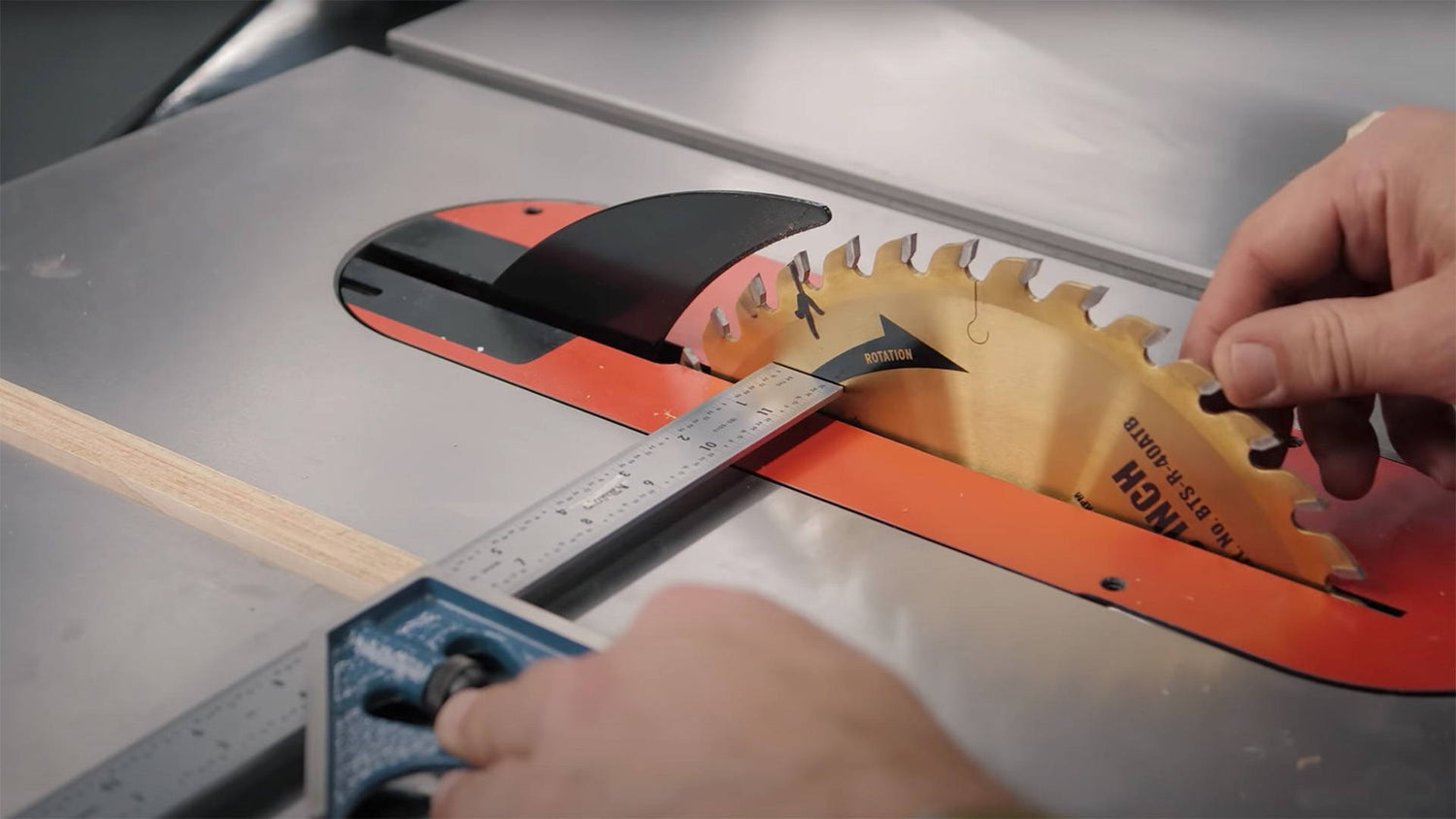
The blade spins toward the front of the saw. The right-hand thread tightens naturally as the blade rotates and cuts wood. The friction and cutting force press the blade against the arbor flange, keeping the nut tight. This makes a reverse thread unnecessary.
When Reverse Threads Are Used
Reverse threads are more common on tools where the rotation could loosen the nut, such as left-side mounted circular saws or some grinders. On table saws, the standard rotation means the nut actually tightens during operation.
Credit: kmtools.com
How To Tell If Your Table Saw Blade Is Reverse Threaded
While most are not, you should always check your specific saw. Here’s how:
- Read the Owner’s Manual: The safest way. Look for “arbor” or “blade installation” instructions.
- Check the Arbor Nut: Most nuts have a small arrow or “L” (left) or “R” (right) stamped on them.
- Observe the Threads: If you remove the nut, look at the threads. If they spiral up to the right, it’s right-hand. If they go up to the left, it’s left-hand (reverse).
- Ask the Manufacturer: If you’re unsure, email or call the company with your model number.
- Look for Markings on the Saw: Some saws have arrows or labels near the blade/arbor area.
Never force the nut if you’re unsure. If it’s not moving with gentle pressure, double-check your method.
Changing A Table Saw Blade: Step-by-step Guide
Changing a blade is simple if you follow these steps. Here’s a straightforward process for most table saws:
- Unplug the Saw: Safety first. Never change a blade while the saw is plugged in.
- Raise the Blade: Turn the wheel to raise the blade to its highest point.
- Remove the Throat Plate: This is the flat piece around the blade.
- Wedge the Blade: Use a scrap piece of wood to block the blade from spinning.
- Loosen the Arbor Nut: Use the wrench provided with your saw. Turn counterclockwise (left) to loosen, unless your manual says otherwise.
- Remove the Nut and Flange: Slide them off and keep them safe.
- Take Out the Old Blade: Carefully lift it out.
- Install the New Blade: Make sure the teeth point toward the front of the saw.
- Replace the Flange and Nut: Tighten the nut clockwise (right). Do not overtighten.
- Replace the Throat Plate and Plug In: You’re done.
Important Safety Tip
Never use power tools to tighten the arbor nut. Hand-tighten only, and check for movement before use.
Table: Thread Direction By Table Saw Brand
Here’s a quick look at popular brands and their typical thread direction.
| Brand | Model Example | Thread Direction | Notes |
|---|---|---|---|
| DeWalt | DW745 | Right-hand | Standard for US/Canada |
| Bosch | 4100-10 | Right-hand | Check manual for rare EU models |
| Makita | 2705 | Right-hand | Standard on all models |
| Delta | 36-725T2 | Right-hand | No left-hand models |
| SawStop | PCS175 | Right-hand | Safety system unaffected by threading |
| Grizzly | G0771Z | Right-hand | Rare left-hand on old models |
Common Exceptions: When Reverse Threads May Appear
While 99% of table saws use right-hand threads, here are some rare cases where you might find reverse threads:
- Some European Saws: A few older or high-end European models mount the blade on the left and may use reverse threads.
- Custom or Aftermarket Arbors: If you or a shop have replaced the arbor, it’s possible a reverse-threaded one was installed.
- Specialty Saws: Some industrial saws (used for plastics, metals) use left-hand threads for safety.
- Very Old Saws: Pre-1950s models sometimes have left-hand threads. Always check the manual or consult an expert if you have a vintage saw.
Real-world Example: Changing A Blade On A Dewalt Dw745
Let’s look at a common jobsite saw, the DeWalt DW745.
- Unplug the saw.
- Raise the blade all the way up.
- Remove the throat plate by unscrewing the single screw.
- Use the included wrench to hold the arbor and loosen the nut counterclockwise.
- Remove the nut, flange, and blade.
- Install the new blade, making sure the teeth face forward.
- Tighten the nut clockwise by hand. Do not overtighten.
This saw uses a right-hand thread, like almost all DeWalt saws.
Table: Right-hand Vs. Left-hand Thread—key Differences
Here’s a quick comparison to help you spot the difference:
| Feature | Right-Hand Thread | Left-Hand (Reverse) Thread |
|---|---|---|
| Tighten Direction | Clockwise | Counterclockwise |
| Loosen Direction | Counterclockwise | Clockwise |
| Table Saw Blades | Standard | Rare (some vintage/EU models) |
| Common Tools | Wrenches, table saws | Angle grinders, some miter saws |
Non-obvious Insights Beginners Often Miss
Many guides stop at the basics. Here are two important details most beginners don’t know:
1. The Arbor Flange Must Be Clean And Flat
Before mounting a new blade, always check that the arbor flange (the flat metal washer) and the blade face are clean. Even a bit of sawdust or resin can make the blade wobble. A dirty flange is a common cause of vibration and poor cuts.
2. Do Not Overtighten The Arbor Nut
It’s a myth that you need to wrench the nut as tight as possible. The saw’s rotation naturally keeps it snug. If you overtighten, you can strip the threads or bend the arbor. Hand-tight plus a gentle tug with the wrench is enough.
If the nut is hard to remove next time, you probably overtightened it.
How To Check Blade Rotation Direction
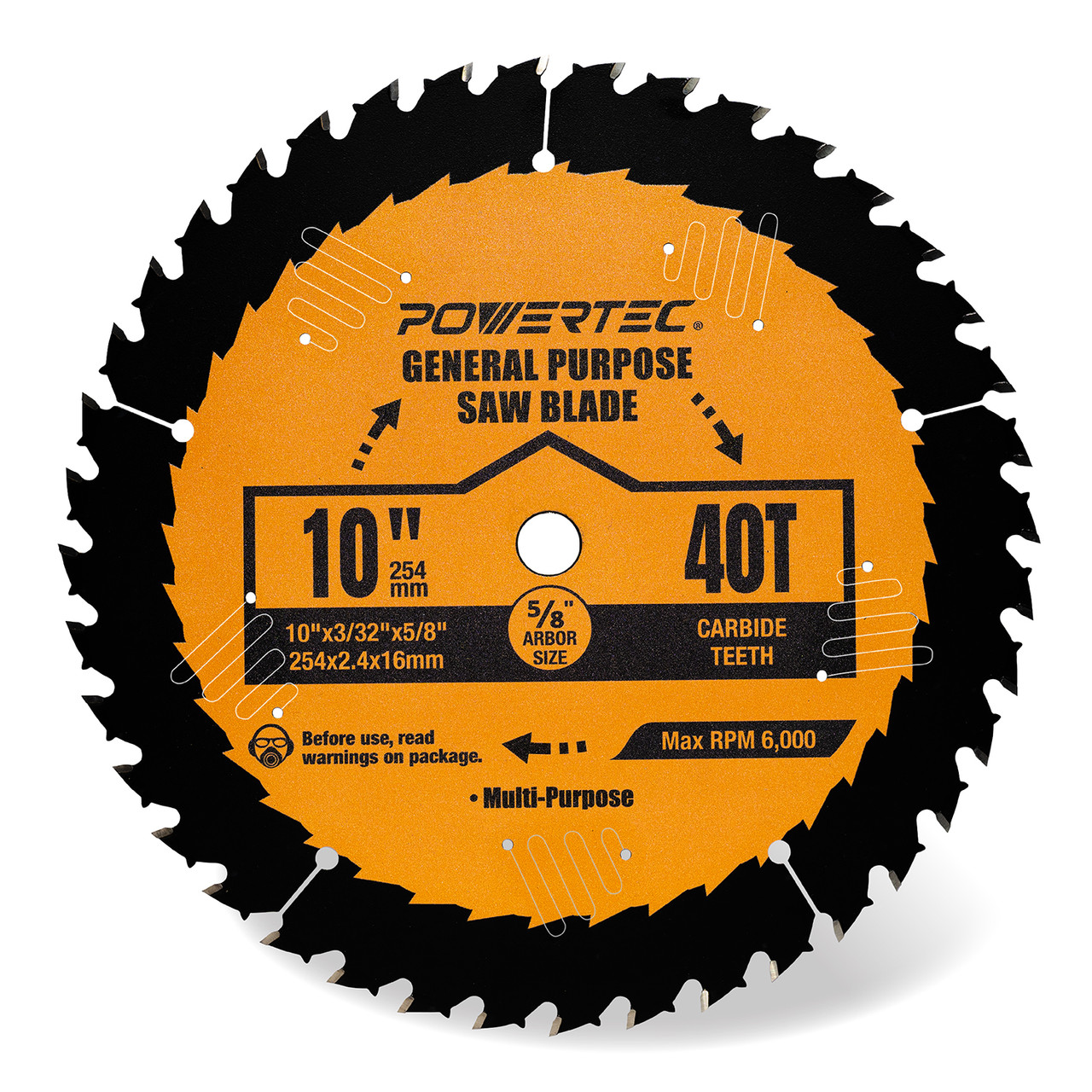
Installing the blade backward is a common mistake. Most blades have an arrow showing the rotation direction. On table saws, the teeth should point toward the front of the saw, toward you when standing at the operator’s position.
If you’re unsure, check your manual or look for arrows stamped on the blade and the saw body.
Credit: powertecproducts.com
Safety Tips When Changing Table Saw Blades
Changing a blade is routine, but it’s also risky if you rush. Here are some safety tips:
- Always unplug the saw. Never trust the switch alone.
- Wear gloves if the blade is dull or dirty. New blades are very sharp.
- Block the blade with a scrap of wood, not your hand, to prevent movement.
- Double-check blade tightness before plugging in the saw.
- Use the right wrench size. Forcing the wrong tool can round off the nut.
Common Mistakes To Avoid
Here are some classic errors to watch out for:
- Forcing the nut the wrong way: If it’s not loosening easily, you may be turning the wrong direction.
- Mounting the blade backward: This leads to burning wood and poor cuts.
- Losing the flange or washer: Always keep these parts together when changing blades.
- Not cleaning the arbor and flange: Dirt here causes vibration and rough cuts.
- Overtightening the nut: This can damage your saw.
Credit: www.reddit.com
Table: Changing Table Saw Blade—problems And Solutions
| Problem | Likely Cause | Solution |
|---|---|---|
| Nut won’t loosen | Wrong direction or overtightened | Check thread direction; use proper wrench |
| Blade wobbles | Dirty flange or bent blade | Clean flange; replace blade if bent |
| Blade burns wood | Blade installed backward | Check tooth direction; reinstall correctly |
| Blade won’t spin | Nut too tight or misaligned blade | Loosen, realign, and retighten nut |
How Often Should You Change Or Check The Blade?
How often you change the blade depends on use, but you should check it every few weeks or whenever you notice:
- Burning or rough cuts
- More effort needed to push wood through
- Visible dullness or missing teeth
- Vibrations or weird noises
Most hobbyists change blades every 6-12 months. Professionals may switch blades weekly or even daily, depending on the work.
What If The Nut Is Stuck?
Sometimes, the arbor nut is stuck and won’t budge. Here’s what to do:
- Apply penetrating oil (like WD-40) and wait a few minutes.
- Tap the wrench gently with a rubber mallet. Do not use a hammer.
- Double-check thread direction. Most likely, it loosens counterclockwise.
- Don’t use excessive force. If it won’t move, consult a service center.
Are Other Saws Reverse Threaded?
Here’s where the myth comes from. Some other power tools use reverse threads:
- Angle grinders: Usually left-hand thread, especially on the left side.
- Some miter saws: May use reverse threads depending on blade side.
- Right-angle drills: Sometimes use reverse threads.
But for table saws, right-hand threads are almost universal.
How To Identify Thread Direction Without Manual
If you’ve lost your manual, here’s a simple trick. Hold the arbor with the nut facing you. If the threads spiral up and to the right, it’s a right-hand thread. If they go left, it’s a left-hand thread.
What To Do If You Have A Reverse-threaded Saw
If you discover your saw is one of the rare reverse-thread models:
- Mark the Direction: Use a permanent marker or label.
- Inform Others: Anyone else using the saw should know.
- Order Spare Parts: Reverse-threaded nuts can be hard to find.
Always follow your specific saw’s instructions.
Can You Convert A Reverse-threaded Saw To Standard?
In theory, you could swap the arbor for a right-hand thread model, but this is rarely worth the cost or effort. It may also void your warranty or cause alignment issues.
If you have a working reverse-threaded saw, it’s best to keep it as is and just be careful.
The Importance Of The Right Blade For The Right Job
Thread direction is not the only thing that matters. Choosing the right blade type for your material (wood, plywood, MDF, or laminate) is just as important for safety and results.
Useful Resources And Further Reading
For more on table saw safety and blade care, check reputable sources like Wikipedia’s Table Saw page.
Frequently Asked Questions
Is It Safe To Use A Power Tool To Tighten The Arbor Nut?
No, always use hand tools to tighten the arbor nut. Power tools can easily overtighten and damage the threads or arbor, making future blade changes difficult or dangerous.
Can I Use Any Table Saw Blade On My Saw?
Most table saws use a 5/8″ arbor hole, but always check your saw’s specs. The blade’s diameter and thickness must match your saw’s capacity. Using the wrong size can damage the saw or be unsafe.
Why Does My Blade Keep Coming Loose During Use?
This is rare if you have the right thread direction and the nut is hand-tightened. If it happens, check for a worn nut, damaged threads, or missing flange. Never use a reverse-thread nut on a right-thread arbor.
How Do I Know If My Saw Is Right Or Left Hand Threaded?
Check your manual, look for arrows or labels near the arbor, or examine the thread direction. If in doubt, try loosening the nut gently both ways—do not force it.
Do Left-handed Users Need A Reverse-threaded Saw?
No, thread direction is unrelated to which hand you use. It’s determined by the saw’s design, not user preference.
Table saw blade changes get easier with practice. By understanding thread direction and following these tips, you can work safer and with more confidence. Whether you’re using a modern DeWalt, a vintage European saw, or something in between, the right knowledge keeps your projects on track and your fingers safe.