
The best glue cement to wood combines strong grip, gap filling, and waterproof hold.
You want a bond that lasts. Maybe you’re attaching a wood threshold to a concrete floor, fixing a stair tread, or building a bench that sits on stone. I’ve been there. The wrong adhesive can fail fast, but the right one can outlast the wood itself. In this guide, I break down top choices for bonding wood to concrete, tile, stone, and more. I also cover classic wood-to-wood glues for joinery that won’t budge. I tested, researched, and compared real-world performance so you can pick with confidence and get pro-grade results at home.

Heavy Duty Construction Adhesive, 8.8…
POWERFUL BONDING FOR HEAVY-DUTY PROJECTS – Our construction adhesive delivers industrial-strength bonding that holds up under pressure. Whether you’re securing concrete blocks, installing tiles, or bonding wood panels, this high-performance…

Gorilla Wood Glue; 8 Ounce…
Complete Projects Fast: Requires only 20-30 minutes of clamp time; fully cured in 24 hours. Quickly creates an incredibly strong bond for wood projects. Use Indoors or Outdoors: Passes ANSI/HPVA…

Metal Glue – High Strength,…
Need a fix that holds fast and lasts? Our professional-grade epoxy sets in just 5 minutes and cures to a steel-like strength within 24 hours. It creates a permanent, waterproof…
Heavy Duty Construction Adhesive, 8.8 oz
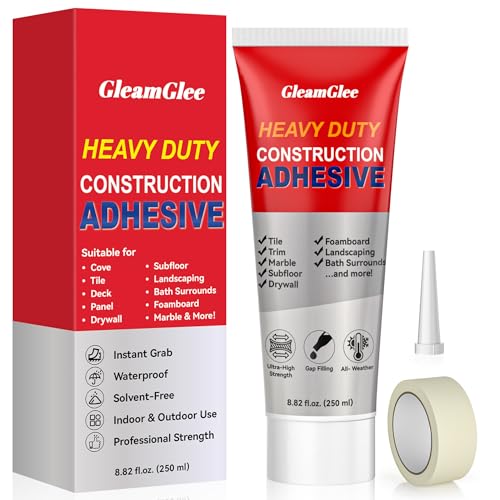
This heavy duty construction adhesive is made for tough jobs. It bonds wood to concrete, tile, stone, and even painted surfaces. The formula is thick, so it fills gaps and reduces squeeze-out. It works indoors and outdoors, and it holds up to moisture once cured.
Use it for thresholds, stair nosing, subfloors, and wall trims on masonry. The bond sets up in minutes, but I still brace parts for a day. Full cure often takes 24–48 hours. Once cured, it’s paintable and stays slightly flexible to handle seasonal wood movement.
Pros:
- Excellent for wood-to-concrete and wood-to-stone bonds
- Gap-filling body for rough or uneven surfaces
- Waterproof after cure for indoor/outdoor use
- Paintable, low mess with a controlled bead
- Remains slightly flexible to resist shear stress
Cons:
- Longer cure time than instant adhesives
- Not ideal for fine furniture joinery
- May require a caulk gun and steady hand
My Recommendation
If you want a secure bond between wood and masonry, this is a smart pick. It’s forgiving on imperfect surfaces and holds strong in damp or outdoor spots. For DIYers anchoring wood sills, thresholds, or trim to concrete, it earns trust. I consider it one of the best glue cement to wood choices for heavy projects that need lasting strength.
| Best for | Why |
|---|---|
| Wood-to-concrete thresholds | Strong, gap-filling, waterproof hold |
| Outdoor trim on masonry | Handles moisture and temperature swings |
| Subfloor and stair treads | Thick bond reduces squeaks and movement |
Gorilla Wood Glue, 8 oz
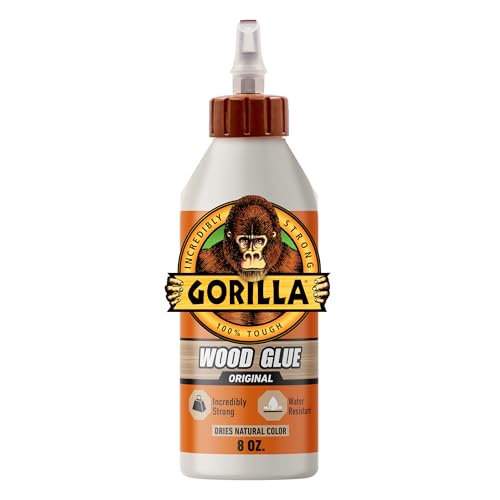
Gorilla Wood Glue is a proven PVA for clean wood-to-wood joints. It dries to a natural wood color that’s easy to sand and finish. It has a good open time for alignment and clamps well. Once cured, it delivers a tough bond that can outlast the wood fibers.
It carries water resistance suitable for indoor projects and light outdoor use when sealed. Cleanup is simple with water while wet. I use it for panels, face frames, edge joints, and most furniture tasks. It’s not a cement-to-wood adhesive, but it’s essential for your shop bench.
Pros:
- Strong PVA bond that sands and stains well
- Generous open time for precise fit-ups
- Water-resistant for interior and covered exterior
- Easy water cleanup when wet
- Reliable, consistent results for joinery
Cons:
- Not for wood-to-concrete or tile
- Needs proper clamping pressure
- Not waterproof for direct water exposure
My Recommendation
For wood-to-wood assembly, this is a staple glue. If you need clean glue lines and a bond that planes smooth, it fits. Keep this alongside a construction adhesive so you’re covered on all fronts. I reach for this often, and I pair it with the best glue cement to wood when a project moves from joinery to installation.
| Best for | Why |
|---|---|
| Furniture joinery | Strong PVA bond that sands clean |
| Panels and edge-gluing | Good open time and clamp performance |
| Trim and cabinetry | Natural color and easy cleanup |
High-Strength Metal Epoxy, 1.76 oz

This two-part epoxy focuses on metal, but it bonds many materials. With good prep, it sticks to wood, plastic, ceramic, and glass too. The cured resin is rigid and strong, with excellent shear and peel resistance. It’s a go-to for mixed-material repairs and structural fixes.
I use it when screws aren’t possible and I need a permanent hold. Rough up the surfaces and degrease before applying. Epoxy needs accurate mixing and a steady hand. Give it time to cure, and you’ll get a bond that laughs at vibration.
Pros:
- Great for wood-to-metal repairs and fixtures
- High-strength, rigid bond with low creep
- Good chemical and heat resistance
- Bridges small gaps and voids
- Multi-surface compatibility for complex jobs
Cons:
- Requires careful mixing for best results
- Short working time on some versions
- Rigid bond may crack on large wood movement
My Recommendation
Choose this when a project blends steel and wood, or you need a tough fix. It’s ideal for brackets, hardware, or art pieces that mix mediums. For those seeking the best glue cement to wood alternatives on metal, epoxy shines with durability. Store it for those tricky repairs that nothing else seems to solve.
| Best for | Why |
|---|---|
| Wood-to-metal brackets | Rigid, high-shear epoxy bond |
| Automotive or tool repairs | Heat and chemical resistance |
| Mixed-media crafts | Adheres to many surfaces with prep |
Titebond III Ultimate Wood Glue, 16 oz

Titebond III is a premium PVA with waterproof performance. It offers a longer open time for complex glue-ups. Once cured, it’s strong, sandable, and safe for indirect food contact after cure. In tests common to the industry, it rates high in shear strength.
I lean on it for cutting boards, outdoor furniture, and any joinery near sinks or baths. Cleanup is water-based when wet. Clamp pressure is still key to success. If you want wood joints that shrug off moisture, this is a winner.
Pros:
- Waterproof performance for outdoor projects
- Long open time for larger assemblies
- Sands clean and finishes well
- Trusted for cutting boards and kitchen use after cure
- Strong, consistent bond quality
Cons:
- Not designed for wood-to-concrete bonds
- Needs proper clamping for full strength
- Can creep slightly under high heat
My Recommendation
If your project is wood-to-wood and sees water, pick this. It’s excellent for outdoor chairs, garden boxes, and sink-side shelves. I keep it on my bench for high-stakes joinery that must endure. When I also need wood-to-masonry bonds, I pair it with the best glue cement to wood for installations.
| Best for | Why |
|---|---|
| Cutting boards | Waterproof and food-safe after cure |
| Outdoor furniture | Resists weather and moisture |
| Complex glue-ups | Longer open time for alignment |
Heavy Duty Construction Adhesive, 7.4 oz

This squeeze-tube construction adhesive is handy for smaller jobs. The 7.4 oz tube fits tight spaces and doesn’t need a gun. It bonds wood to concrete, tile, and stone. The thicker body fills rough spots and reduces the need for perfect prep.
It’s a good pick for baseboards on masonry or stair trim. The cure is moisture-resistant and reliable for indoor use, with outdoor potential depending on exposure. Clean surfaces and dry fit first. A light brace helps keep parts steady as it sets.
Pros:
- Compact tube, no caulk gun required
- Great for wood-to-tile or wood-to-concrete
- Gap-filling for rough surfaces
- Good control for trim and detailed work
- Solid hold for small to mid-size tasks
Cons:
- Not as economical for large projects
- May have longer set time in cold
- Limited bead size vs. full cartridge
My Recommendation
Use this when you want precision and minimal tools. It shines for quick trim installs or repairs where a full cartridge is overkill. For occasional wood-to-masonry jobs, it’s a convenient sidekick. I’d rank it high on a shortlist of the best glue cement to wood for small-space fixes.
| Best for | Why |
|---|---|
| Baseboard to masonry | Controlled bead in tight corners |
| Stair nosing repairs | Strong bond without a caulk gun |
| Small tile transitions | Gap-filling on uneven surfaces |
Super Glue with Brush, 130 ml

This is a brush-on cyanoacrylate, or super glue. The brush makes it easy to coat small joints and edges. It bonds wood, ceramic, plastic, rubber, and more. It sets very fast, which is perfect for quick fixes and jigs.
I use super glue with an activator for instant holds. It’s great for edge chips, veneer repairs, and small trim pieces. It’s not the best option for wood-to-concrete, but it earns a spot in every toolbox. The clear bond hides well under finish.
Pros:
- Fast set for quick repairs
- Brush lid improves control and coverage
- Works on many household materials
- Clear, neat bond line
- Great for jigs, templates, and small trims
Cons:
- Brittle on large, moving joints
- Short open time can trap mistakes
- Not ideal for wood-to-masonry loads
My Recommendation
Keep this for small, urgent fixes and craft tasks. It shines when time matters and the piece is small. It’s not a cement-to-wood workhorse, but it covers a vital niche. I often pair it with the best glue cement to wood so I can move from instant tacking to long-term installs.
| Best for | Why |
|---|---|
| Veneer and chip fixes | Brush control and quick bond |
| Shop jigs and templates | Instant hold to keep work moving |
| Small trim and décor | Clear, tidy finish |
Yeardera Clear Construction Adhesive

This clear construction adhesive gives you a cleaner look. It bonds tile, floor, stone, wood, and walls. The transparent cure helps hide squeeze-out lines. It’s ideal when the bead might be visible or near glass and light woods.
Use it where neatness meets strength. It holds up to moisture and daily stress. I like it for kitchen transitions and decorative trims over masonry. Let it cure fully before load; clear adhesives often need that extra patience.
Pros:
- Clear cure for a cleaner appearance
- Versatile across tile, stone, and wood
- Good for visible joints and glassy surfaces
- Moisture-resistant after curing
- Reduced visual footprint on light woods
Cons:
- May cure slower than opaque versions
- Not for ultra-heavy structural loads
- Requires careful surface cleaning
My Recommendation
Pick this when a neat, near-invisible joint matters. It’s solid for thresholds, glass-wood accents, and tile trims. If you want function and form, this earns its place. I count it among the best glue cement to wood when you need a strong bond that doesn’t show.
| Best for | Why |
|---|---|
| Visible trim joints | Clear cure hides the bead |
| Glass and light woods | Less discoloration at the joint |
| Tile transitions | Strong, neat finish |
Max Strength Clear Construction Adhesive, 2.8 oz

This small clear adhesive tube packs a punch. It’s billed to work even underwater, which is rare and helpful. The tube design gives you pinpoint control. For small fixtures, tile repairs, and wood-to-stone accents, it’s a tidy solution.
I like it for bathrooms, kitchens, and outdoor décor. Use it for small areas where a big cartridge is overkill. The clarity helps the finished look. Always let it cure per instructions, especially in wet conditions.
Pros:
- Works in wet environments and even underwater
- Clear cure for subtle joints
- Great control with small integrated tube
- Strong on wood, tile, and stone
- Perfect for repairs and small installs
Cons:
- Not suited for large surface bonding
- Higher cost per ounce
- Requires patience for full cure in wet areas
My Recommendation
If you’re fixing a shower threshold or an outdoor plaque, this fits. It’s built for damp spots where normal glue struggles. For wood-to-masonry in wet zones, it’s clutch. I see it as one of the best glue cement to wood picks when moisture is unavoidable.
| Best for | Why |
|---|---|
| Bathrooms and kitchens | Performs in wet conditions |
| Small decorative installs | Controlled bead and clear finish |
| Outdoor plaques | Moisture-tolerant bond |
Meuvcol Metal Glue, 100 g

This metal-focused adhesive targets aluminum, stainless, and other alloys. It also bonds wood, rubber, and some plastics. With proper surface prep, it holds fast under stress. It’s a practical choice for metal-to-wood plaques, fixtures, and hardware.
I prep by scuffing and degreasing. The cure becomes tough and clear. It’s useful for repairs when drilling isn’t an option. For crafts and light-duty structural duties, it delivers value.
Pros:
- Good for metal-to-wood bonding
- Clear finish for a neat look
- Fast bonding for quick repairs
- Versatile across materials
- Useful when mechanical fasteners aren’t possible
Cons:
- Not ideal for high-heat zones
- May be brittle on large wood movement
- Surface prep is crucial for strength
My Recommendation
Use this for metal labels, décor, and brackets on wood. It also suits quick shop fixes. If you often mix wood and metal, keep a tube handy. I see it as a helpful partner to the best glue cement to wood when your project crosses material lines.
| Best for | Why |
|---|---|
| Metal plaques on wood | Clear, strong, simple |
| Light hardware fixes | Good initial tack and cure |
| Craft and décor | Multi-material bonding |
Heavy Duty Construction Adhesive, 10.5 oz

This 10.5 oz cartridge is built for bigger jobs. It’s waterproof and rated for tile, concrete, stone, wood, and granite. The larger volume is more economical for long runs. The cured bead forms a rugged bond ready for traffic.
I use it for stair treads, subfloors, and long thresholds. Brace parts for the first day while it grabs. The bead is paintable after cure. It’s a reliable choice for interior and many exterior tasks.
Pros:
- Large cartridge for bigger projects
- Strong on wood-to-stone and wood-to-concrete
- Waterproof after full cure
- Paintable, durable finish
- Cost-effective per ounce
Cons:
- Needs a quality caulk gun
- Heavier tube can fatigue your hand
- Not for delicate joinery
My Recommendation
If you’re bonding long runs or heavy pieces, grab this. It’s a workhorse for stair and flooring tasks. I’d list it among the best glue cement to wood when volume and strength both matter. Ideal for weekend warriors and pros alike.
| Best for | Why |
|---|---|
| Long thresholds | Economical and strong over distance |
| Subfloors | Reduces squeaks with a tough bond |
| Stairs and risers | Reliable grab and durability |
Heavy Duty Construction Adhesive, 8.8 oz (Alt)
This 8.8 oz waterproof construction glue is versatile. It bonds floors, walls, wood, stone, and concrete. The formula is made to take on indoor and outdoor jobs. It holds firm once cured, even with light movement.
Use it for granite thresholds, masonry trims, and decking details. It’s thick enough to fill gaps. I always clean with a degreaser and dust off pores. Expect a solid bond that stands up to time.
Pros:
- All-around construction-grade strength
- Works on many porous materials
- Waterproof after full cure
- Good gap-filling body
- Paintable and durable
Cons:
- Not instant; needs bracing time
- Can be messy without careful application
- Less suitable for fine trim joinery
My Recommendation
For general installs where wood meets stone or concrete, this is solid. It balances performance and price. If your project spans a few substrates, keep it close. I’d call it one of the best glue cement to wood options for everyday renovation work.
| Best for | Why |
|---|---|
| Granite-to-wood transitions | Strong bond on dissimilar materials |
| Deck accents | Weather-ready after cure |
| Wall trims on masonry | Gap filling for rough surfaces |
Heavy Duty Construction Adhesive, 7.4 oz (Alt)
This alternative 7.4 oz tube is built for rough surfaces. It bonds cement, floor, wall, stone, and wood. The squeeze-tube format offers easy control in corners. Use it where precision and a smaller bead matter most.
I find it handy for repairs and small runs in older homes. Uneven plaster or rough masonry is no problem. Clean, dry surfaces give the best bond. Expect a durable cure suited for daily wear.
Pros:
- Excellent control from a squeeze tube
- Engineered for rough bonding surfaces
- Strong, durable hold on multiple materials
- Good for small projects and repairs
- Minimal waste compared to large cartridges
Cons:
- Limited volume for big jobs
- May require longer bracing on heavy parts
- Bead size limited by nozzle
My Recommendation
Got a small but tough bond to make on old masonry? This fits the bill. It’s precise, strong, and simple to use. It’s not a shop glue, but out in the field it saves time. I’d include it in any kit focused on the best glue cement to wood for repairs.
| Best for | Why |
|---|---|
| Old masonry repairs | Great control on rough surfaces |
| Tight corners | Squeeze tube access and accuracy |
| Small thresholds | Durable hold without waste |
FAQs Of best glue cement to wood
What is the strongest way to bond wood to concrete?
Use a construction adhesive made for wood-to-masonry. Clean, dry both surfaces. Apply a continuous bead, press, and brace for 24 hours.
Is epoxy better than construction adhesive for wood-to-stone?
Epoxy gives a very rigid, high-strength bond. Construction adhesives add flexibility and gap filling. Choose based on joint size and movement.
Can I use wood glue on cement?
No. Standard wood glue is for wood-to-wood only. Use a construction adhesive or epoxy for cement or tile.
How long should I clamp or brace the joint?
Most construction adhesives need bracing for 12–24 hours. Epoxy varies by formula. Always check the label and allow full cure.
Will these adhesives handle moisture outdoors?
Many are waterproof after cure. Look for indoor/outdoor ratings and follow cure times. Seal wood surfaces when possible for best life.
Final Verdict: Which Should You Buy?
For solid wood-to-masonry bonds, a construction adhesive is king. The 10.5 oz heavy duty option is my top pick for strength and coverage. For precise, smaller installs, the 7.4 oz squeeze tube is a close second.
For wood joinery, I rely on Titebond III and Gorilla Wood Glue. Pair one of them with the best glue cement to wood for installs, and you’ll be ready for any project.