
Diablo D1060X leads for smooth, clean, burn‑free cuts on miter saws.
You know that feeling when a gorgeous piece of trim tears out at the last inch? Or when a simple crosscut leaves burn marks and you have to sand it forever? I’ve been there. The right blade fixes all of it. The best 10 inch blade for miter saw turns shaky joints into tight seams and turns pine, oak, and even melamine into glass-smooth edges. In this guide, I’ll break down the picks that actually earn their spot on your saw, from fine-finish heroes to budget-friendly workhorses. You’ll find what fits your cuts, your projects, and your wallet—without guesswork.

Diablo Fine Finish Saw Blade…
Ultra-Smooth Finish – High tooth count and Hi-ATB geometry deliver clean, precise cuts, minimizing blowout and reducing the need for sanding. Enhanced Durability – TiCo Hi-Density carbide teeth are specially…
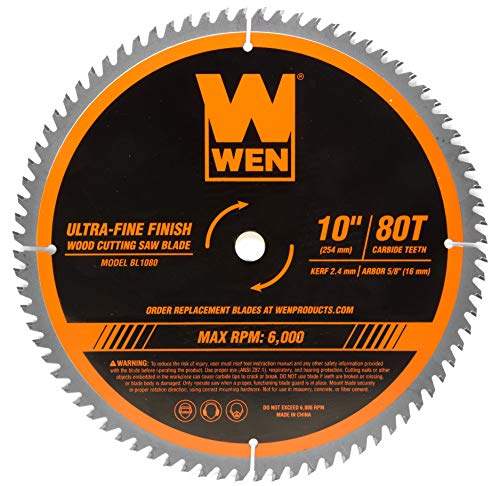
WEN BL1080 10-Inch 80-Tooth Carbide-Tipped…
Featuring a 10-inch diameter (254 mm), a 5/8-inch arbor (15.88 mm) and a rating of up to 6000 RPM Perfect for slicing through both hard and softwoods of all kinds…
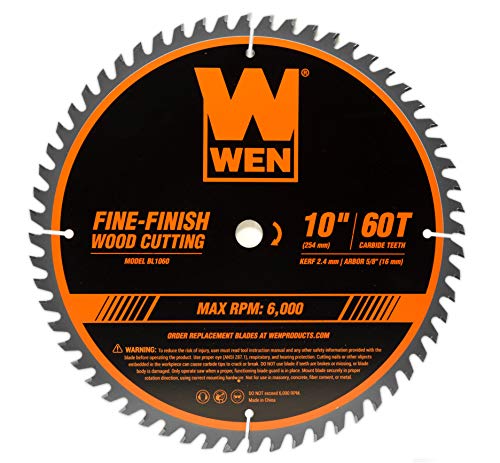
WEN BL1060 10-Inch 60-Tooth Fine-Finish…
Featuring a 10-inch diameter (254 mm), a 5/8-inch arbor (15.88 mm) and a rating of up to 6000 RPM Perfect for slicing through both hard and softwoods of all kinds…
Diablo D1060X 10″ 60T Fine Finish Blade

The Diablo D1060X is a crowd favorite for a reason. Its 60-tooth Hi-ATB grind is built to shear wood fibers clean, which helps stop tear-out on fine trim and moldings. The thin kerf reduces load on the motor, so your cuts feel effortless and quick. A slick non-stick coating fights pitch build-up and heat, which keeps the blade sharp longer.
I’ve run this on painted trim, oak casing, and veneered shelves with crisp results. The plate stays true, and the vibration control is solid for a thin-kerf blade. It shines on crosscuts and light miters, and leaves edges that need little to no sanding. If you want a fast, clean finish without jumping up to an 80T, this one is easy to love.
Pros:
- Very clean crosscuts in hardwoods and softwoods
- Hi-ATB teeth reduce tear-out on trim and veneered stock
- Thin kerf cuts fast with less strain on the saw
- Coating helps reduce heat and pitch build-up
- Great value for pro-level finish quality
Cons:
- Not ideal for heavy ripping or thick stock
- Thin kerf can deflect under aggressive feed
- Can leave slight fuzz on end grain in very soft wood
My Recommendation
If you buy one blade to upgrade your miter saw, start here. It is the best 10 inch blade for miter saw users who want a sweet spot of speed and finish. It balances cut quality, price, and lifespan very well. It suits trim carpenters, DIY finishers, and anyone who works with paint-grade and stain-grade molding.
| Best for | Why |
|---|---|
| Finish trim and molding | Hi-ATB teeth shear fibers for smooth, clean edges |
| Crosscuts in hardwood | Thin kerf and carbide tips keep cuts crisp and fast |
| Veneered plywood | Low tear-out with proper support or a zero-clearance fence |
WEN BL1080 10″ 80T Ultra-Fine Blade

If you need a glass-smooth cut on a budget, the WEN BL1080 is a strong pick. The 80-tooth count lays down a very fine finish on miters and crosscuts. It helps reduce chip-out on delicate stock, like crown profiles or veneered faces. For the price, the polish of cut can be surprising.
I find it best for trim and cabinet work where speed is not the key goal. It eats through pine, poplar, and oak with a steady feed. The plate remains stable during gentle cuts. For hobby shops and weekend projects, it can feel like the best 10 inch blade for miter saw when you want top-tier finish without breaking the bank.
Pros:
- Very fine finish thanks to 80 teeth
- Good value for clean crosscuts
- Works well for trim, casing, and delicate moldings
- Stable performance with moderate feed rate
- Solid fit on most 10-inch miter saws
Cons:
- Not a good choice for ripping
- Slower feed due to high tooth count
- Edge can dull faster in abrasive materials
My Recommendation
Choose the BL1080 if you want a super smooth finish for a small price. It feels like the best 10 inch blade for miter saw owners doing careful trim work or building face frames. Use a light, steady feed and support the work well. You’ll see crisp corners and tight joints.
| Best for | Why |
|---|---|
| Crown and baseboard | 80T leaves polished edges with less sanding |
| Cabinet trim | Fine finish helps parts align clean at joints |
| Veneer edges | Gentle cutting reduces chip-out on thin faces |
WEN BL1060 10″ 60T Fine-Finish Blade
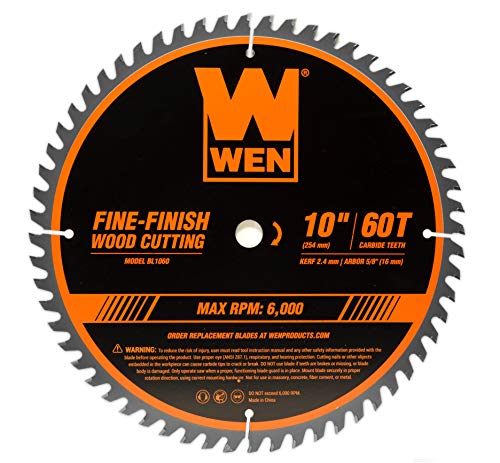
The WEN BL1060 is a step down in tooth count but still aims for a clean edge. With 60 teeth, it balances speed and finish on a miter saw. It handles common trim woods and plywood with good control. The cut is not as glossy as an 80T, but it is often fast enough and clean enough for paint-grade work.
I like this for general shop use where the blade needs to do a bit of everything. It’s more forgiving on feed rate and can stay sharp longer than some budget blades. If you are building shop cabinets or simple built-ins, the BL1060 gets it done without fuss. For many, it’s a quiet contender for the best 10 inch blade for miter saw on a budget.
Pros:
- Balanced cut quality and speed
- Good for general crosscutting and light trim
- Affordable option with decent durability
- Handles plywood and soft hardwoods well
- Reduced strain compared to heavier-kerf blades
Cons:
- Not as smooth as an 80T finish
- Struggles in thick hardwood stock
- More tear-out on melamine without extra support
My Recommendation
Pick the BL1060 if you want a steady, all-around performer at a fair price. It can be the best 10 inch blade for miter saw users who switch between framing-grade and finish-grade work. Pair it with a zero-clearance fence for cleaner edges. It’s a smart blade to keep in your kit.
| Best for | Why |
|---|---|
| General crosscutting | 60T balance speeds up work while staying clean |
| Shop cabinets | Decent finish on plywood and soft hardwood |
| Paint-grade trim | Clean enough edge that sands fast and paints great |
10″ 80T ATB Fine Finish Blade, 5/8″ Arbor

This 10-inch, 80-tooth ATB blade aims for a fine finish at a low cost. The high tooth count is helpful on crosscuts and miters in trim stock. It also does well on plywood edges if you back up the cut. For DIY and light pro use, it can be a pleasant surprise.
In use, the plate feels steady if you keep the feed light. Tear-out stays low on supported workpieces. Expect a slower cut than a 60T, but a nicer edge right off the saw. If you need the best 10 inch blade for miter saw at a tight budget, this one is worth a look.
Pros:
- Fine finish from 80 ATB teeth
- Low-cost upgrade over stock blades
- Good on trim, picture frames, and molding
- Handles plywood edges with support
- Fits most 10″ saws with 5/8″ arbor
Cons:
- Slower feed due to tooth count
- Not ideal for repetitive heavy cuts
- Durability may be lower than premium brands
My Recommendation
Go for this if you want an 80T finish without premium pricing. It won’t outlast top blades, but it delivers clean results on a budget. For weekend projects, it might feel like the best 10 inch blade for miter saw when you need crisp miters for base and casing.
| Best for | Why |
|---|---|
| DIY trim installs | Fine finish with simple setup and slow feed |
| Picture frames | Clean miter corners for tight joints |
| Plywood edging | ATB teeth reduce chipping with backer support |
ANGELSWORD 10″ 3-Pack: 32T, 60T, 80T
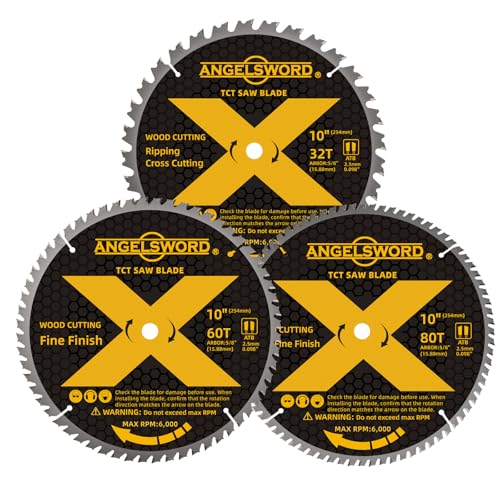
This ANGELSWORD pack gives you a full cutting toolkit: 32T for framing and fast cuts, 60T for fine finish, and 80T for ultra-fine. Swapping blades to match the job saves time and gives better results. The variety also helps you learn what feels best on your saw. For a growing shop, that flexibility is gold.
I like the 32T for rough dimensioning and the 80T for delicate trim work. The 60T covers most daily tasks and keeps you moving. You get value by bundling, and the results can rival many single premium blades. For many, this 3-pack feels like the best 10 inch blade for miter saw collection if you want one purchase to handle it all.
Pros:
- Three blades for different tasks
- Good range from roughing to ultra-fine finish
- Cost-effective bundle for new setups
- Lets you tailor tooth count to each cut
- Useful for both miter and table saws
Cons:
- Blade swaps take time
- Not as specialized as some premium single blades
- Durability varies by tooth count and use
My Recommendation
Get this if you’re building a small shop or you tackle mixed work. It can be the best 10 inch blade for miter saw starter kit because you gain speed, finish, and flexibility in one buy. Label the blades and change with a plan. Your cuts will tell you when to step up or down in teeth.
| Best for | Why |
|---|---|
| New woodworkers | One purchase solves many cutting needs |
| Mixed material jobs | Pick 32T, 60T, or 80T per task |
| Budget-conscious shops | Bundle saves money vs buying blades one by one |
ANGELSWORD 10″ 60T Fine Finish, 2-Pack

This 2-pack targets the sweet-spot 60T class, which is ideal for smooth crosscuts at a solid pace. Keeping a spare is smart when a dull blade sneaks up mid-job. The consistent tooth count means your cuts look the same from blade to blade. If you do repeat work, consistency matters.
I like this bundle for trim crews and busy DIYers. You can rotate blades for cleaning and keep working. The cut quality holds steady for most paint-grade and many stain-grade projects. For many, it’s a practical path toward the best 10 inch blade for miter saw performance day after day.
Pros:
- Two blades for nonstop workflow
- Balanced 60T for speed and finish
- Consistent results across replacements
- Good value compared to buying single blades
- Ready for miter or table saw duty
Cons:
- Not as polished as a premium 80T
- Limited if you need a rough-cut or ultra-fine option
- Requires regular cleaning for pitch build-up
My Recommendation
Pick this 2-pack if you run lots of similar cuts and hate downtime. It functions like the best 10 inch blade for miter saw strategy: one blade working, one blade ready. That rhythm keeps your edges clean and your project timelines tight.
| Best for | Why |
|---|---|
| Trim crews | Swap a twin blade in seconds and keep moving |
| Consistent finish work | Same tooth count equals same results |
| DIY remodels | Budget 2-pack reduces mid-project surprises |
ANGELSWORD 10″ 40T+60T Combo, 2-Pack

This combo solves two needs: a 40T blade for faster crosscuts and light ripping, and a 60T for a cleaner finish. On a miter saw, the 40T speeds up framing and deck work. Swap to the 60T for trim that needs a neater edge. It’s a simple way to match blade to job.
I reach for sets like this when moving from rough lumber to final pieces in one session. It reduces burn risk and tear-out because you are not forcing one blade to do everything. For the price, the flexibility stands out. If you want the best 10 inch blade for miter saw versatility under one purchase, this hits the mark.
Pros:
- Two tooth counts for different tasks
- 40T speeds up rough cuts
- 60T cleans up finish work well
- Good value and simple to use
- Helps prevent pushing blades beyond their sweet spot
Cons:
- Still need an 80T for ultra-fine trim
- More blade swaps vs a single general-purpose blade
- Ripping thick hardwood best left to table saw
My Recommendation
Choose this if you switch between rough and finish work often. This duo acts like a small system. It might be the best 10 inch blade for miter saw owners who need speed early in the build and a cleaner edge at the end. Keep both blades handy and change with purpose.
| Best for | Why |
|---|---|
| Renovation jobs | 40T for demo cuts, 60T for finish install |
| Decks and outdoor trim | Switch to cleaner blade for visible corners |
| Small shops | Two blades cover most needs without a big spend |
TOYAKI 10″ 120T Ultra-Fine Miter Blade
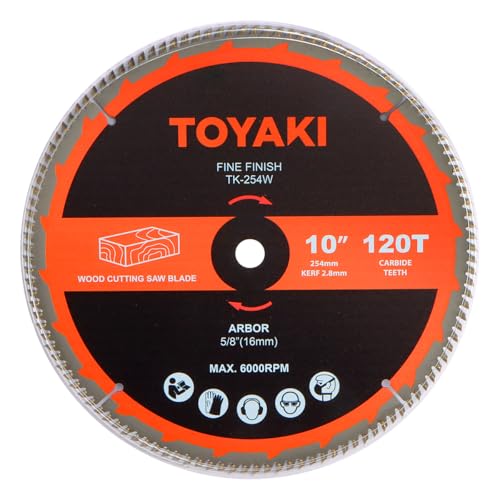
When you want cuts that look like they were sanded, a 120T blade steps in. This TOYAKI blade focuses on ultra-fine crosscuts. It is great on delicate moldings, very thin stock, and veneered panels with the right support. The result is a cut face that feels smooth to the touch.
Be ready for slower feeds and very clean technique. Keep a sharp pencil line and a patient hand. On a tuned miter saw, it can feel magical. For detail-heavy work, this can be the best 10 inch blade for miter saw use where the finish matters more than speed.
Pros:
- Ultra-smooth crosscut finish
- Excellent for delicate trim and veneers
- Helps reduce sanding time
- Works well for picture framing
- Good edge quality on thin stock
Cons:
- Slow feed due to very high tooth count
- Can heat up faster if pushed
- Not suited for general-purpose cuts
My Recommendation
Use this blade when finish is everything. It suits picture frames, crown returns, and delicate detail work. It may be the best 10 inch blade for miter saw owners who chase flawless edges on fine projects. Run it slow. Let the teeth do the work. Your joints will thank you.
| Best for | Why |
|---|---|
| Picture framing | Ultra-fine edges make tight corners easier |
| Delicate moldings | High tooth count reduces chip-out |
| Veneered panels | Cleaner faces with good backer support |
Makita A-93681 10″ 80T Miter Saw Blade

The Makita A-93681 is a long-time favorite for fine crosscuts. Its micro-polished teeth and refined grind leave a crisp, almost glassy edge. The plate feels stable, and cut lines stay true with the right feed. Many trim carpenters keep one close for stain-grade work.
It moves slower than 60T options but rewards your patience. On oak, maple, and even some pre-finished trim, the cut looks sharp. Pair with a zero-clearance fence to cut down chip-out even more. For serious finish work, this is often the best 10 inch blade for miter saw results that impress clients.
Pros:
- Very clean, consistent crosscuts
- Great for stain-grade trim and hardwood
- Stable plate and smooth feed feel
- Pro-trusted finish quality
- Holds a sharp edge with proper use
Cons:
- Higher cost than budget blades
- Slower than 60T on bulk cuts
- Needs clean technique to shine
My Recommendation
Choose the Makita if you want premium finish quality without fuss. It often stands as the best 10 inch blade for miter saw tasks where the edge must be showroom-ready. It’s a top choice for trim carpenters and furniture-grade crosscuts. Keep it clean, and it will reward you.
| Best for | Why |
|---|---|
| Stain-grade trim | 80T leaves a smooth, ready-to-finish edge |
| Hardwood crosscuts | Stable plate supports clean lines in dense wood |
| Furniture components | Refined tooth grind for high-precision faces |
Luckyway 10″ 80T Fine Finish, 2-Pack

Two 80T blades for one price is a strong deal. The Luckyway 2-pack targets clean, fine crosscuts with less cost per blade. You get a spare on hand for longer jobs or for rotation when cleaning. The result is more up-time and fewer mid-cut surprises.
In use, it does well on moldings, window trim, and picture frame stock. The finish is solid when you use a steady feed and proper support. It is slower than 60T but leaves fewer saw marks. For the money, it can feel like the best 10 inch blade for miter saw value if you need 80T results often.
Pros:
- Great value two-pack
- Fine finish with 80T count
- Reduced downtime with a spare ready
- Good on trim, molding, and small parts
- Useful on both miter and table saws
Cons:
- Slower feed than 60T
- Budget carbide may dull faster
- Less ideal for heavy hardwood work
My Recommendation
Grab this if you cut a lot of trim and want a spare. It’s a smart path to the best 10 inch blade for miter saw finish on repeat tasks. Keep one clean, run the other, and swap fast. That rhythm keeps your miters tight and your day smooth.
| Best for | Why |
|---|---|
| High-volume trim work | Two blades reduce downtime and keep finish high |
| Picture frames | 80T helps create clean, tight joints |
| DIY remodels | Budget-friendly path to a polished finish |
FAQs Of best 10 inch blade for miter saw
How many teeth are best for a 10-inch miter saw blade?
For clean trim work, 60T to 80T is ideal. Use 40T for faster, rougher cuts. Go 100T+ for ultra-fine, slow cuts.
What tooth geometry reduces tear-out the most?
ATB (Alternate Top Bevel) or Hi-ATB helps shear fibers and reduce chip-out on crosscuts and veneers.
Is thin-kerf better for a miter saw?
Thin-kerf cuts faster with less strain and heat. It’s great for most miter saws. Use a steady feed to avoid deflection.
Can I use the same blade on a table saw?
Yes, most 10-inch blades fit both if they have a 5/8-inch arbor. Match tooth count to the task for best results.
How do I get the smoothest cut possible?
Use a high-tooth-count blade, add a zero-clearance backer, feed slow, and keep the blade clean and sharp.
Final Verdict: Which Should You Buy?
If you want one do-it-all upgrade, the Diablo D1060X is hard to beat. It blends speed, clean edges, and long life, so it often feels like the best 10 inch blade for miter saw users.
For ultra-fine cuts, choose the Makita A-93681 or TOYAKI 120T. Budget hunters should try WEN or Luckyway. Match tooth count to your jobs, and you’ll find the best 10 inch blade for miter saw in minutes.