
The best plexiglass jigsaw blade stays cool and cuts clean, chip-free.
You want a clear, glassy edge without melt marks or cracks. Maybe you’re trimming an acrylic window, shaping a sign blank, or cutting a custom splash guard. The wrong blade will melt, grab, or chip your sheet. The right blade makes a smooth cut that needs almost no sanding. In this guide, I share the best plexiglass jigsaw blade options I trust in my own shop, and how to choose based on thickness, curve work, and tool setup. Let’s get your next cut clean on the first try.

Bosch T102BF 3 pc. 3-5/8…
DESIGNED FOR CUTTING PLEXIGLAS 5/64 IN. TO 3/4 IN. THICK IDEAL FOR STRAIGHT, CLEAN CUTS GROUND AND TAPER BACK TOOTH DESIGN SUPERIOR BI-METAL LONGEVITY

Diablo Bi-Metal Jig Saw Blades…
Boost Efficiency – With a Blade that stays cool, you can easily make smooth, melt – free cuts in plexiglass, giving you the precise results you are after. Ultra -…
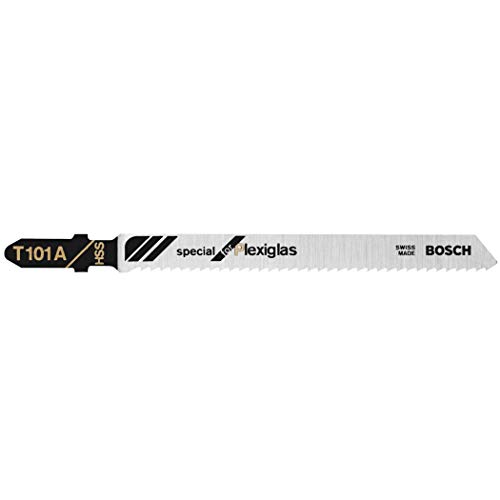
BOSCH T101A 5 pieces 4…
Engineered for precision cuts on Plexiglas 5/64 In. to 3/4 In. thick Ideal for fine and straight cuts High Speed Steel construction for long life 4 In. overall length, 2…
Bosch T102BF 13 TPI Plexiglas Blades (3 pc)

The Bosch T102BF is a staple in my plexiglass kit for a reason. With its 13 TPI profile and Bi-Metal build, it stays cool and resists snapping on tight curves. The grind is tuned for acrylic and polycarbonate, so you get fewer chips and less melting. I reach for this when I want a clean, ready-to-polish edge without drama.
This short 3-5/8 in. length gives you control over delicate sheets and narrow work. It shines on thin to medium acrylic, sign materials, and guards. Slow your speed, turn orbital off, and let it glide. If you ask me what the best plexiglass jigsaw blade is for day-to-day work, this one is always on the short list.
Pros:
- Clean, cool cuts in acrylic and polycarbonate
- Short length improves control on thin sheet
- Bi-Metal holds teeth and resists heat
- Great for curves and tight templates
- Minimal chipping with correct speed and feed
Cons:
- Short blade limits very thick stock
- Only three blades in the pack
- Can cut slowly in very hard plastics
My Recommendation
If you want the best plexiglass jigsaw blade for consistent, chip-free results on thin to medium acrylic, start here. It balances control, durability, and finish quality. I use it for window inserts, splash guards, and sign letters where the edge must look clean right off the saw.
| Best for | Why |
|---|---|
| Thin to medium acrylic sheets | Short blade, 13 TPI, reduced vibration and melt |
| Curves and tight templates | Easy control; Bi-Metal teeth stay sharp on arcs |
| Clean edges with little sanding | Tooth grind made for Plexiglas clarity |
Diablo DJT102BF5 13 TPI Plexiglass, 5-Pack

Diablo’s DJT102BF5 mirrors the proven Bosch spec with a 13 TPI, acrylic-focused grind, and bi-metal body. In my hands, it cuts fast while keeping edges clear of melt beads. The 5-pack keeps you stocked for batch jobs, like trimming multiple guards or sign panels in one go. It aligns well with dust collection and table setups.
I like the predictable tracking on slow speeds and the way it handles arcs without snag. It is a strong rival for best plexiglass jigsaw blade in a shop that wants value and volume. If you run through blades on production days, the 5-pack format makes sense and saves time.
Pros:
- 5-pack is great for production or backups
- Clean cuts with low melting when used at slow speed
- Bi-Metal durability for longer life
- Good edge quality on acrylic and PC
- Reliable for both straight and curved cuts
Cons:
- May feel slightly more aggressive than Bosch
- Finish can vary with very thin sheet if rushed
- Not ideal for extra thick material
My Recommendation
Need a stash of blades that stay cool and deliver clean lines? This is a great pick for shops that cut acrylic often. For many users, it will be the best plexiglass jigsaw blade in a value pack that does not hold you back on finish quality.
| Best for | Why |
|---|---|
| Batch or production runs | 5-pack keeps you working without reorders |
| Clean edges on acrylic sheets | 13 TPI and bi-metal grind handle melt and chips |
| Curves in signage | Stable tracking even at slow feed rates |
Bosch T101A 14 TPI Plexiglas, 5-Pack
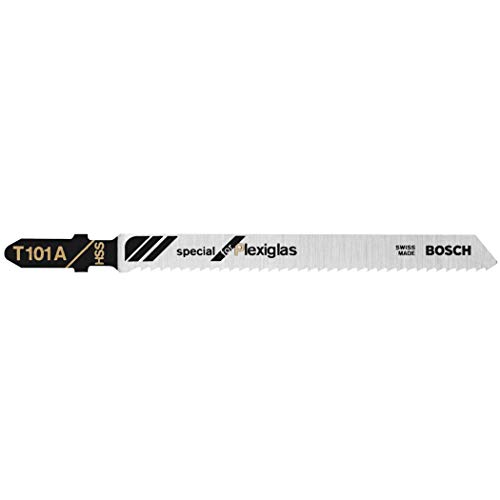
The Bosch T101A is the classic “Special for Plexiglas” blade with a finer 14 TPI layout and a longer 4 in. reach. That extra length helps on thicker acrylic and stacked sheets. It leaves a refined edge on straight cuts and gentle sweeps. With orbital off and slow speed, I get melt-free results that polish fast.
It is a go-to when I need a little more reach than the T102BF. If you cut desk shields, machine guards, or thicker panels, this blade earns its keep. Many pros still call this the best plexiglass jigsaw blade for thicker stock in a T‑shank format.
Pros:
- Longer 4 in. length for thicker material
- Fine 14 TPI for crisp edges
- Excellent control with low vibration
- Trustworthy “Special for Plexiglas” geometry
- Good for both straight and gentle curved cuts
Cons:
- Cuts slower than coarser blades
- May chatter on very thin stock if rushed
- Not ideal for super tight radius curves
My Recommendation
Choose this when your acrylic is thick or your reach is short with other blades. It is steady, clean, and easy to guide. For many makers, this is the best plexiglass jigsaw blade to keep on hand for larger panels or stacked sheets.
| Best for | Why |
|---|---|
| Thicker acrylic panels | 4 in. length increases reach and stability |
| Clean straight cuts | 14 TPI leaves a smooth, polish-ready edge |
| Shop mainstay blade | Time-tested “Special for Plexiglas” grind |
Bosch T101A3 14 TPI Plexiglas, 3-Pack
Same trusted geometry as the T101A, but in a 3-pack for lighter use. If you cut acrylic now and then, this pack makes sense. It gives you that 4 in. reach and 14 TPI finish without buying more than you need. It remains one of the easiest blades to guide on a slow, controlled cut.
I use it for home projects, single-off builds, and small-batch trim work. For users who still want the best plexiglass jigsaw blade quality without a larger pack, this hits the sweet spot. It is reliable and simple to control in most sheet thicknesses.
Pros:
- Excellent edge finish quality
- Good reach for thicker material
- Ideal pack size for casual users
- Stable tracking and low chatter
- Strong pick for acrylic and polycarbonate
Cons:
- 3-pack may not suit heavy users
- Cut speed is moderate
- Not designed for tight-radius scroll cuts
My Recommendation
Pick this if you want premium acrylic results and do not need a large pack. The finish is clean and ready to buff. For home fabricators, this can be the best plexiglass jigsaw blade choice when quality and value both matter.
| Best for | Why |
|---|---|
| Occasional acrylic work | 3-pack offers value without waste |
| Thicker sheets | 4 in. length handles depth better |
| Clean edges | Fine tooth profile reduces post-sanding |
50-Piece T‑Shank Jigsaw Blade Set with Case
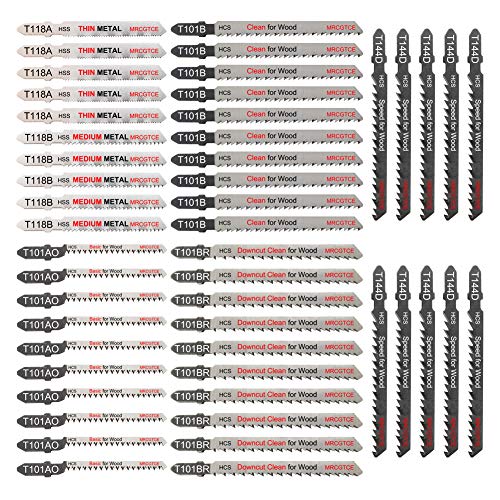
This big assorted set covers wood, metal, and some plastics. While it is not a plexiglass-focused kit, I still find a few blades work in a pinch. The finer metal blades, like T118A, can handle thin acrylic if you go slow and keep things cool. It is not the best plexiglass jigsaw blade set, but it is a solid all-rounder to keep on the bench.
The storage case is handy, and you get a wide mix for odd jobs. For clear, chip-free acrylic edges, use a high TPI blade and minimal orbital action. Expect more sanding compared to plexiglass-special blades. This is a backup path, not my first choice for clean acrylic work.
Pros:
- Huge variety for different materials
- Great value for new tool kits
- Case keeps blades sorted
- Fine metal blades can cut thin acrylic
- Useful for PVC and polycarbonate with care
Cons:
- Not optimized for acrylic clarity
- More risk of melt or chips
- Finish may need extra sanding
My Recommendation
Get this if you want one set for many tasks and only cut acrylic now and then. For pure clarity, you still want a plexiglass-specific blade. I would not call this the best plexiglass jigsaw blade kit, but it can fill gaps in a home shop.
| Best for | Why |
|---|---|
| New jigsaw owners | All-purpose selection with useful case |
| Occasional acrylic cuts | Use finer metal blades at slow speed |
| Mixed-material projects | Wood, metal, and plastic options included |
Bosch T503 Laminate/Hardwood Set (3 pc)
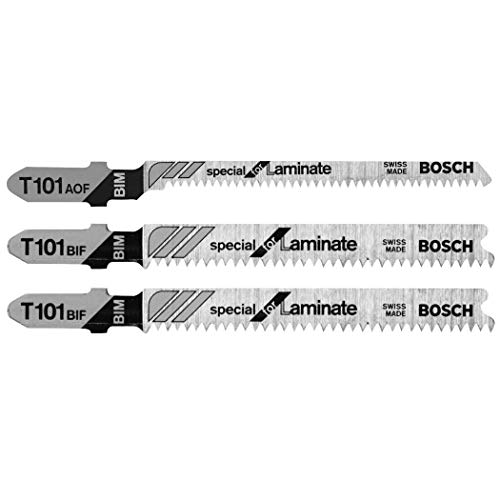
Designed for laminate and hardwood, these fine-tooth blades can still handle thin plastics with care. I have used similar profiles on small acrylic jobs where a plexiglass blade was not on hand. Slow speed, no orbital, and a light feed reduce melt. But you will likely need extra sanding to get that glassy edge.
I consider this a “make it work” option, not a best plexiglass jigsaw blade. It can give a decent cut on very thin material in a pinch. If you mostly work wood and sometimes touch plastic, the set has value. For frequent acrylic, get a purpose-built plexi blade instead.
Pros:
- Fine teeth for smooth wood and laminate cuts
- Can cut thin plastics at slow speeds
- Short length aids control on small parts
- Good for edge-sensitive worktops
- Fits common T‑shank jigsaws
Cons:
- Not dedicated to acrylic or PC
- Higher risk of melt on thicker plexiglass
- Finish may need polishing and scraping
My Recommendation
If you are a wood-first DIYer and sometimes cut plastic, this can serve. But it is not the best plexiglass jigsaw blade for clean, clear edges. Keep your speed low and your feed gentle if you must use it on acrylic.
| Best for | Why |
|---|---|
| Laminate and hardwood | Fine profile supports clean topside finish |
| Very thin plastics | Fine teeth allow slow, careful cuts |
| Backup acrylic option | Works in a pinch with slow feeds |
10-Piece Assorted T‑Shank Blades (Wood/Metal/Plastic)

This 10-piece sampler includes popular Bosch-style profiles like T101 and T118. That means you get options for wood, metal, and some plastic work. For acrylic, stick to the finer metal or downcut profiles and go slow. Expect a usable edge, but not the perfect clarity of a true plexiglass blade.
It is a handy kit for home users who do not want to chase single packs. I keep similar sets as backups when my plexi blades run out. It will not be the best plexiglass jigsaw blade set in finish quality, but it is fine for utility cuts and shop fixtures.
Pros:
- Good variety for many materials
- Budget-friendly starter set
- Fine blades can manage thin acrylic
- Covers straight and curve cutting
- Works on PVC and other plastics
Cons:
- Not a dedicated acrylic grind
- Higher melt risk if rushed
- Finish may need more cleanup
My Recommendation
Pick this if you need an affordable kit for general tasks and rare acrylic jobs. Use the finest blades and slow feeds for plexi. For showpiece edges, you still want the best plexiglass jigsaw blade designed for acrylic.
| Best for | Why |
|---|---|
| Budget tool kits | Wide variety at low cost |
| Occasional plastic cuts | Fine blades can do thin acrylic |
| General DIY work | Covers wood, metal, and plastics |
14-Piece U‑Shank Jigsaw Blades Set

If you own an older U‑shank jigsaw, this set gives you many TPI choices. There are fine blades up to 32 TPI that can cut thin plastics. Go slow, reduce heat, and you can get serviceable edges on acrylic. It is not a plexiglass-specific kit, but it keeps your legacy tool in the game.
Check your saw for U‑shank compatibility before you buy. Most newer jigsaws use T‑shank only. For those with the right tool, this can stand in when you cannot find dedicated plexi blades. It is not the best plexiglass jigsaw blade choice, yet it is a practical option for older gear.
Pros:
- Supports older U‑shank jigsaws
- Fine TPI options for thin plastics
- Value set with multiple uses
- Can cut PVC and polycarbonate
- Keeps legacy tools useful
Cons:
- Not optimized for acrylic clarity
- Most modern saws use T‑shank
- Finish may need extra polishing
My Recommendation
Use this if your jigsaw takes U‑shank blades and you cut a little acrylic. It can do the job with slow feeds and light pressure. For frequent clear cuts, seek out the best plexiglass jigsaw blade in a U‑shank style if your tool allows.
| Best for | Why |
|---|---|
| Older U‑shank jigsaws | Wide TPI range keeps them useful |
| Thin acrylic sheets | Fine 24–32 TPI helps reduce melt |
| Budget multi-use set | Works across wood, metal, plastic |
Diablo DJT308BFP5 Ultra-Fine Wood, 5-Pack

This Diablo set is tuned for ultra-fine wood cuts, top and bottom. It can make beautiful edges in laminates and veneers. On acrylic, use only if you have no plexiglass blade handy. With slow speed and a patient feed, you can get a usable edge on thin sheet, though polish work will be needed.
I would not call it the best plexiglass jigsaw blade by any stretch. But for woodworkers who sometimes touch plastic, it can serve in a pinch. Be gentle and keep the cut cool to avoid melt lines and chips.
Pros:
- Excellent for fine wood finishes
- Decent control on straight lines
- Can handle thin plastics with care
- Good pack value for wood projects
- Stable T‑shank fit
Cons:
- Not designed for acrylic
- Higher melt risk on thick plexiglass
- Edge may need heavy polishing
My Recommendation
Buy for wood, use on acrylic only when you must. The finish will not match a true plexiglass blade. If clear edges matter, go get the best plexiglass jigsaw blade made for acrylic and save yourself the sanding.
| Best for | Why |
|---|---|
| Ultra-fine wood cuts | Tooth profile protects veneer faces |
| Occasional thin plastic cuts | Works if fed gently at low speed |
| General shop use | Reliable Diablo performance on wood |
5PCS T344D 6-Inch HCS Jigsaw Blades

These T344D blades are made for fast wood cuts. They are long, aggressive, and great for deep rip cuts in lumber. For plexiglass, they are not a match. Large teeth will grab, chip, and melt. Only use for rough PVC cuts if needed, and expect heavy cleanup.
I do not consider this a best plexiglass jigsaw blade by any measure. But in a mixed-material shop, long blades like these have value for wood. Keep them far from your acrylic unless the goal is a quick, rough sizing before a final tool pass.
Pros:
- Very fast wood cutting
- Long reach for deep material
- Works for rough PVC resizing
- Good value for carpentry tasks
- Stable in straight cuts
Cons:
- Not suitable for plexiglass
- High chip and melt risk on plastic
- Rough finish needs lots of sanding
My Recommendation
Use these for wood and rough PVC only. If you need clarity in acrylic, choose a dedicated plexi blade instead. Save yourself time and pick the best plexiglass jigsaw blade for clear edges and fewer headaches.
| Best for | Why |
|---|---|
| Fast wood cuts | Coarse teeth remove material quickly |
| Deep rip cuts | 6 in. length reaches through thick stock |
| Rough PVC sizing | Works for utility cuts before cleanup |
How to Choose the Best Plexiglass Jigsaw Blade
Picking the best plexiglass jigsaw blade starts with teeth. Look for 13–21 TPI in a grind that is made for plastics. Fine, evenly ground teeth keep heat down and edges clean. Many top blades say “for Plexiglas” or “for plastics” right on the pack.
Blade length matters. Short blades add control on thin sheets and curves. Longer blades help with thicker panels or stacked sheets. If you do mostly thin acrylic, a short 3–4 in. blade is ideal.
Material counts too. Bi-Metal blades resist heat and last longer on curves. High-speed steel can also work, but may dull faster. For most users, a bi-metal, fine-tooth blade is best.
Cut settings make or break your edge. Turn off orbital. Slow your speed. Tape your cut line and support both sides to reduce chatter. A light mist of soapy water or a cool air blast can cut melting. Let the blade do the work. Do not push hard.
Match blade to thickness. For sheets under 1/8 in., use the finest blade and a very light feed. For 1/8–3/8 in., a 13–14 TPI plexi blade is ideal. Over 3/8 in., a longer blade with similar TPI keeps the cut on track.
Plan your polish. Even the best plexiglass jigsaw blade may leave a tiny burr. A plastic scraper, then fine sand, then a quick flame or buff gives a glass-clear edge. Keep heat low during sanding to avoid haze.
Pro Tips for Cleaner Plexiglass Cuts
- Peel only enough film to see the line. Keep the rest on during the cut.
- Use painter’s tape over the line to reduce chips and scratches.
- Clamp and back the sheet with scrap MDF for support.
- Turn off orbital, set low speed, and feed lightly.
- Use a blower or a light mist to keep the kerf cool.
- Start with a small pilot notch to help the blade engage.
- For tight curves, make relief cuts to avoid binding.
- Deburr with a plastic scraper before sanding.
Which Blades Truly Stand Out?
For most acrylic jobs, Bosch T102BF and Diablo DJT102BF5 lead the pack. They balance speed, control, and clarity. For thicker sheets, Bosch T101A and T101A3 offer extra reach with a fine finish. These are my repeat buys when edge quality matters.
General sets have a role in mixed shops, but they are not the best plexiglass jigsaw blade options for showpiece edges. If you cut acrylic often, invest in a dedicated plexi blade. Your cuts, your polish time, and your projects will thank you.
FAQs Of best plexiglass jigsaw blade
What TPI is best for cutting plexiglass?
Go with 13–21 TPI. I get the best balance at 13–14 TPI for most sheets. Use very fine TPI for very thin material.
Should I use orbital action when cutting acrylic?
No. Turn orbital off. It reduces chipping and heat. Keep the speed low and the feed light.
How do I stop plexiglass from melting?
Use a fine, plexi-rated blade, low speed, and gentle feed. Keep the kerf cool with air or a light mist of soapy water.
Can I cut plexiglass with wood blades?
Not ideal. Coarse wood blades cause chips and melt. In a pinch, use a fine-tooth blade at slow speed, but expect cleanup.
Which blade is best for thick acrylic panels?
A longer, fine-tooth plexiglass blade like Bosch T101A works well. It reaches deeper while keeping a clean edge.
Final Verdict: Which Should You Buy?
For most users, Bosch T102BF is the best plexiglass jigsaw blade for clean, cool, chip-free cuts. For thicker sheets, Bosch T101A earns the nod.
Pick a plexiglass-rated blade, turn orbital off, and feed slow. Your edges will look great, and your sanding time drops fast.